
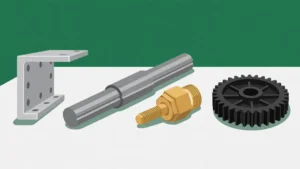
How to Choose a CNC Machining Material: Aluminum, Steel, or Engineering Plastic?
“Aluminum” is not a material specification. Start from what the part must survive, then let strength, environment, tolerance and cost narrow the grade.
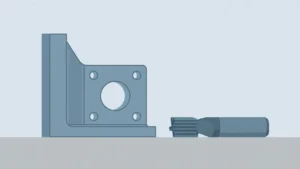

“Aluminum” is not a material specification. Start from what the part must survive, then let strength, environment, tolerance and cost narrow the grade.
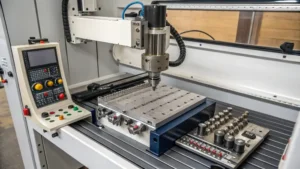
A comparable CNC quotation starts with a complete RFQ: a controlled 3D model and 2D drawing, a clear datum and tolerance scheme, material and quantities, surface finish, and agreed inspection evidence. This guide explains what to send and how to compare the quotes you receive.

Master CNC machining for plastic prototypes through material choice, fixturing, wall design, tool paths, tolerances, heat, finishing and inspection.

Practical design for CNC machining rules covering tolerances, radii, wall thickness, pockets, holes, material choice and manufacturable part geometry.

Compare injection molding, 3D printing and CNC machining for plastic parts, including cost, material, tolerance, speed, prototypes and production.

Improve manufacturing sustainability through functional-unit metrics, yield, tool life, material efficiency, energy, cooling, logistics and verified claims.

Follow CNC mold manufacturing from datum setup and roughing through heat treatment, finish cutting, EDM, inspection and trial correction.

Compare injection molding and CNC machining by volume, design maturity, material fidelity, geometry, tolerance, surface, lead time and total cost.

See how CNC machining improves injection mold projects through datum control, insert strategy, hard milling, probing, repeatable revisions and inspection.
Use this short form for a general inquiry. For a quotation, complete the full RFQ and email any 3D/CAD files separately to jerry@ckmold.com.
Join our mailing list and receive a 10% discount on your next mold or CNC project.