
CKMOLD Blog

Injection Molding

Injection Molding vs Thermoforming: When to Use Each

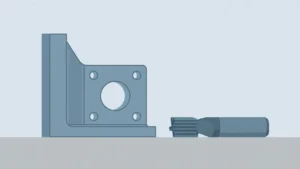
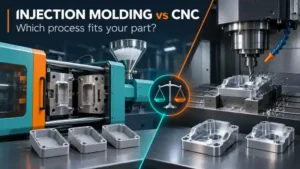
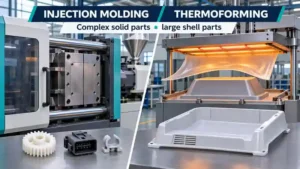
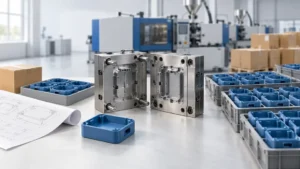
Choose between injection molding and thermoforming from the part geometry, critical dimensions, material form and cost per accepted part at the expected volumes. Injection molding fills a closed tool and can integrate detailed features on both sides. Thermoforming shapes heated sheet and is often a strong candidate for large open

Read More »
Design

How Can Integrated Handle Design Techniques Enhance Bucket Ergonomics?

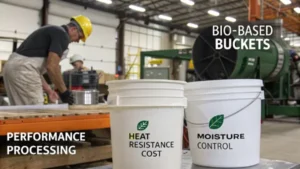
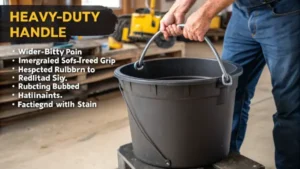
Integrated handles can improve bucket-carrying comfort when grip size, attachment geometry and materials suit the filled load, intended users and task. A wider contact area can distribute pressure across the palm, but handle design alone cannot eliminate pain or make an excessive load acceptable. Start with a grip that fits

Read More »
Injection Molding

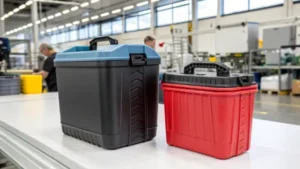
Why Choose Two-Component Injection Molding for Premium Plastic Containers?

Two-component molding is worth considering when an integrated grip, seal or color feature removes a separate assembly step or provides a function that a single material cannot meet. The decision depends on the exact material grades, bond or retention design, tooling, production demand and acceptance tests. Appearance alone does not

Read More »
Comparison of Processes and Technologies

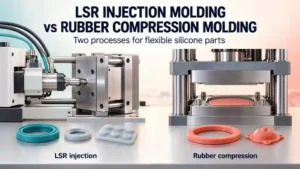
LSR Molding vs. Rubber Compression Molding Compared

There is more than one way that silicone can be used for seals, gaskets, keypads, valves, and soft-touch parts. There are two predominant methods, namely liquid silicone rubber (LSR) injection molding and rubber compression molding. They both generate flexible, durable elastomer components but vary in material, tooling, speed, precision, and

Read More »
Comparison of Processes and Technologies

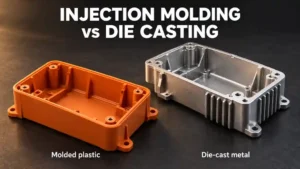
Injection Molding vs Die Casting: Should You Choose Plastic or Metal Manufacturing?

Choose injection molding when a specified polymer can meet the part’s loads, temperature, chemical exposure and dimensional requirements at an acceptable total cost. Consider die casting when the design needs a metal alloy’s stiffness, heat conduction or other properties. Validate the complete part and assembly: neither process name establishes performance

Read More »

How Can We Use Weight Reduction Techniques in Plastic Container Manufacturing?

Reduce a plastic container’s weight by removing unnecessary material or selecting a lower-density structure while meeting its specified function. Compare geometry, material and process changes against the actual contents, load, temperature, stacking duration, drop conditions, closure and barrier requirements. Lower mass, lower resin consumption and lower cost are different outcomes;

Read More »
Design

How Can We Optimize Mold Design for Plastic Buckets to Reduce Cycle Time and Material Usage?

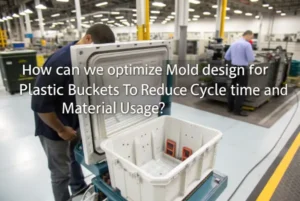
Optimize a bucket mold by reducing cost per accepted bucket while maintaining its specified drop, stacking/creep, handle-load, lid-fit and dimensional performance. First measure the cycle bottleneck, part and scrap mass, reject rate and actual cooling conditions. Then compare geometry, gate/runner, cooling and process changes on the same acceptance basis; thinner

Read More »

Start with the Project Basics

Use this short form for a general inquiry. For a quotation, complete the full RFQ and email any 3D/CAD files separately to jerry@ckmold.com.

Wait, We Have Something Special for You!

Join our mailing list and receive a 10% discount on your next mold or CNC project.