
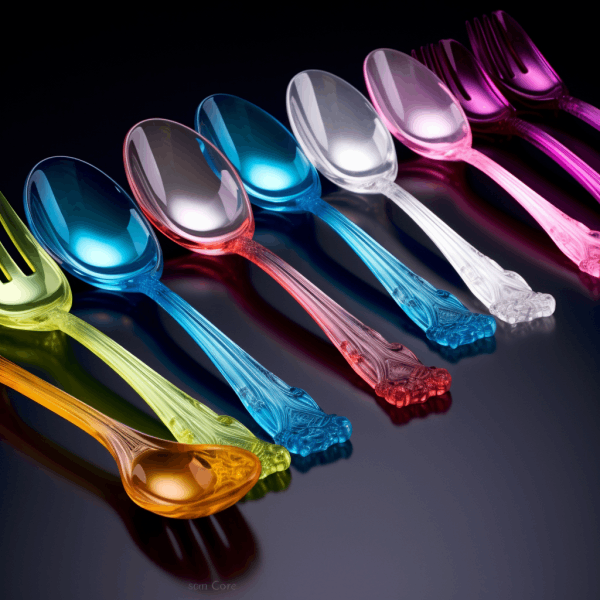
Plastic cutlery manufacturing depends on material selection, thin-wall mold design, cycle stability and consistent quality control. For buyers and product engineers, choosing a plastic cutlery manufacturer is not only about unit price. The mold, resin and production process determine whether forks, spoons and knives are strong, safe and consistent.
Plastic cutlery manufacturing combines food-contact evidence, thin-wall flow and high-cavity economics in a product whose edge, stiffness and cleanliness are immediately judged by users. A fork tine, spoon bowl and knife edge create different filling and strength risks. Manufacturers must qualify the complete material and color system, balance every cavity and control packaging contamination—not simply run the shortest possible cycle.
Related engineering resources: multi-cavity injection molds | mold design | production injection molding
Original Product Reference Images

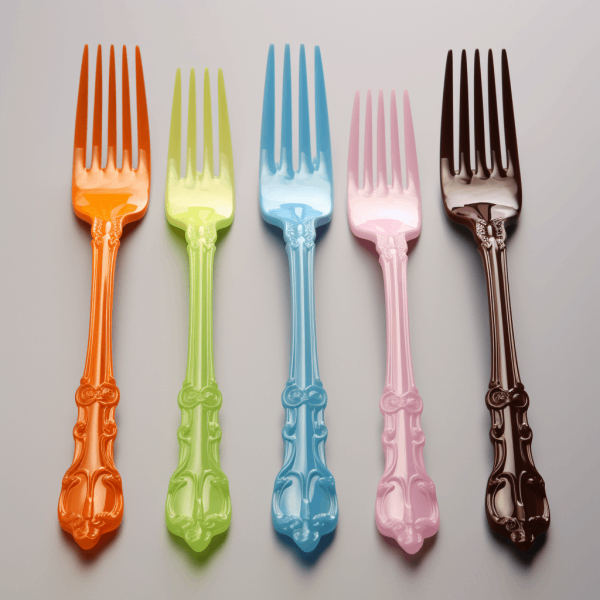
What Plastic Cutlery Manufacturers Actually Do
A plastic cutlery manufacturer may provide product design, mold design, mold manufacturing, injection molding, packing and shipment. Some suppliers only mold parts from existing tooling, while others can support the full workflow from drawing to production.
Common Materials for Plastic Cutlery
Plastic cutlery is commonly made from PP, PS or other food-contact suitable materials depending on stiffness, cost and local regulatory requirements. Material choice affects flexibility, break resistance, surface feel and mold shrinkage.
Mold Design Considerations
- Thin-wall filling: cutlery parts need balanced filling to avoid short shots.
- Gate location: gate marks should not affect appearance or function.
- Ejection: long thin parts can deform if ejection is not planned correctly.
- Cooling: cycle time and warpage depend heavily on cooling layout.
- Cavity number: multi-cavity tooling can reduce unit cost but increases mold complexity.
Quality Risks in Plastic Cutlery Production
Common issues include flash, short shots, brittleness, warpage, inconsistent weight, rough edges and poor stacking. Many of these defects come from mold design, material drying, processing parameters or insufficient inspection.
What to Ask Before Choosing a Manufacturer
- Can the supplier review DFM before mold manufacturing?
- What resin is recommended for the target market?
- How many cavities are suitable for the expected volume?
- How will weight, strength and appearance be inspected?
- Can the supplier provide T1 samples before production approval?
How CKMOLD Helps
CKMOLD can support plastic cutlery projects through plastic product design review, mold design, injection mold manufacturing and trial molding. We help buyers understand tooling cost, cycle-time risk and material considerations before production starts.
Define Use Conditions Before Material
Identify hot or cold food, fatty or acidic contact, contact time, single or repeated use, bending load and target market. PP, PS and alternative compounds offer different stiffness, toughness, heat and flow. Food-contact status depends on exact components and conditions of use. Bio-based or compostable claims require separate grade and disposal evidence and do not replace food-contact evaluation.
Design Each Utensil Around Its Load Path
Fork tines need fill and break resistance, spoon bowls need stiffness without sink, and knives need a controlled edge plus bending strength. Smooth transitions from handle to working end reduce stress. Texture, logos and stacking features should not trap food or create weak sections. Define acceptable fracture so parts do not form hazardous sharp fragments under foreseeable use.
Engineer Balanced Thin-Wall Filling
High-flow resin, hot-runner architecture, gate position, venting and mold temperature determine whether distant features fill without excessive pressure or flash. Family molds can be difficult when utensils have different projected area and flow length. Cavity-pressure or weight studies help separate runner imbalance from local gate or vent restrictions.
Remove Heat Without Distorting the Stack
Thin parts cool quickly in theory, but handles, bowls and local ribs can retain uneven heat. Balanced cooling and stable ejection prevent twist and nest interference. Robot takeout, counting and packaging timing should be included in the cycle study. A warm utensil can deform after inspection if compressed into a tight stack too early.
Control Hygiene, Traceability and Claims
Use approved resin, color and process aids with lot and cavity traceability. Protect open product and packaging from dust, oil, pests and mixed materials according to the quality plan. Inspect weight, dimensions, edges, appearance, break behavior and count. Supplier, color, recycled or bio-based content and packaging changes should trigger documented food-contact and performance review.
Plastic Cutlery Manufacturing and Mold Design: Design and Validation Checklist
- Define food type, time, temperature, use pattern and sales markets.
- Qualify exact resin, color, additives and environmental-claim evidence.
- Review tine, bowl, edge, handle and stacking geometry by failure mode.
- Balance hot runner, gates, vents, cooling and ejection across cavities.
- Control hygiene, lot and cavity traceability, counting and packaging.
Authoritative Reference Points
- U.S. FDA: Regulatory Status of Food-Contact Components
- U.S. EPA: Plastic Recycling and Composting FAQ
Plastic Cutlery Tooling Cost Drivers
Tooling cost for plastic cutlery depends on cavity count, runner design, steel selection, part finish and production target. A low-volume mold may use fewer cavities and simpler construction. A production mold for large orders may need more cavities, better cooling, tighter balancing and more durable steel.
Thin-wall products also require careful filling. If the mold is not balanced, some cavities may short shot while others flash. If cooling is uneven, parts may warp or stack poorly. These issues are not only processing problems; they often begin in mold design.
Food-Contact and Market Requirements
Plastic cutlery buyers should confirm the target market early. Requirements may differ between regions, especially for food-contact material, labeling, packaging and recycled or reusable product claims. CKMOLD does not replace regulatory testing, but tooling and material planning should leave room for the customer’s compliance requirements.
Production Quality Checklist
- Part weight consistency across cavities
- No sharp flash on edges or handle areas
- Stable stiffness and break resistance
- Consistent color and surface appearance
- Reliable stacking and packing performance
- Approved T1 samples before mass production
How to Avoid Supplier Miscommunication
Before ordering a mold, define whether the supplier is responsible for product design, mold design, molding production or only tool manufacturing. Also confirm sample approval standards, mold ownership, spare parts, shipment packing and whether future mold maintenance is included.
Frequently Asked Questions
Is polypropylene automatically food safe for cutlery?
No. The exact resin, colorants, additives, supplier authorization and conditions of use determine suitability.
Why do fork tines short-shot in some cavities?
Runner balance, gate restriction, trapped air, local cooling, resin condition or cavity variation can reduce flow to thin distant features.
Does compostable cutlery break down in home compost?
Not necessarily. Claims must identify the supported conditions, test basis and collection route; industrial compostability does not automatically mean home compostability.
What material is best for plastic cutlery?
PP and PS are common, but the best choice depends on stiffness, flexibility, heat exposure, target market and food-contact requirements.
How many cavities should a plastic cutlery mold have?
It depends on annual volume, machine size, part weight and budget. A higher cavity count can lower unit cost but increases mold cost and design complexity.
Can CKMOLD manufacture plastic cutlery molds?
Yes. CKMOLD can review the part design, recommend mold structure and manufacture injection molds for cutlery and other thin-wall plastic products.