Category: Material

How Can We Use Weight Reduction Techniques in Plastic Container Manufacturing?

Reduce a plastic container’s weight by removing unnecessary material or selecting a lower-density structure while meeting its specified function. Compare geometry, material and process changes against the actual contents, load, temperature, stacking duration, drop conditions, closure and barrier requirements. Lower mass, lower resin consumption and lower cost are different outcomes;

Read More »
Material

Stackable Plastic Container Design: How Does It Maximize Storage Efficiency?

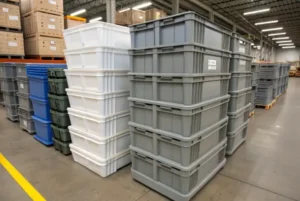
Stackable container design can improve space use by matching footprints, stack interfaces and usable internal volume to the pallet or rack. Safe height is limited by the container, load, temperature, handling equipment and facility clearance requirements. A matching lid and base alone do not establish a safe floor-to-ceiling stack. What

Read More »

Next-Generation TPE Materials: Enhanced Performance and Environmental Benefits?

“Next-generation TPE” is not a standardized material class. It is a useful market description for thermoplastic-elastomer grades developed for a particular improvement—such as recycled or bio-based content, adhesion to a selected substrate, lower density, softness, weathering or a demanding mechanical property. No grade improves every property at once. Select the

Read More »
Material

TPE Medical Device Components: How to Handle Material Selection and Regulatory Compliance?

Selecting a TPE for a medical-device component is a device risk-management task, not a search for a generic “medical-grade” plastic. Start with the component’s body-contact category, duration, function, cleaning or sterilization exposure and regulatory pathway. Then select and validate an exact supplier grade. What makes a TPE candidate suitable for

Read More »
Material

How to Use Soft-Touch TPE in Premium Electronics: A Design and Manufacturing Guide?

A premium soft-touch surface comes from a controlled material–geometry–tool–process system, not from choosing a low Shore hardness alone. Start with the user’s grip, wear and cleaning conditions; then match a TPE grade to the rigid substrate and validate the appearance and bond on production-representative parts. Translate “premium feel” into measurable

Read More »
Material

Eco-Friendly Plastics Guide: Comparing Recyclability and Environmental Impact?

No plastic is environmentally preferable in every application. Compare candidates using the same functional unit—such as one accepted part over its required life—and verify the real collection, sorting and reprocessing route. A recyclable polymer used in an incompatible multi-material assembly may perform worse at end of life than its resin

Read More »
Material

How Do Heat-Resistant and Food-Safe Materials Compare: TPE vs PP vs Silicone?

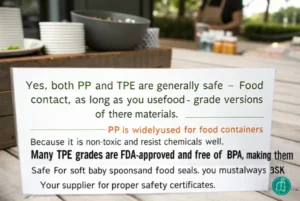
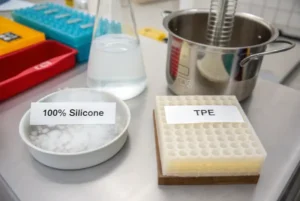
PP, TPE and silicone cannot be ranked with one “heat-safe and food-safe” score. PP may be efficient for rigid containers and hinges, TPE for flexible seals and overmolds, and silicone for flexible parts exposed to higher temperatures—but the exact grade, food type, time/temperature and cleaning cycle determine suitability. Compare the

Read More »
Material

Toxicity Assessment of Common Plastic Materials: Which is Safest for Your Application?

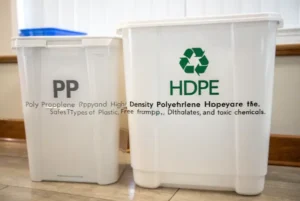
There is no universally “safest plastic.” A material is appropriate only when its exact formulation, intended contact, temperature, service life, manufacturing process and applicable market rules are considered together. Resin identification codes describe polymer categories for sorting; they are not toxicity rankings. Start with the exposure, not the resin name

Read More »

Start with the Project Basics

Use this short form for a general inquiry. For a quotation, complete the full RFQ and email any 3D/CAD files separately to jerry@ckmold.com.

Wait, We Have Something Special for You!

Join our mailing list and receive a 10% discount on your next mold or CNC project.