
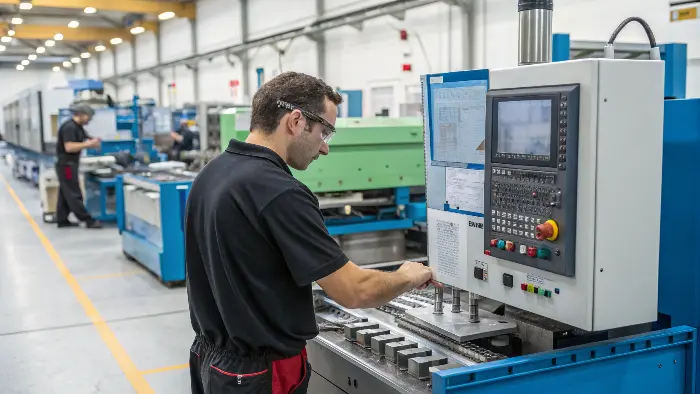
Do you have a new plastic product that you are trying to introduce to life and you are lost in the complicated world of production? You are so genius but it seems to be too hard and costly to make it a tangible and quality product. You would risk expensive tooling mistakes, poor quality and irritating delays without the right partner. The answer is the plastic molding services that have the knowledge and equipment to translate your design into thousands of the same parts, at a low cost and with efficiency.
Plastic molding services can range from a single molding operation to a complete product-to-production workflow. A capable service provider may support DFM, material selection, mold design, tooling, sampling, process development, injection molding, secondary operations, inspection, packaging and logistics. Buyers should define which responsibilities they need covered and what technical evidence will be delivered at each stage.
Related CKMOLD resources: injection mold services, DFM analysis, production injection molding.
Plastic moulding services are commercial manufacturing services that manufacture plastic parts by utilizing a custom-developed mould. A company that offers plastic moulding services for such work undertakes the complete project from designing and developing the mould through the mass production of the final plastic product. They use processes like injection moulding when producing high-quality and consistent parts for various industries. These services are indispensible for any businessman who needs to put their product concept into the market fast and economically and is an important manufacturing partner.
Understanding what these services are is the first step. But to really appreciate their value, it is crucial to look deeper into the specific roles and processes involved. This knowledge helps you choose the right partner and understand how your product goes from a digital file to a tangible object in your hands.
The Injection Molding DFM Guide: From CAD Review to Steel Release connects geometry, tooling and approval as one process. The narrower task here is how DFM fits within a broader molding-service program.
What does a moulding company do?
It can be a risk going with a manufacturing partner. You want more than a factory; you want a partner who understands your vision and is capable of handling every single step of the process. A wrong choice can lead to communication breakdown, missed deadlines, and an end product that doesn’t quite make the grade for you. A superior quality molding company, however, is your one-stop partner, who escorts your project all the way from the initial designing up through the manufacturing and delivery process end.
A molding company is an all-encompassing partner who takes your customer’s idea and turns it into a complete plastic product. Their duties reach far beyond producing it. They can provide design consultation, mold making (tooling), material selection, mass production, quality inspection, and even secondary offerings such as assembly or packaging. In short, they oversee the complete supply chain for producing your custom plastic part, doing it efficiently and economically from the very beginning to the very end.
From Concept to Component: The Core Functions
The main task of a molding firm is to coordinate between an idea, to a physical part. This begins with Design for Manufacturability (DFM). During this phase, engineers will analyse your design and recommend areas that can be improved to make the design simpler and cheaper to replicate without compromising quality. This is a very important step, which I underline. Such a minor modification can save thousands of dollars and will avoid some serious headaches in the future. There follows the tooling or the mold making. The key to the whole operation is the mold. It is a high quality and tailor-made tool that will shape your parts. Making a long-lasting, precise mold is a one-time investment that will be compensated in regularity and durability. Lastly, the business takes care of the mass production and high quality control whereby each unit that leaves the line shall be of the precise specifications that you require.
Beyond the Mold: Value-Added Services
The best molding companies offer more than just the core functions. These value-added services are what separate a simple supplier from a true partner. They simplify your supply chain and let you focus on growing your business.
| Service | Description | Why It’s Important for a Business Owner |
|---|---|---|
| Material Selection | Advising on the best plastic resin for the application. | Ensures product durability, function, and cost-effectiveness. |
| Prototyping | Creating early samples for testing and validation. | Reduces the risk of costly errors in mass production. |
| Assembly | Putting together multiple molded parts. | Simplifies your supply chain and reduces your workload. |
| Packaging & Logistics | Preparing products for shipping to the end-user. | Provides a complete end-to-end manufacturing solution. |
For a business owner like the buyer, these extra services are invaluable. They mean he has one point of contact, one team that understands his product inside and out, and a reliable partner who helps him stay competitive.
What is the plastic molding process?
You’ve got your finished design, but it doesn’t simply turn into thousands of duplicate plastic parts. Manufacture can be a black box for a lot of people. Keeping the process secret creates difficulty explaining your project expertise intelligently to your suppliers. That can lead to potential miscommunications about timelines, prices, and quality. The plastic molding process is a clear, step-by-step process that generally turns raw plastic material into your finished product with incredible consistency.
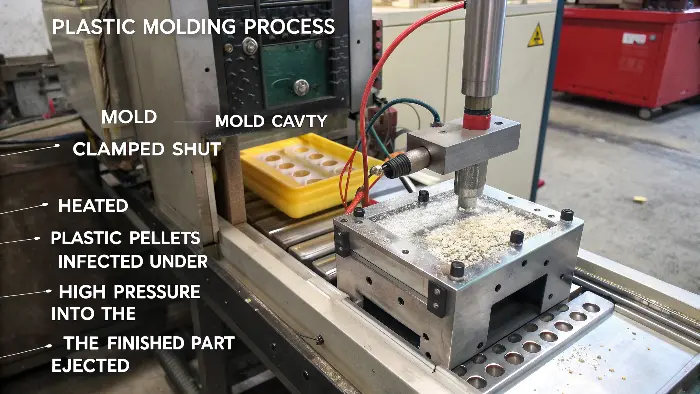
The plastic molding process is a manufacturing method for producing parts by injecting molten plastic material into a mold. It begins with clamping the two halves of the mold shut. Then, heated plastic pellets are injected under high pressure into the mold cavity, where the plastic fills the space and takes its shape. The part is then cooled to solidify before the mold opens and the finished part is ejected. This cycle repeats rapidly to produce large quantities of identical items with great speed.
The Heart of Production: The Molding Cycle
Injection molding is the most common process, and it works in a continuous cycle. Each cycle creates one or more parts and consists of several key stages:
- Clamping: The machine grips the two halves of the steel mold firmly together with a lot of force. This will prevent the mold from opening up under the impact force of the injected plastic.
- Injection: In an injection process, raw plastic pellets are first melted through a barrel and thereafter a large screw forces the molten plastic through, driving it into the cavity of the mold at high speed and pressure.
- Dwelling & Packing: Following the main injection, additional pressure is used to “pack” additional material into the mold. This will compensate for material shrinkage upon cooling and fill the part up full without voids.
- Cooling: This tends to be the longest phase of the process. The mold actually has internal channels where a fluid, most commonly water, runs through and cools the plastic part off until it can be ejected as a hard piece. The cooling phase dictates the overall cycle time.
- Mold Opening & Ejection: The clamping unit opens the mold when the part is in the solid state. Ejector pins help eject the finished part from the mold, and it falls into a receiving bin. The mold closes and begins another iteration.
Common Molding Methods at a Glance
While injection molding is very popular, other methods are used for different types of products. Choosing the right one is crucial for success.
| Molding Method | Process Overview | Best For… | Example Products |
|---|---|---|---|
| Injection Molding | Molten plastic is injected into a closed cavity. | Complex, detailed, high-volume parts. | Lego bricks, phone cases, car dashboards. |
| Extrusion Molding | Plastic is pushed through a shaped die. | Continuous shapes with a fixed profile. | Pipes, window frames, drinking straws. |
| Blow Molding | Air pressure inflates a tube of hot plastic into a mold. | Hollow containers. | Bottles, jugs, fuel tanks. |
| Rotational Molding | A heated mold is rotated to coat the inside walls. | Large, hollow, low-stress parts. | Kayaks, large water tanks, playground slides. |
Each method serves a different purpose, but they all share the same goal: to create consistent, high-quality plastic products efficiently.
8 Various Kinds of Plastic Molding Services and Their Uses
1: Blow Molding
Blow molding is a plastic molding process used to create hollow, lightweight, and durable products. The process involves heating thermoplastic material until it becomes soft and then inflating it into a mold cavity using air pressure. This method is ideal for manufacturing items such as bottles, containers, tanks, and other hollow components. Blow molding offers benefits like cost efficiency, high-volume production, and design flexibility. It also supports the use of different types of plastic materials, ensuring strength and chemical resistance. CKMOLD provides blow molding solutions that allow clients to achieve consistent product quality, making it a preferred option for packaging, automotive, and consumer goods industries where precision and durability are essential.
2: Injection Molding
Injection molding is one of the most widely used plastic molding methods due to its precision and ability to produce complex shapes. The process involves melting plastic pellets and injecting the molten material into a mold cavity under high pressure. Once cooled, the mold opens to release the finished product. This technique is commonly used to manufacture parts for electronics, automotive components, household products, and medical devices. Its main advantages include high repeatability, excellent surface finish, and the ability to produce large quantities at a low cost per unit. CKMOLD specializes in injection molding services, delivering high-quality parts with exact specifications, making it a reliable solution for industries requiring detailed and durable plastic products.
3: Compression Molding
Compression molding involves hot plastic material being directly inserted into an open cavity mold, after which it is pressed under intense pressure in order to create a desired shape. Compression molding is frequently applied in thermosetting plastics, which become permanently hardened when cured. This type of molding is appropriate in terms of producing hard, heat-resistant, and robust parts such as car parts, electronic component bodies, and parts used in household appliances. Compression molding is unique in terms of accommodating large and intricate parts, as well as minimizing material wastage. CKMOLD specializes in compression molding appropriate in industries where there is a need for affordable, robust, and high-performance plastics parts, a factor that makes it a viable option in challenging applications where robustness and reliability are essential.
4: Extrusion Molding
Extrusion molding entails extruding plastic in a molten state through a shaped die to create continuous profiles of regular cross-sections. The technique is beneficial in building long-shaped items from plastics such as tubes, pipes, sheets, and weatherstrips. Extrusion molding is efficient in terms of generating large quantities of similar parts that have smooth finishes. The technique is also flexible in that various thermoplastics are used, providing variety in terms of strength, color, and finish. CKMOLD offers extrusion molding as a service that helps support companies precise and affordable output, and it is a most indispensable technique in construction, packaging, and industry where uniform profiles are a must.
5: Rotational Molding
Rotational molding, or roto-molding, is a technique used to produce large, seamless, and hollow plastic items. For this process, powered plastic resin is loaded into a mold, which is rotated constantly and is heated. The plastic covers the mold’s interior evenly, producing a final component once it cools down. Rotational molding is ideal for building large tanks, outdoor play equipment, furniture, and custom containers. Design flexibility, durability, and uniform wall thickness are its advantages. CKMOLD’s rotational molding is designed to provide cost-effective and strong products, which is why most industries, which need large, impact-resistant, and hollow components, prefer it.
6: Plastic Thermoforming
Thermoforming is a molding process in which a sheet of plastic is warmed so it is pliable and then molded over a shape under vacuum or pressure. The plastic takes the shape of the mold after it cools. This process is widely used in producing packaging items, trays, panels, and thin cases. Thermoforming has been praised for its economy, ability to quickly create a prototype, and versatility in handling small and large products. CKMOLD offers a thermoforming service that is tailored to suit companies that value customization and fast turnaround times. With this process, companies are able to have high-grade packaging and structure items at affordable prices.
7: Vacuum Forming
Vacuum forming is a type of specialty thermoforming in which a sheet of heated plastic is draped over a mold and drawn in by a vacuum. The process is appropriate for producing thin-walled and lightweight products such as clamshell packaging, display supports, panels, and covers for protection. The process is economical, and it is particularly effective for small to moderate-sized orders. The process has fast production cycles and variable design along with moderate tooling expenses. Vacuum forming is provided by CKMOLD as an efficient and quality-oriented service, allowing companies to create custom-made plastic pieces appropriate for packaging, display at retail stores, and houseware products at reasonable prices.
8: Pultrusion
Pultrusion is a continuous molding process used in the production of lightweight, strong, and reinforced profiles of plastics. Pultrusion involves fibers such as carbon or glass being pulled through a bath of resin, then through a hot die, whereafter the cure of the resin forms hard shapes. Pultrusion is efficient in producing structural elements such as beams, panels, channels, and rods used in construction, aerospace, and industry. The process realizes high mechanical strength, corrosion resistance, and identical cross-sections. CKMOLD produces pultrusion services that result in high-performing plastic composite products, and as a result, it is a core molding process for industries requiring strong, lightweight, and enduring products.
What does a plastic molder do?
We spend lots of time discussing machines and processes, but we can lose sight of the human expertise behind it all. Who is really manning the operation? As we all know, the finest, most costly molding machine can turn out defective parts without the proper operator skills. That results in scrap material, wasted time, and project deadlines that cost you profits. A plastic molder or molding technician is the working professional who actually runs the equipment, working one-handed at times, and sees that every individual part comes off the press just the way you specified it.
A plastic molder, also known as a process technician or molding technician, is an operator who sets up and operates plastic molding machines. Their main task is to make the machine output high-quality parts reliably and efficiently. They do this by loading the proper material, adjusting the machine parameters of the machine such as the temperature and pressure, observing the production run, checking the parts for quality, and fixing problems that develop. They are the first-line specialists who make the manufacturing process work right.
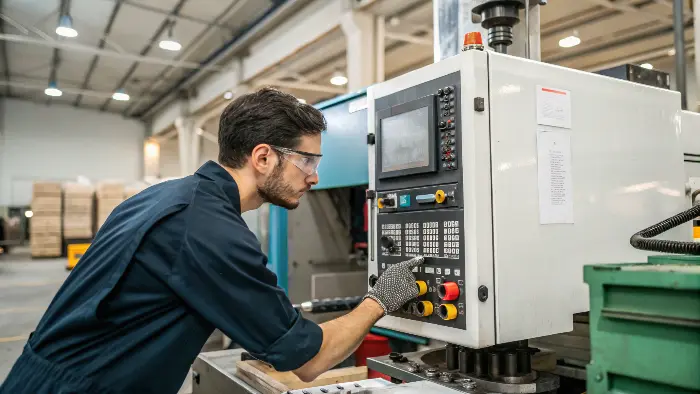
I have generally thought that the technician is as much as the machine. I may put a great technician in an average machine and get good parts but an untrained operator on a state-of-the-art machine will most likely end up with a load of scrap. It is their expertise, which turns a manufacturing process into a manufacturing solution.
The Technician’s Daily Grind
Plastic molder is a dynamic job and involves a keen mind. There is more than just pressing buttons in a normal day. It begins by an in-depth inspection of the machine, mold and raw materials to verify that all is in place to commence production. The setup, or dialing in the process is the most critical task. The technician feeds an exact formula of parameters-temperatures, pressure, speed and time, depending on the plastic material being used and the design of the part. Here experience comes into play. Once the production run begins, they are in a state of alert constantly keeping watch over the parts and checking any defects that might occur and hearing the beat of the machine. Once a problem arises, such as a part not filling to capacity or when there is too much flash, they are the first to trouble shoot the problem and modify the process to correct it.
More Than Just a Machine Operator
The skills of a plastic molder go far beyond basic operation. They need a deep understanding of how materials behave and how machines work. Their responsibilities directly impact the success of a client’s project.
| Responsibility | Key Skill Required | Why It Matters to a Client |
|---|---|---|
| Process Setup | Deep understanding of material properties & machine settings. | Prevents defects from the start and maximizes production efficiency. |
| Quality Inspection | High attention to detail and use of measuring tools. | Catches problems early before thousands of bad parts are made, saving money. |
| Mold Maintenance | Mechanical aptitude and careful, precise handling. | Protects the client’s expensive tooling investment and ensures its long life. |
| Troubleshooting | Strong problem-solving skills and logical deduction. | Minimizes machine downtime and material waste, keeping the project on schedule. |
When a business owner like the buyer looks for dependable service, he’s really looking for a company with skilled technicians. These are the people who ensure his high-precision molds are treated with care and that his parts are made correctly every time.
What is the job description of plastic molding?
You now know that a molder is an experienced technician who operates the machine. But were you a factory owner, what particular skills would you want such key employees to possess? Comprehension of the same can give you, the customer, a better idea of what qualifies a supplier as truly competent. If your partner employs unskilled personnel, it affects your product quality and project schedule directly, regardless of the sophistication of their equipment. A detailed plastic molding job description exposes the combination of technical expertise, practical ability, and trouble-shooting skill that characterizes a truly superior technician.
A mold setter or plastic molding job description typically references the duties of a Process Technician, Mold Setter, or Molding Operator. Primary tasks include deinstalling and installing molds, setting up the molding machines for production via process sheets, and starting up production. The worker is responsible for monitoring the process, performing quality control checks, starting up changes where necessary for the longevity of the part quality, and documenting all the production information. The candidates must have a developed mechanical aptitude, exceptional trouble-shooting skills, and hands-on experience with specific molding equipment and plastic materials.
When I was building my own company, I spent a lot of time refining the job descriptions for my technicians. I knew that hiring the right people was the foundation of my promise to clients: “Master Molding Right.” The details in that description are a direct reflection of the quality and reliability a client can expect.
Anatomy of a Molding Technician’s Job Description
Detailed job description is a map of a high-performing team. It articulately indicates expectations and the abilities required to achieve those expectations. To a client, the presence of such clear standards by a prospective supplier can only be a good sign. It demonstrates that they are quality conscious.
Here are the typical sections you would find:
- Job Title: Molding Technician, Process Technician, Mold Setter
- Summary: A brief statement explaining the role’s primary purpose, which is to safely and efficiently produce high-quality molded parts.
- Key Responsibilities:
- Mount and set up injection molds in molding machines.
- Establish and optimize molding process parameters (temperature, pressure, speed).
- Perform first-article inspections and routine quality checks using calipers and gauges.
- Troubleshoot and correct common molding defects like flash, sink marks, or short shots.
- Perform basic preventative maintenance on machines and molds.
- Maintain a safe, clean, and organized work environment (5S principles).
- Document process changes, production output, and quality data accurately.
- Required Skills & Qualifications:
- High school diploma or equivalent; a technical certificate is a major plus.
- Proven experience (e.g., 3-5 years) in a plastic injection molding environment.
- Strong mechanical aptitude and hands-on skills.
- Deep familiarity with a variety of plastic resins and their properties.
- Ability to read and interpret part blueprints and technical documents.
- Basic computer skills for data entry and process monitoring.
What These Qualifications Mean for You, the Client
Every single one of those adjectives on that job listing maps one-to-one into a benefit for your project. When an organisation asks for “demonstrated experience,” it simply means their techs aren’t going to be trained at your company’s expense. When they list “experience with many resins,” it simply means they can handle your specific product material needs without a lengthy, high-risk learning curve. But above all, when they seek an individual who can demonstrate “strong troubleshooting skills,” it simply means decreased downtime and faster resolution of issues, keeping your project on schedule and within budget. It’s the distinction between a supplier who runs a machine and a partner who produces results.
Product and Material Review
The service begins with 3D CAD, drawings, resin, tolerance, surface, assembly and volume review. Engineers should identify draft, wall, parting line, gate, ejection, shrinkage and material risks before the quote is finalized. This stage determines whether later tooling work is based on a manufacturable definition.
Mold Design and Tool Construction
Tooling services may include mold-flow review, cavity and core design, slides, lifters, hot or cold runners, cooling, venting, ejection and standard-component selection. The supplier should control revisions and provide a clear mold specification, trial plan and ownership record.
Sampling and Process Development
T1 and later trials should be treated as engineering checkpoints. Review fill, flash, sink, weld lines, warpage, part weight, dimensions, surface, cycle and ejection. A controlled correction list connects each issue to a design or process change and identifies the sample revision used for approval.
Production and Quality Control
Production services should include material-lot control, drying or storage requirements, setup standards, first-article checks, in-process inspection, final inspection, nonconformance handling and traceability. The right inspection plan is based on function and risk, not on measuring every dimension without a purpose.
Secondary Operations and Delivery
Some programs require insert molding, overmolding, trimming, assembly, printing, ultrasonic welding, packaging or kitting. Confirm who controls these operations, how defects are defined and how finished products are protected during export. Delivery is part of the service when the project depends on a complete ready-to-use component.
Plastic Molding Services? From DFM and Tooling to Production: Buyer Review Checklist
- Define whether the supplier owns DFM, tooling, molding, assembly, inspection and logistics responsibilities.
- Require controlled CAD, mold, material, trial and process documentation.
- Approve samples using dimensions, appearance, weight, function and cycle evidence.
- Align material, quality, secondary-operation, packaging and traceability requirements.
- Use a single corrective-action path from prototype through production delivery.
FAQ
Do plastic molding services include mold design?
Some providers include DFM and mold design, while others only run customer-owned tooling; define the scope before quoting.
What should a molding service provider deliver?
Typical deliverables may include DFM feedback, tool drawings, samples, inspection data, material records, process information and production-quality documentation.
Conclusion
Plastic molding services are a whole solution in the end. They are provided through an experienced company and its professional technicians who control an accurate and reproducible process. They are there to see your ideas brought to high quality physical products that you can proudly call yours. The knowledge of these major aspects of the company role, the manufacturing process and the human beings who make the machinery work, will enable you to select the right partner and discover real success in your manufacturing process.