
Have you ever looked at a complex plastic part and wondered how it was made from simple raw pellets? It can seem like an industrial secret, shrouded in complex terminology. Trying to understand the process on your own can be frustrating, leaving you with more questions than answers. But the core principle is actually a straightforward, elegant dance of pressure, heat, and precise timing. Let’s break it down together, step by step.
A plastic injection molding machine is a coordinated thermal, hydraulic or electric and mechanical system. The injection unit prepares and pushes the melt, the clamping unit keeps the mold closed, the mold shapes and cools the part, and the control system repeats the sequence. Understanding those interfaces helps engineers connect a defect to the right input instead of treating the machine as a black box.
Related engineering resources: production injection molding | mold design | mold testing and validation
A plastic injection molding machine works by melting plastic pellets and then injecting them under high pressure into a custom mold. The process has four main stages: clamping the two halves of the mold shut, injecting the molten plastic, cooling the plastic until it solidifies into the part’s shape, and finally, ejecting the finished part. This cycle repeats very quickly, allowing for the mass production of identical parts with amazing consistency and making it a foundational technology in modern manufacturing.
That’s the big picture, but the real genius is in the details of each stage. To really appreciate how these machines produce such precise and consistent parts, we need to look closer at what each key component does. Understanding this will demystify the entire process and show you why every single detail is critical for creating a high-quality product. So, let’s start with the part that holds everything together under extreme force.
What’s the real magic behind the clamping unit’s force?
Injection molding involves forcing molten plastic into a mold with incredible pressure. This raises a critical question: what stops the two halves of the mold from being pushed apart? If they separate even slightly, you get “flash”—excess plastic that seeps out, ruins the part, and costs money. The solution is the clamping unit, a powerful system that locks the mold halves together with massive force, ensuring a suitable seal every single time.
The clamping unit’s force is generated by a powerful hydraulic ram or a precision all-electric motor system. It pushes a movable platen, which holds one half of the mold, against a stationary platen holding the other half. Many machines use a toggle mechanism—a clever system of levers and joints—to amplify a smaller initial force into the many tons needed to keep the mold shut. This immense, controlled pressure is essential to counteract the injection force and produce clean, accurate parts.
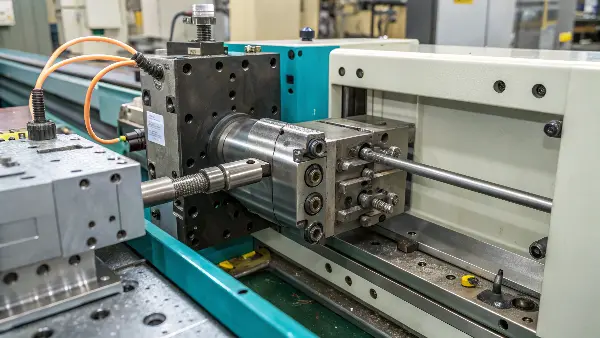
The amount of force, measured in tonnage, is one of the most important specs of a machine. A small machine might provide 20 tons of force, while a massive one used for car bumpers could exceed 4,000 tons. Choosing the right tonnage is a balancing act. Too little, and you get flash. Too much, and you risk damaging the delicate mold and wasting energy.
The two main types of clamping systems are hydraulic and all-electric.
| System Type | How it Works | Key Advantages |
|---|---|---|
| Hydraulic | Uses high-pressure oil to push a large piston, creating immense force. It’s the traditional, powerful workhorse of the industry. | Very powerful, robust, and cost-effective for large parts and high clamping force requirements. |
| All-Electric | Uses precise, high-torque servo motors and ball screws to move the platen. It offers digital control over every movement. | Extremely precise, clean (no oil), energy-efficient, and quiet. Ideal for medical or electronic parts. |
| Hybrid | Combines an electric screw for injection with a hydraulic clamp, offering a mix of power and energy efficiency. | Balances the benefits of both systems, providing a good middle ground for many applications. |
How does the injection unit turn solid pellets into a precision part?
You have a hopper full of solid plastic pellets. How do they transform into a molten liquid and get shot into the mold with suitable accuracy? This seems like a simple step, but it’s where material properties are defined. If the plastic isn’t heated correctly or injected properly, the final part will be weak, brittle, or dimensionally wrong. The injection unit is the heart of the machine, responsible for this critical transformation.
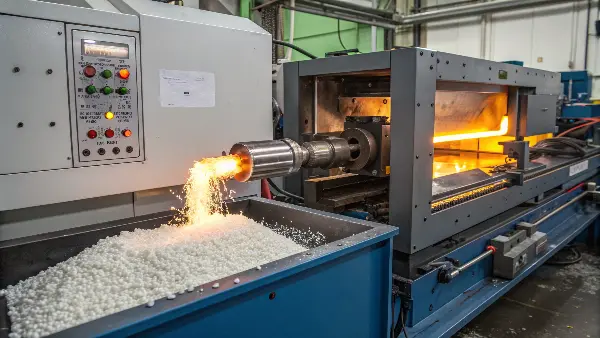
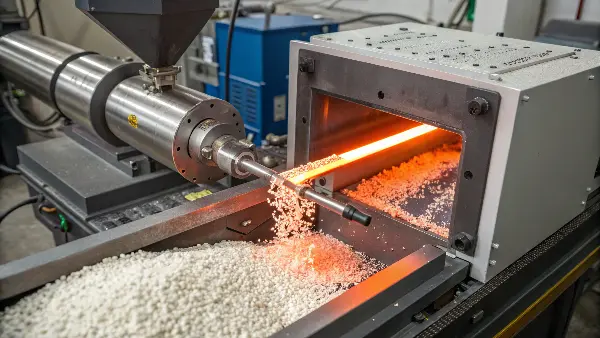
The injection unit melts plastic pellets using heater bands and the friction from a rotating screw. As the screw turns, it conveys the pellets forward through zones of increasing heat, melting and mixing them into a uniform liquid. The screw then acts like a plunger, injecting this molten plastic at high speed and pressure into the clamped mold. This ensures every corner of the mold cavity is filled completely before the plastic starts to cool.
This process is far more sophisticated than just melting and squirting plastic. The reciprocating screw is a brilliant piece of engineering. It doesn’t just push the pellets; it performs three crucial functions as it rotates and moves backward, preparing a “shot” of molten plastic at its tip.
The Three Zones of the Screw
- Feed Zone: This is the deepest part of the screw at the back, near the hopper. Its job is simply to grab the solid pellets and move them forward into the barrel. Think of it as the loading dock.
- Compression Zone: In this middle section, the depth of the screw flights decreases. This systematically squeezes the pellets together, forcing out air pockets and increasing friction. The heater bands on the outside of the barrel are doing most of the heating here, but the shearing action of the screw itself generates a lot of heat, ensuring a consistent melt.
- Metering Zone: The final section has a very shallow flight depth. Its purpose is to ensure the plastic is at a reliably uniform temperature and consistency before it’s injected. It acts as a final quality check, delivering a suitable shot of molten material.
Once the right amount of molten plastic accumulates at the front, the screw stops rotating and is pushed forward hydraulically or electrically. This injection phase must be incredibly fast and powerful to fill the mold before the plastic starts to harden. After the initial fill, a “holding pressure” is applied to pack more material in to compensate for shrinkage as the part cools. This delicate balance of speed, pressure, and temperature is what turns simple pellets into a strong, functional product.
What role does the machine controller play in modern molding?
You have the raw power of the clamping unit and the precision heating of the injection unit. But what coordinates them? How does the machine know exactly when to clamp, inject, cool, and eject? Executing these steps with suitable timing, cycle after cycle, is impossible to do manually. Any tiny variation could ruin thousands of parts, leading to massive waste. This is where the machine’s most vital component—its brain—comes in.
The machine controller is the central nervous system that synchronizes every action of the injection molding machine. It’s a sophisticated computer that allows an operator to set and monitor hundreds of parameters, such as temperatures, pressures, speeds, and timing, down to the millisecond. This digital precision ensures that every single cycle is identical to the last, guaranteeing part consistency, quality, and production efficiency. It makes modern, automated manufacturing possible.
They manage a feedback loop using sensors throughout the machine.
- Temperature Control: Thermocouples in the barrel and mold feed temperature data back to the controller, which adjusts the heater bands or cooling channels to maintain the exact setpoints. A few degrees of deviation can dramatically alter the plastic’s flow.
- Pressure Control: Pressure transducers monitor the hydraulic or electric systems for injection and clamping. The controller ensures the pressure profile—how the pressure changes over the few seconds of injection—is followed reliably. This is key to avoiding defects like sink marks.
- Position and Speed Control: Encoders on the screw and platen tell the controller their exact position and speed. This allows for precise control over shot size (how much plastic is injected) and the speed of mold opening and closing, which impacts cycle time.
Modern controllers with user-friendly touch screens have made setting up complex molding processes much easier. They can store recipes for thousands of different molds, so switching jobs is quick and reliable. For a business owner like the buyer, this means less downtime, fewer rejects, and a more predictable manufacturing process. The controller turns the brute force of the machine into a finely tuned, highly intelligent manufacturing tool.
Why is the cooling process more than just waiting?
After the molten plastic is injected, it needs to solidify. It might seem like the cooling phase is just a pause—a simple waiting period. But this is a common misunderstanding. In fact, cooling is often the longest part of the entire cycle and has a massive impact on the final part’s quality. Rushing it or getting it wrong can cause warping, sink marks, and internal stresses that lead to parts failing later on.
The cooling process is an active, engineered stage where heat is systematically removed from the mold to solidify the plastic part into its final, stable shape. This is done by circulating a fluid, usually water, through channels drilled into the mold. The rate and uniformity of cooling are critical; they determine the part’s dimensional stability, surface finish, and internal structure. Proper cooling is essential for achieving both high quality and a fast, efficient cycle time.
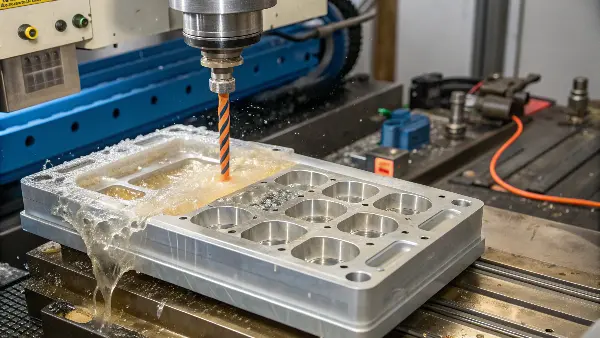
When plastic cools, it shrinks. If one part of the mold is cooler than another, that area of the plastic part will shrink faster and more than the other areas. This differential shrinkage is what causes a part to warp or twist out of shape. For example, a long, flat part needs reliably uniform cooling across its entire length to stay flat.
Here’s how we control the cooling process:
- Cooling Channel Design: The location, size, and path of the cooling channels are meticulously designed when the mold is made. For complex parts, we might use advanced techniques like “conformal cooling,” where the channels follow the shape of the part cavity to provide more even heat extraction.
- Coolant Temperature & Flow Rate: The temperature of the water flowing through the channels is tightly controlled by a separate piece of equipment called a thermolator. Colder water cools faster but can cause issues. A higher flow rate removes heat more efficiently. We have to find the suitable balance for each specific plastic material and part geometry.
- Mold Material: The type of steel or aluminum used for the mold also plays a role. Materials like beryllium copper are sometimes used in specific areas of a mold because they transfer heat much faster than steel, helping to cool tricky spots.
How do ejector pins ensure a suitable release every time?
The part has been injected and cooled. It’s now a solid, finished piece locked inside the mold. How do you get it out without damaging it? You can’t just pry it out. The slightest scratch or stress mark can be a cause for rejection, especially for cosmetic parts. This final, delicate step is handled by the ejection system, and its most common components are the humble but crucial ejector pins.
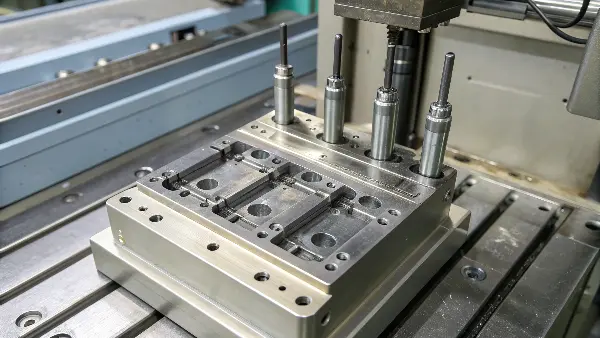
Ejector pins are steel rods that push the finished plastic part out of the mold cavity after it has cooled. They are housed in the back half of the mold and are driven forward by an ejector plate connected to the machine. When the mold opens, this plate moves, causing the pins to advance and apply a gentle, distributed force on the part, breaking it free from the mold core. This system ensures a clean, fast, and damage-free release.
The placement and design of these pins are absolutely critical. As plastic cools, it shrinks and grips tightly onto the core half of the mold (the male side). The ejector pins have to apply enough force to overcome this grip without leaving marks or deforming the part. Several factors must be considered during the mold design phase.
Key Considerations for Ejection
- Pin Location: Pins should be placed on non-cosmetic surfaces whenever possible. They should push on strong features like ribs, bosses, or walls to distribute the force evenly. Placing a pin in the middle of a thin, flat wall is a recipe for a warped or broken part.
- Pin Size and Quantity: Using more, smaller pins is often better than a few large ones. This spreads the ejection force over a larger area, reducing the stress on any single point of the part. The size of the pin must be appropriate for the feature it is pushing against.
- Draft Angles: For ejection to work smoothly, the walls of the part must be slightly angled, not reliably vertical. This angle, called a draft, helps the part release from the mold surface with less friction. Without proper draft, the part will scrape against the mold wall during ejection, causing drag marks.
- Type of Ejection: While pins are most common, other methods exist. “Sleeves” can be used to eject round bosses, “stripper plates” can eject the entire outer edge of a part, and “air blast” can be used for thin-walled containers. The best method depends entirely on the part’s shape.
Feed, Melt and Meter the Material
Pellets enter through the hopper and are conveyed, heated and mixed by the screw inside the barrel. Screw recovery, back pressure, temperature profile, shot size and residence time determine the melt history. The check ring must seal consistently so the measured shot can be transferred into the cavity.
Inject Through the Nozzle and Runner
During injection, the screw moves forward and the melt passes through the nozzle, sprue, runner and gate. Speed profile, pressure limit, gate restriction, venting and flow length determine whether the cavity fills without short shots, burns, jetting, weld-line damage or flash.
Hold Pressure and Control Shrinkage
After the cavity fills, hold pressure can compensate for material contraction until the gate freezes. Transfer position, hold pressure, hold time and gate-freeze behavior influence part weight, sink, dimensions and residual stress. A longer hold is not automatically better if the gate is already frozen.
Clamp, Cool and Eject
The clamping unit resists injection force and keeps the parting line closed. Cooling removes heat through the mold, then the mold opens and ejectors or a stripper release the part. Alignment, shutoff strength, cooling balance and ejection support directly affect flash, warpage and marks.
Use Controls and Data as a Quality Loop
Modern machines record positions, speeds, pressures, temperatures, cycle time and alarms. These values become useful when linked to CTQs such as weight, dimensions, appearance and cavity identity. The operator or automation system needs a defined response when a trend moves outside the approved window.
How a Plastic Injection Molding Machine Works: Buyer Review Checklist
- Understand material feed, screw recovery, shot size, check-ring sealing and residence time.
- Review nozzle, runner, gate, speed, pressure, venting and flow-length interaction.
- Separate filling, holding, gate freeze, cooling and ejection decisions.
- Check clamp force, shutoffs, cooling balance, alignment and release support.
- Connect machine data and alarms to measurable CTQs and reaction plans.
Frequently Asked Questions
What is the most important part of an injection molding machine?
There is no single answer. The injection unit, clamping unit, mold, temperature control and control system must work together for repeatable parts.
Can machine settings alone fix a molding defect?
Not necessarily. Gates, vents, cooling, material condition, mold wear and part geometry may be the root cause. Settings should be changed with evidence from the whole system.
Conclusion
A plastic injection molding machine is a symphony of coordinated systems. From the immense pressure of the clamping unit to the precise melting of the injection screw, every stage is carefully controlled. The controller acts as the conductor, ensuring suitable timing, while the cooling and ejection systems support the final part is both dimensionally accurate and cosmetically suitable. Understanding how these elements work together demystifies the process and makes it clear why it’s a cornerstone of modern manufacturing.