
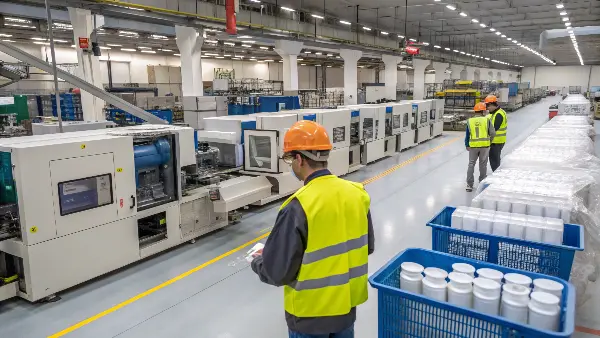
You look at a massive injection molding machine, with its complex array of buttons, screens, and moving parts, and a wave of uncertainty hits you. The thought of your team making a costly mistake is daunting. A poorly run machine doesn’t just waste time; it ruins expensive molds, wastes raw material, and produces faulty parts, directly hitting your bottom line. But what if mastering this machine was less about being a genius and more about understanding a clear, repeatable process?
Operating a plastic injection molding machine has a wide range of difficulty. For basic tasks, like starting a pre-programmed production run, an operator can be trained in just a few days. However, becoming a true technician or process engineer is a different story. This advanced skill requires a deep understanding of material science, precise parameter settings (like temperature, pressure, and speed), and the ability to troubleshoot defects on the fly. This level of expertise is not learned overnight; it’s built through years of hands-on experience and continuous learning.

It’s easy to feel overwhelmed when you see the whole picture at once. I’ve been there myself, standing in front of a new machine, feeling a mix of excitement and anxiety. But like any complex skill, from learning to drive a car to running a business, it becomes much more manageable when you break it down into smaller pieces. So before we get into the specifics of machine operation, let’s take a step back and look at the bigger picture to put everything in context.
How hard is plastic injection molding?
You’re thinking about bringing plastic injection molding into your business, but the whole process feels like a mysterious "black box." You’ve heard it’s incredibly efficient for mass production, but you’ve also heard whispers about the steep learning curve and high initial costs. Jumping in without fully grasping the challenges can lead to a massive waste of money on equipment, materials, and training, with very little to show for your efforts. Let’s pull back the curtain and look at the real challenges.
Plastic injection molding is a challenging but highly rewarding manufacturing process. The difficulty isn’t just in running the machine; it’s in managing the entire ecosystem. True success depends on precise mold design, a solid understanding of polymer science, meticulous machine setup, and consistent quality control. Every single step is critical. A tiny mistake in the mold design can create huge production headaches. Choosing the wrong material or setting incorrect parameters can result in parts that are weak, warped, or completely useless.

The complexity of injection molding can be broken down into a few key areas. Each one presents its own set of challenges, but mastering them is what separates the amateurs from the professionals. In my early days, I learned this the hard way. I thought a good machine was all I needed, but I quickly realized that the machine is just one piece of a much larger puzzle. The real work starts long before you ever press the "start" button.
The Three Pillars of Molding Difficulty
-
Mold Design & Engineering: This is the foundation of everything. A poorly designed mold will never produce good parts, no matter how skilled your operator is. I once had a client who tried to save a few thousand dollars on a cheaper mold from an unproven supplier. The mold had poorly designed cooling channels and no draft angles. They ended up with warped parts that were impossible to eject, and the cycle time was twice as long as it should have been. They lost more in wasted production time and materials in the first month than they "saved" on the mold. The lesson is clear: your mold is an investment, not an expense.
-
Material Science: Every plastic is different. ABS is strong and rigid, polypropylene (PP) is flexible and cheap, and polycarbonate (PC) is incredibly tough. Each one melts, flows, and cools differently. You have to understand their specific shrinkage rates, moisture sensitivity, and processing temperatures. Using the settings for ABS on a run of PC will result in a mess. A good molder is part-scientist, able to select the right material for the job and fine-tune the process to match its unique properties.
-
Process Control & Optimization: This is where the machine operator becomes a true technician. It involves a delicate balance of multiple variables. Think of it like baking a perfect cake. You need the right temperature, the right time, and the right amount of each ingredient. In molding, you balance injection pressure, injection speed, holding pressure, cooling time, and mold temperature. A slight change in one variable can affect all the others. The goal is to find the "sweet spot" that produces a perfect part in the shortest possible time, over and over again.
How to operate a plastic injection molding machine?
You’ve decided to move forward, but the practical steps of operating the machine still seem unclear. Your team needs to know what to do, and you need to ensure they can do it safely and efficiently. Without a clear, structured process, operators can make simple mistakes that lead to machine downtime, damaged equipment, or even injuries. This uncertainty can stall your production and create unnecessary stress. Let’s outline a straightforward, step-by-step approach to get you started on the right path.
To operate a plastic injection molding machine, you follow a systematic process: ensure safety, prepare the mold and material, set the parameters, and run the cycle. The first step is always safety—checking all guards and emergency stops. Next, you securely install the mold and pre-dry the plastic resin as required. Then, you program the machine with the correct settings for temperature, pressure, and speed. Finally, you start the automatic cycle, monitor the first few parts for quality, and make small adjustments as needed.

This process might sound simple on paper, but each step has its own depth. I always tell new operators that their first job is not to make parts, but to learn to respect the machine. These are powerful pieces of equipment that can be dangerous if not handled correctly. A calm, methodical, and safety-conscious approach is the most important skill you can learn. Once you have that foundation, you can start to build the technical expertise needed to make great parts.
A Step-by-Step Guide for Operators
Here is a more detailed breakdown of the operational workflow. This is the same process we train our technicians on. It ensures consistency and safety every time a new job is started.
| Step | Action | Key Considerations |
|---|---|---|
| 1. Safety First | Perform pre-operation safety checks. | Ensure all safety guards are in place and functional. Know the location of all emergency stop buttons. Wear appropriate Personal Protective Equipment (PPE), including safety glasses and heat-resistant gloves. |
| 2. Mold Installation | Mount the mold into the machine. | Clean the mold and the machine platens. Securely clamp the mold and connect all water, oil, or electrical lines for cooling and heating. Double-check that all connections are tight and leak-free. |
| 3. Material Preparation | Load the plastic resin into the hopper. | Make sure you are using the correct type and color of plastic. Many engineering-grade plastics are hygroscopic (they absorb moisture from the air) and must be dried in a special oven before use. Wet material will cause defects. |
| 4. Setting Parameters | Program the machine’s control unit. | This is the most technical step. You will set barrel temperatures, injection pressure, injection speed, holding pressure, cooling time, and part ejection settings. These settings should come from a pre-established process sheet for the specific mold and material. |
| 5. Running the Cycle | Start the machine in semi-automatic mode. | Run one or two cycles in semi-automatic to ensure everything is working correctly. Check the first parts for any obvious defects. The initial parts are almost never perfect; they provide the data you need for fine-tuning. |
| 6. Quality Control & Adjustment | Switch to fully automatic mode and monitor. | Once the cycle is stable, switch to automatic. Check the parts every 15-20 minutes for dimensional accuracy and cosmetic appearance. Make small, incremental adjustments to the process parameters to correct any issues like sink marks, flash, or short shots. |
How much do plastic injection molders make?
As a business owner, you need to attract and retain talented people. You wonder what a competitive salary is for someone who can operate this complex machinery effectively. If you offer too little, you won’t attract skilled technicians, leaving you with operators who might cause expensive problems. Offer too much, and your labor costs could squeeze your profit margins. Understanding the market rate for these roles is crucial for building a strong, sustainable team. Let’s look at what you can expect to pay.
The salary for a plastic injection molder depends heavily on their skill level, experience, and location. An entry-level Operator, who primarily loads material and removes parts, might make between $17 and $22 per hour. A skilled Mold Technician or Process Technician, who can set up molds, program the machine, and troubleshoot problems, can earn significantly more, typically from $25 to $35 per hour or higher. A senior Process Engineer with deep expertise in tooling and materials could command a salary well over $80,000 per year.

When I started my first company, I made the mistake of hiring the cheapest operators I could find. I thought I was saving money on labor. But what I actually did was create a revolving door of untrained staff who made costly errors. I quickly learned that one great technician is worth three inexperienced operators. A skilled technician doesn’t just run the machine; they optimize the process, reduce scrap rates, and prevent downtime. They don’t cost you money; they make you money.
Breaking Down the Compensation Tiers
Investing in your people is just as important as investing in your machinery. To build a successful team, you need to understand the different roles and what they are worth in the market.
-
Level 1: Machine Operator
This is the entry-level position. Their main duties include starting and stopping the machine on a pre-set cycle, loading raw materials, and performing basic visual inspections of the finished parts. They alert a technician if something goes wrong, but they don’t typically perform setups or troubleshooting. Think of them as the machine’s attendant. Their value is in their reliability and consistency. -
Level 2: Mold Setter / Setup Technician
This is a more skilled role. A Mold Setter is responsible for physically changing the molds in the press, connecting the water and electrical lines, and getting the machine ready for the Process Technician. They need mechanical aptitude and a strong focus on safety and procedure. This role is critical for minimizing downtime between production runs. A good setter can have a new job up and running in a fraction of the time it takes an inexperienced one. -
Level 3: Process Technician
This is the key position on the production floor. The Process Technician takes the setup from the Mold Setter and develops the optimal process parameters to produce good parts. They are the primary problem-solvers. When a part has flash, sink marks, or warping, they are the ones who diagnose the root cause and adjust the machine settings to fix it. This role requires a deep understanding of the molding process and materials. They are the artisans of the molding world, and they should be compensated accordingly.
Is the injection molding business profitable?
Ultimately, every decision comes down to the bottom line. You see the high cost of machinery, molds, and skilled labor, and you have to ask: is this business actually profitable? It’s a high-stakes game. A single bad project or an inefficient operation can quickly erase your profits and leave you with very expensive paperweights. The fear of making a huge investment with no return is real. But with the right strategy, the rewards can be substantial. Let’s break down the economics.
Yes, the injection molding business can be very profitable, but it operates on thin margins and high volume. Profitability depends entirely on efficiency, utilization, and management. The high initial investment in machinery and molds means your overhead is significant. Success comes from running the machines as much as possible (high utilization), minimizing scrap and waste, and optimizing cycle times to produce parts quickly. A well-managed shop that controls costs and secures consistent work can achieve healthy profit margins, often between 8% and 15% or more.

The secret to profitability isn’t just about having the best machines; it’s about being the smartest operator. I’ve seen small shops with older equipment outperform large, state-of-the-art facilities. Why? Because they were masters of efficiency. They specialized in a particular niche, they had bulletproof processes for quoting and production, and they treated every second of machine time like gold. They understood that in this business, you aren’t just selling plastic parts; you’re selling machine time. The more parts you can produce per hour, the more profitable you will be.
Key Drivers of Profitability
To succeed, you need to focus relentlessly on the factors that drive profit. It’s a game of pennies, where small improvements add up to big results over millions of cycles.
-
Machine Utilization: An injection molding machine that isn’t running is a machine that is losing you money every single minute. The goal is to keep the presses running 24/7 if possible. This means you need a strong sales pipeline to bring in consistent work and an efficient setup team to minimize downtime between jobs. High overhead costs are manageable when they are spread across a high number of production hours.
-
Cycle Time: This is the single most important factor in determining the cost of a part. If you can shave just one second off a 30-second cycle time, you increase your output by over 3%. Over a run of a million parts, that’s 30,000 extra parts for nearly the same cost. This is why investing in good mold design with efficient cooling is so critical. It pays for itself over and over again by enabling faster cycle times.
-
Scrap Rate: Every part you throw away is lost profit. It’s wasted material, wasted machine time, and wasted labor. A well-run shop aims for a scrap rate of less than 1%. This requires a stable process, well-maintained equipment, and properly trained operators who can identify and fix problems before they produce a mountain of bad parts. Tracking your scrap rate is essential; it’s a direct measure of your operational health.
Conclusion
Operating a plastic injection molding machine is a skill that ranges from simple to highly complex. While anyone can learn the basics, true mastery requires a deep understanding of the entire process, from mold design to material science. The profitability of the business itself hinges on this expertise. By investing in skilled people and focusing on efficiency, you can turn these complex machines into powerful engines of growth and success for your company.