
You’re running a perfect production cycle, but then you see it—a tiny black speck marring an otherwise flawless part. These specks lead to high scrap rates, customer complaints, and endless troubleshooting. It feels like a never-ending battle that costs you serious time and money. What if the solution isn’t just another purge compound, but a fundamental change in how you maintain your core equipment? A truly comprehensive barrel and screw maintenance program can eliminate these sources for good.
A comprehensive barrel and screw maintenance program eliminates black specks by systematically addressing their root causes. This involves regular, detailed inspections to catch wear and damage early, thorough cleaning procedures to remove degraded material and contaminants, and a strict preventive schedule to maintain equipment health. By focusing on the screw and barrel, you target the primary zones where plastic degrades and contamination originates. This proactive approach ensures a clean melt path and consistently high-quality parts, moving you from reactive problem-solving to preventive control.

Fighting black specks can feel like chasing ghosts. You adjust temperatures, change materials, and purge the machine for what seems like hours, only for them to reappear. It’s one of the most persistent problems in injection molding. But the key to winning this fight isn’t just about what you do when the problem appears; it’s about establishing a system that prevents it from happening in the first place. This journey begins with understanding exactly where these specks come from. Let’s dig into the core of the issue.
What Are the Root Causes of Black Specks in Plastic Molding?
You see a perfect part, except for one tiny black speck. It’s a common and incredibly frustrating sight. You start questioning everything: the raw material, the temperature settings, even the operator. The chase for the source feels endless and eats into your valuable production time. But before you overhaul your entire process, let’s look at the most common culprits. Understanding exactly where black specks come from is the first step to defeating them permanently.
The primary root causes of black specks are material degradation and external contamination. Degradation happens when plastic is overheated or stays in the barrel too long, causing it to burn and char. Contamination can be external, like dust or dirt entering the hopper, or internal, like remnants from previous runs of different materials or colors. Both char and contaminants get trapped in worn or damaged areas of the screw and barrel, then break off and enter the melt stream, ruining your final products.
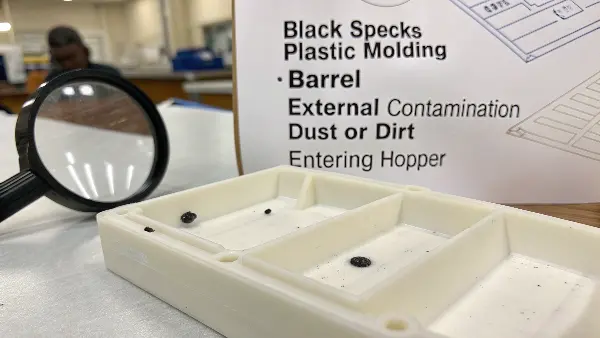
To really get a grip on this, we need to break down the sources of these problems. It’s rarely just one thing, but a combination of factors that create the perfect storm for black speck formation. From my experience helping clients troubleshoot this exact issue, the problems almost always trace back to what’s happening inside that barrel.
Common Sources of Degradation and Contamination
Degraded material is the number one cause. Think of it like burnt food stuck to a pan. Over time, layers build up in specific "dead spots" within the barrel or on the screw.
- Residence Time: If plastic sits in the barrel for too long at a high temperature, it starts to break down chemically. This is common in oversized machines where the shot size is very small compared to the barrel capacity. The material in the front of the barrel might sit through many cycles before it’s injected.
- High Shear: Excessive screw speed or back pressure can generate too much frictional heat. This localized overheating can "cook" the plastic, leading to char that sticks to the screw and barrel surfaces.
- Worn Components: Scratches, nicks, and worn areas on the screw and barrel act like traps. Pellets and melt can get stuck in these spots, where they are exposed to prolonged heat and degrade. Eventually, these burnt particles break free and flow into the mold.
Contamination, on the other hand, is about foreign material entering the system.
| Contamination Type | Common Sources | How It Causes Specks |
|---|---|---|
| Cross-Material | Switching between materials with different melting points (e.g., PC to PP). | Higher-temp material residue remains, degrades, and flakes off into the lower-temp melt. |
| Color Additives | Carbon black-based colorants leaving behind stubborn residue. | The black pigment can be very difficult to purge completely, leading to lingering streaks. |
| External Debris | Dust from the plant environment, cardboard flakes from packaging, metal fines. | These particles fall into the hopper, mix with the resin, and burn inside the barrel. |
By understanding that black specks are symptoms of either degradation or contamination, you can stop fighting the symptoms and start treating the cause. This begins with a close look at the hardware itself.
How Do You Properly Inspect Your Barrel and Screw for Wear?
You’ve identified that the barrel or screw is likely the source of your black specks, but now what? Just pulling the screw out and giving it a quick glance isn’t enough. You could easily miss the subtle signs of wear that are causing all your problems. If you don’t know exactly what to look for, you risk putting a worn component back into service, guaranteeing the problem will return. A proper, detailed inspection is the only way to be certain.
To properly inspect your barrel and screw, first perform a thorough visual check for obvious damage like nicks, chips, and discoloration after cleaning. Next, use precision measuring tools. Measure the outside diameter of the screw flights at multiple points along its length and compare it to the original specifications. Use a bore gauge to measure the inside diameter of the barrel at corresponding points. The clearance between the screw and barrel is critical; excessive clearance is a major red flag for wear and a prime spot for material to stagnate.
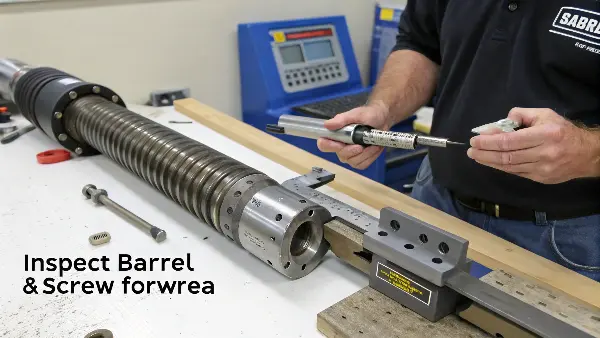
An inspection isn’t just about finding a problem; it’s about understanding the health of your equipment. For years, I had a customer who was plagued with black specks in their clear polycarbonate parts. They purged for hours with no luck. The moment we pulled the screw and measured it, we found the answer. The clearance in the metering zone was almost double the manufacturer’s recommendation. They replaced the screw and barrel, and the problem vanished overnight. That experience taught me that you can’t manage what you don’t measure.
The Inspection Checklist: A Step-by-Step Guide
A systematic approach ensures you don’t miss anything. You need to look at both the screw and the barrel, as wear on one often accelerates wear on the other.
-
Visual Inspection (Post-Cleaning):
- Screw: Look for cracks on the flight root, chips on the flight edges, and any signs of pitting or corrosion. Check the color. A blue or rainbow discoloration indicates the steel was exposed to excessive heat, which could point to shear-burn issues.
- Barrel: Use a borescope or a strong light to look inside. Search for longitudinal scratches (a sign of abrasive wear) and small pits. Pay close attention to the area around the feed throat and nozzle.
- Non-Return Valve (Check Ring): This is a high-wear area often overlooked. Disassemble it completely. Check for chips, cracks, and rounding of the sharp edges, which can cause inconsistent shots and material hang-up.
-
Dimensional Measurement:
This is where you get the hard data. Simply looking "worn" is subjective; measurements are factual.
| Component | Tool to Use | What to Measure | What It Tells You |
|---|---|---|---|
| Screw | Micrometer | Outside diameter (OD) of the flights in the feed, transition, and metering zones. | A decrease in OD indicates flight wear. This reduces pumping efficiency and can create areas for material to hang up. |
| Barrel | Bore Gauge | Inside diameter (ID) at multiple points along its length and at different angles. | An increase in ID, especially an oval shape (bell-mouthing), shows barrel wear. This creates a larger gap. |
| Both | Caliper, Feeler Gauge | Calculate the clearance: (Barrel ID – Screw OD) / 2 | This is the most critical measurement. Excessive clearance lets material flow backward and stagnate against the barrel wall. |
Documenting these measurements over time gives you a wear trend, allowing you to predict when a replacement will be needed before it starts causing scrap.
What’s the Best Way to Clean a Barrel and Screw to Prevent Contamination?
So you’ve pulled the screw and confirmed there’s buildup. Your first instinct might be to grab a wire brush and a torch and just burn everything off. This is one of the biggest mistakes I see people make. You’re trading a short-term fix for long-term damage. Aggressive cleaning methods can scratch and damage the very surfaces you’re trying to protect, creating even more places for material to hang up and degrade later. The best cleaning method is one that is both effective and non-damaging.
The best way to clean a barrel and screw is to use methods that preserve the integrity of the metal surfaces. For the screw, soaking it in a specialized oven that pyrolyzes the plastic is ideal, followed by gentle brushing with brass tools. For the barrel, using a dedicated purging compound while the machine is hot is highly effective for routine cleaning. For deep cleaning, mechanical methods with brass or copper gauze on a cleaning rod are preferred over steel tools that can cause scratches and permanent damage.
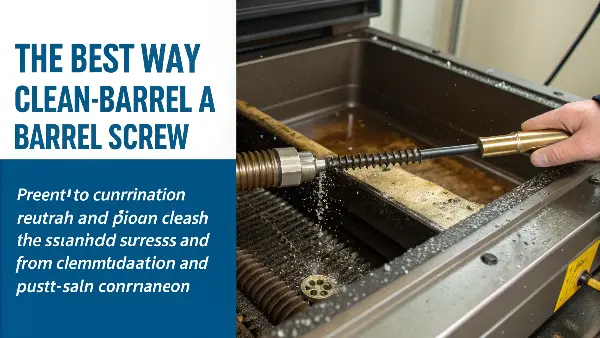
I remember visiting a facility that was having terrible issues with carbon buildup. When I watched their teardown procedure, I saw an operator using a steel pry bar and a hammer to knock chunks of burnt plastic off the screw. I immediately stopped him. We switched them to a softer brass tool kit and implemented a proper purging schedule. Their black speck problem was cut by more than half, simply by changing how they cleaned the equipment. The right method protects your investment and prevents future headaches.
Comparing Cleaning Methods
There isn’t a single "best" method for every situation. The right choice depends on the type of plastic, the severity of the contamination, and the amount of time you have.
Chemical vs. Mechanical Cleaning
-
Chemical Cleaning (Purging Compounds):
These are specialized materials you run through the machine. They work in different ways—some are abrasive (but with a soft abrasive, like glass fiber), while others create a chemical reaction that helps release contaminants.- Pros: Fast, can be done without a full teardown, great for color and material changes.
- Cons: May not remove severe carbon buildup, can be expensive, may require several kilos to be effective. Best for routine maintenance, not deep cleaning.
-
Mechanical Cleaning (Manual Teardown):
This involves physically removing the screw from the barrel and cleaning both components by hand.- Pros: The only way to remove stubborn, layered carbon deposits. Allows for a full inspection of the components.
- Cons: Time-consuming, requires machinery downtime, carries a risk of damaging components if done improperly.
Here’s a breakdown of the tools and techniques for a safe and effective manual clean:
| Tool | Recommended Material | Why It’s Recommended | Notes |
|---|---|---|---|
| Brushes, Scrapers | Brass, Bronze, Copper | Softer than the hardened steel of the screw and barrel, so they won’t scratch it. | Never use hardened steel tools like screwdrivers, pry bars, or steel wire brushes. |
| Heat Application | Pyrolysis ("Burnout") Oven | Provides controlled, even heat to break down plastic without damaging the steel’s temper. | A handheld torch is a bad idea. It creates hot spots that can warp or detemper the screw. |
| Barrel Cleaning Rod | Copper or Brass Gauze | The gauze provides enough friction to scrub the barrel wall without gouging it. | Wrap the gauze around a cleaning rod and push it through the barrel while it’s still warm. |
A combination approach is often the most effective. Use purging compounds for regular changeovers and schedule periodic teardowns for a deep mechanical clean and inspection.
How Can You Create an Effective Preventive Maintenance Schedule?
You’ve cleaned your components and put everything back together. Your parts look perfect again. But if you stop there, you’re just waiting for the problem to come back. The cycle of contamination, cleaning, and downtime will just repeat itself. The only way to truly break this cycle is to move from a reactive approach to a proactive one. An effective preventive maintenance (PM) schedule is the foundation of a reliable, speck-free molding operation. It turns maintenance from a fire-fighting activity into a controlled, planned process.
To create an effective preventive maintenance schedule, start by classifying tasks by frequency: daily, weekly, monthly, and annually. Daily tasks include monitoring process parameters. Weekly tasks might involve using a purging compound. Monthly, you could inspect the nozzle and check ring. Annually, schedule a full screw pull for detailed inspection and measurement. Document everything. Record wear measurements, cleaning dates, and any issues found. This data will allow you to predict component life and schedule replacements before they cause catastrophic failure and unplanned downtime.

The power of a good PM schedule is in the data it generates. I worked with a client who started tracking screw and barrel wear annually. After three years, they had a clear trend line showing their components processing abrasive, glass-filled nylon had a reliable service life of about 3.5 years. They now proactively schedule the replacement at the three-year mark during a planned shutdown. They haven’t had an unplanned, speck-related shutdown in years. They are in control of their process, not the other way around.
Building Your PM Schedule: From Daily Checks to Annual Overhauls
A robust PM schedule is tailored to your specific process—the materials you run, your cycle times, and the age of your equipment. A machine running a mild polymer like polypropylene 24/7 will have a very different schedule than one running a corrosive material like PVC on a single shift.
Here is a template you can adapt:
Sample PM Schedule Template
| Frequency | Task | Purpose |
|---|---|---|
| Daily | Monitor melt temperature, back pressure, and screw recovery time. | Sudden changes can indicate a problem like a failing heater band or worn check ring. |
| Weekly | Purge the machine with a suitable purging compound during the last shutdown of the week. | Removes minor buildup from the week’s production, preventing it from hardening. |
| Monthly | Remove and inspect the nozzle tip and adapter. Clean the check ring assembly. | These are common areas for material to hang up and degrade. Easy to access and clean. |
| Biannually / Annually | Full Screw Pull: Perform a complete teardown for cleaning and inspection. | This is the core of the program. |
| 1. Thorough Cleaning: Use non-damaging mechanical methods. | Remove all baked-on carbon that purging compounds can’t reach. | |
| 2. Detailed Inspection: Visually check for chips, cracks, and pitting. | Identify damage that could trap material. | |
| 3. Dimensional Measurement: Use micrometers and bore gauges to measure wear. | Collect hard data to track the rate of wear over time. |
The Importance of Documentation
Your PM schedule is only as good as your records. Every time you perform a task, log it.
- Date and machine number.
- What was done? (e.g., "Annual screw pull and measurement.")
- What was found? (e.g., "Screw OD in metering zone is now X.X mm. Down 0.2mm from last year.")
- Who did the work?
This historical data is invaluable. It helps you justify the cost of new components, optimize the frequency of your PM tasks, and train new technicians on what to look for based on past experiences. It transforms maintenance from a cost center into a strategic tool for improving quality and efficiency.
Conclusion
Eliminating black specks is not about finding a magic bullet, but about implementing a disciplined, comprehensive maintenance program. By understanding the root causes of degradation and contamination, you can shift your focus from reacting to problems to preventing them. A methodical approach of regular inspection, proper cleaning techniques, and a documented preventive schedule focused on your barrel and screw is the most reliable path to producing high-quality, speck-free parts consistently. This systematic control is the key to mastering your molding process.