
Starting a new plastic product project can be exciting, but the journey to creating the suitable mold often feels like stepping into a complex, hidden world. You know a mistake in this stage can lead to massive delays and budget overruns, creating a lot of stress. Let’s pull back the curtain and demystify this process, giving you the clarity and confidence you need to manage your project successfully from start to finish.
Injection mold making is a sequence of engineering decisions and verification gates. The process begins with the part, material, volume and quality requirements, then moves through DFM, mold architecture, steel, machining, cooling, surface finishing, assembly, trials and approval. Each stage should leave evidence for the next; otherwise a late defect becomes a tooling surprise instead of a manageable design issue.
Related engineering resources: mold design | DFM analysis | mold testing and validation
The injection mold-making process is a systematic manufacturing journey that converts a digital design into a physical tool for mass-producing plastic parts. It begins with a detailed review and design phase (DFM analysis), followed by the selection of appropriate steel. The core of the process is machining, where techniques like CNC milling, EDM, and grinding shape the steel blocks into core and cavity components. These parts are then carefully assembled, polished, and subjected to rigorous testing (T1 trials) to validate performance and part quality before final delivery.
Now that you have the big picture, you’re probably wondering what actually happens in each of these stages. It’s in the details where a good mold transforms into a great one, and understanding these details is key to a successful partnership with your mold maker. Let’s break it down, step by step, so you can see exactly how your idea becomes a physical tool ready for mass production. Let’s start at the very beginning.
How does mold design start the whole process?
You have a fantastic design for your new product, but you’re worried about whether it can be molded efficiently. Pushing a design with hidden flaws into the mold-making stage can lead to a cascade of problems, from endless revisions to unexpected costs and major production delays. The key is to catch these issues early, saving you from a manufacturing nightmare down the road.
The entire mold-making journey begins with a comprehensive review of your product’s 3D model, known as a Design for Manufacturability (DFM) analysis. This is where experienced mold designers act as the crucial bridge between your concept and a producible reality. They meticulously analyze draft angles for smooth part ejection, check for uniform wall thickness to prevent defects, and strategically plan the gate location for optimal plastic flow. This collaborative process results in a finalized 3D mold design, the essential blueprint for everything that follows.
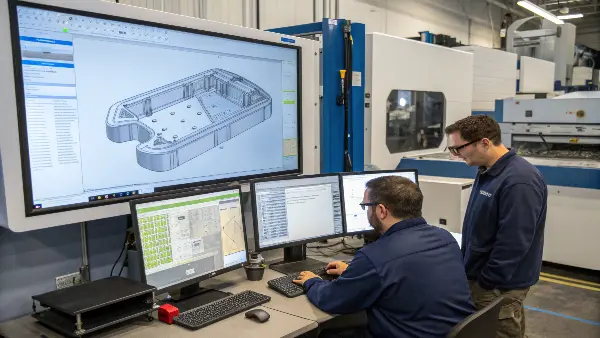
We focus on several critical elements:
- Parting Line: Where will the two halves of the mold meet? The choice affects the final appearance of the part and the complexity of the mold itself.
- Gate Location: Where will the molten plastic enter the cavity? This decision impacts the part’s strength, cosmetic finish, and potential for defects like weld lines.
- Ejection System: How will the finished part be pushed out of the mold? We need to place ejector pins carefully to avoid leaving marks on visible surfaces.
- Cooling Channels: How will we control the temperature of the mold? Proper cooling is vital for fast cycle times and preventing part warpage.
We present all these findings in a detailed DFM report. This isn’t just a technical document; it’s a conversation starter. We use it to explain our recommendations in simple terms, ensuring you understand the “why” behind every decision. This collaborative review ensures the final mold design is optimized for quality, speed, and cost-effectiveness.
What materials are best for making injection molds?
You’ve approved the design, and now it’s time to build. But you hear about different types of steel—P20, H13, S136—and wonder which is right for your project. Choosing the wrong material can lead to a mold that wears out quickly, produces inconsistent parts, or fails under the stress of high-volume production, ultimately costing you more in the long run.
The best material for an injection mold depends on factors like the required production volume, the type of plastic being molded, and the part’s surface finish requirements. For lower-volume prototyping, pre-hardened steels like P20 are a cost-effective choice. For high-volume production or when using abrasive plastics, tougher, heat-treated tool steels like H13 or Stavax S136 are necessary for their superior durability and wear resistance. For parts requiring a high-gloss, mirror-like finish or for medical applications, high-purity stainless steels are the standard.
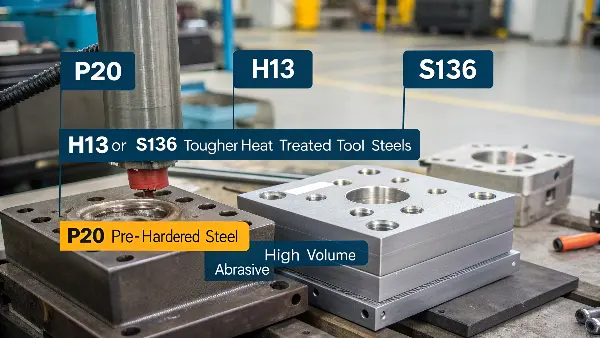
Choosing the right steel is a balance of cost, performance, and longevity. I generally discuss this with my clients upfront to align the mold’s specifications with their business goals. You don’t want to pay for a million-shot mold when you only plan to produce 50,000 parts. On the other hand, cutting corners on steel for a high-volume project is a recipe for disaster.
Here’s a simple breakdown of common mold steels to help you understand the options:
| Steel Type | Common Grade(s) | Best For | Key Characteristics |
|---|---|---|---|
| Pre-Hardened | P20, 718H | Low to medium volume (under 100k shots), prototypes, large molds | Good machinability, cost-effective, ready to use |
| Hardened Tool | H13, 8407 | High volume (1M+ shots), abrasive materials (e.g., glass-filled) | Excellent wear resistance, high toughness, requires heat treatment |
| Stainless Steel | S136, 420SS | High-polish optical parts, medical devices, molding corrosive PVC | Superior corrosion resistance, can be polished to a mirror finish |
Before we even start machining, we provide our clients with a material certificate for the steel we purchase. This document certifies the origin and chemical composition of the steel, giving you peace of mind that you are getting exactly what you paid for. This transparency is a core part of our process and builds the trust needed for a successful project. The right steel choice ensures your mold will perform reliably for its entire intended lifespan.
How is the raw steel turned into a mold?
You have a final design and have selected the right steel. Now, how does a solid block of metal become the intricate, precise tool needed to make your parts? This machining phase can seem like a mystery, filled with complex machines and technical jargon. If not managed reliably, errors here can lead to a mold that doesn’t fit together or produces parts that are out of spec.
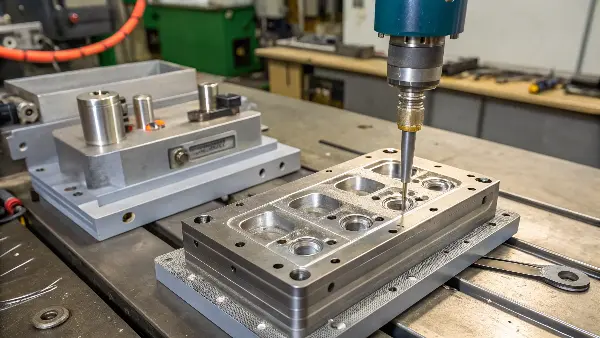
Turning raw steel into a mold is a multi-step machining process centered on precision. It starts with CNC (Computer Numerical Control) milling, where high-speed cutting tools carve the basic shape of the mold’s core and cavity from the steel blocks. For finer details, sharp corners, or deep ribs that CNC can’t reach, we use EDM (Electrical Discharge Machining). This technique uses electrical sparks to erode the steel with extreme accuracy. Finally, grinding machines ensure all surfaces are reliably flat and dimensions are exact.
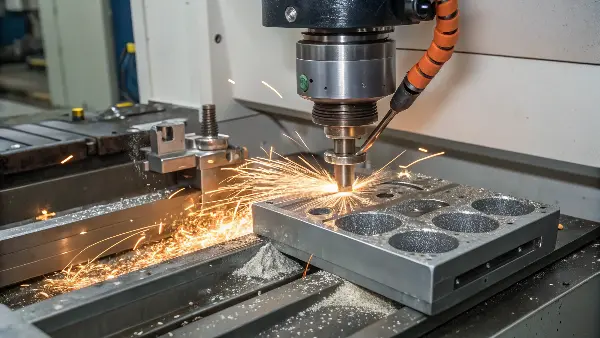
This stage is where the digital design truly becomes physical. It’s a bit like sculpting, but with incredible precision. I generally enjoy walking clients through our workshop to see these machines in action. The process usually follows a clear sequence.
First, the big work is done with CNC milling. A programmer translates the 3D mold design into instructions for the machine. We start with “roughing,” which quickly removes large amounts of steel to get the general shape. Then, we switch to “finishing” passes with smaller tools to create the detailed surfaces of the mold. It’s amazing to watch a computer-controlled machine cut steel to within the width of a human hair.
Next comes EDM, which is essential for features that are impossible to mill. Imagine you need a very sharp internal corner in your part design. A spinning CNC tool is round, so it can’t create that sharp corner. For this, we use EDM. We first machine a copper or graphite electrode in the exact shape of the feature we need. Then, we place this electrode very close to the steel workpiece inside the EDM machine, submerged in a special fluid. A powerful electrical current creates sparks between the electrode and the steel, slowly and precisely eroding the steel into the desired shape.
Throughout this entire process, our quality control team is constantly measuring and checking the parts against the design drawings to ensure every dimension is suitable.
Why is mold assembly and testing so critical?
All the individual components of your mold have been reliably machined. But what is the process to put them all together and ensure they work as a single, consistent system? This is a nail-biting phase. A small error in how the parts fit together can cause the mold to jam, leak plastic, or produce defective parts, leading to costly and time-consuming rework.
Mold assembly, or fitting, is the critical stage where all machined components—cores, cavities, slides, lifters, and the ejector system—are meticulously hand-fitted together by skilled toolmakers. This ensures every moving part operates smoothly without friction. Following assembly, the mold undergoes T1 (first-shot) testing. It is installed in an injection molding machine, and we produce the first sample parts. This trial validates the mold’s mechanical function and gives us the first look at the plastic part’s quality, dimensions, and appearance.
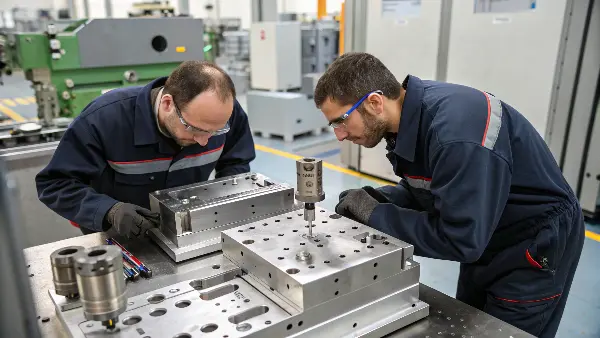
This is the moment of truth. After weeks of careful design and precision machining, we finally see if it all comes together. The assembly process is a testament to the skill of the toolmaker. It requires patience and an incredible eye for detail. They work like jewelers, carefully polishing surfaces, spotting the fit of every component, and making micro-adjustments until the mold opens and closes with suitable smoothness.
Once assembled, we move to the T1 trial. This is generally an exciting day. We carefully mount the brand-new mold into one of our injection molding machines. We heat it up, load the specific plastic resin for the project, and inject the first shot. The first parts that come out are immediately sent to our quality lab. We perform a full dimensional analysis, comparing the part’s measurements against the original 3D model. This is called the First Article Inspection (FAI) report.
We then share the T1 sample parts and the FAI report with you. This is your first opportunity to hold a physical version of your product. Based on your feedback and our internal review, we determine if any adjustments are needed. It’s very common to make small “tuning” adjustments to the mold after T1 to suitable the part. This iterative process of testing and refining is absolutely essential to delivering a mold that is ready for reliable mass production.
What happens after the mold is successfuly tested?
The T1 trial was a success, and the sample parts look great. You’re almost at the finish line, but what final steps are needed to get the mold completely production-ready and shipped to your facility? It’s tempting to rush at this stage, but skipping the final finishing touches can affect the cosmetic appearance of your parts or lead to shipping issues, causing one last unexpected delay.
After successful testing and your approval of the sample parts, the mold enters the final finishing stage. This often includes applying a specific surface texture or polish to the mold cavities to achieve the desired look and feel for the final product. Common options range from a high-gloss polish to various matte or patterned textures from standards like VDI or Mold-Tech. Finally, the mold is carefully disassembled, cleaned, coated with a rust inhibitor, reassembled, and securely crated for safe shipment to your facility.
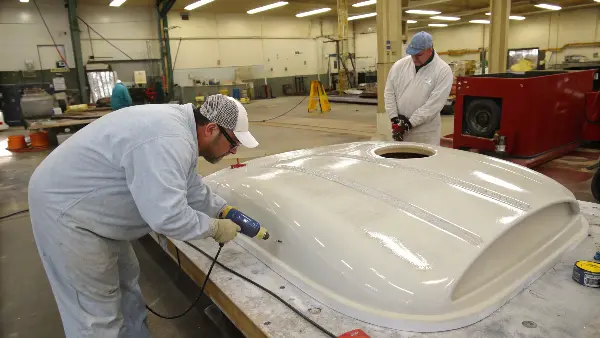
The final look of your plastic part is largely determined by the finish of the mold surface. This is a step where artistry meets engineering. If you need a shiny, “Class A” finish on a consumer product, our polishers will meticulously hand-polish the mold cavity surfaces to a mirror-like sheen. This is a highly skilled and time-consuming job that requires incredible precision.
Alternatively, many products require a textured finish. This can be for aesthetic reasons, like creating a leather-grain look, or for functional reasons, like making a surface easier to grip. To do this, we send the mold components to a specialized texturing partner. They use a photo-etching process, where acid is used to carefully etch a pattern onto the steel surface. We can match thousands of standard textures, or even create custom ones.
Once all finishing is complete, we prepare the mold for its journey. One of my first experiences shipping a mold taught me a valuable lesson. We didn’t crate it properly, and it arrived with minor damage that required repairs. Ever since then, I’ve been obsessed with our shipping process. We build custom, robust wooden crates for every international shipment. The mold is bolted down securely inside, and we include a final checklist of all standard components, spare parts, and final part samples. Our goal is for the mold to arrive at your factory in “plug-and-play” condition.
How do you ensure mold quality throughout the entire process?
You’ve learned about the individual steps, but how do you support that quality is maintained from start to finish? A single overlooked detail at any stage—a design miscalculation, a machining error, a poor polish job—can compromise the entire project. You need confidence that your mold-making partner has a robust system in place to catch and correct issues before they become major problems.
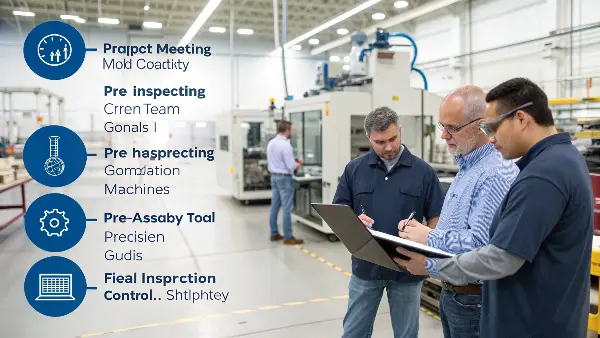
Ensuring mold quality requires a comprehensive quality control (QC) system integrated into every step of the process. It starts with a kickoff meeting to align on project goals. During manufacturing, in-process inspections using CMMs (Coordinate Measuring Machines) and other precision tools verify that each machined component meets the drawing specifications. A final inspection before assembly, a rigorous T1 trial analysis, and a pre-shipment check ensure nothing is missed. This systematic approach helps support the final mold is built to last and produces parts to your exact requirements.
For me, quality isn’t just a final check; it’s a mindset that permeates our entire operation. I learned early on that it’s far cheaper and faster to prevent a mistake than to fix one later. That’s why we’ve built our process around clear communication and constant verification.
Our process is structured as a series of quality gates:
- Design Review: Before any steel is ordered, multiple engineers, including myself, review the DFN and mold design to ensure it is robust and efficient.
- Material Certification: We verify the steel certificate upon arrival to confirm it’s the correct grade.
- In-Process Inspection: After each key machining step (e.g., CNC finishing, EDM), a QC technician measures the component. If it’s even slightly out of tolerance, we stop and correct it immediately. We use advanced tools like CMMs that can measure dimensions with pinpoint accuracy.
- Assembly Check: Before the T1 trial, a final checklist is completed to ensure all components, from cooling lines to ejector pins, are correctly installed and functioning.
- T1 Sample Inspection (FAI): As mentioned, the first parts undergo a full dimensional inspection. This report is our objective proof that the mold is producing parts to specification.
We provide our clients with a weekly progress report, including photos and updates from the factory floor. This transparency means you are not in the dark. You can see the quality being built into your mold every step of the way. This thorough, systematic approach is how we deliver on our promise: Master Molding Right.
Freeze Requirements and DFM
Confirm CAD, drawings, material, shrinkage assumptions, volume, tool life, cavities, appearance zones, CTQs, tolerance, gates, parting, draft and ejection. Review risks before detailed design. A signed DFM decision log prevents a cosmetic or assembly request from appearing after steel is cut.
Develop the Mold Architecture
Select cavity count, runner or hot runner, core and cavity split, slides, lifters, inserts, cooling, venting, ejection and standard components. Check opening sequence, maintenance access, steel strength, wear, balance and the process window the architecture is expected to support.
Machine and Finish the Steel
Rough and finish machining, EDM, drilling, heat treatment, polishing, texturing and fitting create the functional cavity. Control datums, steel condition, electrode strategy, surface direction and dimensional inspection. The final surface must support the part requirement, not only look good on the bench.
Assemble, Dry-Cycle and Inspect
Fit plates, cores, slides, lifters, ejectors, hot-runner components, cooling circuits and sensors. Check alignment, shutoffs, movement, water flow, electrical connections, vent access and safe operation before molding. Dry-cycle evidence can catch interference that a molded sample would hide.
Run Trials and Close the Tool
Use T0 or T1 trials to evaluate filling, balance, pressure, cooling, ejection, dimensions, appearance, flash, weld lines and function. Record deviations, make controlled corrections and rerun critical evidence. Final approval should include inspection reports, samples, process settings, maintenance points and open-issue ownership.
The Injection Mold-Making Process: Buyer Review Checklist
- Freeze part, material, volume, CTQs, appearance, tolerance and DFM decisions.
- Select cavity, runner, split, mechanisms, cooling, venting, ejection and maintenance architecture.
- Control steel, machining, EDM, heat treatment, polishing, texture and dimensional evidence.
- Dry-cycle and inspect alignment, movement, cooling, electrical and safety functions.
- Use trials to close filling, dimensions, appearance, function and maintenance issues.
Frequently Asked Questions
How long does injection mold making take?
Timing depends on part complexity, cavities, mechanisms, steel, surface finish, supplier capacity and trial corrections. A realistic schedule includes design review, machining, assembly and T1 learning.
What should a mold approval package contain?
Typically part samples, dimensional results, material and process records, appearance approval, open-item disposition, tool drawings or data, maintenance information and agreed ownership or change records.
Conclusion
The injection mold-making process is a detailed and disciplined journey, blending advanced technology with hands-on craftsmanship. From the critical DFM analysis to precision machining and meticulous testing, each step is designed to transform your idea into a reliable, high-performance manufacturing tool. By understanding this process, you are better equipped to collaborate with your supplier and ensure your project’s success, resulting in high-quality parts delivered on time and on budget.