
Every parent worries about what goes into their child’s mouth. You hear news stories about toxic chemicals in plastics, and it feels scary. You look at a toy label, see “Polyethylene” or “PE,” and you pause. You need to know if this material is truly safe for your family or if it carries hidden risks.
Polyethylene is widely used in consumer products and can be appropriate for toys, but a toy is not safe simply because it is made from PE. Safety depends on age grading, small parts, sharp edges, mechanical abuse, flammability, coatings, colorants, additives, regulated substances, cleanliness and market-specific testing and certification. The finished toy and all accessible components must be evaluated.
Related engineering resources: production injection molding | mold testing and validation | DFM analysis
Yes, Polyethylene (PE) is considered one of the safest plastics for children’s toys. It is non-toxic, durable, and chemically stable. Unlike some other plastics, it does not require dangerous additives like BPA or phthalates to maintain its shape or flexibility. High-Density Polyethylene (HDPE) and Low-Density Polyethylene (LDPE) are industry standards for making safe, food-grade, and bite-resistant products.
Many people get confused by chemical names. A common observation is this often in the manufacturing industry. Parents want simple answers, but the science can look complex. I will break down exactly why this material is the top choice for safe toys.
What Is Polyethylene and Why Is It Used in Toys?
Plastic names all sound the same to most people. You see HDPE, LDPE, and complex symbols on the bottom of a toy. It is hard to understand why manufacturers choose this specific material over others.
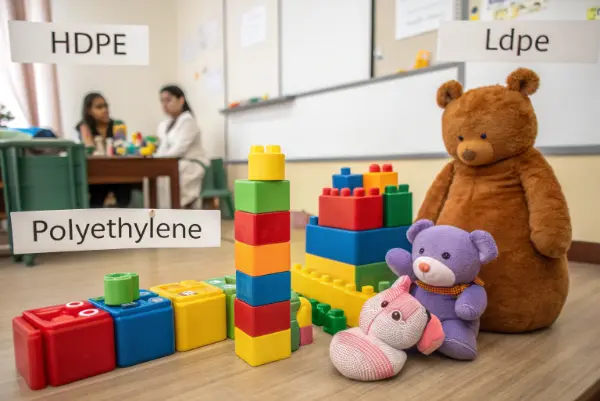
Polyethylene is the most common plastic in the world because it is lightweight, strong, and easy to mold. For toys, we use it because it resists moisture and can handle heavy impact without shattering. It comes in two main forms for toys: High-Density (HDPE) for hard items like blocks, and Low-Density (LDPE) for softer, flexible parts.
I have spent years in mold factories watching raw plastic pellets turn into finished products. Polyethylene is a favorite in the industry for good reasons. It is a thermoplastic. This means we can melt it down, shoot it into a mold, and cool it into a shape.
When we look at toy design, we need a material that is versatile. Polyethylene offers this versatility through its density variants.
| Type of Polyethylene | Common Toy Applications | Key Characteristic |
|---|---|---|
| HDPE (High-Density) | Ride-on trucks, building blocks, outdoor playsets | Stiff, strong, withstands heavy weight |
| LDPE (Low-Density) | Squeezable toys, flexible parts, lids | Soft, flexible, resistant to cracking |
| LLDPE (Linear Low-Density) | Play balls, mats | High puncture resistance, very stretchy |
From a manufacturing perspective, PE flows well into molds. This allows us to make smooth surfaces. Rough surfaces can scratch a child’s skin. Because PE shrinks predictably when it cools, we can design molds that ensure the parts fit together reliably. If the parts fit well, the toy does not fall apart. This reduces the risk of small parts breaking off. Project teams should use PE for items that will face rough play. It is not just about being cheap; it is about the mechanical properties that keep the toy in one piece.
Does Polyethylene Contain Harmful Chemicals Like BPA or Phthalates?
We all remember the panic when BPA became a household term. You worry that plastic toys are silently leaching chemicals into your child’s system. It is a valid fear that keeps many parents up at night.
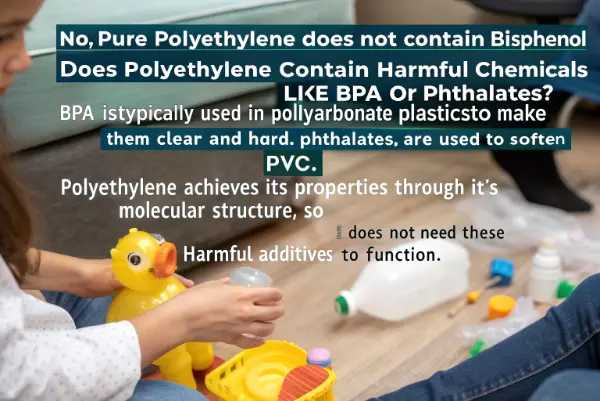
No, pure polyethylene does not contain Bisphenol A (BPA) or phthalates. BPA is typically used in polycarbonate plastics to make them clear and hard. Phthalates are used to soften PVC. Polyethylene achieves its properties through its molecular structure, so it does not need these harmful additives to function.
In my time running a mold business, I have had to source materials that meet strict safety codes. The chemistry of polyethylene is actually very simple. It is a chain of carbon and hydrogen atoms.
Because the structure is simple, we do not need to add complex chemicals to make it work. Other plastics, like Polycarbonate, need BPA to be strong. PVC needs phthalates to be soft. If you do not add them, PVC is hard and brittle like a pipe. Polyethylene is different. We control its hardness by how we process it, not by adding “softening” chemicals.
Here is a breakdown of why this matters for safety:
- No Leaching: Since the chemicals aren’t there, they cannot leach out. When a baby chews on a PE ring, they are chewing on carbon and hydrogen chains.
- Food Grade History: You likely use HDPE every day for milk jugs and food containers. The FDA approves virgin PE for food contact. If it is safe for milk, it is generally safe for a toy that might end up in a mouth.
- Stability: PE is chemically inert. This is a fancy way of saying it does not react with other things easily. It does not break down when exposed to saliva.
However, A useful principle is that the source of the plastic matters. Recycled PE can be risky if we do not know where it came from. But virgin (new) PE used in reputable toys is chemically one of the safest options available.
How Durable Is Polyethylene Under Rough Play?
Children are experts at destroying things. You buy a toy, and five minutes later, it is thrown across the room. If a toy shatters, it creates sharp edges that can cut skin or small pieces that become choking hazards.
Polyethylene is incredibly impact-resistant and absorbs shock effectively. Instead of shattering like brittle plastics such as Polystyrene, PE tends to dent or bounce. This “toughness” ensures that the toy remains intact even when thrown, dropped, or stepped on, keeping the child safe from sharp shards.
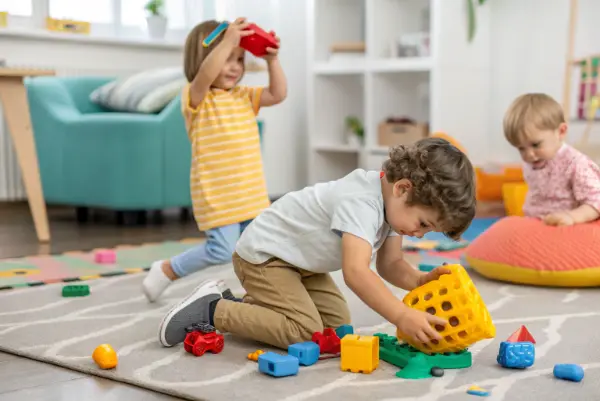
Polyethylene behaves differently because it is “ductile.” This means it can stretch a little bit under stress. When a child throws a large HDPE truck down the stairs, the plastic molecules absorb the energy. The truck might get a white stress mark or a dent, but it usually stays in one piece.
There are specific mechanical reasons for this:
- Tensile Strength: It holds together well when pulled.
- Impact Strength: It resists sudden force.
- Fatigue Resistance: You can bend a piece of LDPE back and forth many times before it breaks.
This is crucial for “living hinges.” A living hinge is that thin piece of plastic connecting a lid to a box. With PE, you can open and close it thousands of times. If we used a brittle plastic, that hinge would snap off. A snapped piece is a choking hazard. So, when we design molds for toys, we choose PE not just for the main body, but to ensure that the small, moving parts do not detach. This mechanical reliability is the first line of defense against physical injury.
How Does Polyethylene Compare to PVC in Terms of Safety?
You see soft plastic ducks and dolls, and they all look similar. But PVC has a bad reputation in the parenting world. You need to know if PE is actually better or if it is just another plastic with the same problems.
Polyethylene is significantly safer and more eco-friendly than Polyvinyl Chloride (PVC). PVC often contains chlorine and requires heavy metal stabilizers or toxic plasticizers to be usable for toys. PE is naturally soft or hard depending on its density, so it avoids the toxic lifecycle associated with PVC.
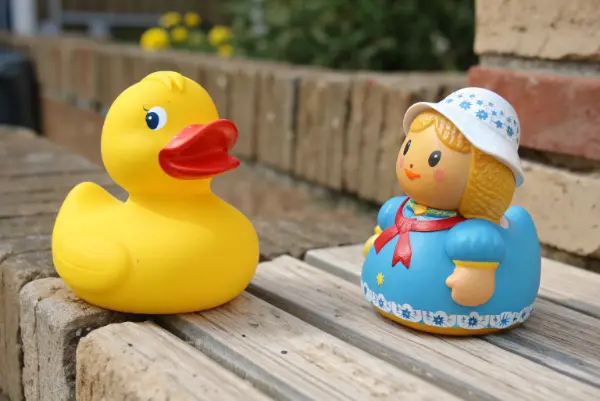
In the mold industry, we see a big shift away from PVC. PVC (Recycling code #3) was the king of toys for a long time because it holds paint well and feels like rubber. But the cost of that feel is high in terms of chemistry.
To make PVC soft, manufacturers add plasticizers. These are the chemicals that can migrate out of the plastic over time. You might notice a greasy feel on old PVC toys. That is the plasticizer coming out. PE does not do this.
Here is a critical comparison I use when advising business owners:
- Chlorine Content: PVC contains chlorine. If it burns, it releases toxic gas. PE contains only carbon and hydrogen. If it burns, it mostly releases water vapor and carbon dioxide.
- Recycling: PE (Codes #2 and #4) is one of the easiest plastics to recycle. PVC is very difficult to recycle and often contaminates other recycling batches.
- Production Safety: Making PE is cleaner. Making PVC involves vinyl chloride monomer, which is a carcinogen.
A recurring observation is clients choose PVC because it is easier to paint. Paint sticks to PVC very well. Paint peels off PE easily. This is why many PE toys use stickers or have colored plastic parts instead of painted details. As a parent, I would prefer a toy with fewer painted details (PE) over a toy that holds paint well but contains chlorine (PVC). The trade-off is worth it for safety.
What Manufacturing Standards Ensure Polyethylene Toy Safety?
A safe material can still be made into a dangerous toy if the factory is sloppy. You worry about lead paint, sharp edges from bad molds, or loose parts. The material is only half the battle; the process matters just as much.
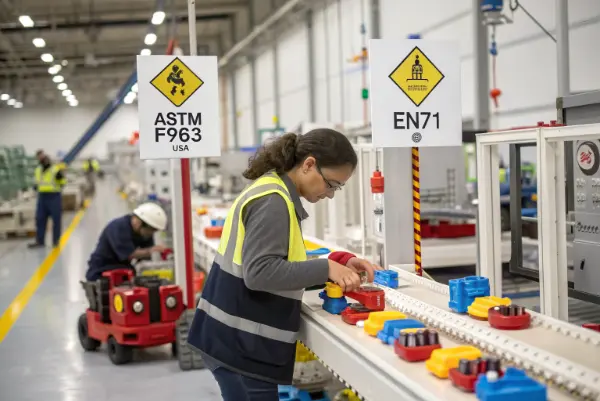
Even with safe Polyethylene, reputable manufacturers must follow strict standards like ASTM F963 (USA) or EN71 (Europe). These regulations test for heavy metals, sharp points, and small parts. A toy is only safe if it passes these tests, ensuring the manufacturing process did not introduce new hazards.
I built my business on quality control. You can buy the best virgin HDPE pellets in the world, but if your machine is dirty, or your mold is bad, the toy will be unsafe.
Let me explain “Flash.” This is a common defect. If a mold does not close tightly, a thin, razor-sharp fin of plastic leaks out at the seams. On a PE toy, this flash can be strong and sharp enough to cut a finger. Good manufacturing requires:
- Precision Molds: The steel must be cut reliably so no plastic leaks.
- Proper Cooling: If PE cools too fast or too slow, it can warp. Warping creates gaps where fingers can get pinched.
- Clean Hoppers: The machine that melts the plastic must be clean. If a previous batch had red colorant with lead (rare now, but possible in unregulated factories), it could contaminate the safe PE.
Standards like ASTM F963 are rigorous. They do “abuse testing.” They drop the toy, pull on it, and try to break it. They also test the surface coating. Since PE is hard to paint, some factories use aggressive chemical primers to make paint stick. These primers must also be tested.
When I work with clients, I insist on testing the final product, not just the raw material. The certification on the box applies to the whole toy. Look for the CE mark or the ASTM label. It tells you that the factory did not just use safe plastic, but they used it safely.
Official reference resources: CPSC toy safety requirements
Start With Age and Foreseeable Use
Define the intended age, mouthing likelihood, impact, bending, pulling, climbing or outdoor exposure. Young-child products create different small-part, accessibility and abuse risks than products for older children. Instructions cannot replace a design that anticipates normal and reasonably foreseeable use.
Control Resin, Colorants and Additives
Approve the exact PE grade, pigments, masterbatch, stabilizers, printing inks, coatings and any soft components. Supplier statements should match the supplied lot and applicable chemical limits. Avoid unapproved regrind or mixed material that breaks traceability.
Design Out Mechanical Hazards
Review small detachable parts, sharp points, pinch zones, fasteners, hinges, cords, thin films and impact breakage. Radii, wall thickness, weld-line position and assembly retention matter. Use abuse testing to see how the toy fails, not only how it looks before use.
Buyer Evidence Package Before a Purchase Order
Do not qualify a children’s toy from a resin name, food-contact letter, CE mark or generic laboratory report. Ask whether every document matches the exact product, age grade, market, bill of materials and production revision that will be supplied.
| Evidence to request | What to verify | Insufficient shortcut |
|---|---|---|
| Controlled BOM | Exact resin/grade, colorants, inks, coatings, inserts, fasteners and approved suppliers | “Made from PE” |
| Requirements matrix | Market, product classification, age grade and applicable clauses/hazards | A list of standard names without applicability |
| Representative test report | Model, photos, revision, sample description, laboratory and test dates match production | A different color/model or a resin-only report |
| Certification and traceability | Responsible party, manufacturing location/date/lot and certificate basis where required | A logo or CE mark without the technical file |
| Change-control commitment | Written notification before material, supplier, color, design or process changes | Verbal assurance that substitutions are equivalent |
The CPSC’s Toy Safety business guidance explains that U.S. children’s toys are certified against applicable requirements and that toys intended primarily for children 12 and under generally require testing by a CPSC-accepted third-party laboratory. Use the product-specific applicability route; a generic PE report is not a substitute.
Use the manufacturing-control companion, How to Manufacture Safer PE Plastic Toys, to audit production controls. For a quote, submit product and market details through the RFQ form, then email controlled CAD separately.
Meet the Target Market’s Testing Rules
For the United States, applicable CPSC requirements can include the mandatory toy standard, lead, phthalates, small-parts, tracking-label and third-party testing or certification obligations. Requirements vary by product and market, so identify them before material and tool approval.
Release With Traceability
Link resin, color, supplier, molding lot, cavity, assembly, test report, inspection and certificate. Control product changes and corrective actions. A toy-safety file should show that the exact production article—not only a resin sample—met the applicable requirements.
Is Polyethylene Safe for Children’s Toys? What Buyers Must Verify: Buyer Review Checklist
- Define age grade, mouthing, abuse, outdoor use and foreseeable behavior.
- Approve exact PE, pigments, masterbatch, inks, coatings and soft materials.
- Evaluate small parts, sharp edges, pinch, fasteners, film and impact breakage.
- Identify market-specific testing, certification, labeling and documentation.
- Trace resin, cavity, assembly, reports, certificates and product changes.
Frequently Asked Questions
Is polyethylene automatically non-toxic for toys?
No blanket claim is appropriate. Exact resin, pigments, additives, coatings and the finished toy must meet applicable chemical and product-safety requirements.
Do PE toys for children require third-party testing in the United States?
Toys intended primarily for children 12 and under generally require applicable CPSC-accepted third-party testing and certification; the exact sections depend on the product.
Can recycled PE be used in toys?
Potentially, but source, contamination, composition, consistency, applicable limits and finished-product performance require strong controls and qualification.
Conclusion
Polyethylene is widely regarded as the safest plastic choice for children’s toys. It is free from BPA and phthalates, durable enough to prevent breakage, and chemically stable. While the material itself is safe, you should generally check for safety certifications like ASTM F963 to ensure the manufacturing quality is high. As a mold expert, I trust PE for its reliability and safety profile.