
Are you struggling to find plastics that can withstand extreme heat, chemicals, and stress? Using the wrong material often leads to failed parts, costly recalls, and a damaged reputation. This is where emerging engineering plastics step in, offering superior performance where traditional plastics fall short and opening up new design possibilities.
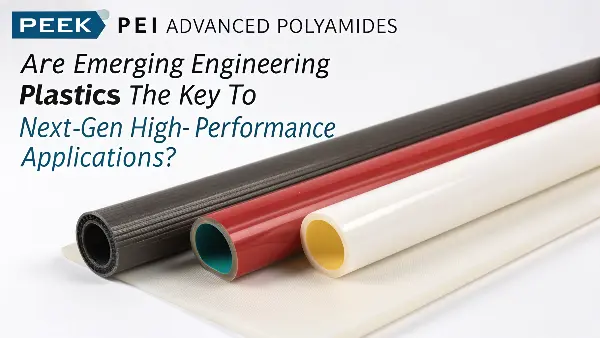
Yes, emerging engineering plastics are absolutely crucial for next-generation applications. These advanced polymers are specifically designed to offer exceptional mechanical properties, thermal stability, and chemical resistance far beyond standard plastics. Materials like PEEK, PEI, and advanced polyamides are replacing metal in demanding industries like aerospace, automotive, and medical devices, enabling lighter, more efficient, and more durable product designs for the future.
I remember when I started in the mold industry, the choices felt much simpler. But over the years, I’ve seen a massive shift. Clients began asking for parts that could do more—withstand higher temperatures, resist harsh chemicals, and last longer under intense mechanical stress. This demand pushed us to explore a new world of materials. The performance gap between standard plastics and what was needed became a chasm, and high-performance engineering plastics were the bridge. Let’s break down what these materials are and why they are becoming so essential for designers like you.
What Exactly Defines a High-Performance Engineering Plastic?
Do you find the term "high-performance" confusing when looking at material datasheets? It gets thrown around a lot, making it hard to know if a material truly meets your demanding specifications. Choosing incorrectly based on a vague label can compromise your entire project from the start. Let’s clarify what sets these elite materials apart from the rest.
A high-performance engineering plastic is defined by its ability to maintain superior properties under extreme conditions. This typically means continuous service temperatures above 150°C (302°F), plus excellent mechanical strength, dimensional stability, and resistance to chemicals, wear, and creep. Unlike commodity plastics, these materials are engineered for reliability in environments where failure is not an option, providing a unique combination of toughness and durability.
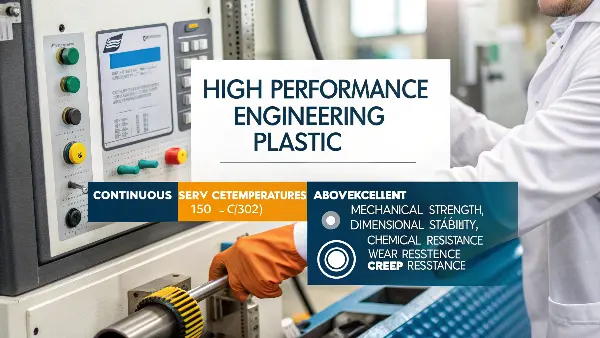
To really understand what makes a plastic "high-performance," you have to look beyond a single property. It’s about the combination of characteristics that allow it to function reliably in harsh environments. I’ve learned that a material might have great heat resistance but poor impact strength, or vice versa. A true high-performance plastic delivers on multiple fronts. These are materials you can trust for critical applications.
Key Performance Indicators
The term "performance" is measured by several key metrics. When I evaluate a material for a client’s project, I focus on a few core areas. These are the non-negotiables for demanding applications.
- Thermal Stability: This is about how well the material holds its shape and strength when exposed to heat over a long period. We look at the continuous service temperature, which is the maximum temperature it can handle without degrading.
- Mechanical Strength: This includes tensile strength (resistance to being pulled apart), flexural modulus (stiffness), and impact strength (toughness). These materials must resist breaking, bending, or deforming under load.
- Chemical Resistance: The ability to withstand exposure to fuels, solvents, acids, and other aggressive chemicals without swelling, dissolving, or becoming brittle is critical in many industrial and automotive uses.
Comparing Material Tiers
Not all engineering plastics are created equal. I find it helpful to think of them in tiers. This framework helps me quickly narrow down the options for a given project.
| Plastic Tier | Continuous Service Temp. | Common Examples | Typical Application |
|---|---|---|---|
| Commodity Plastics | < 100°C (212°F) | PE, PP, PVC | Packaging, toys, consumer goods |
| Engineering Plastics | 100°C – 150°C | PC, PA66, POM | Automotive parts, gears, housings |
| High-Performance | > 150°C (302°F) | PEEK, PEI, PPS | Aerospace, medical implants, oil & gas |
Understanding this hierarchy is the first step. It moves the conversation from "we need a strong plastic" to "we need a material with a continuous service temperature of 170°C and resistance to hydraulic fluid." That level of specificity is where great design begins.
What Materials Make Up the Spectrum of Engineering Plastics?
Are you wondering which specific polymers fall under the "engineering plastics" umbrella? The landscape is vast, and without a clear map, it’s easy to get lost in a sea of acronyms and trade names. Choosing the right family of plastics is a critical first step that impacts performance, cost, and manufacturability down the line.
The spectrum of engineering plastics includes several key polymer families, each with unique properties. Common examples are Polyamides (PA), known for toughness; Polycarbonates (PC) for impact resistance and clarity; Acetal (POM) for low friction; and Polyesters (PBT/PET) for good electrical properties. These materials form the backbone of modern manufacturing, bridging the gap between low-cost commodity plastics and ultra-high-performance specialty polymers.
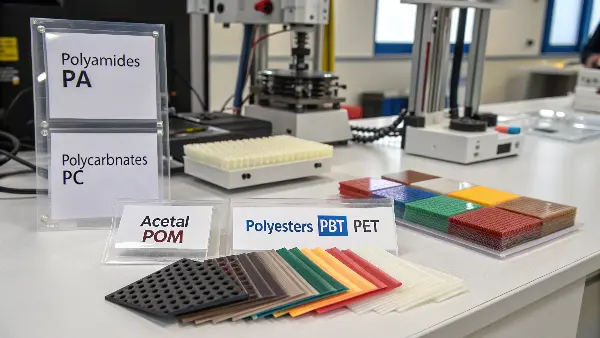
When I work with designers, one of the first things we do is walk through these core material families. Each one has its own personality—its strengths, weaknesses, and ideal processing conditions. For example, I had a project for an automotive client that required a fuel line connector. We needed good chemical resistance and toughness. Polyamide (Nylon) was a natural fit. For another project, a clear protective cover for an electronic display, Polycarbonate was the obvious choice due to its clarity and incredible impact strength. Let’s look at these workhorse materials more closely.
The Core Families of Engineering Plastics
These are the materials you will encounter most frequently. They offer a significant step up in performance from standard plastics like polypropylene or polyethylene, making them suitable for durable goods and mechanical components.
- Polyamides (PA): Commonly known as Nylon, materials like PA6 and PA66 are celebrated for their excellent balance of strength, toughness, and chemical resistance. They are often used for gears, bushings, and automotive engine components. However, they are hygroscopic, meaning they absorb moisture, which can affect their dimensional stability and mechanical properties.
- Polycarbonate (PC): This material is a champion of impact resistance and optical clarity. If you need something that is incredibly tough and transparent, PC is your go-to. It’s used in everything from safety glasses and riot shields to automotive headlights and electronic housings. Its main weakness is its low resistance to scratches and some chemicals.
- Acetal (POM): Also known as Polyoxymethylene, POM is valued for its high stiffness, dimensional stability, and very low coefficient of friction. This makes it perfect for precision parts that require good slip properties, like bearings, conveyor belt links, and fuel system components.
- Polyesters (PBT/PET): Polybutylene Terephthalate (PBT) and Polyethylene Terephthalate (PET) are known for their great electrical insulating properties, strength, and stability. PBT is widely used in electrical connectors and sockets, while PET is famous for its use in beverage bottles and food packaging, but also finds use in engineering applications when reinforced.
Selecting the Right Material Family
Choosing between these families depends entirely on the specific needs of your application. There is no single "best" material. The key is to match the material’s profile to the functional requirements of the part.
| Material family | Key Strength | Common Weakness | Best For… |
|---|---|---|---|
| Polyamide (PA) | Toughness & Wear Resistance | Absorbs Moisture | Gears, Bearings, Fasteners |
| Polycarbonate (PC) | Impact Strength & Clarity | Poor Scratch/Chem Resistance | Lenses, Housings, Glazing |
| Acetal (POM) | Low Friction & Stability | Poor UV/Acid Resistance | Precision Parts, Bushings |
| Polyester (PBT) | Electrical Insulation | Low Hydrolysis Resistance | Connectors, Switches, Sensors |
Thinking this way has saved my clients countless hours and dollars. By starting with the right family, we establish a solid foundation for the entire design and manufacturing process.
What Sets Super Engineering Plastics Apart from the Rest?
Have you ever encountered a design challenge that standard engineering plastics just can’t solve? Perhaps it’s an application needing to survive inside a jet engine or withstand repeated sterilization in a medical device. This is where you enter the world of "super" engineering plastics, but what makes them so super?
Super engineering plastics, also known as ultra-performance plastics, are set apart by their ability to perform reliably at continuous service temperatures above 200°C (392°F). They also exhibit extreme chemical inertness, outstanding mechanical properties, and inherent flame retardancy. Materials like PEEK, PEI, and PPS can replace metals like aluminum, stainless steel, and even titanium in the most demanding environments imaginable.
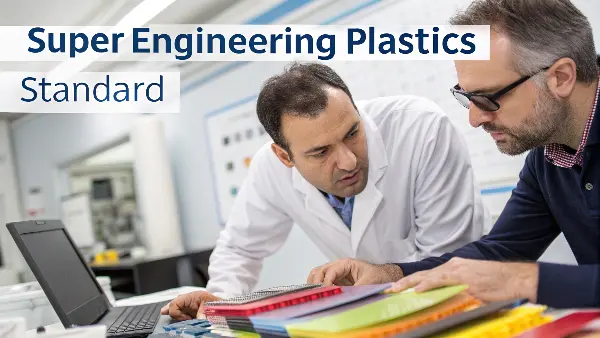
I’ll never forget the first time I worked with PEEK (Polyether Ether Ketone). A client in the oil and gas industry needed a seal that could withstand immense pressure, corrosive downhole fluids, and temperatures that would turn most plastics into goo. We specified PEEK, and the initial material cost was a shock to them. But when we factored in the cost of failure—a multi-million dollar shutdown—the price of PEEK became a bargain. That’s the essence of super engineering plastics: they perform where nothing else can.
The Elite Group of Polymers
These materials represent the pinnacle of polymer technology. They are not used for everyday applications; they are reserved for the most critical and extreme scenarios.
- PEEK (Polyether Ether Ketone): Often considered the king of thermoplastics, PEEK offers an incredible combination of high-temperature performance, mechanical strength, and chemical resistance. It’s biocompatible, making it suitable for medical implants, and its durability makes it a favorite in aerospace and semiconductor manufacturing.
- PEI (Polyetherimide): Known by its trade name ULTEM™, PEI is prized for its high strength-to-weight ratio, excellent thermal stability, and broad chemical resistance. It’s often used for electrical components, reusable medical instruments that require repeated steam sterilization, and aircraft interior parts due to its low smoke and toxicity ratings.
- PPS (Polyphenylene Sulfide): PPS is one of the most chemically resistant thermoplastics available. It is dimensionally very stable and has great thermal stability, making it an excellent candidate for automotive fluid handling systems, pump housings, and electrical components that operate in harsh environments.
- LCP (Liquid Crystal Polymer): LCPs are unique because of their highly ordered molecular structure, even in a liquid state. This allows for the molding of extremely thin-walled, complex parts with outstanding precision and dimensional stability. They are the material of choice for high-density electronic connectors and minute components in mobile devices.
When to Justify the Cost
The primary barrier to using these materials is their price—they can be 20 to 100 times more expensive than standard engineering plastics. So how do you justify the investment?
| Factor | Justification for Using Super Plastics |
|---|---|
| Temperature | Continuous operation above 150°C (302°F) is required. |
| Chemicals | Part is exposed to aggressive solvents, acids, or bases. |
| Weight Reduction | Replacing heavy metals like steel or bronze without compromising strength. |
| Cost of Failure | The economic or safety impact of a component failure is extremely high. |
| Regulations | Strict industry standards (e.g., aerospace, medical) demand top-tier performance. |
Choosing a super engineering plastic is an investment in reliability. For those truly challenging applications, they are not just an option; they are the only solution.
What Does the Future Hold for Plastic Engineering?
As a designer, are you constantly looking over the horizon for the next big thing? It’s easy to get caught up in today’s projects, but staying ahead means understanding where the industry is heading. The world of plastics is evolving faster than ever, driven by demands for sustainability, higher performance, and smarter functionality.
The future of plastic engineering is focused on three key areas: sustainability, enhanced performance, and functional integration. This means a move towards more bio-based and recycled materials, the development of advanced composites and nanocomposites for unprecedented strength-to-weight ratios, and the integration of smart capabilities like conductivity and self-healing properties directly into the polymers themselves. The line between material and component will continue to blur.

Throughout my career, I’ve seen plastic evolve from a cheap substitute for metal to a high-tech material that enables innovation. Now, we are on the cusp of another great leap. I’m already seeing an increase in client requests for molds designed to handle recycled materials or bio-resins. We are also getting inquiries about molding conductive plastics for integrated electronics. It’s a clear signal that the future is not just about making parts stronger or more heat-resistant; it’s about making them smarter, greener, and more integrated into the final product’s function.
Trend 1: The Rise of Sustainable Polymers
Sustainability is no longer a buzzword; it’s a core business requirement. This is pushing the industry in two main directions.
- Bio-Plastics and Bio-Based Resins: These are plastics derived from renewable resources like corn, sugarcane, or algae. While many early bio-plastics couldn’t match the performance of their petroleum-based counterparts, the new generation of bio-based PA and PBT is closing the gap, offering a greener alternative for durable applications.
- Advanced Recycling (Chemical Recycling): While traditional mechanical recycling downgrades plastic quality, chemical recycling breaks polymers down to their original monomers. These can then be used to create new plastics with virgin-like quality. This will create a truly circular economy for plastics, reducing waste and our reliance on fossil fuels.
Trend 2: Composites and Nanomaterials
The quest for lighter and stronger materials is relentless. The next frontier is in advanced composites.
- Carbon Fiber & Glass Fiber Composites: Reinforcing high-performance thermoplastics like PEEK or PA with continuous carbon or glass fibers creates materials with the strength of aluminum at a fraction of the weight. This is revolutionizing industries like aerospace and high-performance vehicles.
- Nanocomposites: Imagine adding tiny particles, like graphene or carbon nanotubes, into a polymer matrix. These nanocomposites can achieve dramatic improvements in mechanical, thermal, and electrical properties with very low loading levels, opening doors for things like electrostatic discharge (ESD) safe materials and super-strong, lightweight components.
Trend 3: Smart and Functional Plastics
This is perhaps the most exciting trend. Plastics are becoming active components, not just passive structures.
| Smart Functionality | Description | Future Application |
|---|---|---|
| Conductive Plastics | Polymers filled with conductive materials (e.g., carbon) to carry electrical current. | Integrated circuits, EMI/RFI shielding, smart textiles. |
| Self-Healing Polymers | Materials with the ability to repair minor cracks or scratches automatically. | Longer-lasting automotive coatings, durable electronics casings. |
| 3D/4D Printing Materials | Materials designed for additive manufacturing that can change shape over time when exposed to a stimulus (e.g., heat, light). | Self-assembling structures, adaptive medical devices. |
The future is about multifunctional materials. As a designer, this means you will have a toolbox filled with polymers that do more than just exist; they will sense, respond, and contribute to the function of the product in ways we are only beginning to imagine.
Conclusion
We’ve journeyed from standard engineering plastics to the elite world of ultra-performance polymers and glanced at the future. The key takeaway is that material selection is more critical than ever. Choosing the right plastic is not just a technical detail; it’s a strategic decision that drives innovation, ensures reliability, and defines what’s possible in modern product design.