
Struggling to get consistent results with PVC injection molding? It’s a notoriously difficult material that can lead to burnt parts, defects, and costly production delays if not handled correctly. You might be wasting time and money tweaking settings without a clear strategy. The key isn’t trial and error; it’s a deep understanding of the critical process variables that dictate success.
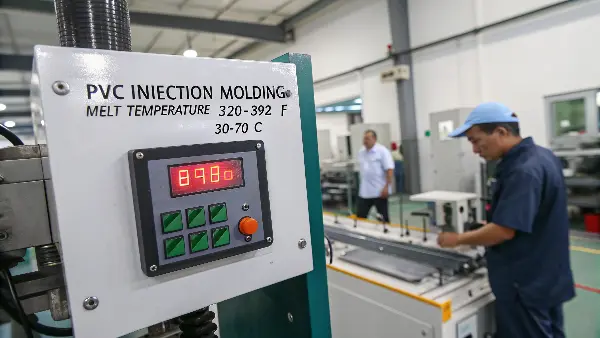
To optimize PVC injection molding, you must precisely control five critical parameters: melt temperature, mold temperature, injection pressure, shot size, and injection speed. For PVC, maintaining melt temperature between 160-200°C (320-392°F) is vital to prevent thermal degradation. A balanced mold temperature of 30-70°C (86-158°F) ensures proper flow and surface finish. Careful management of these variables, along with appropriate screw design and venting, prevents defects and ensures high-quality, consistent parts.
Getting these parameters right is the difference between a profitable production run and a pile of scrap. But knowing the names of the variables is just the start. The real skill lies in understanding how they interact with each other, especially for a sensitive material like PVC. Let’s dig deeper into each of these elements to give you the control you need over your manufacturing process.
What Are the Four Core Variables in Plastic Processing?
It’s easy to get lost in dozens of machine settings, feeling overwhelmed and unsure where to begin troubleshooting. This confusion often leads to random adjustments that make the problem worse, wasting valuable production time. The secret is to simplify your focus and master the four fundamental pillars that govern any plastic molding process.
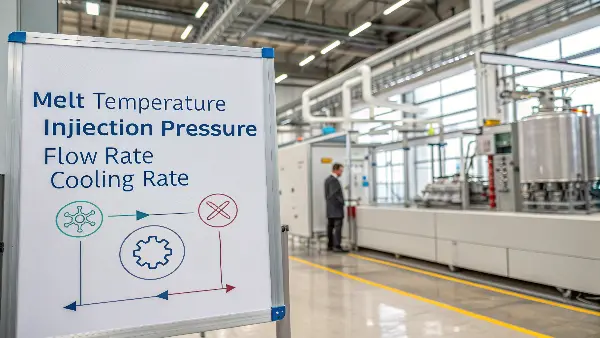
The four core variables in plastic processing are melt temperature, injection pressure, flow rate (or injection speed), and cooling rate. These elements are interconnected and form the foundation of a stable and repeatable injection molding process. Mastering the balance between how the plastic is heated, how it’s pushed into the mold, how quickly it fills the cavity, and how it solidifies is the key to achieving consistent part quality and dimensional accuracy.
Let’s break down these four fundamental variables. I always tell my team that if you understand these four, you can solve 90% of molding problems. They are the language the machine uses to talk to the plastic. It’s our job to understand that language to get the results we want.
1. Melt Temperature
This is the temperature of the plastic as it’s injected into the mold. It directly affects the material’s viscosity, or its ability to flow. For a material like PVC, this is incredibly critical. Too low, and the plastic won’t fill the mold properly, leading to short shots. Too high, and PVC can burn and degrade, releasing corrosive gases and ruining the part, the mold, and even the machine over time. Finding the sweet spot is essential.
2. Injection Pressure
This is the force used to push the molten plastic into the mold cavity. It’s composed of two main stages: filling pressure and holding (or packing) pressure. The filling pressure needs to be high enough to fill the entire mold before the plastic starts to freeze. The holding pressure is applied after filling to compensate for material shrinkage as it cools, preventing sink marks and voids.
3. Flow Rate
This variable, controlled by injection speed, determines how fast the molten plastic enters the mold. A faster flow rate can improve surface finish and prevent hesitation marks, but it can also cause jetting or burn marks due to high shear heat. A slower rate might be necessary for complex geometries but increases the risk of the plastic cooling too soon.
4. Cooling
Cooling begins the moment the plastic touches the cooler mold walls and continues until the part is solid enough to be ejected. The cooling time, mold temperature, and cooling channel design all influence this variable. It’s often the longest part of the cycle, so optimizing it can significantly reduce cycle times. For materials like PVC, proper cooling is vital for dimensional stability and preventing warpage.
| Core Variable | Critical Role for PVC | Consequence of Mismanagement |
|---|---|---|
| Melt Temperature | Controls viscosity and prevents thermal degradation. | Too high causes burning; too low causes short shots. |
| Injection Pressure | Ensures complete mold filling and compensates for shrinkage. | Too low leads to voids; too high causes flash. |
| Flow Rate | Dictates fill speed and affects surface finish. | Too fast causes jetting; too slow causes flow lines. |
| Cooling | Determines part solidification, final dimensions, and cycle time. | Improper cooling leads to warpage and long cycles. |
Which Parameters Are Most Critical for PVC Injection Molding?
You know the basics of molding, but PVC is a different animal. Applying standard parameters for plastics like ABS or PP to PVC can be a recipe for disaster. You might see parts that are discolored, brittle, or full of black specks, leaving you frustrated and your production schedule in jeopardy. The truth is, PVC’s sensitivity demands a specialized approach.
For PVC injection molding, the most critical parameters are melt temperature and residence time. PVC has a very narrow processing window and degrades quickly with excessive heat or prolonged exposure in the barrel. Therefore, maintaining a precise melt temperature (160-200°C) and ensuring a "first-in, first-out" material flow is paramount. Beyond this, proper mold venting to release corrosive gases and a chrome-plated screw and barrel are essential to prevent equipment damage and ensure part quality.
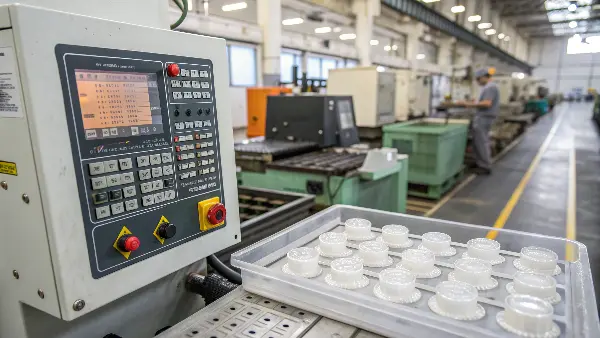
When I started my first factory, we took on a big PVC job. We treated it like any other material and paid the price. We fought against black specks and burnt material for weeks. The issue wasn’t just temperature; it was the time the material spent at that temperature. This experience taught me that with PVC, you have to think about heat and time together.
The Temperature-Time Relationship
PVC is extremely heat-sensitive. The longer it stays hot in the machine’s barrel, the more it degrades. This is why residence time is as critical as melt temperature. You need to match your shot size to the barrel capacity as closely as possible. A good rule of thumb is to use between 30% and 70% of the barrel’s capacity. Using a machine that is too large for the job means the PVC will sit in the hot barrel for too long, leading to degradation.
Screw and Barrel Considerations
The equipment itself is a critical parameter. Standard screws can create too much shear heat when processing PVC, adding to the thermal degradation problem.
- Screw Design: A lower compression ratio screw (e.g., 1.8:1 to 2.2:1) is recommended for PVC to minimize shear heating.
- Material: The screw, barrel, and nozzle should be made from corrosion-resistant materials or be chrome-plated. When PVC degrades, it releases hydrochloric acid, which will destroy standard steel components over time. I’ve seen non-plated molds get eaten away in a matter of days.
Mold Venting
This is a frequently overlooked but vital parameter. As PVC is injected, trapped air and any gases from slight degradation need a path to escape.
- Inadequate Venting: If vents are too small or clogged, these hot gases get compressed, causing burn marks on the part, often at the last point of fill. It also corrodes the mold steel.
- Proper Venting: Ensure deep and wide vents are cut into the mold’s parting line. This allows gases to escape easily, resulting in a better surface finish and protecting the mold’s longevity.
| Critical PVC Parameter | Why It’s Critical | Best Practice |
|---|---|---|
| Melt Temperature | Narrow processing window; risk of degradation. | Strictly control between 160-200°C (320-392°F). |
| Residence Time | PVC degrades over time at melt temperature. | Match shot size to barrel; aim for 30-70% barrel utilization. |
| Screw Design | High shear can burn the material. | Use a low-compression screw; ensure it is chrome-plated. |
| Mold Venting | Trapped corrosive gases cause burns and mold damage. | Ensure deep, clean vents at the end of the fill path. |
How Does Shot Size Impact PVC Molding Quality?
You’re carefully controlling your temperatures and pressures, yet you’re still getting inconsistent parts. Some look great, while others have black specks or flow lines. You might not realize that the problem isn’t your settings, but your machine choice. Using a machine with a barrel that’s too large for your part size is a hidden trap that can ruin your PVC parts.
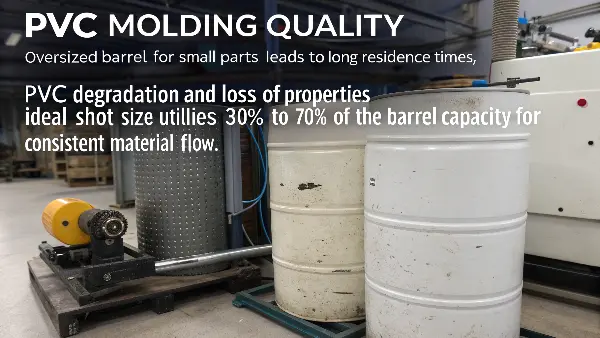
Shot size is a critical factor in PVC molding because it directly determines the material’s residence time in the heated barrel. An oversized barrel for a small part leads to long residence times, causing the heat-sensitive PVC to degrade, discolor, and lose its properties. The ideal shot size should utilize between 30% and 70% of the machine’s barrel capacity to ensure a consistent, "first-in, first-out" flow of fresh material, preventing thermal damage.
I remember a client, Michael, who was making small PVC electrical connectors. He was using a large 300-ton machine because it was available on his shop floor. He couldn’t figure out why his parts were so brittle. We analyzed his process and found his shot size was only 15% of the machine’s barrel capacity. The PVC was sitting in the barrel for multiple cycles, slowly cooking and breaking down. We moved the job to a smaller 80-ton machine, and the problem vanished instantly.
Why the "Cushion" Matters
When setting up your shot size, you also need to consider the cushion. This is the small amount of molten plastic left in the barrel at the end of injection, typically 5-10mm. This cushion is essential because it transmits the holding pressure to the part, which helps compensate for shrinkage.
- No Cushion: If the screw "bottoms out" (reaches zero), you lose all control over packing the part. This is a common cause of sink marks and inconsistent dimensions.
- Too Much Cushion: This can be an indicator that your shot size is too small for the barrel, increasing the residence time of that extra material.
Calculating Your Shot Size to Barrel Capacity
To avoid these issues, always perform a simple calculation before starting a job:
- Find your total shot weight: This is the weight of the part(s) plus the runner system.
- Find the machine’s maximum shot capacity: This is usually listed in the machine’s specifications in grams (g) or ounces (oz) for a specific material like Polystyrene (PS). Remember to convert this for PVC’s density.
- Calculate the utilization percentage:
(Total Shot Weight / Max Shot Capacity) * 100
Your goal is to be in that 30% to 70% range. If you are below 30%, you are at high risk for material degradation. If you are above 70%, you might have trouble with melt consistency and recovery time.
| Barrel Utilization | Risk Level for PVC | Primary Concern |
|---|---|---|
| < 30% | High | Material degradation due to long residence time. |
| 30% – 70% | Optimal | Stable process with consistent material quality. |
| > 70% | Moderate | Inconsistent melting, long screw recovery times. |
What Is a Critical Factor Affecting Your Injection Molding Costs?
As a business owner, you’re always focused on the bottom line. You might think material price is the biggest cost driver in injection molding. But focusing only on the raw material cost can blind you to a much larger factor that quietly drains your profits and extends your timelines: the complexity of your mold.
A critical, often underestimated, factor affecting injection molding cost is the injection mold itself. Mold complexity—driven by part design, number of cavities, side actions, and surface finish requirements—directly dictates tooling costs, which can range from a few thousand to hundreds of thousands of dollars. Furthermore, a complex mold increases maintenance costs and can lead to longer cycle times, which directly impacts the final price of each part produced.
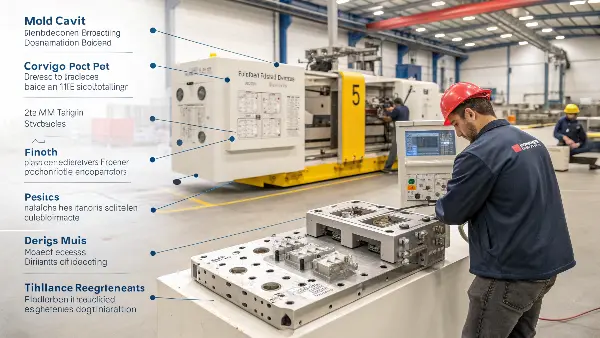
I’ve had many conversations with clients who come to me with an incredibly complex part design, asking for a cheap mold. They are often shocked when the tooling quote comes back higher than they expected. I always explain that we’re not just making a plastic part; we’re first building a high-precision machine (the mold) to make that part. The more complicated the part, the more complicated that machine has to be.
Breaking Down Mold Complexity and Cost
Several elements contribute to the complexity and cost of an injection mold. Understanding them can help you design parts that are more economical to manufacture.
- Number of Cavities: A single-cavity mold produces one part per cycle. A multi-cavity mold produces multiple parts, which lowers the per-part cost but significantly increases the upfront tooling cost and complexity.
- Undercuts and Side Actions: If your part has features like clips or side holes, the mold needs "side actions" or "lifters"—moving parts within the mold that slide in and out to form these features. Each moving part adds complexity, cost, and a potential failure point.
- Surface Finish: A simple matte finish is standard and low-cost. A high-gloss, mirror-like polish requires many hours of skilled manual labor and specialized equipment, driving up the mold’s price. Textured finishes also add to the cost.
Design for Manufacturability (DFM)
The best way to control mold costs is to focus on Design for Manufacturability (DFM) early in the process. This means designing the part with the manufacturing process in mind. I work with my clients on DFM to identify and eliminate unnecessary complexity before a single piece of steel is cut. Small changes, like adjusting a part feature to eliminate an undercut, can sometimes save thousands of dollars in tooling costs and reduce production headaches down the line. It’s the most valuable conversation you can have.
| Mold Feature | Low Cost | High Cost | Impact on Part Price |
|---|---|---|---|
| Cavitation | Single Cavity | Multi-Cavity (8+) | High cavitation lowers per-part cost but has a high initial investment. |
| Part Geometry | Simple, open/close | Complex, with undercuts | Side actions increase maintenance and can slow cycle times. |
| Surface Finish | Standard machine finish | High-polish SPI-A1 | Polishing is pure labor cost; significantly adds to tooling price. |
| Tolerances | Standard (+/- 0.1mm) | Tight (+/- 0.02mm) | Requires more precise machining and more quality checks. |
Conclusion
Mastering PVC injection molding is not about a secret formula, but about a solid understanding of a few core principles. By focusing on the critical link between temperature and time, choosing the right shot size for your machine, and designing parts that are efficient to manufacture, you gain control over the process. This knowledge turns a challenging material like PVC into a reliable and profitable part of your production.