
Ever stood before a plastic injection molded machine and felt awed and intimidated? You look at the sophisticated controls and robust hydraulics and you can’t help but think it must take you years to learn the ropes of such a job. That can make manufacturing seem like a black box, something complete separate from your designing work. But knowing what the machines do is fundamental to good designing.
Operating an injection mold machine for simple, repeated tasks isn’t very difficult. The hard part is the setup, optimizing the process, and troubleshooting. Though nearly anyone can be trained on picking up a completed part and opening the safety door, it takes endless training, experience, and an intimate grasp of the overall process for a capable technician who can accurately setup a mold, make minor adjustments for the best quality and shortest cycle time, and troubleshoot such problems as flash or sink mark problems.
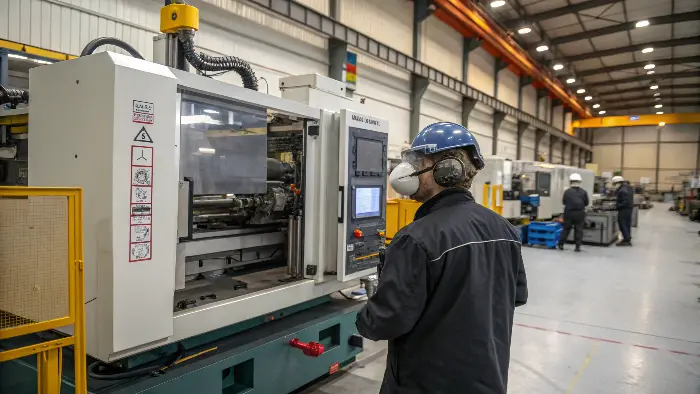
Knowing that the machine is in an automatic cycle is a thing but knowing the elements that make the cycle efficient and successful is a whole other thing. There is very little difference between an operator and a master technician, but that little is what can make the difference between an average and a great product. We will separate out what it actually means to operate one of these machines, and what that implies to you as a designer or engineer.
Is Injection Molding Actually Difficult to Master?
You’ve probably been told that injection molded parts are an arcane process replete with techno-jargon and dozens of ways for something to go wrong. This image can make you leery of delving further, and you might simply submit your design and wait for the results. This sit-back-and-wait method forfeits you the chance of product refinements and cost savings that you can get through proper education on the process. But it is not an immutable code; it is a skill that can be mastered.
Injection molding isn’t difficult to learn at the elementary level, but it is extremely difficult to master. The basic problem is controlling the myriad interacting variables. Material properties, geometric shape of the mold, and machine variables like temperature, pressure, and speed all interact among themselves. The slightest adjustment of one variable can cause an unwanted defect elsewhere. Mastery is the acquisition through experience of the intuitive skill of forecasting such interaction and correcting the trouble quickly and efficiently.
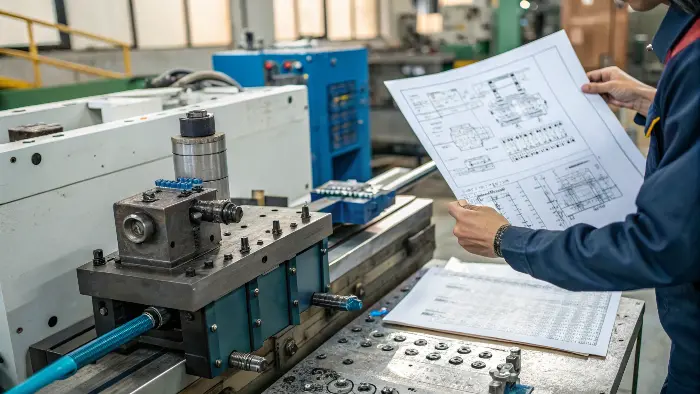
The Learning Curve: From Operator to Technician
The career path of an injection molder has separate steps. A beginner can begin from the basic jobs: observing the machine, unloading the parts, and carrying out entry-level quality checks. As a beginner, your work is simply following directions. However, the learning process starts when you are shifted into the process tech position. This is where you get the "why" for the "what."
I remember my early days on the factory floor. I only cared for keeping the machine running and retrieving parts off the belt. My first real problem happened one day when we were producing a tiny housing panel with an incredibly thin wall. No matter what we did, the parts were coming warped. Hours were spent by my boss just adjusting settings, but also educating me as to why. We adjusted the packing pressure, lowered the melt temperature, and lengthened the cooling time. My first real education was that one could not operate this machine by simply pushing buttons, but through an understanding of the physics of plastics.
Where the Real Challenge Lies
The true complexity of injection molding is in the balance. You are trying to achieve a perfect equilibrium between quality, speed, and cost. This requires a deep and practical knowledge of several areas.
| Area of Knowledge | Basic Understanding | Advanced Mastery |
|---|---|---|
| Material Science | Knows which plastic pellet to load. | Understands melt flow, shrink rates, and moisture content for different polymers. |
| Mold Design | Can identify the main parts of a mold. | Knows how gate location, cooling channels, and venting affect the final part. |
| Machine Parameters | Can input pre-defined settings. | Can adjust pressure, speed, and temperature to troubleshoot defects and reduce cycle time. |
| Troubleshooting | Reports a defect like a short shot. | Diagnoses the root cause of the short shot and systematically fixes it. |
This holistic understanding is what makes an expert. It’s the ability to look at a warped part and know instantly whether to check the cooling lines in the mold, the holding pressure on the machine, or the moisture content of the raw material.
Factors Influencing Difficulty
There are several reasons that make plastic injection molding complex. Some of them include:
1. Material Selection
The melting, flow, and cooling time of various kinds of plastic vary. The proper material selection might influence not merely the strength and appearance of final output, as well as productivity of entire injection molding operation, but influence them as well.
2. Mold Design
Appropriate design of a mold is required to obtain regular and accurate parts. The draft angle, wall thickness, and cooling channels are to be taken into consideration. Ineffective design of a mold can lead to defects such as incomplete fills or warpage.
3. Machine Settings
Accurate machine settings such as temperature, pressure, and injection speed should be determined accurately. Inaccurate settings will lead to defects, longer cycle times, and wasted materials.
4. Quality Control
Regular checking and testing are also a must in plastic injection molding production. Operators must discover potential problems early to reduce loss and achieve high-quality productions
What Are the Steps to Operate a Plastic Injection Molding Machine?
When one sits at the control panel of a typical injection molding machine, it may seem like one is in an airplane cockpit. It has innumerable buttons, screens and graphs. It is natural to have that feeling that a single misstep of the key-pad might lead to an expensive error or even a severe safety problem. This fear may make you not wish to have practical experience. However, the whole process may be reduced to a rational chain of actions that anybody can master.
In order to run an injection molding machine, the initial step is to check the safety and to pre-heat the barrel. Next, the mold is done by carefully placing it into a machine and clamping. You determine the most important process parameters, including injection speed, pressure, and cooling time, on loading the plastic raw material into the hopper. You then empty out the old stuff and do some trial runs to ascertain quality. After the part is good, you cross-set the machine to automatic mode to produce continually.
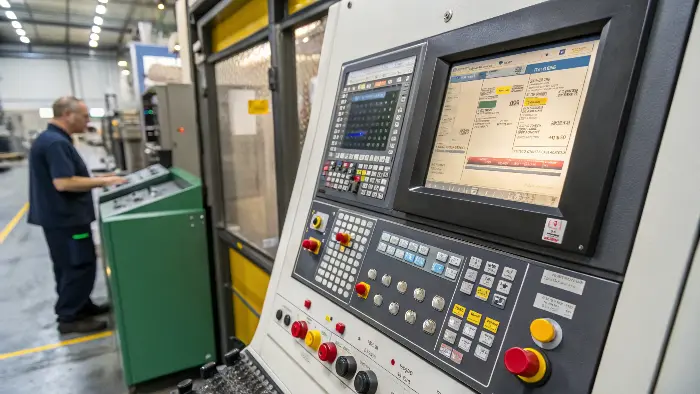
A Step-by-Step Guide to Operation
Operating the machine is a systematic process. Breaking it down makes it much more manageable. Every good technician follows a similar workflow to ensure consistency and safety.
Phase 1: Preparation and Safety
The first thing is safety. The initial thing that any operator gets to learn is that the safety gates, emergency stop buttons and warning signs are not recommendations but vital rules. I once witnessed a new operator to save some seconds by passing through a safety sensor. It led to a spoiled mold which cost us thousands and one production line was down a whole day. You need to hear only once that lesson, and it is better to hear it read. Once the safety features are confirmed, then the next process is to pre-heat the barrel of the machine to the required specific temperature in which the plastic material in use is supposed to be heated.
Phase 2: Mold Setup and Material Loading
It is a physical and exact step. The heavy mold should be lifted with the use of a hoisted and attached to the platens of the machine. You must hook up the water cooling lines and have all connections tight. When the mold is set, you add the plastic pellets in the hopper. Ensure that the material is dry and clean because moisture is a major source of defect.
Phase 3: Setting Parameters and Test Runs
This is where the technician’s skill really shines. You program the "recipe" for the part into the machine’s controller. This involves setting dozens of variables.
| Parameter | Function | Why It’s Important |
|---|---|---|
| Melt Temperature | Heats the plastic to a molten state. | Too hot can degrade material; too cold causes flow issues. |
| Injection Pressure | Pushes the molten plastic into the mold. | Determines if the mold fills completely. |
| Holding Pressure | Packs extra material in to combat shrinkage. | Prevents sink marks and voids as the part cools. |
| Cooling Time | Allows the part to solidify in the mold. | The biggest factor in cycle time and part stability. |
After inputting the initial settings, you perform a "purge" to clear any old material from the barrel. Then, you run a few cycles on a semi-automatic setting, inspecting each part and making small adjustments until the part is perfect.
Phase 4: Production and Monitoring
Once the process is stable and the parts meet quality standards, you switch the machine to full-automatic mode. The job isn’t over, though. A good operator constantly monitors the process, performing regular quality checks on the parts and listening to the rhythm of the machine.
Challenges of the Injection Molding Machine in the Injection Molding Process
Injection molding machines are at the center of the creation of plastic elements, although they also introduce a range of issues that may influence productivity, the quality of products, and their final price. Among the most crucial problems are:
Accurate heat regulation.
It is i mportant to keep the barrel, mold and cooling system in the proper temperature. Any minor deviations may result in defects like warpage, sink marks or missing filling. One of the most widespread problems that operators have to deal with is the attainment of the stable temperature control.
Pressure Regulation
Injection molding has to be precisely controlled in terms of injection and clamping pressures. In case of too low pressure, short shots and voids can take place; in case too high, flash and tool damage can ensue. The process of balancing pressure is usually a sensitive one.
Cycle Time Optimization
Manufacturers work to achieve higher cycle time in order to enhance productivity. Nevertheless, excessive shortening of the cooling or injection time will affect the quality of parts. There is always a struggle to balance between speed and quality.
Material Handling and Compatibility.
Dissimilar plastics need disparate conditions of processing. The machines are supposed to work with a broad range of materials without contamination and degradation which may present a challenge when changing between resins.
Precision Control and Automation.
The injection molding machines of modern days are highly automated and computer controlled. Though these systems enhance precision, they have to be operated by skilled personnel in order to program, calibrate, and troubleshoot.
Energy Consumption
The injection molding machines consume a lot of energy, particularly the hydraulic machines that are older. The extensive consumption of energy raises the production expense and raises sustainability issues causing manufacturers to seek more energy-efficient solutions.
Start up/shutdown issues.
Machines tend to give defective parts especially during startup until sufficient stable operating conditions are achieved. On the same note, closing downs can lead to material waste and accumulation of residue that will impact on the production cycle later.
Stability in Large Bulk Consistency.
Mass production is appreciated in injection molding, however the challenge of ensuring that the quality of parts remain constant throughout the production of thousands or millions of products is a significant challenge. The machines should operate effectively during prolonged durations without pressure, temperature and cycle time deviations.
With the help of frequent maintenance, training of the operators, and the application of modern machinery, the company like CKMold can achieve the stable performance, less downtime, and quality plastic components.
Is Being an Injection Molding Operator a Hard Job?
You may think that an injection molding operator has only a role to stand next to the machine all day and do the same simple thing. This is an impression that may make you think that it is a low-skill, drilled job. The job in question actually requires a peculiar blend of physical strength, full concentration and ability to solve problems, and is far more than merely a button push. So, is it a "hard" job?
Surely, it may be difficult to sit and stay as an injection molding operator, yet the challenge depends on the position. The simplest parts-catcher job may be physically strenuous and monotonous. The work of a setup or process technician is, however, mentally extremely demanding. It involves profound technical understanding of both the mold structures and systems, the constant need to solve problems and pay attention to details in order to streamline production. The work is not only physical but of the great responsibility of ensuring quality and efficiency in the job.
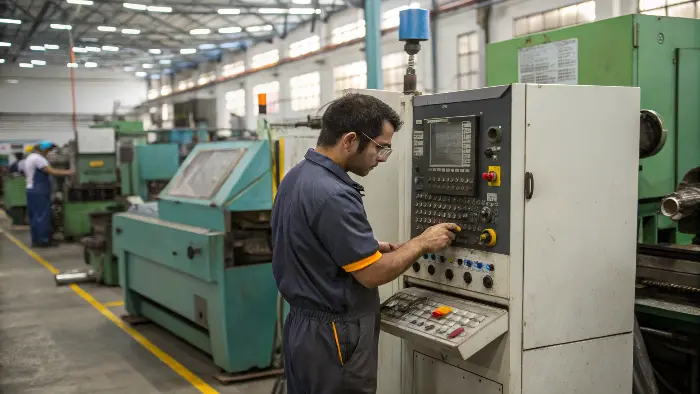
The Physical vs. Mental Demands
The difficulty of the job depends heavily on your title. An "Operator" and a "Technician" might work on the same machine, but their jobs are worlds apart.
-
The Operator: This role is often focused on the output of the machine. The work can be physically demanding, involving standing for long shifts, performing repetitive motions like trimming or assembling parts, and packing boxes. While it requires focus and an eye for obvious defects, the primary challenge is often physical endurance.
-
The Technician (or Setter): This role is about the process. The technician sets up the molds, programs the machine, and is the first line of defense when things go wrong. This job is more mentally taxing. They need to be a detective, figuring out why a part has flash on one edge or a sink mark in the middle. Their challenge is to solve problems under pressure, because every minute the machine is down, the company is losing money.
I used to work with a senior technician named Wei. He had this amazing ability to diagnose problems just by sound. He’d walk past a machine, pause for a moment, and say, "The pack pressure sounds a little high on that one," without even glancing at the control screen. He was almost always right. That level of intuition isn’t something you learn in a textbook. It’s the "hard" part of the job that’s built over thousands of hours of focused, hands-on work.
A Day in the Life
A typical day for a process technician isn’t just watching a machine run. It might involve:
| Role Title | Key Responsibilities & Skills |
|---|---|
| Machine Operator | Monitor machine cycles, remove parts, perform basic visual inspection, trim excess plastic (de-gating), pack finished products. Requires stamina and attention to detail. |
| Setup Technician | Change molds (often weighing hundreds or thousands of pounds), connect water and hydraulic lines, load correct material, start up the new process safely. Requires mechanical skill and strength. |
| Process Technician | Fine-tune machine parameters to optimize cycle time and quality, troubleshoot defects (flash, shorts, warping), document process settings. Requires deep process knowledge and problem-solving skills. |
The job is a blend of a mechanic, a scientist, and a troubleshooter. It’s challenging but also incredibly rewarding when you solve a complex problem and see the machine running perfectly, producing thousands of flawless parts.
Faults That Occur During the Production Process of Injection Molding
Injection molding is a very effective and accurate manufacturing process, although it has no immunity against production defects. Different defects can occur in the event of faulty parameter control, material, or tooling. Some of the most outspoken defects are:
Sink Marks
These Sink marks are small depressions that are observed in molded products. Most often, this occurs when there is non-uniform cooling of plastic, or non-optimality in design of the mold in wall thickness.
Short Shots
It occurs when there is a low injection of molten plastic into a cavity mold; therefore, parts will be faulty. The short shot is caused by low injection pressure, faulty venting, and low flow of materials.
Flash
Flash is small webs of excess plastic that pull away from the mold cavity. This occurs usually when there is faulty clamping of the mold, or injection pressure gets too great.
Weld Lines
Weld lines are visible lines on molded parts where two flow fronts of molten plastic meet. They weaken the product and often occur due to improper mold temperature or injection speed.
Burn Marks
Burn marks show up as dark spots at thesurface of molded parts. They are usually due to enclosed air or gas that overheats while injection.
Voids and Bubbles
Voids are air bubbles trapped inside of a molded item, while bubbles are found externally. Bubbles are caused by gas becoming trapped in the molding, while voids happen as a consequence of gas becoming too rapidly.
Warpage
It happens when parts bend or twist when cooled. Warpage is triggered by non-uniform cooling, inconsistency of walls in wall thickness, or residual stress in materials.
Discolor
It is caused by overheating of the plastic raw material or by contamination of unwanted materials. It results in variations in coloring or in dark spots at the product’s surface.
Delamination
Delamination happens when there is layer separation at the molded face, usually as a consequence of contamination, incompatibility of materials, or underdrying of resins before processing.
Jetting
Jetting produces a wave-like or squiggly texture at the part’s skin. This occurs typically at high-velocity entry of molten plastic into the cavity of the mold with minimal cooling.
Through precise regulation of injection speed, mold temperature, raw material, and machine conditions, it is possible to minimize such faults and maintain steady, high-quality output.
Can a Plastic Injection Molding Business Be Profitable?
Thinking of the huge expenditure incurred in one injection molding machine alone, not to mention the expensive cost of a tailor made steel mold, one is left wondering how anyone could even make a profit in this business. The massive initial cost can be like an elephant. This emphasis on initial cost, though, conceals the unbelievable financial benefit of the process: gigantic scale. So, is it a profitable venture?
Yes, plastic injection molding business can be highly profitable, yet, it is dependent on volume. Initial high machinery and moulds, expenses are compensated with a very low cost-per-part after production is operational. Profitability depends on maximizing the amount of machine uptime, realizing quick cycle times, low scrap rates and large, long-run orders. The business model is founded on the use of speed and repeatability to access mass markets and is incredibly profitable when operated with efficiency.
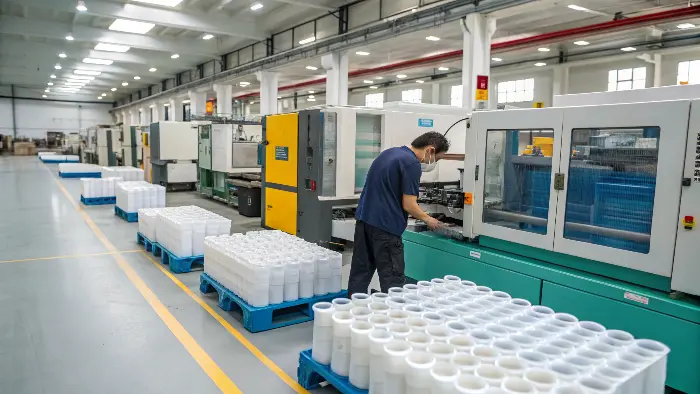
The High Initial Investment
It cannot be avoided: the business of injection molding is capital-intensive to start. Depending on machinery size and capabilities, a new industrial machine would cost between 50,000 and above 500,000. To top it all, the products need their own mold, which may cost between $5,000 to elaborate prototype mold, or more than 100,000 on a complicated, multi-cavity production mold. The largest challenge is this start up cost.
I can say that one of the most frightening experiences of my life was when I bought the first machine when I started my own company. The first few months I was simply concerned with how I could get enough to finance and payroll. I was not thinking about profit, I was thinking survival.
The Path to Profitability
The injection molding magic is in the concept of amortization. Big Mold Price is a one-off cost. When you are making 1,000 parts only, the mold cost is very high. However, when you order 500,000 parts the cost of the mold represents a small percentage of the end product.
Everything was different in my company when we won our initial big order of 250,000 pieces of a consumer product component. All of a sudden the math seemed entirely different. The mold price that had been a mountain now was only a hillock on a quarter-million pieces. The plastic resin, electricity and labor were very cheap costs of each part. This is when I really realized the strength of scale in this industry.
Key Factors for Success
Profit isn’t guaranteed. It depends on operational excellence.
| Cost Component | Impact on Profitability | How to Optimize It |
|---|---|---|
| Mold Cost | A large, one-time investment per product. | Design for manufacturability (DFM) to simplify the mold and reduce its cost. |
| Machine Uptime | Idle machines don’t make money. | Efficient mold changes, preventative maintenance, and skilled technicians reduce downtime. |
| Cycle Time | The speed at which parts are made. | Shaving even one second off the cycle time saves thousands of dollars on a large run. |
| Scrap Rate | Defective parts are wasted material and time. | A stable, well-defined process with tight quality control minimizes scrap. |
A profitable molding business is a well-oiled machine in every sense of the word. It’s about getting good contracts, yes, but it’s also about ruthlessly pursuing efficiency on the factory floor.
Conclusion
It is a profound and valuable skill, then, to learn plastic injection molding, as a child might learn to open the safety door and remove a finished part. It is an art that perfectly involves science, experience and to some extent art. Learning all this process not only in the day-to-day work of the operator but also in what makes the business profitable will make you an even wiser and better designer or engineer. It is a tricky world though it is a learning process worth doing.