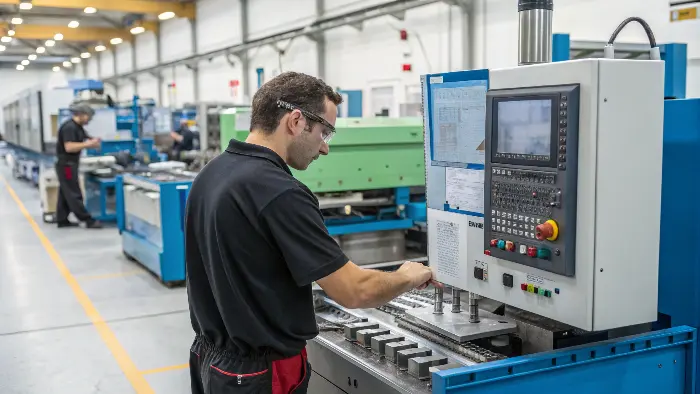
Plastic molding services can cover anything from molding an existing tool to managing DFM, toolmaking, trials, production and quality deliverables. Buyers should define the required scope and approval gates before comparing suppliers.
Plastic molding services can range from a single molding operation to a complete product-to-production workflow. A capable service provider may support DFM, material selection, mold design, tooling, sampling, process development, injection molding, secondary operations, inspection, packaging and logistics. Buyers should define which responsibilities they need covered and what technical evidence will be delivered at each stage.
Related CKMOLD resources: injection mold services, DFM analysis, production injection molding.
What Does a Plastic Molding Service Actually Include?
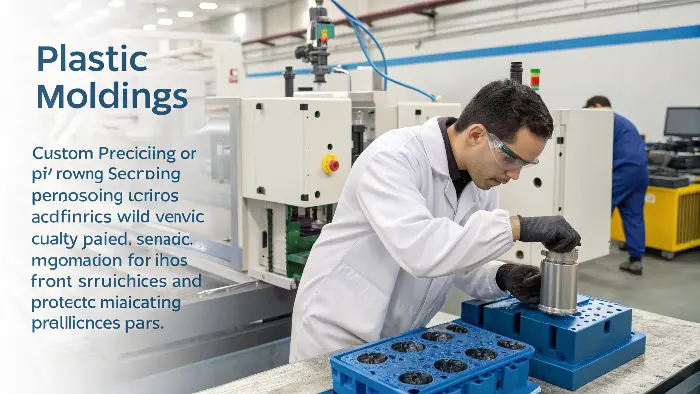
A plastic molding service is the agreed chain of deliverables that takes a released product requirement through DFM, tool design/build, sampling, process development, validation, production, inspection and delivery. Scope varies by supplier: some build tools only, some mold parts only, and some coordinate both with qualified subcontractors.
Before award, identify who owns CAD changes, mold design, steel/components, hot runner, texture, trials, inspection, secondary operations, packaging, freight, tool ownership, maintenance and transfer support. “Full service” is useful only when each item has an owner, output and acceptance gate.
For an injection-molded program, compare that scope with CKMOLD’s injection mold services. The related guide to design for manufacturability for injection-molded parts explains the part-design questions that should be resolved before tool release. Submit the same requirements through the RFQ page.
Which Molding Process Fits the Part?
Process selection starts with geometry, material form, annual quantity, tolerance, surface, performance and validation—not with a provider’s equipment list. Injection molding is suited to repeatable thermoplastic parts with a dedicated closed tool. Blow molding is used for suitable hollow forms; extrusion for continuous profiles; thermoforming for heated sheet; rotational molding for certain large hollow parts; and compression/transfer processes for suitable compounds.
These routes use different feedstocks, tools, tolerances and economics. Ask the bidder to explain why the proposed route fits the product and what geometry or material changes it requires.
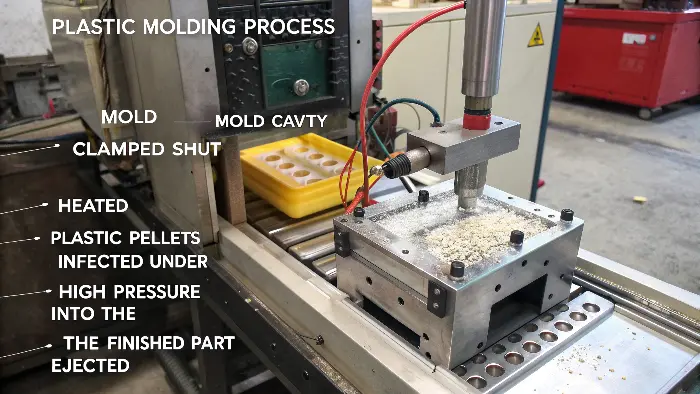
Process Comparison for a Buyer
| Route | Typical product question | Evidence to request |
|---|---|---|
| Injection molding | Can a dedicated tool repeatedly form this solid thermoplastic geometry? | DFM, mold concept, machine fit, trial and CTQ plan |
| Blow molding | Does the product need an enclosed hollow body and controlled neck/parison? | process variant, wall distribution and leak/neck tests |
| Extrusion | Is the section continuous along its length? | die concept, line rate, cut/secondary operations and profile inspection |
| Thermoforming | Can formed sheet meet wall, detail and trim requirements? | sheet spec, draw ratio, trim method and dimensional limits |
| Compression/transfer | Does a thermoset, rubber or composite compound suit the requirement? | material/cure control, flash/trim and test plan |
| Rotational molding | Is a large hollow, low-pressure part acceptable at the required tolerance and cycle? | powder/material, wall-control and leak/warp evidence |
This comparison does not claim that CKMOLD performs every listed process. Confirm the named plant, equipment and subcontracted scope for the actual project.
What Does the Molder Control During Production?
The production team verifies material identity and condition, installs and protects the mold, follows an approved process, approves first-off parts, monitors defined signals and CTQs, segregates nonconforming output, records lots and performs planned maintenance. Engineers and toolmakers control changes that exceed the operator’s authorized limits.
A buyer should request the process sheet, inspection plan, reaction plan, maintenance responsibility and traceability record. Job titles alone do not prove that those controls operate.
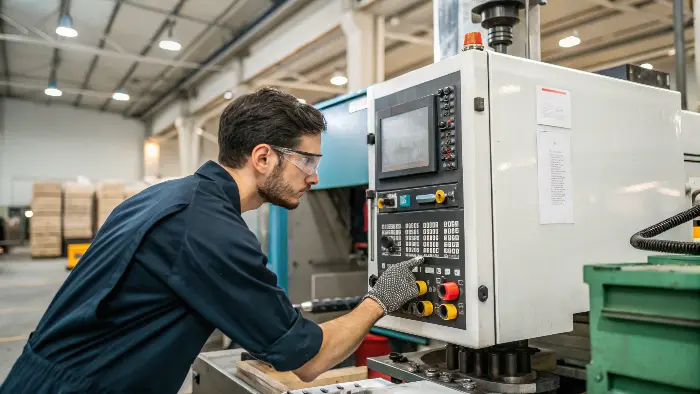
Define Roles at Each Approval Gate
Assign named responsibility for product revision, DFM approval, mold design, machining/fitting, sampling, process approval, metrology, production release, engineering changes and shipment. Specify who may adjust the process, repair steel or accept a deviation.
This role map prevents a technical question from becoming an unrecorded sales promise and tells the buyer which evidence should exist at each milestone.
Product and Material Review
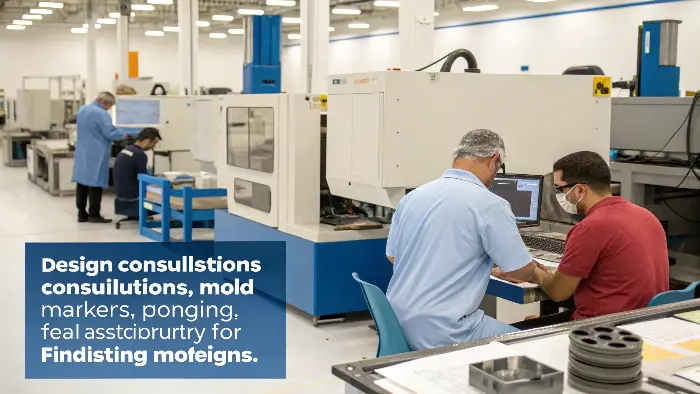
The service begins with 3D CAD, drawings, resin, tolerance, surface, assembly and volume review. Engineers should identify draft, wall, parting line, gate, ejection, shrinkage and material risks before the quote is finalized. This stage determines whether later tooling work is based on a manufacturable definition.
Mold Design and Tool Construction
Tooling services may include mold-flow review, cavity and core design, slides, lifters, hot or cold runners, cooling, venting, ejection and standard-component selection. The supplier should control revisions and provide a clear mold specification, trial plan and ownership record.
Sampling and Process Development
T1 and later trials should be treated as engineering checkpoints. Review fill, flash, sink, weld lines, warpage, part weight, dimensions, surface, cycle and ejection. A controlled correction list connects each issue to a design or process change and identifies the sample revision used for approval.
Production and Quality Control
Production services should include material-lot control, drying or storage requirements, setup standards, first-article checks, in-process inspection, final inspection, nonconformance handling and traceability. The right inspection plan is based on function and risk, not on measuring every dimension without a purpose.
Secondary Operations and Delivery
Some programs require insert molding, overmolding, trimming, assembly, printing, ultrasonic welding, packaging or kitting. Confirm who controls these operations, how defects are defined and how finished products are protected during export. Delivery is part of the service when the project depends on a complete ready-to-use component.
Plastic Molding Services? From DFM and Tooling to Production: Buyer Review Checklist
- Define whether the supplier owns DFM, tooling, molding, assembly, inspection and logistics responsibilities.
- Require controlled CAD, mold, material, trial and process documentation.
- Approve samples using dimensions, appearance, weight, function and cycle evidence.
- Align material, quality, secondary-operation, packaging and traceability requirements.
- Use a single corrective-action path from prototype through production delivery.
FAQ
Do plastic molding services include mold design?
Some providers include DFM and mold design, while others only run customer-owned tooling; define the scope before quoting.
What should a molding service provider deliver?
Typical deliverables may include DFM feedback, tool drawings, samples, inspection data, material records, process information and production-quality documentation.
Conclusion
Plastic molding services should be purchased as a defined set of responsibilities and deliverables. Match the forming process to the part, assign ownership at DFM, tool, trial and production gates, and approve the program through controlled drawings, samples, process data and inspection evidence.