
Home / Engineering Support / DFM & Moldflow Analysis for Injection Molding
CKMOLD separates three levels of review: a preliminary manufacturability check during RFQ, a detailed DFM after commercial alignment, and moldflow analysis when simulation is justified and separately scoped. This prevents a quick quotation screen from being confused with a full engineering deliverable.
The output identifies what must change before tooling, what is recommended but negotiable, and what remains an accepted project risk. Customer approval closes the loop before steel and major components are released.
Fast screen for quote-critical manufacturability risks
Annotated engineering review after scope alignment
Separately scoped simulation when needed
Resolved basis before steel cutting
Reviewed by CKMOLD project engineering • Last updated August 2026
A focused screen for visible geometry, material and tooling issues that affect whether CKMOLD can quote responsibly.
A structured review after the commercial basis is aligned and before the mold design is released.
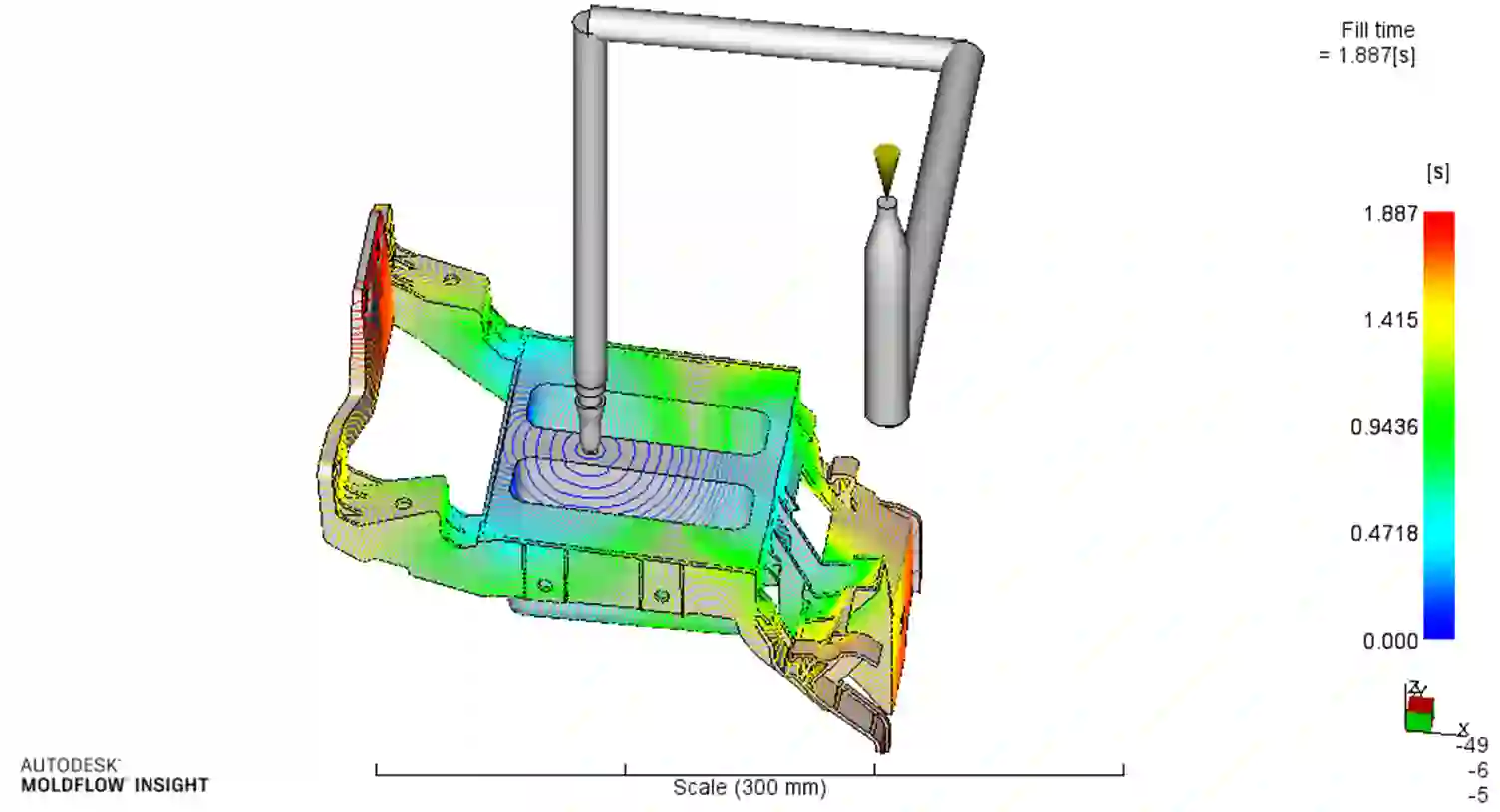
Simulation is quoted separately when flow length, weld location, pressure, cooling, warp or cavity balance cannot be addressed adequately by review alone.
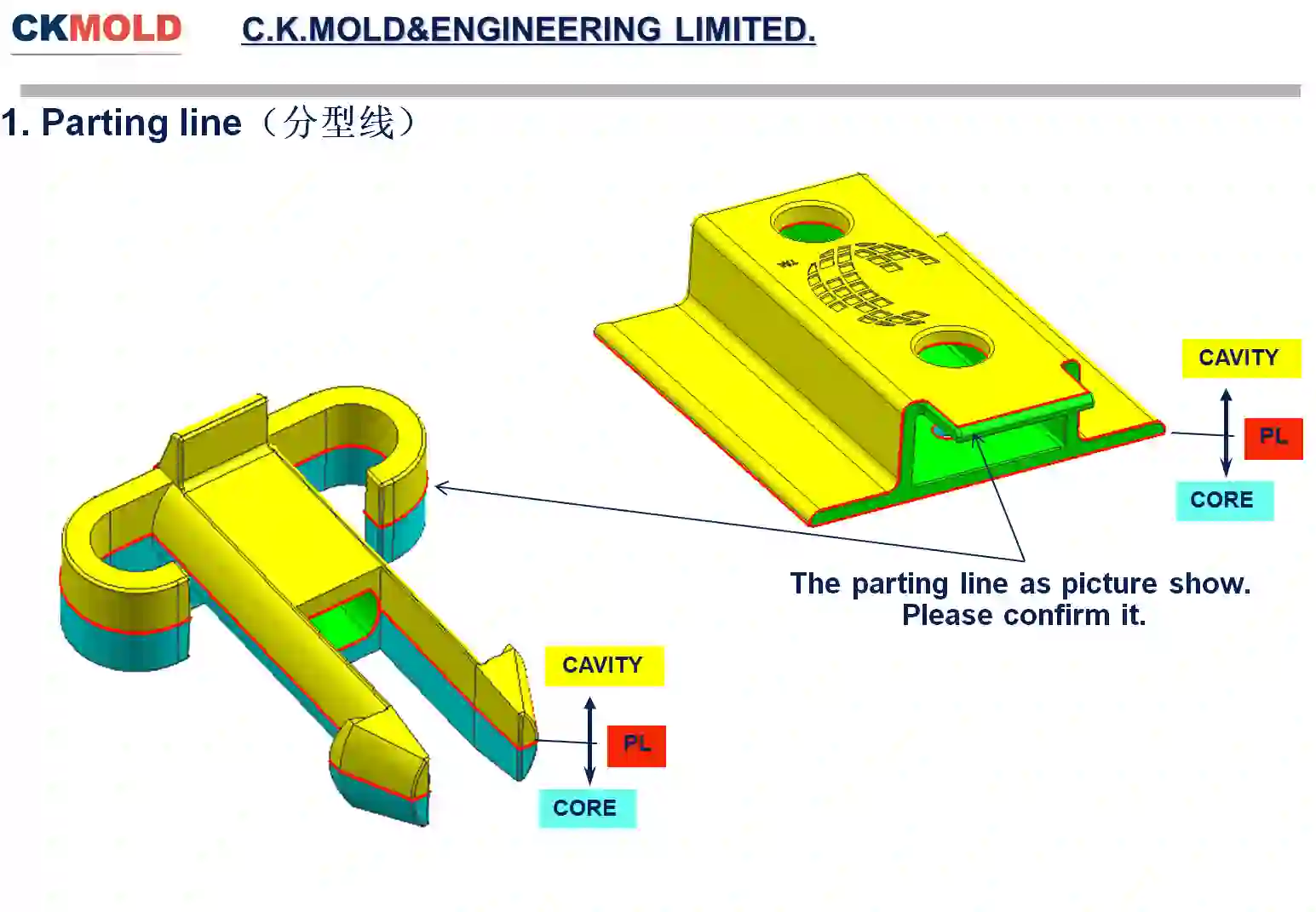
Review draw direction, local draft, texture allowance, shutoffs and surfaces at risk of scuffing or difficult release.
Identify thick intersections, abrupt transitions, unsupported posts and geometry likely to create sink, read-through or long cooling.
Separate avoidable geometry from features that justify sliders, lifters, inserts or other side-action solutions.
Discuss candidate gate regions, visible vestige, weld-line sensitivity, air traps and the limits of review without simulation.
Relate resin, fiber direction, wall distribution, cooling and tolerance intent; escalate to moldflow when prediction risk is high.
Coordinate draft, ejector support, deformation risk and witness marks with customer-facing surfaces.
Identify critical-to-function dimensions, likely molding capability drivers and dimensions that should be controlled through assembly or measurement strategy.
Review drying, wear, corrosion, transparency, gloss, texture, color and post-processing requirements tied to the selected grade.
Check snap engagement, fastening, sealing, mating clearance and stress concentration so manufacturability changes do not break product intent.
Before: a cosmetic housing has a thick boss intersection near the visible outer wall, minimal draft on the textured face and an undercut that would force a side action. The CAD looks complete, but the combination raises sink, scuff and tooling-complexity risk.
After review: the boss connection is redistributed with supporting ribs, draft is aligned with the intended texture, and the undercut is either removed through a feature revision or accepted with a defined side-action concept. The report records what changed, why, and which customer requirement was protected.
Lock the reviewed CAD revision, resin, finish, quantities, critical dimensions, assembly and known press constraints.
Show the location, risk mechanism and practical effect instead of writing generic molding advice.
Mark items as must-change, recommended, customer decision or accepted risk with an owner for the next action.
Update product CAD or mold concept, then verify that the change did not create a new interface or appearance problem.
Record the approved revision and remaining assumptions before mold design is finalized and steel is cut.
A condition that prevents feasible tooling, safe tool motion, reliable part release, material flow or a critical function from being met on the proposed basis.
A change likely to improve robustness, appearance, maintenance, cycle or cost, but the customer may retain the geometry after understanding the tradeoff.
A known issue the customer chooses to carry because of function, timing or redesign constraints. Acceptance does not turn uncertainty into a guarantee.
No. The preliminary review identifies quote-critical risks and missing information. A detailed DFM follows commercial alignment and provides the structured findings, decisions and approval basis needed before tooling release.
No. Moldflow is scoped and priced separately when simulation can materially improve a decision about filling, weld lines, pressure, warp, cooling or cavity balance. The required model, material data and assumptions must be available.
Depending on scope, you may receive an annotated DFM document, marked views, a question/action register, proposed mold concept views and a record of approved changes. The quotation should state the exact deliverable formats.
CKMOLD can recommend and explain changes. The customer approves product function, protected interfaces and the final CAD revision used for tooling. Steel release should reference that approved basis.
The team can evaluate alternate gating, mold actions, inserts, ejection or trial monitoring, but these may add cost or leave residual risk. The decision and limitation should be documented rather than hidden.
Include resin, finish, critical tolerances, annual quantity, assembly context and the date when tooling must be released. State whether you need an RFQ screen, detailed DFM or a separately quoted moldflow study.
Use this short form for a general inquiry. For a quotation, complete the full RFQ and email any 3D/CAD files separately to jerry@ckmold.com.
Join our mailing list and receive a 10% discount on your next mold or CNC project.