
Home / Mold Tooling / Export Injection Molds Built for a Defined Destination
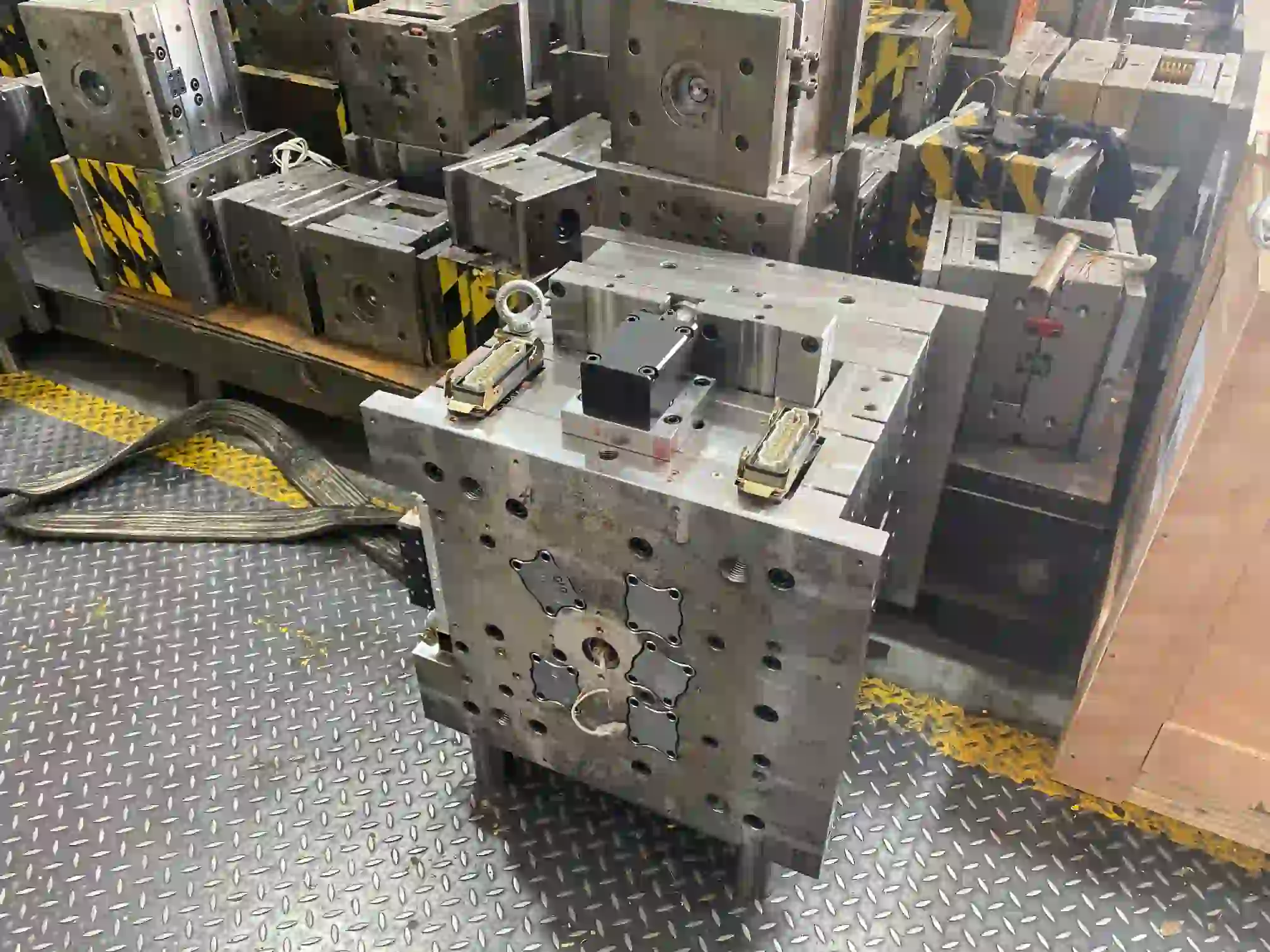
An export mold must arrive as a transferable manufacturing asset, not simply as a tool that ran once in the builder’s press. CKMOLD designs and validates export tooling against the receiving machine, utilities, component standards, documentation, ownership and acceptance plan supplied by the customer.
The handover starts at RFQ. If tie-bar clearance, locating interface, ejection, hot-runner controls, water standards or release documents are discovered only after T1, changes become slower and more expensive.
Press and utility interfaces defined before design
Component brand and model approved by the buyer
T0/T1 and final release objectives recorded
Files, spares, protection and ownership details
Reviewed by CKMOLD project engineering • Last updated August 2026
Maximum mold size, thickness, daylight, platen/tie-bar clearances, lifting/handling limits and installation direction.
Locating ring, nozzle radius/orifice, clamp slots or bolt pattern, support and any customer-specific interface.
Machine ejector pattern, available stroke, coupling, return requirements and safe relationship to the tool ejection system.
Connection standard, port location, circuit identity, flow need and any hydraulic core or action interface.
Voltage, connector, zone count, thermocouples, controller compatibility, wiring identification and approved system supplier.
Part and runner drop, gripper access, eject position, mold-protection considerations and manual fallback where relevant.
The customer identifies approved families, preferred local support and any mandatory models for mold base, guidance, locks, springs, hot runner, connectors or water hardware.
When the buyer has no fixed standard, CKMOLD proposes components against mold function, service life, destination support, maintenance and price.
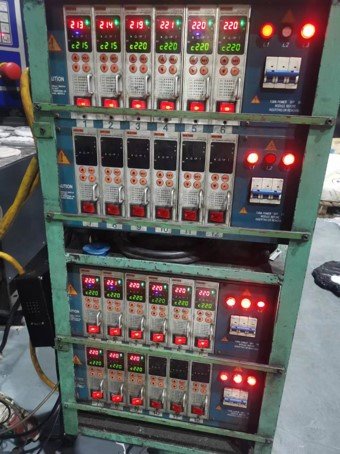
A hot-runner name alone does not define compatibility. The project must confirm manifold/nozzle models, gate arrangement, heater and thermocouple zones, voltage, connector type, wiring standard, controller ownership and the spare strategy available to the receiving plant.
Electrical checks and identification are completed before shipment according to the agreed scope. If CKMOLD’s trial controller differs from the customer’s production controller, that difference must be visible in the acceptance plan rather than discovered after installation.
Release machine sheet, part revision, resin, component standards, mold life, documents and acceptance criteria.
Check safe mold operation, fill, actions, ejection, water/electrical function and major steel issues.
Evaluate corrected samples by cavity against appearance, dimensions, assembly and function defined by the buyer.
Confirm agreed corrections, process record, sample quantity, documents, spares and mold condition for handover.
Apply preservation, nameplate, labels, tool protection and crate suitable for the approved air or sea route.
Released 3D mold assembly and scoped 2D drawings in the agreed formats, with part/tool revision identity.
Purchased-component list, approved suppliers/models and agreed spare items for wear or failure risk.
Mold steel or material certificates where included, tied to the quoted and approved tool materials.
Press, resin, drying and key setup information from the approved trial; not presented as a universal process recipe for another machine.
Cavity-identified samples and reports for the dimensions, appearance or tests stated in the acceptance plan.
Customer ownership, mold number, part number/revision, weight or handling information and other agreed identification.
Provide mold-size and weight limits, tie-bar spacing, platen/daylight, locating ring, nozzle, clamp pattern, ejector interface, water/hydraulic connections, electrical voltage/connectors, hot-runner controller details and handling requirements.
Yes, customer-specified standards can be quoted when the exact families or models are defined and available. Any proposed equivalent or deviation should be approved before purchase and reflected in the BOM.
Acceptance is project-specific. It can include an approved trial, labeled cavity samples, dimensional or functional results, mold operation checks, document review, spare parts, preservation, nameplate and packing release. Define it during RFQ.
Trial parameters are a starting reference, not a guarantee of identical settings on a different press. The receiving molder must redevelop the process around its machine, material handling and local conditions.
CKMOLD can review installation questions, trial feedback, documentation or correction needs using agreed files, photos, measurements and process information. On-site or major service support is quoted separately when required.
Complete the RFQ with mold life, component standards, hot-runner controls, sample/report list, spares, target release date and shipping destination. Email the part files and customer machine sheet separately to jerry@ckmold.com.
Use this short form for a general inquiry. For a quotation, complete the full RFQ and email any 3D/CAD files separately to jerry@ckmold.com.
Join our mailing list and receive a 10% discount on your next mold or CNC project.