
Home / Plastic Parts / Low-Volume Injection Molding for Repeat Production
Low-volume injection molding is for released parts that need real production resin and recurring batches, but whose demand does not justify a conventional high-output tooling strategy. It is not simply a prototype service and it is not automatically the lowest-cost method for a handful of pieces.
The commercial decision balances tool construction, batch setup, resin and color purchase, machine time, inspection, manual operations and the expected pattern of repeat orders. Future cavity expansion or replacement production tooling can be planned without pretending the first tool will serve every stage.
Production intent rather than open-ended prototyping
Ordering pattern matters as much as first quantity
Material, color and process behavior are production inputs
Future cavities, automation or new tooling reviewed early
Reviewed by CKMOLD project engineering • Last updated August 2026
A change-friendly or simplified tool can reduce initial investment, but resin, finish, actions and expected life still define the safe construction.
Mounting, water/electrical connection, process stabilization and first-part approval occur whether the run is short or long.
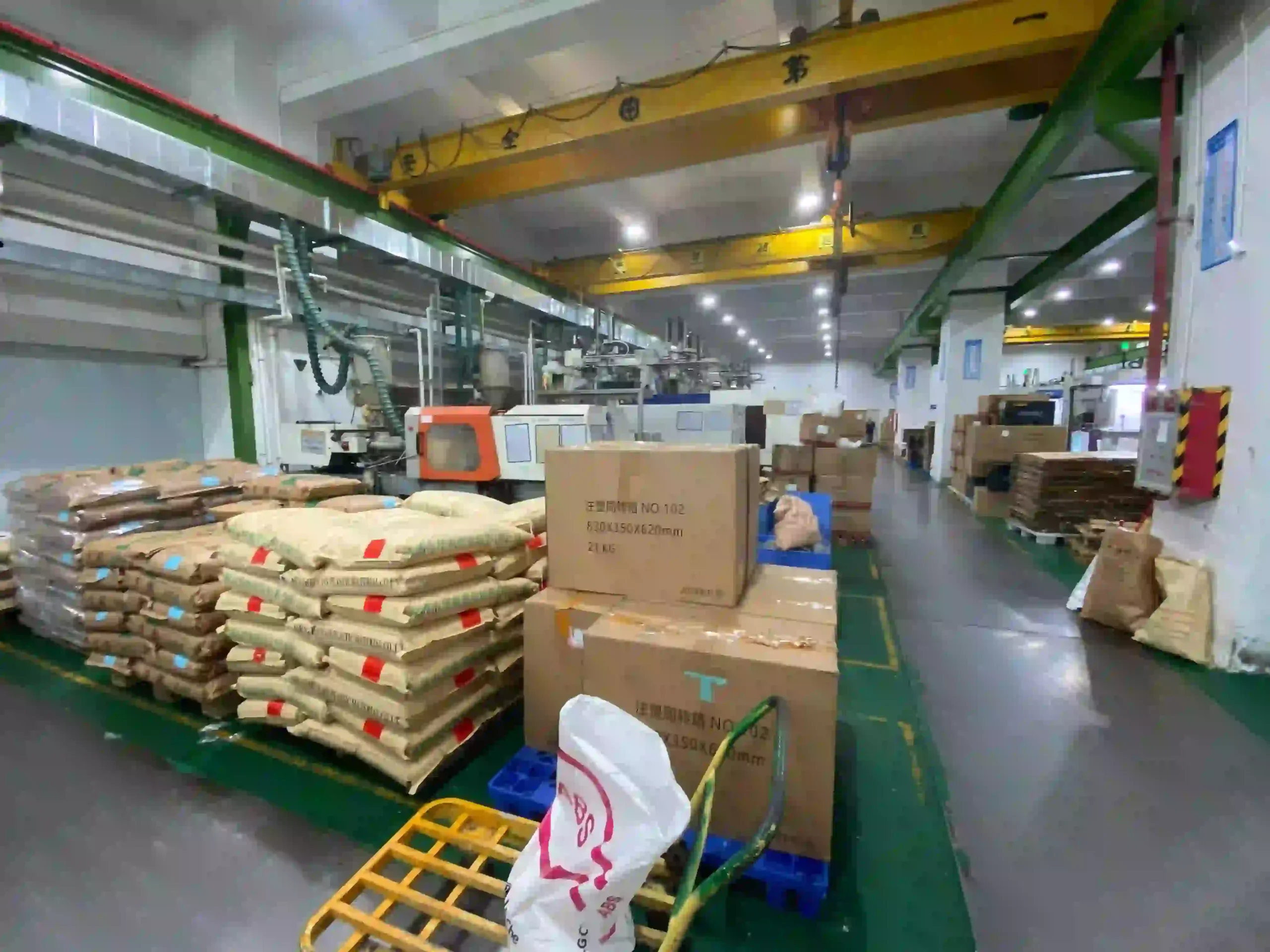
Resin and masterbatch supplier pack sizes, drying, storage, purge and unused material affect the economic batch.
Cleaning and purge between colors can consume more time and resin than the buyer expects from the part count alone.
A short run still needs drawing revision, first-part checks, cavity identity and any report or functional test required for release.
Insert loading, trimming, assembly, printing, packing or partner finishing may dominate unit labor when automation is not justified.
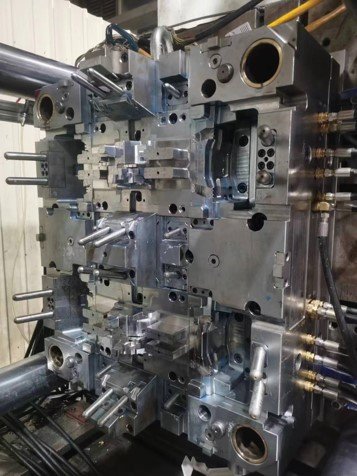
A low-volume tool may use one cavity, modular or replaceable inserts, a simpler runner, manual insert loading or a more flexible correction strategy. These choices should be deliberate. A tool that is cheap only because it ignores future batch demand may create excessive maintenance or setup cost later.
If demand can rise, CKMOLD reviews whether the initial mold can accept additional cavities, whether automation access should be preserved, or whether a separate production tool is the cleaner scale route. No upgrade is promised until the mold architecture and business case are evaluated.
Approve geometry, resin, color, finish, inspection and packaging before the first production batch.
Record setup, material preparation, cavity identity and first-part disposition against the released basis.
Complete quantity, inspection, packing and mold care; retain the project information needed for a future restart.
Check revision, demand, resin/color availability and any process or tool change before each new batch.
Keep the current tool and manual operations when demand remains stable and the process can be restarted economically.
Add cavities, handling or operation aids only when the original architecture, press and business case support the change.
Use the approved part and batch learning to create a tool designed for higher life, output, cycle and maintenance demands.
There is no universal quantity. Part size, cycle, cavities, resin purchase, setup, inspection, repeat frequency and tooling investment determine whether injection molding is economical. Share both the first order and estimated annual demand.
Prototype molding is primarily for learning and validation while geometry or production strategy may still change. Low-volume molding supplies released parts in repeatable batches under an approved material, process and quality basis.
Sometimes, but only if the tool material, layout, cooling, runner, actions, expected life and press strategy support higher demand. Expansion or automation should be evaluated, not assumed.
Setup, material preparation, purge, first-part approval, inspection, secondary work and packaging are spread over fewer parts. The tool may also require maintenance and storage between infrequent runs.
For very small quantities, 3D printing or CNC may be more appropriate unless injection-molded resin behavior is the purpose of the project. CKMOLD can compare the validation method before quoting a tool.
Send CAD, resin, color, first-order quantity, expected annual demand, batch frequency, finish, critical dimensions, secondary work and the likely scale scenario.
Use this short form for a general inquiry. For a quotation, complete the full RFQ and email any 3D/CAD files separately to jerry@ckmold.com.
Join our mailing list and receive a 10% discount on your next mold or CNC project.