
Struggling to choose the right nylon grade for your automotive project? The wrong choice can lead to part failure, costly recalls, and a damaged reputation. Imagine having a clear guide that matches specific nylon grades to vehicle systems, ensuring optimal performance and reliability every time. This guide will help you navigate the complexities of nylon selection for automotive engineering and make choices with confidence.
The right nylon for an automotive part depends on where the part lives, how it is loaded and how its environment changes over time. An interior clip, an under-hood bracket, an electrical connector and an air-management component should not be selected from the same generic material rule. Grade family, reinforcement, moisture condition, heat history, chemicals, weld lines and assembly loads all belong in the decision.
Related engineering resources: DFM analysis | automotive injection molding | mold testing and validation
To select the right nylon for different automotive systems, you must match the material’s properties to the specific application’s demands. For under-the-hood parts, choose heat-stabilized nylons like PA66-GF30 for high-temperature resistance. For interiors, prioritize UV-stable and aesthetically pleasing grades like PA6. For fuel systems, select nylons with high chemical resistance, such as PA12. Each system—powertrain, interior, chassis, or fuel—requires a tailored nylon grade to ensure durability, safety, and performance.
Why Is Nylon So Crucial for Powertrain and Under-the-Hood Components?
The engine bay is a brutal environment with extreme heat and constant vibration. Metal parts are heavy and expensive, but can plastics really survive? Using the wrong polymer here leads to warping, cracking, and catastrophic failure. What if you could replace metal with a lightweight, cost-effective plastic that thrives in these harsh conditions, improving efficiency and reducing costs?
Nylon is crucial for powertrain and under-the-hood components because of its exceptional thermal stability, mechanical strength, and resistance to automotive fluids like oil and coolant. Glass-filled grades, such as PA66-GF30, offer high stiffness and resistance to creep at elevated temperatures, making them suitable for engine covers, intake manifolds, and radiator end tanks. This combination of properties allows nylon to replace metal, reducing vehicle weight and improving fuel economy without compromising on performance or reliability.
When a client comes to me with a project for an under-the-hood part, the first thing we discuss is the extreme environment it has to endure. It’s not just about heat; it’s a combination of heat, vibration, and exposure to aggressive chemicals. This is where selecting the right grade of nylon becomes a make-or-break decision. You need a material that won’t just survive, but will perform reliably for years.
Heat Resistance is Non-Negotiable
The continuous operating temperature under the hood can easily exceed 150°C (302°F). Standard plastics would simply melt or deform. This is why heat-stabilized, glass-filled nylons like PA66 and PPA (polyphthalamide) are the go-to choices. For example, a radiator end tank has to handle hot coolant under pressure day in and day out. Using a PA66-GF30 (30% glass fiber reinforced) gives you the necessary strength and resistance to heat-related creep.
The Role of Glass Fibers
Plain nylon is strong, but adding glass fibers transforms it into a high-performance engineering material. These fibers act like rebar in concrete, dramatically increasing stiffness, strength, and dimensional stability at high temperatures. The percentage of glass fiber—typically ranging from 15% to 50%—is tailored to the specific mechanical loads the part will experience. More fiber means more rigidity, but it can also make the part more brittle, so finding the right balance is key.
Chemical and Fluid Resistance
The engine compartment is a splash zone for oils, fuels, coolants, and battery acid. Nylon, especially PA6 and PA66, has excellent resistance to these hydrocarbons and chemicals. This property is vital for parts like engine covers, oil pans, and various sensor housings. The material must maintain its integrity and not swell or degrade when exposed to these fluids, ensuring a long and reliable service life for the component.
What Makes Nylon Ideal for Automotive Interior and Exterior Parts?
Your customers touch and see interior parts every day, so they must look good and feel solid. Exterior parts face sunlight, rain, and road debris. Using a material that fades, scratches easily, or becomes brittle ruins the perception of quality. What if a single material could provide the premium finish for interiors and the rugged durability for exteriors, all while being easy to mold into complex shapes?
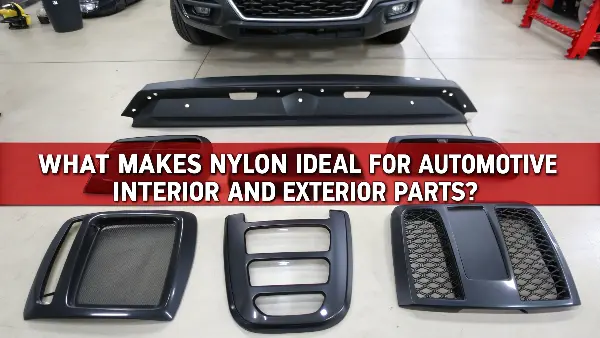
Nylon is ideal for automotive interiors and exteriors due to its excellent aesthetics, wear resistance, and toughness. For interior parts like door handles and trim, unfilled or mineral-filled PA6 offers a high-quality surface finish and good scratch resistance. For exterior components such as mirror housings and grilles, UV-stabilized and impact-modified nylon grades provide long-term durability against weathering and physical impacts. Its versatility allows it to meet both cosmetic and functional requirements.
Aesthetics and Haptics for Interiors
The “feel” of a car’s interior is crucial. PA6 and its compounds are fantastic for this. They can be molded to have a very high-quality surface finish, from matte to high-gloss. They also have good “haptic” properties, meaning they feel solid and pleasant to the touch. This makes them suitable for switchgear, trim pieces, and seat adjustment levers. Mineral-filled grades can be used to increase stiffness and give parts a more premium, dense feel without the high cost of more exotic plastics.
Durability and Weathering for Exteriors
Exterior parts are constantly under attack from the elements. UV radiation from the sun is the biggest enemy, as it can make plastics brittle and cause colors to fade. That’s why exterior nylon grades are formulated with UV stabilizers and protective additives. Impact-modified nylons are also common for parts like bumper brackets and mirror housings. These grades have rubber-like additives blended in, which significantly improves their ability to absorb impacts, even in cold weather, preventing cracks.
| Application Area | Key Nylon Property | Common Nylon Grade | Example Part |
|---|---|---|---|
| Interior | Surface Finish | PA6 (Unfilled) | Decorative Trim |
| Interior | Wear Resistance | PA66 | Door Handles |
| Exterior | UV Resistance | PA6 (UV Stabilized) | Mirror Housings |
| Exterior | Impact Strength | PA6 (Impact Modified) | Wheel Covers |
Which Nylon Grades Are Best for Fuel Systems and Fluid Handling?
Handling fuels and other automotive fluids is a high-stakes game. A leak in a fuel line can have catastrophic results. Materials must resist aggressive chemicals like gasoline and ethanol blends without swelling, weakening, or becoming brittle over time. How do you ensure the absolute Failsafe integrity of components that are constantly exposed to these harsh substances, protecting both the vehicle and its occupants?
For fuel systems and fluid handling, nylons with superior chemical resistance and low permeability, such as PA12 and PA612, are the best choices. These long-chain nylons are less susceptible to absorption and degradation from fuels, oils, and hydraulic fluids. They maintain their dimensional stability and mechanical properties even with prolonged exposure, making them essential for fuel lines, connectors, and pump components where safety and reliability are paramount. PA11, a bio-based alternative, also offers similar high-performance characteristics.
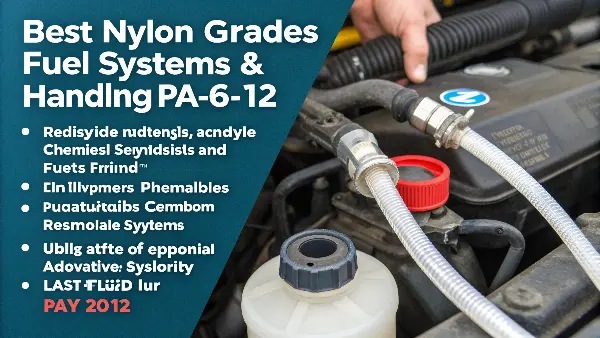
Safety is the number one priority when discussing fuel systems. There is zero room for error. I’ve worked with clients who are leaders in this space, and their material specifications are among the most stringent I’ve ever seen. The material can’t just resist the fuel; it has to act as a barrier to prevent fuel vapor from escaping into the atmosphere, which is a major environmental and regulatory concern.
The Power of Long-Chain Nylons
The secret to nylon’s performance in fuel systems lies in its molecular structure. PA11 and PA12 are called “long-chain” nylons because their molecular chains are longer and more flexible than those of PA6 or PA66. This structure makes them much less prone to absorbing fuel and other chemicals. When a material absorbs fluid, it swells and its mechanical properties degrade. Long-chain nylons resist this, ensuring that parts like fuel lines and connectors maintain their precise dimensions and strength over the vehicle’s entire lifespan.
Barrier Properties and Multi-Layer Tubing
Modern fuel lines are not just simple tubes; they are often complex multi-layer structures designed to meet strict evaporative emissions (EVAP) standards. Nylon is a key component in these structures. An inner layer of PA12 might be used for its excellent fuel resistance, while an outer layer provides mechanical protection. Sometimes, a special barrier layer, like EVOH (ethylene vinyl alcohol), is sandwiched between nylon layers to stop fuel vapor from escaping. This sophisticated engineering is only possible with materials as versatile and reliable as nylon.
Resistance to New Fuel Blends
The automotive industry is constantly evolving, with new biofuel and ethanol blends becoming more common. These alternative fuels can be more aggressive toward plastics than traditional gasoline. PA11 and PA12 have proven to be highly resistant to these new blends, making them a future-proof choice for any forward-thinking manufacturer. Their stability ensures that components will not fail prematurely as fuel formulations change.
How Does Nylon Contribute to Safety and Structural Integrity?
When you think of vehicle safety, you probably think of steel frames and airbags. But plastic components play a massive, and often unseen, role. Using weak or brittle plastics in structural or safety applications is a recipe for disaster. How can an engineering plastic like nylon provide the strength and energy absorption needed to protect passengers and maintain the vehicle’s structural integrity during an impact?
Nylon contributes significantly to vehicle safety and structural integrity through its high strength-to-weight ratio and excellent energy absorption capabilities. High-strength, glass-reinforced grades are used in structural components like front-end carriers and roof frames, reducing weight without sacrificing rigidity. Impact-modified grades are used for airbag canisters and seatbelt components, deforming in a controlled way during a crash to absorb energy and protect occupants. Its reliability makes it a trusted material in critical applications.
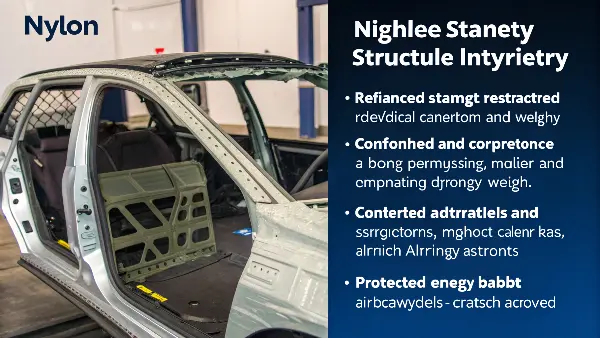
I find the use of plastics in safety applications one of the most interesting areas of automotive engineering. It’s a testament to how far these materials have come. We’re not just using nylon to replace a simple metal bracket anymore; we’re using it to engineer complex modules that are the backbone of the vehicle’s front end. These parts have to be incredibly strong and behave predictably in a crash scenario. For a business owner, using nylon here means creating safer, lighter, and more fuel-efficient vehicles.
Metal Replacement in Structural Parts
One of the biggest innovations has been the development of “front-end carriers” or “bolting bars” made from highly reinforced nylon (e.g., PA6-GF50). This single, large molded part replaces a complex assembly of dozens of stamped metal pieces. It integrates mounts for the headlights, radiator, and bumpers. This not only saves a huge amount of weight but also simplifies the assembly process, reducing costs. The high stiffness of the glass-filled nylon ensures the front of the car is rigid and that panels align reliably.
Energy Absorption in a Crash
During a collision, you don’t want materials to be reliably rigid; you want them to crush and deform in a controlled way to absorb the impact energy. This is where impact-modified nylons excel. They are used in bumper energy absorbers, placed just behind the decorative fascia. In a low-speed impact, these parts can deform and bounce back, preventing damage to more critical components. In a high-speed crash, they crush to slow the rate of deceleration, protecting the vehicle’s occupants.
Reliability in Safety Systems
Nylon’s reliability and consistency make it the material of choice for components within safety systems. Think about an airbag canister. When the airbag deploys, the canister must withstand the explosive force without shattering. Or consider the mechanical components inside a seatbelt retractor. These parts must function flawlessly every time. The predictable strength and toughness of specific nylon grades ensure they perform their life-saving function without fail, meeting the industry’s most rigorous safety standards. It’s a level of trust built on decades of proven performance.
What Are the Key Molding Considerations for Automotive Nylon Parts?
Choosing the right nylon is only half the battle. If your molding process isn’t optimized for the material, you can end up with weak, warped, or defective parts. This leads to high scrap rates, production delays, and unhappy clients. How can you master the injection molding process for nylon to ensure every part you produce is dimensionally accurate, strong, and meets the highest quality standards?
Key molding considerations for automotive nylon parts center on managing moisture content, high processing temperatures, and material shrinkage. Nylon is hygroscopic, so it must be properly dried before molding to prevent defects. It requires high melt and mold temperatures for optimal flow and crystallization. Its shrinkage rate, especially for glass-filled grades, is anisotropic and must be accounted for in mold design to achieve tight tolerances. Proper processing control is essential for quality.
The Challenge of Moisture
Nylon’s biggest personality quirk is that it loves to absorb water from the air (it’s “hygroscopic”). If you try to mold nylon pellets that haven’t been properly dried, the water turns to steam in the hot barrel of the molding machine. This steam creates splay marks, bubbles, and, most critically, breaks down the polymer chains, making the final part weak and brittle. That’s why every nylon molding operation must start with a high-quality material dryer, ensuring the moisture content is below 0.2% (and often lower for specific grades).
Temperature and Shrinkage Control
Nylon is a semi-crystalline material, which means it needs high processing temperatures—both for the melted plastic and the mold itself—to achieve the right crystalline structure. A “cold” mold will cause the nylon to freeze too quickly, leading to poor surface finish and internal stresses.
Furthermore, this crystalline structure leads to significant and often non-uniform shrinkage as the part cools. The mold design must carefully predict and compensate for this. For glass-filled grades, the fibers tend to align with the flow of the plastic, so the part shrinks less in the direction of flow and more across it. A skilled mold designer anticipates this and builds it into the mold’s dimensions.
Mold and Gating Design
The design of the mold is critical. Because of nylon’s high processing temperatures, molds must be made from high-quality, durable steel. The runner and gate system—the channels that deliver plastic to the part cavity—must be designed to allow for fast filling without creating excessive shear, which can degrade the material and break the glass fibers. Proper venting is also essential to allow trapped air to escape as the mold fills, preventing burn marks and incomplete parts. Every detail of the mold matters when you’re aiming for perfection.
Map the Vehicle Location and Duty Cycle
Separate interior, under-hood, exterior, fuel or fluid-adjacent and electrical applications. Record continuous and peak temperature, humidity, fluids, vibration, impact, UV, noise and service life. A short hot event and a long-term load at elevated temperature create different risks for nylon.
Choose the Nylon Family and Reinforcement
Compare the exact PA grade, chain structure, glass or mineral reinforcement, impact modification, heat stabilization and hydrolysis resistance where relevant. Reinforcement can improve stiffness and reduce creep while increasing anisotropic shrinkage, surface read-through and weld-line sensitivity.
Design Around Moisture and Fiber Direction
Nylon absorbs moisture and can change stiffness, dimensions and impact behavior. Gate and rib orientation also influence shrinkage and strength. Place ribs, clips, bosses and weld lines with the actual load path in mind, and define the conditioning state used for fit and performance decisions.
Check Assembly and Interface Loads
Fasteners, snap fits, clips, inserts, seals and neighboring metals can concentrate stress. Review installation force, torque, pullout, thermal expansion mismatch and long-term relaxation. A grade that is strong in a tensile coupon may still fail at a thin boss or a molded-in interface.
Validate the Part in Its Automotive Environment
Use production-like parts and test temperature cycling, humidity, fluids, vibration, impact, fatigue, assembly and dimensional retention as required. Include weld-line and fiber-direction specimens when they are representative of the design. Record grade, lot, drying, process and conditioning so future substitutions can be assessed.
Selecting Nylon for Automotive Systems: Buyer Review Checklist
- Identify vehicle zone, temperature-time profile, fluids, vibration, impact and life.
- Select exact nylon grade, reinforcement and stabilization from the failure mode.
- Account for moisture, fiber orientation, weld lines, shrinkage and conditioning.
- Check clips, bosses, fasteners, inserts, seals and metal interfaces.
- Validate finished parts under representative automotive environment and assembly loads.
Frequently Asked Questions
Is glass-filled nylon the best choice for every automotive part?
No. It can improve stiffness and creep resistance, but it may increase anisotropy, surface variation, wear and weld-line risk. The application and load direction must decide.
Why must nylon automotive parts be tested after conditioning?
Moisture changes nylon’s stiffness, dimensions and impact response. The conditioning state should reflect the vehicle requirement, not only the as-molded sample.
Conclusion
Selecting the right nylon for automotive applications is a critical process that balances performance, cost, and manufacturability. By understanding the unique demands of each vehicle system—from the high heat of the engine bay to the aesthetic needs of the interior—you can make informed decisions. Matching the right nylon grade to the right application ensures the final parts are safe, durable, and reliable, which is the foundation of any successful manufacturing venture.