
Are you struggling to produce small batches of tiny custom plastic parts without a massive budget? The cost and lead time for traditional steel molds can be a major roadblock, stopping your creative or business ideas before they even start. Imagine having to spend thousands of dollars just to test a simple prototype, killing your ability to innovate quickly. What if you could turn your desktop 3D printer into a powerful tool for small-scale injection molding?
A desktop 3D printer can help make a prototype mold or fixture for tiny objects, but it does not turn a desktop printer into an injection molding machine. Tiny parts may still require controlled melt temperature, injection pressure, venting, precise alignment, safe clamping and repeatable ejection. The correct approach separates printed design aids from the equipment and tooling needed to mold the part safely.
Related engineering resources: rapid tooling | prototype injection molding | mold design
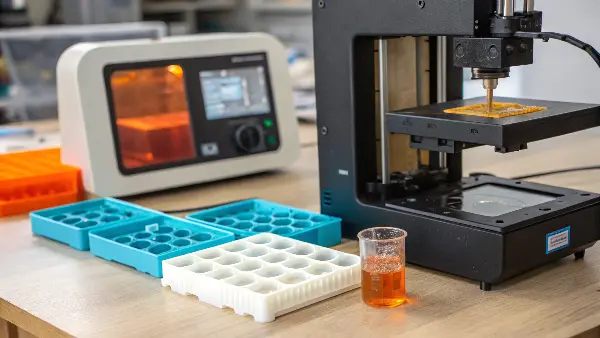
Yes, you can absolutely use a 3D printer to create injection molds for tiny objects. This method combines the speed and flexibility of 3D printing with the material variety of injection molding. You don’t print the final object; instead, you print the mold itself using heat-resistant filaments like ASA, PETG, or high-temperature resins. You then use this mold with a benchtop injection machine to produce small batches of parts. This approach is suitable for rapid prototyping, custom one-offs, and low-volume production runs.
Can you actually injection mold with a 3D printer?
Have you ever wondered if you could bypass the massive costs of professional mold making? The initial investment for a traditional steel mold can be discouraging, especially if you only need a handful of parts. It feels like a barrier designed to keep small players out. What if your 3D printer could be the key to unlocking low-volume injection molding, giving you the power to create real, functional parts right from your desktop?
Absolutely. The process involves 3D printing the mold, not the final part. You design your mold in CAD software, then print the two halves using a material that can withstand heat, like high-temp resin (for SLA printers) or filaments like ABS, ASA, or PETG (for FDM printers). Once printed, you clamp the mold together and inject molten plastic using a desktop injection machine. This technique is a material change for creating strong, functional prototypes and small production runs with a professional finish.
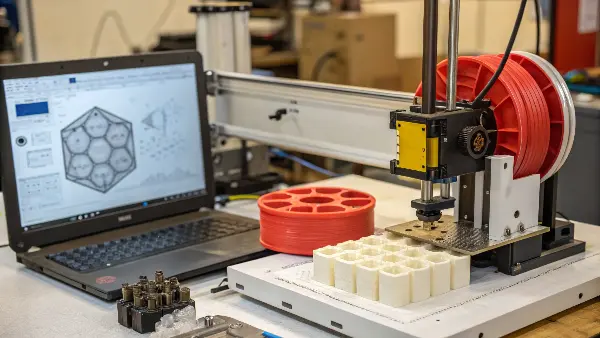
This method bridges the gap between 3D printing and traditional manufacturing. While 3D printed parts can sometimes lack the strength or surface finish you need, injection molding offers a wider range of materials and superior part quality. But success depends on getting the details right.
Key Factors for Success
Your choice of material for the mold is critical. The mold must handle the heat and pressure of the injected plastic without deforming.
| Mold Material | Pros | Cons | Best For |
|---|---|---|---|
| High-Temp Resin | Incredible detail, smooth surface finish | More brittle, expensive | Detailed miniatures, jewelry, complex shapes |
| PETG / ASA | Good durability, decent heat resistance | Layer lines can transfer to the part, may warp | Functional parts, simple geometries |
| ABS | High heat resistance, strong | Prone to warping during printing, requires enclosure | High-wear parts, things that need durability |
Beyond the material, your mold design needs to incorporate features from traditional mold making. You must include sprues (where plastic enters), runners (channels to guide plastic), gates (the entry point into the part cavity), and vents to let air escape. Forgetting vents is a common mistake A common observation is; without them, the trapped air will prevent the cavity from filling completely, resulting in a flawed part. Also, adding draft angles—slight tapers on the walls of your part—is essential for easy removal from the mold.
Can 3D printers print really small things?
You have an idea for a tiny, intricate component, maybe a custom gear for a hobby project or a specialized clip for an electronic device. But you’re worried your 3D printer just can’t handle the level of detail required. It’s frustrating when your technology seems to be the limiting factor, holding you back from creating what you truly envision. Will the layers be too thick? Will the fine features just turn into a blob of plastic?
Yes, modern 3D printers, especially resin-based ones (SLA/DLP), are exceptionally good at printing incredibly small and detailed objects. While standard FDM printers can struggle with features smaller than their nozzle size (typically 0.4mm), resin printers can achieve resolutions under 50 microns (0.05mm). This precision allows you to create highly detailed molds for tiny objects like jewelry, miniature figures, or complex electronic enclosures that would be impossible with a standard FDM printer.
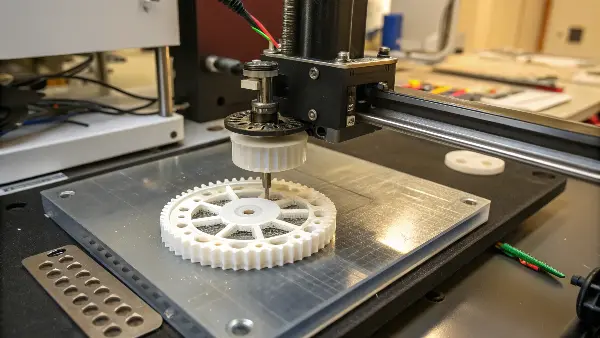
The ability to print these fine details is what makes 3D printed molds for tiny parts so powerful. But the type of printer you use makes a huge difference. Let me break it down.
FDM vs. Resin: A Tiniature Showdown
The choice between an FDM (Fused Deposition Modeling) and a resin (SLA/DLP) printer is the most important decision when creating molds for tiny parts. Each technology has its own strengths and weaknesses that directly impact the final quality of your injection molded object.
FDM Printers:
These printers work by extruding a filament of plastic layer by layer. Their detail is limited by the nozzle diameter.
- Resolution: Typically limited to nozzle sizes of 0.2mm to 0.4mm. You can’t print a feature smaller than your nozzle.
- Surface Finish: FDM prints have visible layer lines. These lines will transfer directly onto your injection molded part, giving it a textured finish. While you can post-process the mold by sanding or using epoxy coatings, it adds a lot of manual labor.
- Best For: Simple, geometric molds that don’t require a reliably smooth surface finish. Think small brackets, knobs, or functional parts where aesthetics aren’t the top priority.
Resin Printers (SLA/DLP):
These printers use UV light to cure liquid resin layer by layer, allowing for much finer details.
- Resolution: Can achieve resolutions below 0.05mm. This allows for incredibly sharp details, crisp edges, and complex textures.
- Surface Finish: Resin prints have a very smooth surface, almost like an injection molded part itself. This means your final part will come out of the mold with a professional, clean finish.
- Best For: Molds that require high precision and a smooth surface. This is the go-to choice for miniatures, jewelry, custom connectors, and any part where detail is paramount.
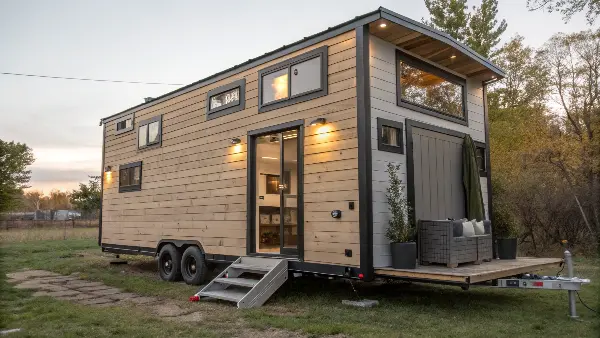
How can this method be used for tiny homes?
Thinking about tiny homes usually brings up images of wood, hammers, and saws. You might not immediately connect this trend with 3D printing and injection molding. It seems like two different worlds. Many people assume manufacturing custom plastic parts is only for large-scale products, not for one-off projects like building a home. This misconception can stop you from exploring innovative solutions for creating unique, space-saving features for a tiny living space.
3D printed injection molds are suitable for creating custom, space-saving hardware and components for tiny homes. Instead of settling for off-the-shelf parts, you can design and produce unique items like folding brackets, custom drawer pulls, specialized wall mounts for electronics, or compact plumbing fittings. The ability to create a few dozen high-quality, strong parts on demand allows for true customization, ensuring every inch of a tiny home is optimized for functionality and personal style without the massive cost of traditional manufacturing.
Smart Solutions for Small Spaces
In a tiny home, everything needs to be efficient. Using 3D printed molds to injection mold custom parts can solve many of the unique challenges that come with small-scale living.
- Custom Mounting Solutions: Standard TV mounts or speaker brackets can be bulky. With this method, you can design a low-profile mount that fits a specific corner or unconventional wall angle reliably. You can injection mold it from a durable plastic like ABS to ensure it’s strong enough to hold the weight.
- Multi-Functional Hardware: Think about a custom-designed hinge that locks at multiple angles to create a fold-down table or desk. Or a drawer handle that doubles as a towel hook. You can design these multi-functional parts in CAD, 3D print a mold, and produce them in a material that feels good to the touch, like nylon.
- Organizational Components: You can create custom clips, dividers, and modular containers that are designed to fit reliably within your specific drawers and cupboards. This helps maximize storage and keep the small space clutter-free. Injection molding them ensures they are durable and have a clean, finished look.
A friend of mine was building a camper van and struggled to find plumbing fittings that would work in the tight space under his sink. The standard PVC parts were too bulky. He designed his own slim-profile connectors, 3D printed a mold from PETG, and injection molded the parts using polypropylene. The result was a custom, leak-free plumbing solution that would have been impossible to achieve with off-the-shelf components. This is the kind of problem-solving that this hybrid manufacturing process unlocks.
What is illegal to 3D print?
As you get excited about the endless possibilities of 3D printing and making your own molds, it’s easy to get carried away. You might start thinking, “I can make anything!” But this freedom comes with serious responsibilities. It’s unsettling to think that with a few clicks, you could accidentally create something that is not only dangerous but could also land you in serious legal trouble. The line between legal and illegal can be blurry, and ignorance is not a defense.
It is illegal to 3D print firearms, patented or copyrighted objects without permission, and items intended to facilitate illegal activities, such as lockpicking tools or counterfeit keys. While you are creating a mold and not the final object, manufacturing parts that are protected by intellectual property (IP) is still an infringement. Generally ensure your designs are your own original work or that you have the legal right to reproduce them. The law focuses on intent and the final product, not just the manufacturing method.
Staying on the Right Side of the Law
The rules surrounding 3D printing and custom manufacturing are built on long-standing legal principles. It’s crucial to understand them to protect yourself and your business. The main areas of concern are intellectual property and regulated items.
Intellectual Property (IP) Infringement
This is the most common legal trap for creators. IP law protects original creations from being copied without permission.
- Copyright: Protects artistic works like sculptures, characters, and decorative designs. You can’t just download a model of a famous cartoon character, make a mold, and start selling figurines. That’s a clear violation of copyright.
- Patents: Protect functional inventions. If a specific mechanism or part is patented, you cannot reproduce it, even for personal use. This is common with replacement parts for electronics or machinery. Generally check for patents before replicating a functional object. A client once asked me to replicate a patented clip for a medical device. I had to explain that we couldn’t do it without a license from the patent holder.
- Trademarks: Protect logos, brand names, and symbols. Printing a famous company’s logo on your parts is trademark infringement.
Regulated and Prohibited Items
This category covers items that are controlled or banned by federal and local laws.
- Firearms: The laws around 3D printing firearms are complex and vary by country and state. In many places, printing undetectable firearms or components without proper licensing is a felony. It is a dangerous and legally fraught area to venture into.
- Locksmithing tools: In many jurisdictions, possessing or creating tools like lockpicks or bump keys without a locksmith license is illegal.
- Counterfeiting: Creating keys for locks you don’t own, or attempting to replicate security devices, falls into this category and carries severe penalties.
The simple rule is this: if you didn’t design it yourself, make sure you have permission to use it. If the item is regulated, stay away from it completely. Focusing on your own creative ideas is not only safer but also far more rewarding.
Clarify What the Printer Is Making
A desktop printer may produce a pattern, a sacrificial form, a polymer mold insert, a loading fixture or a dimensional prototype. It does not directly inject thermoplastic into the cavity. For any printed insert, define its heat, pressure, wear and chemical limits first.
Respect Tiny-Part Flow Physics
Small gates and thin walls freeze quickly, while vents and flash clearances become proportionally significant. Part detail, gate vestige, air traps, shrinkage and ejection force should be evaluated with the actual resin and machine. A visually simple tiny part can have a narrow process window.
Use the Right Mold and Hardware
Printed cavities can support short, low-risk trials, while metal inserts, standard ejector pins and a rigid mold base may be needed for alignment and repeated load. Add draft, venting, support and a safe clamping interface. Do not rely on printed pins or thin walls where they can buckle or chip.
Choose a Process for Evidence, Not Convenience
For a few fit samples, a low-volume or manual setup may be appropriate; for repeatability, use a qualified injection machine and measured parameters. Record melt condition, fill, pressure, cooling, ejection and part dimensions so the result can be compared with a production path.
Set Safety and Quality Boundaries
Hot polymer, stored clamp energy, sharp tooling and fumes create hazards. Use appropriate machine safeguards, ventilation and trained operation. Reject the desktop route when the part needs tight tolerances, high-temperature resin, large force, premium finish or a meaningful production quantity.
Using a Desktop 3D Printer for Tiny Injection-Molded Objects: Buyer Review Checklist
- Define whether the printer makes a pattern, insert, fixture or prototype—not the injection process itself.
- Review gate, vent, freezing, shrinkage, detail and ejection at tiny scale.
- Use rigid mold bases and suitable metal hardware where alignment or load requires it.
- Record process parameters and measurements instead of relying on visual samples.
- Apply machine safeguards and move to qualified tooling when requirements exceed the envelope.
Frequently Asked Questions
Can a desktop 3D printer inject plastic into its own mold?
The printer itself normally does not provide injection pressure or thermal control. It can make a mold insert or fixture, while a separate molding setup supplies the process.
Are tiny parts generally easy to mold?
No. Small gates, fast freezing, trapped air, flash and ejection can make tiny parts more sensitive than larger parts. Geometry and material determine the real difficulty.
Conclusion
Combining 3D printing with injection molding opens up a new frontier for creators, hobbyists, and small businesses alike. It lowers the barrier to entry for producing high-quality, custom plastic parts. You can move from idea to functional prototype quickly and affordably. By understanding the right materials, design principles, and legal boundaries, you can effectively turn your desktop setup into a powerful micro-factory for bringing your unique ideas to life.