
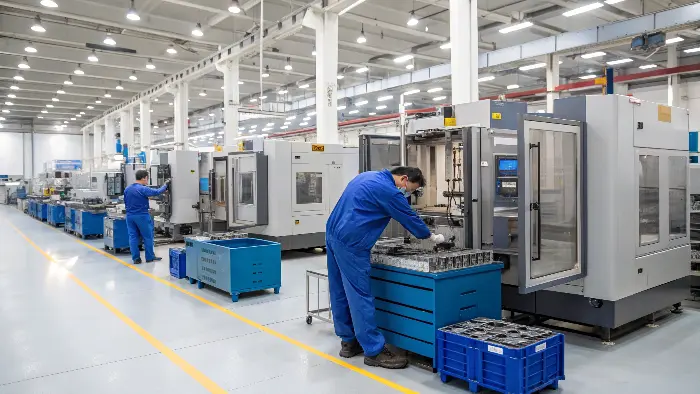
You can get custom injection molded parts made virtually anywhere in China. The country has more injection molding capacity than the rest of the world combined. Walk through Guangdong, Zhejiang, Jiangsu or Shandong and you will find mold shops on every industrial street, in every business park, sometimes in what looks like a converted warehouse with three CNC machines and six people who have been making molds since before the internet existed.
Custom injection molded parts can be sourced from many regions in China, but geographic availability does not support the right engineering or production capability. A successful sourcing project defines the part, material, volume, tolerance, surface, validation, tooling ownership and delivery terms, then matches those requirements to a supplier with evidence and communication discipline.
Related CKMOLD resources: export injection molds, production injection molding, contact CKMOLD.
But here is the thing nobody tells first-time buyers: the fact that you can get parts made anywhere in China does not mean you should. Location matters. Specialization matters. Who you pick and how you manage the relationship matters enormously. Getting this wrong — sending your design to the wrong region, the wrong shop, the wrong type of manufacturer — is how you end up with a mold that costs three times what you budgeted and parts that fail inspection on arrival.
You can find custom injection molded parts in China as it has a large and mature manufacturing industry of injection molded parts. Factories are located throughout the country, especially in the eastern and south-central regions. Many companies offer custom injection molding services, from simple parts to complex designs. They can handle both prototyping and mass production.
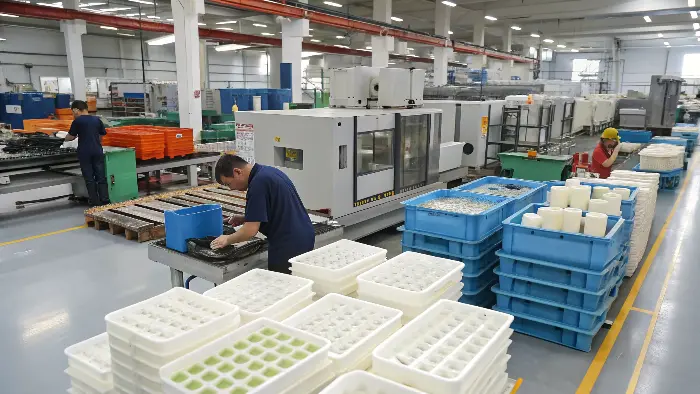
So, the answer is a resounding yes, but “anywhere” needs a bit of qualification. While factories are widespread, certain regions specialize and offer more choices. Understanding this landscape is the first step. I believe that knowing where to look and what to expect can make all the difference.
Understanding Costs — What Custom Injection Molded Parts Actually Cost in China
One of the biggest mistakes buyers make is evaluating a Chinese injection molding quote in isolation. The mold price alone does not represent the real project cost. What matters is the total landed cost — the complete expense required to deliver finished parts to your facility, ready for production use.
Mold Tooling Costs
Injection mold tooling costs in China vary significantly depending on mold complexity, steel grade, cavity count, tolerance requirements, and surface finish specifications.
| Mold Type | Complexity | Typical China Price | Lead Time |
|---|---|---|---|
| Prototype / Soft Tooling | Simple geometry, aluminum or P20 steel | $500 — $3,000 | 2 — 3 weeks |
| Class 103 Production Mold | Medium complexity, P20 steel | $3,000 — $15,000 | 4 — 6 weeks |
| Class 102 Production Mold | Complex geometry, H13 steel | $15,000 — $50,000 | 6 — 10 weeks |
| Class 101 High-Volume Mold | Multi-cavity, hardened steel, hot runner | $50,000 — $150,000+ | 10 — 16 weeks |
| Medical / Optical Grade Mold | Mirror finish, S136 steel, cleanroom applications | $20,000 — $100,000+ | 8 — 14 weeks |
Part Production Costs
Once tooling has been completed, the per-part production cost depends on several factors, including material selection, machine cycle time, labor requirements, part geometry, and machine hourly rates.
For example, a simple ABS housing produced in moderate volumes may cost between $0.30 and $2.00 per part depending on the size, complexity, and order quantity. Engineering-grade resins, tight tolerances, and complex geometries typically increase production costs, while large-volume commodity parts can achieve much lower pricing.
Hidden Costs Buyers Often Overlook
Shipping and Freight
Shipping costs can significantly affect total project economics. A 500 kg injection mold shipped by air freight from Guangdong to Chicago may cost between $2,000 and $4,000. Sea freight is far more economical but usually requires 25 to 35 days of transit time.
Buyers should evaluate both shipping methods during project planning.
Import Duties and Tariffs
In 2026, US tariffs on Chinese manufactured goods continue to impact injection molded part imports. Depending on the HTS classification, tariff rates may add an additional 10% to 25% to the product cost.
Generally confirm applicable tariff rates with a customs broker before finalizing sourcing decisions.
Quality Inspection Costs
Third-party pre-shipment inspections typically cost between $200 and $500 per inspection day. For precision or high-value components, independent inspections are often a worthwhile investment to reduce quality risks before shipment.
Tooling Modification Costs
Most injection molds require some level of modification after T1 sampling and first article inspection. Buyers should budget approximately 10% to 20% of the mold cost for tooling adjustments and process optimization.
Factories promising zero tooling revisions should be evaluated carefully.
Currency and Payment Terms
Standard payment terms for injection mold tooling are commonly structured as:
- 50% deposit before tooling production
- 50% balance after mold approval
For production orders, terms are often:
- 30% production deposit
- 70% balance before shipment
International wire transfers may also involve banking fees and currency exchange risks that should be included in total cost calculations.
Quality Control — What Actually Happens and What You Need to Do
Quality control is one of the areas where the gap between buyer expectations and real manufacturing conditions is often the largest. Understanding how quality systems actually operate inside injection molding factories is essential for avoiding production problems, shipment delays, and costly defects.
How much does injection molding cost in China?
China is renowned for competitive manufacturing, but the cost could be different.The injection molding cost in China could be significantly different depending on a host of variables like:
- The intricacy of the mold
- Material choice
- Part size
- Quantity
- The manufacturer’s capabilities.
If you wish to determine whether Chinese injection molding is affordable to you, you must find out the cost incurred.
**The cost of injection molding in China is generally lower than in most Western countries depending on factors like labor costs and economies of scale. The final cost, however, depends on part complexity, material choice, quantity produced, and mold costs. Simple parts in large quantities can be extremely inexpensive, while complex parts using specialty resins will be pricey.
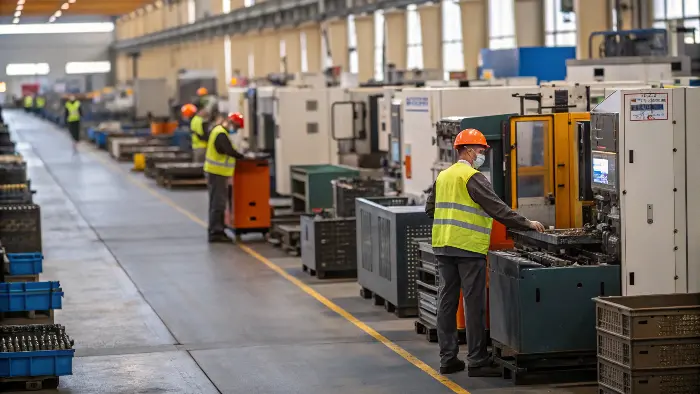
There are lots of reasons for this reason. Part design is a major driver. More complex parts with intricate features, tight tolerances will require more complex molds so it will cost you more as comapred a simple mold with less features. Second, theplastic material you choose significantly impacts the cost. Common commodity resins like Polypropylene (PP) or Polyethylene (PE) are relatively cheap. Engineering resins like Polycarbonate (PC), ABS, or Nylon will be more expensive. High-performance or specialized resins can increase material costs substantially.
Third, production volume plays a huge role. Higher volumes mean the initial mold cost is spread over more parts, reducing the per-part cost. Large orders also allow for more efficient production runs.
Fourth, the mold cost itself is a big upfront investment. We’ll talk more about this separately, but it’s a key component of the overall project cost.
Finally, labor costs in China are generally lower than in many Western countries, which contributes to the overall cost-effectiveness. However, this is changing, and skilled labor costs are rising.
Here’s a table summarizing the main cost drivers:
| Cost Factor | Influence on Price |
|---|---|
| Part Complexity | Higher complexity increases mold and potentially cycle time. |
| Material Type | Commodity resins are cheaper; engineering resins cost more. |
| Production Volume | Higher volume generally means lower per-part cost. |
| Mold Cost | Significant upfront cost, amortized over parts. |
| Labor Costs | Generally lower in China but varies by region/skill. |
| Surface Finish | High polish or special textures add to mold cost. |
| Tolerances | Tighter tolerances require more precise molds and processes. |
Understanding these elements will help you get more accurate quotes and manage your budget effectively.
–
The number of cavities in the mold directly impacts its cost and the production rate. A single-cavity mold produces one part per cycle. A multi-cavity mold (e.g., 2, 4, 8, 16, or more cavities) produces multiple parts per cycle, reducing the per-part molding cost but significantly increasing the mold’s price and complexity.
The required lifespan of the mold also influences material choice and design. A mold expected to produce millions of parts needs to be built to a higher standard than one for only a few thousand.
Other factors include the type of runner system (cold runner vs. hot runner, with hot runners being more expensive but often more efficient for large volumes) and any special surface finishes or textures required.
Here’s a breakdown of mold cost factors:
| Mold Cost Factor | Influence on Price |
|---|---|
| Part Size | Larger parts generally require larger, more expensive molds. |
| Part Complexity | Intricate features, undercuts, threads increase cost. |
| Mold Steel Type | Hardened steels (H13, S136) cost more than P20. |
| Number of Cavities | More cavities mean higher mold cost but lower part cost. |
| Mold Lifespan | Longer lifespan requirements mean better materials/design. |
| Runner System | Hot runner systems are more expensive than cold runners. |
| Surface Finish | High polish, texturing, or special coatings add cost. |
Getting detailed quotes from several mold makers and discussing these factors is crucial. For more information how can you find and source clients check out this post Where Can You Find the Best Prices and how to Compare Injection Mold Quotes Globally?
Which country is best for injection molding?
Looking for the absolute “best” place globally for injection molding? This is a common question, but the answer isn’t simple. If you’re weighing options beyond China, or just want to understand China’s position, it’s helpful to look at the bigger picture.
There isn’t one single “best” country for injection molding that fits every project. China is a strong contender, especially for cost-effectiveness and high-volume production. However, countries like Germany, Japan, and the USA excel in high-precision, advanced technology, and specialized applications. The “best” choice depends on your specific priorities: cost, quality, speed, complexity, and intellectual property concerns.
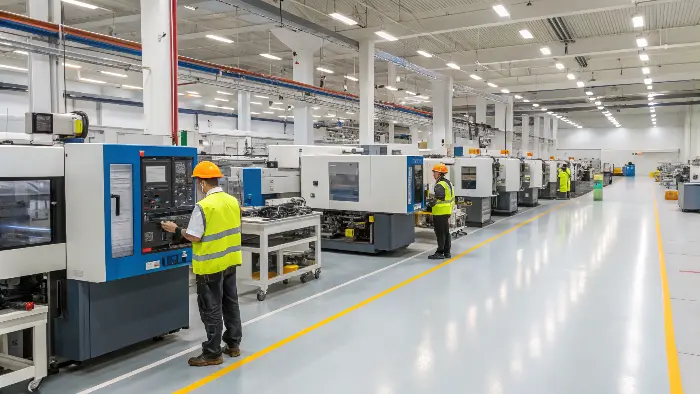
It’s really about finding the best fit for your specific needs.China stands out for its massive manufacturing capacity, well-developed supply chains, and generally lower costs, especially for labor and tooling. China, with 31% market share, is the world’s largest producer of plastics. Plastic raw material is plentiful in the country. China is also the world’s largest injection molding machine producer. So, you will see factories wherever you go in China, but the most dense in the East and Central South. It is not that difficult to locate a Chinese factory that has experience and expertise in the process. The majority of factories are technologically advanced with production systems, i.e., they can produce large orders competitively. If that is not yet sufficient, the world-class infrastructure system in China ensures the delivery of the products to the remotest corners of the world.
This makes it very attractive for a wide range of products, particularly consumer goods and high-volume parts where cost is a major driver. The skill level has also increased significantly over the years.
Germany and Japan are renowned for their engineering excellence, precision manufacturing, and leadership in advanced molding technologies and automation. If your project demands extremely tight tolerances, complex mechanisms, or cutting-edge materials, these countries often lead. However, costs are typically much higher.
The USA has a strong injection molding industry, particularly for medical devices, automotive components, and projects where proximity, quick turnaround, or IP protection are paramount. While costs can be higher than in China, “reshoring” and local manufacturing offer benefits for some companies.
Other countries like Mexico, Vietnam, India, and Eastern European nations are also growing their injection molding capabilities, often offering a balance of cost and quality, or specializing in certain niches.
I’ve worked with clients who sourced molds from Germany for highly critical medical components where precision was non-negotiable, and the budget allowed for it. I’ve also helped many clients achieve excellent results with Chinese manufacturers for a vast array of products, from electronics enclosures to household items. The key is to match the project requirements with the strengths of the manufacturing location. For many projects I encounter through CKMOLD, China offers an unbeatable combination of capability and value. It’s about understanding the trade-offs.
Here’s a simplified comparison:
| Country/Region | Strengths | Considerations |
|---|---|---|
| China | Cost-effectiveness, high volume, vast capacity | IP protection, quality variability (vetting needed) |
| Germany | Precision, high technology, quality | High cost, longer lead times sometimes |
| Japan | Precision, automation, quality | High cost, communication can be a factor |
| USA | IP protection, proximity (for US market), quality | Higher labor costs |
| Other Asia | Emerging cost advantages, specific niches | Infrastructure, consistency can vary |
Your “best” choice depends on a careful evaluation of your project’s specific needs against these factors.
Applications of Injection Molding
Injection molding is the big deal for producing a whole lot of plastic parts—car components, medical equipment, you name it. It’s very cost-effective because it can make a lot of the same plastic components with close tolerances at low cost per part. That is why most industries use it in mass production. It has high quality and quick production regardless of whether the product is simple or complicated.
- Gears: Robust, high-tolerance gears for machinery and electronics.
- Housings: Durable housings for electronics, automotive parts, and industrial equipment.
- Enclosures: Accurate enclosures for electronic components, safeguarding internal components.
- Handles: Long-lasting, comfortable handles for products, appliances, and tools.
- Caps and Closures: Well-functioning caps and closures for bottles, which have good sealing.
- Connectors: Small, delicate connectors for electrical and electronic purposes.
Who is the best mold maker in China?
Searching for the best mold maker in China or any other country is not an easy step. If you want to find a top-tier mold maker partner for your project, you need to be master in some identification and assessment.
Identifying the single “best” mold maker in China is difficult because “best” depends on your specific needs (e.g., mold complexity, industry, volume, budget). Many highly capable mold makers exist. The key is to find a reputable, experienced maker with good communication, a proven track record relevant to your project, and a commitment to quality. Due diligence is crucial.
good or even excellent mold maker in China, rather than chasing a mythical “best.” The Chinese mold-making industry is vast and diverse.
First, define your requirements clearly. What kind of mold do you need? What industry is it for (e.g., automotive, medical, consumer electronics)? What are your quality standards, expected volume, and budget? A maker specializing in simple, high-volume consumer goods might not be the best choice for a complex, low-volume medical device mold.
Look for experience relevant to your project. Ask for case studies or examples of similar molds they have built. A company with a long history of making molds for your specific type of product or industry is a good sign.
Check their quality control systems. Do they have ISO certification? What kind of inspection equipment do they use (CMM, projectors)? How do they ensure mold trial success and part quality?
Communication is key. Ensure they have English-speaking staff who can understand your technical requirements and provide regular updates. Miscommunication can lead to costly errors.
Consider their engineering capabilities. Do they offer Design for Manufacturability (DFM) analysis? Can they help optimize your part design for better molding?
Don’t just rely on online directories. Seek referrals, visit trade shows (if possible), or work with a trusted sourcing partner or consultant who knows the landscape. I’ve spent years building relationships and understanding the capabilities of different suppliers. It’s this groundwork that helps me connect clients with reliable mold makers.
I generally tell my clients, finding a good mold maker is like finding a good doctor. You want someone skilled, experienced in your specific “ailment” (project type), and with whom you can communicate effectively. It’s not about finding the one with the flashiest website, but the one who can deliver the results you need.
Here are criteria for selecting a good mold maker:
| Criteria | Importance |
|---|---|
| Relevant Experience | Proven track record with similar molds/industries. |
| Quality Systems | ISO certification, robust QC processes, good inspection equipment. |
| Engineering Capability | DFM analysis, design support, problem-solving skills. |
| Communication | Clear, responsive, English-speaking contacts. |
| Equipment & Facility | Modern machinery, well-maintained workshop. |
| References/Reputation | Positive feedback from previous clients. |
| Price & Lead Time | Competitive, but not the sole factor; realistic delivery schedules. |
| After-Sales Support | Willingness to support mold adjustments or repairs if needed. |
Thorough vetting is essential to find a mold maker that will be a true partner for your project. Need help for more so check out this blog: Choosing Between US and China Injection Molding: How Can You Get the Best of Both Worlds?
Prepare a Decision-Ready RFQ
Send 3D CAD, 2D drawing, resin and grade, color, annual volume, forecast, surface, tolerance, assembly, inspection, packaging and delivery target. State whether you need a mold only, molded parts, prototype iterations, production supply or a complete export tooling package.
Match Supplier Capability to Part Risk
A simple commodity part may need different equipment and controls from a thin-wall cosmetic housing, multi-cavity automotive component, insert molded assembly or filled engineering resin. Request a technical review and comparable examples instead of assigning suppliers by location alone.
Separate Tooling and Part Quality Decisions
A supplier may build a tool, mold parts or provide both. Define who controls DFM, material approval, trial, inspection, corrections, production release and maintenance. Specify cavity identification, inspection reports, sample approval, spare parts and ownership of the mold and data.
Control Logistics and Communication
Confirm communication language, time zone, revision system, shipping documents, packaging, incoterms, customs, payment, warranty, response time and escalation. A clear interface is especially important when the mold and production parts cross borders.
Compare Total Cost and Supply Resilience
Include tooling, unit price, engineering, samples, scrap, shipping, duties, inventory, lead time, maintenance, alternative capacity and future changes. The lowest part price may not be the lowest risk-adjusted cost.
You Get Custom Injection Molded Parts Anywhere in China? A Sourcing: Buyer Review Checklist
- Prepare a complete RFQ with CAD, drawing, resin, volume, surface, tolerance and delivery information.
- Match supplier equipment, engineering, quality and trial capability to the part risk.
- Define DFM, material, inspection, approval, tooling ownership and production responsibilities.
- Confirm communication, revision, logistics, packaging, warranty and escalation rules.
- Compare total landed cost, resilience, maintenance and future change risk.
Conclusion
Sourcing injection molded parts directly in China, and it’s usually a very cost-effective solution. Knowing what the cost involved is, how molds are charged for, and comparing it with other countries of manufacture will enable you to make an intelligent decision. To get maximum value, it’s necessary to work with knowledgeable manufacturers, make a good mold design investment, and focus on quality control throughout. Doing this allows businesses to get best value pricing without sacrificing product quality.
I wish this piece of writing by CKMOLD could assist you with your process of production.
Frequently Asked Questions
Can a China mold maker also produce my injection molded parts?
Many can, but confirm machine, material, quality, inspection, capacity, tooling ownership and production responsibility for your specific part.
What should I request before ordering custom parts?
Request DFM, material approval, samples, inspection, process assumptions, packaging, change control, warranty and clear commercial terms.
What is the minimum order quantity for custom injection molded parts in China?
The minimum order quantity for custom injection molded parts in China is often around 1,000 pieces, but this depends on the supplier and project requirements.
Some Chinese factories can also accept low-volume orders of 100 to 500 pieces once the tooling has already been manufactured. However, very small production runs are usually less cost-effective because tooling costs are spread across fewer parts. Higher production volumes reduce the tooling cost per unit and improve overall production economics.
How can I tell whether a Chinese injection molding factory is legitimate?
Request the factory’s business license registration number and verify it through China’s national enterprise database. Ask for ISO certification documents and confirm the certificate numbers with the issuing organizations.
You should also request customer references from companies in similar industries and follow up directly with those references. For larger projects, using a third-party factory audit service is strongly recommended.
Reliable factories are generally willing to provide verification documents and answer qualification questions transparently.
Can FDA-approved medical device parts be manufactured in China?
Yes. Many Chinese injection molding manufacturers are capable of producing FDA-compliant medical device components.
An increasing number of Chinese suppliers are ISO 13485 certified and operate validated cleanroom molding facilities, especially in regions such as Guangdong and Shanghai. However, medical projects still require proper supplier qualification, process validation, facility audits, and ongoing quality management agreements.
How do tariffs affect the cost of importing injection molded parts from China to the United States in 2026?
US Section 301 tariffs on Chinese products continue to apply to many imported product categories in 2026. Tariff rates generally range from 7.5% to 25% depending on the HTS classification of the product.
Importers should confirm the correct tariff classification with a customs broker before calculating landed costs. Tariffs are usually based on the customs value of the goods rather than the final landed cost.
What should I do if injection molded parts are rejected after arrival?
Document all issues immediately by taking photographs, recording measurements, and writing a detailed description of the defects.
Notify the supplier in writing within the timeframe specified in the purchase agreement, which is often within 30 days of receiving the shipment. A strong manufacturing agreement should clearly define how defective products will be repaired, replaced, reworked, or credited.
If a third-party inspection company approved the shipment before delivery, you may also be able to pursue corrective action through the inspection provider.
How long does an injection mold typically last?
The average lifespan of an injection mold can range from 30,000 to 100,000 production cycles, and some molds can remain operational for up to 10 years depending on maintenance and production conditions.
How does mold steel quality affect injection mold lifespan?
Mold lifespan depends heavily on the steel grade used during mold manufacturing.
Prototype molds made from aluminum or soft steel may last between 10,000 and 50,000 cycles. P20 Class 103 production molds commonly reach around 500,000 cycles, while hardened Class 101 steel molds can exceed one million production cycles.
Choosing the correct mold steel for the expected production volume is essential for long-term durability and production stability.