
Are the costs for your PVC injection molded products slowly eating into your profits? You see the numbers on the spreadsheet, and each small increase in material, tooling, or production time adds up, making it harder to stay competitive. It feels like a constant battle to maintain quality while keeping expenses in check. But what if you could apply a clear, structured approach to systematically reduce these costs without compromising the final product?
PVC product cost is controlled by the whole process, not only resin price. Part mass, formulation, cycle, thermal history, mold architecture, scrap, purge, tool maintenance, inspection, secondary operations, packaging and downtime all contribute to accepted-part cost. The best savings protect PVC stability and product performance while removing avoidable material, time and variation.
Related engineering resources: DFM analysis | production injection molding | mold design
The most effective way to optimize costs for PVC injection molded products is through a three-pronged strategy: material, design, and process. This involves selecting the most cost-effective PVC grade for your application, simplifying the part design to reduce material usage and cycle time, and fine-tuning the injection molding process parameters. By focusing on these key areas, you can significantly lower raw material expenses, reduce scrap rates, shorten production cycles, and build more efficient, longer-lasting molds.
How Can Material Selection Impact Your PVC Molding Costs?
Choosing the right PVC grade can feel like navigating a minefield. Pick one that’s over-specified, and you’re paying for performance you don’t need. Pick one that’s difficult to process, and you’re facing high defect rates and production delays. This uncertainty can lead to inflated costs that silently erode your profit margins. But by understanding the specific types of PVC and their additives, you can pinpoint the most economical option that still meets all your quality standards.
Material selection affects accepted-part cost through compound price, density, additives, thermal stability, flow behavior, scrap, purge, cycle and maintenance. Flexible and rigid PVC are different application families rather than universal high- and low-cost choices. A lower-viscosity compound, filler or recycled-content option should be used only when the exact formulation still meets mechanical, appearance, regulatory and processing requirements in the proposed tool.
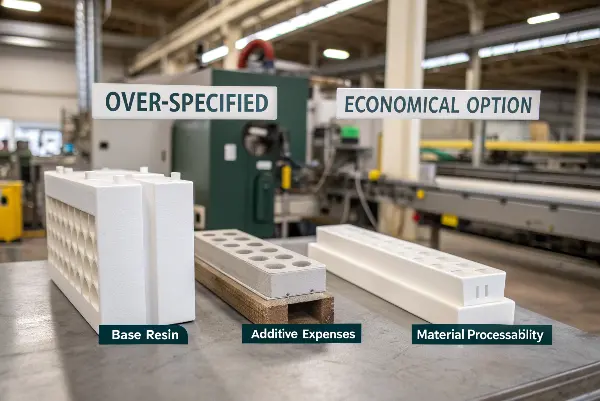
Beyond the base resin, additives play a huge role. Things like heat stabilizers are essential for processing PVC, but some are more expensive than others. Fillers like calcium carbonate can be used to reduce the amount of virgin resin needed, significantly lowering costs, but you must ensure they don’t compromise the part’s structural integrity.
Here’s a simple breakdown of how these choices affect your bottom line:
| Factor | Option A | Option B | Impact on Production |
|---|---|---|---|
| PVC Type | Flexible PVC (with plasticizers) | Rigid PVC (PVC-U) | Neither family is inherently cheaper. Compare the exact compound, density, cycle, scrap, secondary work and required performance. |
| Additives | High-performance stabilizers | Standard stabilizers/fillers | Overuse of fillers can increase abrasion on the mold and screw. |
| Flow Rate | Low-flow, high-viscosity grade | High-flow, low-viscosity grade | Flow must be evaluated with thermal stability, shear, residence time, geometry and quality; higher flow does not by itself prove a shorter accepted cycle. |
| Material Source | 100% Virgin Resin | Blend with recycled content | Confirm source, contamination control, color, property retention, applicable restrictions and process consistency before assigning a saving. |
The key is to work closely with your material supplier. Don’t just order a part number. Have a conversation about your application, your processing window, and your cost targets. A good supplier can help you formulate a custom compound that gives you exactly what you need, and nothing more.
Can Smart Part Design Really Lower Your PVC Molding Expenses?
Have you ever received a part design that looks incredible on a computer screen but is a complete nightmare to manufacture? Overly complex features, unnecessarily thick walls, and sharp internal corners can drive up costs at every stage of production. These design choices lead to more expensive molds, longer cycle times, higher material consumption, and increased scrap rates. It’s a frustrating cycle where aesthetics or engineering override manufacturability, leaving you with the bill. But what if you could make small tweaks to the design that slash costs without affecting the part’s function?
Yes, absolutely. Smart part design is one of the most powerful levers for cost reduction in PVC molding. By implementing principles like uniform wall thickness, using ribs for strength instead of thick sections, and designing generous radii on corners, you reduce material usage. This simplification also allows for less complex and therefore less expensive molds, shortens cooling and cycle times, and minimizes defects like sink marks and warpage, leading to substantial savings over the life of the product.
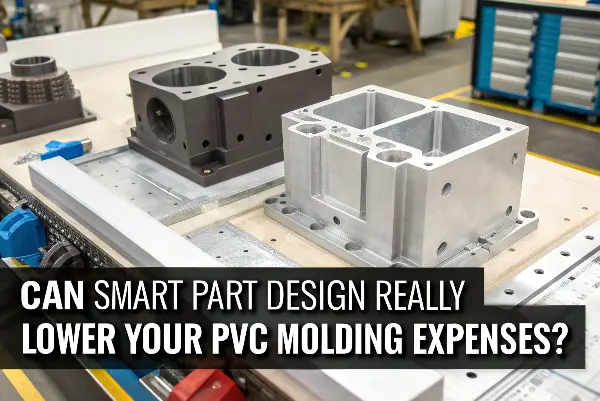
A useful principle is that the cheapest material is the material you don’t use. This is where Design for Manufacturability (DFM) becomes a practical option. The goal of DFM is to design a part that is as easy and cheap to produce as possible, and for injection molding, it starts with wall thickness. A part with thick and thin sections will cool unevenly. The thin sections will solidify while the thick sections are still molten, causing stress, warpage, and ugly sink marks. The solution is to maintain a uniform wall thickness throughout the part. If you need extra strength, don’t just make the wall thicker. Instead, add thin ribs. This provides the necessary stiffness while using a fraction of the material and keeping cooling times short.
Here are some key DFM principles for PVC parts:
| DFM Principle | Common Mistake | Cost-Saving Solution | Why It Saves Money |
|---|---|---|---|
| Wall Thickness | Varying thick and thin sections. | Set a consistent target from the exact compound, flow length, load and molding study; transition gradually where thickness must change. | Reduces material use, shortens cooling time, prevents defects. |
| Structural Support | Making walls thicker for strength. | Add ribs and gussets. | Provides strength with less material and faster cycles. |
| Corners | Sharp internal corners. | Size internal and external radii from wall, load, flow and tool construction; avoid sharp stress and flow transitions. | Improves melt flow, reduces stress concentrations and mold wear. |
| Draft Angles | Vertical walls with no draft. | Specify draft by depth, texture, shrinkage, surface requirement and ejection direction; confirm it in DFM. | Makes the part easier to eject, preventing damage and reducing cycle time. |
By focusing on these design fundamentals before a single piece of steel is cut for the mold, you are building cost efficiency directly into your product. It’s the ultimate form of proactive cost management.
Why is Mold Design So Crucial for PVC Cost Optimization?
Many people focus on the part design or the machine settings, but they often overlook the mold itself as a source of savings. They might accept a quote for a complex mold without questioning if it could be simplified, or they might not consider how the mold’s cooling system will affect cycle times. This can lead to paying for an over-engineered tool that is expensive to build and slow to run, locking you into high production costs for the entire life of the product. But a well-designed mold is an asset that pays for itself over and over again.
Mold design is crucial because it directly dictates production efficiency, part quality, and long-term costs. An optimized mold design minimizes cycle time through efficient cooling channels, reduces material waste with a well-balanced runner system, and lowers maintenance costs by using durable materials for high-wear areas. For a material like PVC, which is sensitive to heat, proper venting and gate design are critical to prevent defects and degradation, ensuring a stable and cost-effective manufacturing process.
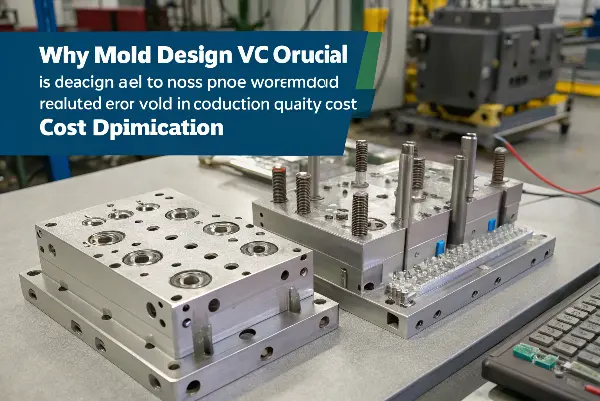
The mold strongly affects accepted-part cost through balance, thermal control, residence time, venting, maintenance and scrap. Runner selection for PVC is not a simple material-saving calculation. A balanced cold runner can add recoverable or disposable runner mass, but it limits hot-runner residence and stagnation risk. A hot-runner concept should be considered only when the exact PVC compound, manifold design, temperature control, purge plan and supplier evidence support it. Teknor Apex’s rigid PVC injection-molding guide, for example, advises that hot-runner molds are not recommended for the rigid compounds covered by that guide. Calculate any proposed runner saving against tooling premium, startup and purge loss, degradation risk, maintenance and accepted yield.
Cooling is another area where mold design can improve cost, provided the shorter cycle is validated. Reducing a 30-second cycle to 28 seconds is a 6.7% cycle-time reduction. At the same cavity count, uptime and accepted yield, theoretical hourly output rises by about 7.1% because 30 ÷ 28 = 1.071. The gain should be claimed only after part weight, dimensions, appearance, ejection and long-run stability remain acceptable.
Here are some mold design considerations specifically for PVC:
| Mold Feature | Poor Design (High Cost) | Optimized Design (Low Cost) | Impact on Production Cost |
|---|---|---|---|
| Material | Standard steel (e.g., P20) for all components. | Steel, coating and maintenance plan selected for the exact compound, stabilizer package, tool duty and surface requirement. | Reduces corrosion risk if PVC overheats or degrades and releases hydrogen chloride; material choice does not replace residence-time and temperature control. |
| Runner System | Unbalanced cold runner. | Balanced, low-residence cold runner unless a PVC-qualified hot-runner concept is supported by compound and system suppliers. | Compare runner mass with residence, startup, purge, balance, maintenance and degradation risk; no runner system eliminates all material loss. |
| Gating | Small, restrictive gates. | Gate type and size selected from the exact grade, flow length, shear/residence limits, appearance and filling study. | Improves flow, reduces shear heat, prevents material degradation. |
| Venting | Inadequate vents. | Vents at last-to-fill locations, sized for the exact compound and verified by trial without causing flash. | Allows trapped gas to escape, preventing burn marks and incomplete fills. |
Investing in a high-quality mold designed specifically for the challenges of PVC isn’t an expense; it’s a core cost-optimization strategy. It ensures faster cycles, less waste, and a more reliable process for years to come.
What Process Adjustments Can Cut Down Your PVC Injection Molding Costs?
You have the right material, a great part design, and an efficient mold. But if the parameters on the injection molding machine aren’t set correctly, you can still end up with high scrap rates and inefficient production. Running the temperature too high can degrade the PVC, while running the pressure too low can lead to incomplete parts. It’s a frustrating balancing act where small errors can lead to big costs. The key is to find the sweet spot where you get consistent, high-quality parts in the shortest possible time.
Process development is a final cost-control step. Establish a documented window for melt temperature, residence time, injection profile, pressure transfer, hold, screw recovery, mold temperature and cooling. The target is the shortest validated cycle that maintains accepted dimensions, appearance, ejection and long-run stability—not the fastest individual setting. Use the compound supplier’s current processing guidance as the starting point and confirm the result in the actual part and tool.
PVC compounds are sensitive to thermal and residence history. Insufficient heat or shear can contribute to poor fill, while overheating or prolonged residence can cause discoloration and degradation; hydrogen chloride may evolve during decomposition and can contribute to corrosion and safety risk. Use the exact compound supplier’s processing window, purge and shutdown instructions, then validate melt condition, color, odor, fill and dimensions in the production setup.
Cycle affects machine cost, but accepted output is the decision metric. Review fill, pressure transfer, hold, gate freeze, cooling, screw recovery and mold movement as a system. A faster injection profile can reduce fill time yet add shear heat or burn risk; shorter cooling can raise deformation or handling damage. Lock the cycle only after cavity-level weight, dimensions, appearance and ejection remain stable over a representative run.
Here’s how you can approach process optimization:
| Process Parameter | Sub-Optimal Setting | Optimized Setting | Cost Impact |
|---|---|---|---|
| Melt Temperature | Too high, causing degradation. | The lowest temperature that provides a consistent fill. | Reduces energy use, shortens cooling time, prevents material damage. |
| Injection Speed | Too slow, increasing cycle time. | A validated profile that fills consistently without excessive shear heating, burn, flash or unstable transfer. | Shortens the fill portion of the cycle time. |
| Cooling Time | Excessively long “just in case.” | A validated time that preserves ejection, handling, dimensions, appearance and downstream fit. | Directly reduces the longest component of the cycle time. |
| Back Pressure | Too high, causing shear and long screw recovery. | Low, just enough to ensure a consistent shot size. | Reduces screw recovery time and material degradation. |
Use a structured process study. A designed experiment can evaluate selected factors and interactions against predefined responses such as part weight, dimensions, appearance, pressure, cycle and accepted yield; changing one variable at a time is not the same as DOE. Confirm the selected window with a repeat run and document the limits before releasing the cost saving.
Reduce Mass Without Creating Stress
Use uniform walls, coring, ribs and transitions to remove unnecessary material while maintaining stiffness, sealing, impact and installation strength. Heavy sections can increase cooling time, sink, degradation exposure and dimensional variation, so mass reduction can improve both cost and quality when validated.
Control Cycle and Thermal Exposure
Cooling, mold temperature, gate freeze, screw recovery and residence time affect output. Do not shorten cooling or increase speed blindly on PVC. Confirm weight, dimensions, appearance, color, odor, ejection and long-run stability at each proposed cycle improvement.
Choose Tooling and Cavities for Demand
Cavity count, runner system, cooling, venting, replaceable inserts and mechanisms should match volume and maintenance capacity. More cavities may reduce direct cost while increasing balance, tool and downtime risk. A modular tool can lower future repair or change cost.
Reduce Scrap, Purge and Changeover Loss
Clean material paths, planned color changes, controlled startup, approved regrind rules and cavity-level inspection reduce wasted PVC. Track scrap by reason—short shot, flash, color, burn, contamination, dimensions or handling—so the improvement is aimed at the actual loss.
Calculate Cost per Accepted PVC Part
Compare proposals on cost per accepted part, not resin price or machine rate alone. Use the same annual demand, quality limits, packaging, delivery point and tool-amortization basis for every supplier.
Accepted-part cost = (material + machine time + labor + energy + setup/changeover + inspection + secondary work + packaging + maintenance allocation + amortized tooling + scrap/rework/disposition) ÷ accepted quantity.
| Sensitivity question | Evidence to request | Common false saving |
|---|---|---|
| Does a cheaper compound run consistently? | Exact grade, scrap by reason, cycle, color/odor and property results | Lower resin price with more purge, rejects or slower recovery |
| Will a faster cycle remain acceptable? | Stable part weight, dimensions, surface, ejection and long-run trend by cavity | Shorter cooling that raises warp or handling damage |
| Does a higher cavity count reduce delivered cost? | Balance/cooling study, capacity, maintenance and downtime scenario | Lower theoretical piece cost with unstable cavities or larger repair loss |
| Does a runner change pay back? | Tool premium, material saved, startup/purge behavior and maintenance | Assuming every runner kilogram is recoverable at full value |
Illustrative calculation only—not a CKMOLD project or quotation: if total assigned production cost is USD 12,000 and 9,600 parts pass final acceptance, the accepted-part cost is USD 1.25. If a process change lowers assigned cost to USD 11,500 but only 8,900 parts pass, accepted-part cost rises to about USD 1.29. Yield must be included before claiming a saving.
Use the mold cost estimator for a preliminary tooling budget only. For a PVC cost review, submit CAD, exact compound, quantities, quality limits, secondary operations and shipping scope through the engineering RFQ.
Compare Quality and Lifecycle Cost
A low-cost compound or tool can become expensive if it creates field failures, frequent cleaning, slow inspection or missed shipments. Include maintenance, spare inserts, packaging, energy, labor, compliance documentation and customer returns in the cost model.
Optimize the Total Cost of PVC Injection-Molded Products: Buyer Review Checklist
- Use DFM to reduce mass while protecting stiffness, sealing, impact and installation.
- Optimize cooling and cycle only after checking PVC thermal history and part quality.
- Match cavity count, runner, cooling, vents, inserts and maintenance to demand.
- Track scrap, purge, changeover and startup loss by defect reason.
- Include quality, maintenance, energy, packaging, downtime and field risk in total cost.
Frequently Asked Questions
Is the cheapest PVC compound the lowest-cost option?
Not necessarily. Processing stability, scrap, cycle, appearance, durability, documentation and supply consistency can outweigh resin price.
Can a shorter PVC cycle generally reduce cost?
Only if accepted output remains stable. Excessive speed or insufficient cooling can increase degradation, warp, flash, ejection damage and inspection cost.
Conclusion
Optimizing the cost of PVC injection molded products isn’t about one single trick; it’s a comprehensive strategy. By carefully selecting your material, designing the part for manufacturability, investing in an efficient mold, and fine-tuning your process parameters, you can achieve significant savings. This holistic approach turns cost reduction from a reactive problem into a proactive, continuous improvement process that strengthens your bottom line and boosts your competitive edge in the market.