
You’ve invested a significant amount of capital into a high-precision injection mold. But then, tiny, almost invisible scratches start appearing on your finished parts. This leads to customer complaints, costly rejects, and production delays. You realize your maintenance might be the root cause. A strict and well-defined mold maintenance protocol is the only way to protect your investment, your reputation, and your bottom line.
A comprehensive mold maintenance protocol for preventing scratches involves three critical stages. First, systematic inspection to detect early signs of wear, residue buildup, or micro-damage before they cause problems. Second, meticulous cleaning using the correct non-abrasive tools and approved chemical agents to remove contaminants without harming the mold surface. Finally, proper preservation and storage with anti-rust agents and secure handling to protect the mold from environmental corrosion and accidental damage between production runs.
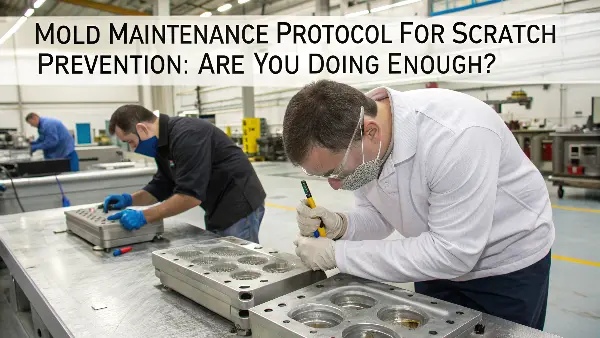
I’ve seen firsthand how a brand-new, expensive mold can be degraded in just a few months due to neglect. It’s a frustrating and costly mistake that is entirely avoidable. The problem isn’t a lack of effort, but a lack of a clear, repeatable system. Establishing a protocol isn’t just about cleaning; it’s about creating a culture of care for your most valuable production assets.
Let’s break down exactly what a robust protocol looks like, step by step, so you can implement a system that protects your molds for years to come.
Why Should You Prioritize Scratch Prevention in Mold Maintenance?
Your production line is humming along, and everything seems fine. Suddenly, your quality control team starts flagging an increase in surface imperfections on your parts. The scrap rate climbs, and production targets are missed. The financial losses add up quickly, all because of minor scratches on a mold surface that were overlooked. This slow bleed of profits is a common, yet preventable, problem.
Prioritizing scratch prevention in mold maintenance directly protects your bottom line and your brand’s reputation. It significantly reduces part rejection rates, which saves material and machine time. It minimizes expensive and time-consuming mold repairs and unplanned downtime. A well-maintained, scratch-free mold ensures consistent product quality, which keeps your customers happy and safeguards your business. It’s a direct investment in operational efficiency and long-term profitability.

A few years ago, a client came to me, frustrated with his rising costs. His company, much like Michael’s, produces components for consumer electronics where appearance is everything. He was experiencing a 15% reject rate due to surface blemishes. When we examined his molds, we found them covered in micro-scratches caused by improper cleaning with abrasive pads and metal tools. The cost of a new mold was out of the question, and repairs would mean weeks of downtime.
We helped him implement a proactive maintenance protocol focusing on scratch prevention. The financial impact was immediate and clear. Preventing damage is always cheaper than fixing it. Here’s a simple breakdown of the costs you avoid:
| Cost Factor | Reactive Repair (Fixing Scratches) | Proactive Maintenance (Preventing Scratches) |
|---|---|---|
| Downtime | High (Days or weeks for polishing/repair) | Minimal (Scheduled cleaning between runs) |
| Material Waste | High (Rejected parts from entire runs) | Low (Consistent quality, minimal scrap) |
| Labor Costs | High (Mold repair specialists, extra QC) | Low (Routine cleaning by trained technicians) |
| Mold Lifespan | Reduced (Each repair removes material) | Maximized (Original-spec surfaces preserved) |
By shifting his mindset from "fix it when it breaks" to "keep it from breaking," he not only eliminated the reject rate but also extended the life of his tooling, saving his company thousands of dollars.
What Does an Effective Mold Inspection Protocol Involve?
You tell your team to inspect the molds after each run. But are they just giving the tool a quick glance before putting it away? This kind of superficial check often misses the subtle signs of trouble. Small issues like gas residue, minor wear, or the beginning of a micro-scratch can easily spiral into major defects if they aren’t caught early, leading to a sudden production halt.
An effective mold inspection protocol is a systematic, documented process. It starts with a visual check of the cavity, core, and parting line surfaces for any obvious damage, corrosion, or residue buildup. Technicians must use magnification and good lighting to spot tiny scratches. It also includes a functional check of all moving components, like ejector pins, slides, and lifters, to ensure they move smoothly without binding or sticking, which could cause scoring.
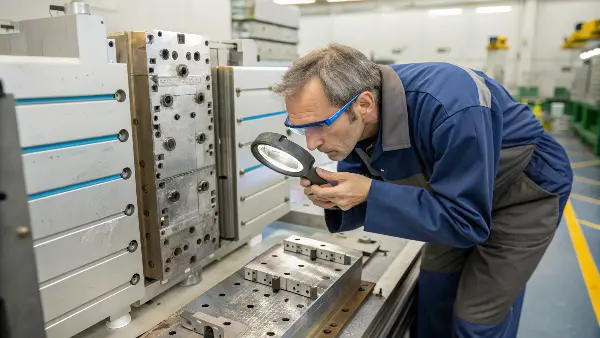
Inspection isn’t just about looking for scratches; it’s about looking for the causes of scratches. I always teach my clients that a good inspection is a forensic investigation done in advance. You need to create a simple but non-negotiable checklist that your team follows every single time a mold comes out of the machine. This removes guesswork and ensures nothing is missed.
Here is a basic framework for a mold inspection checklist:
1. Pre-Cleaning Inspection (Hot Mold)
- Purpose: To check for issues that are only visible when the mold is at operating temperature.
- Checkpoints:
- Examine the last few parts produced for any new defects (drag marks, flash, blemishes).
- Look for signs of material residue or gas burns around vents and deep ribs. This buildup can be abrasive.
- Listen for any unusual noises during the final cycles of operation.
2. Post-Cleaning Inspection (Cool Mold)
- Purpose: A detailed examination of the clean mold surface.
- Checkpoints:
- Parting Line: Check for any dings or damage. A damaged parting line can cause flash, which requires extra trimming and can damage the mold further.
- Cavity & Core Surfaces: Use a bright, angled light source and a magnifying glass. Look for any new scratches, scuffs, or signs of pitting from corrosion. Run a fingernail (gently!) over suspicious areas.
- Moving Components: Manually actuate ejector pins, slides, and lifters. They should move freely and smoothly. Any stiffness or grinding indicates a problem that could cause galling or scratches.
- Water Channels: Ensure all cooling channels are clear and connectors are not leaking.
Creating a physical or digital log for each mold is crucial. Note the date, the operator’s name, and any findings. This history helps identify recurring problems and predict when a mold might need more intensive maintenance.
How Do You Clean a Mold Without Causing Scratches?
Your team knows the mold needs to be clean, so they grab the nearest tool—a brass brush, a steel scraper, or an abrasive pad—and start scrubbing away at stubborn plastic residue. They might think they’re doing a good job. But these aggressive methods are a primary cause of the very scratches you’re trying to prevent, slowly destroying the polished surface of your expensive tool.
To clean a mold without causing scratches, you must use non-abrasive tools and appropriate cleaning agents. Always start with the gentlest method. Use soft cloths, wooden or plastic scrapers, and specialized mold cleaning solutions designed to dissolve polymer residue. For tougher deposits, dry ice blasting is a highly effective, non-abrasive option. Never use steel wool, screwdrivers, or harsh abrasive pads on critical mold surfaces, especially on highly polished or textured areas.
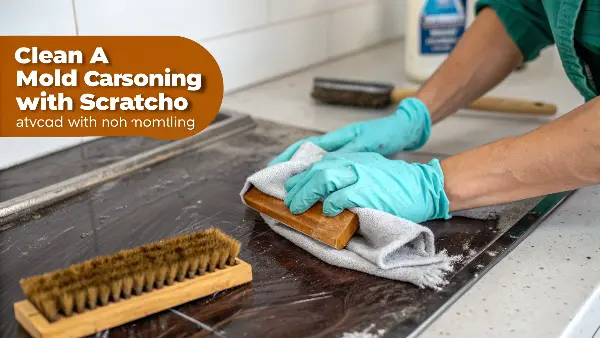
In my early days in the factory, I learned a tough lesson. I was trying to clean a stubborn spot on a mirror-finish mold and used a brass brush, thinking it was soft enough. It left a patch of fine scratches that took a master polisher two full days to fix. That mistake cost the company significant downtime and money. From that day on, I’ve preached the "soft-to-hard" rule of mold cleaning. You always start with the least aggressive method possible.
Here’s a breakdown of the right tools for the job, organized from safest to more specialized:
| Tool/Method | Recommended Use | Cautions |
|---|---|---|
| Soft, Lint-Free Cloths | Wiping away light residue, applying solvents and rust preventatives. The first tool you should always reach for. | Ensure cloths are perfectly clean. A trapped metal shaving will cause scratches. |
| Approved Mold Cleaners | Dissolving specific polymer residues (e.g., PVC, POM). | Always check the cleaner’s compatibility with the mold steel and your plastic material. Use in a well-ventilated area. |
| Wooden or Plastic Scrapers | Gently removing localized, hardened plastic buildup. | Wood or plastic is softer than steel. Never use metal tools like screwdrivers or putty knives on the cavity surface. |
| Soft Bristle Brushes | Cleaning textured surfaces or around complex features like ejector pins. | Use only natural or nylon bristles. Avoid brass brushes on A-1 or A-2 mirror finishes. |
| Dry Ice Blasting | A highly effective method for deep cleaning in-press or out. The dry ice pellets sublimate on impact, leaving no secondary waste. | Requires specialized equipment and trained operators. Excellent for removing stubborn residue without any abrasion. |
Your cleaning protocol should be written down and posted near the cleaning station. It should specify which cleaners and tools are approved for different mold finishes (e.g., mirror polish vs. textured). Training is key. Make sure every technician understands why they can’t use a steel pick, and show them the damage it can cause.
What is the Best Way to Preserve and Store Molds?
The production run is over. The mold has been inspected and thoroughly cleaned. Now, it’s wheeled over to a storage rack and left there until the next order comes in, maybe weeks or months from now. But without proper protection, it’s vulnerable. Humidity can cause rust, and accidental bumps from forklifts or other tools can cause catastrophic damage, turning a pristine tool into a repair project.
The best way to preserve and store molds is to apply a high-quality rust preventative to all steel surfaces and store them in a secure, designated location. After cleaning, spray a light, even coat of a moisture-displacing anti-rust agent on all cavity, core, and external surfaces. Close the mold to protect the core and cavity. Finally, store the mold on a sturdy, clearly labeled shelf, away from high-traffic areas to prevent accidental impact damage.
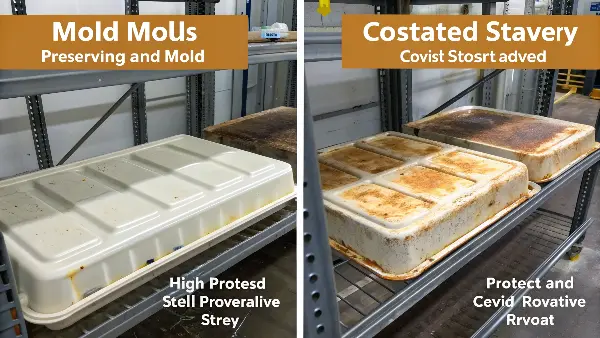
Proper storage is the final, critical step in your maintenance protocol. I think of it as putting your mold to bed. You wouldn’t just leave an expensive piece of equipment out in the open, exposed to the elements. A mold is no different. The two biggest enemies of a stored mold are moisture and physical impact. Your preservation strategy must defend against both.
Here’s a simple, effective procedure for mold preservation and storage:
1. Water Line Purge
- Action: Before applying any rust preventative, connect an air hose to the cooling line inlets and blow out all the water. Trapped water is a primary source of internal rust that can clog channels and ruin your mold’s thermal regulation.
- Why it’s important: Rust inside cooling channels can break off and block them, causing hot spots on the mold surface that lead to part defects.
2. Application of Rust Preventative
- Action: Choose a rust preventative that matches your storage duration. There are different types:
- Light Oil/Waxy Film: Good for short-term storage (a few weeks to a few months). Easy to clean off.
- Heavy-Duty Sealant: Better for long-term storage (6+ months). Provides a thicker, more durable barrier but requires more effort to remove.
- Why it’s important: Even ambient humidity in your factory can cause microscopic rust to form on the polished an steel surface. This pitting is extremely difficult and expensive to repair.
3. Secure Storage Practices
- Action:
- Always store the mold in the closed position to protect the delicate cavity and core surfaces.
- Assign each mold a specific location on a heavy-duty storage rack. Label the shelf clearly with the mold number.
- Ensure storage racks are located away from main aisles where forklifts and other heavy equipment operate.
- Keep a log of where each mold is stored. A "lost" mold is a massive waste of time and money.
By following these preservation steps, you ensure that when you pull a mold for the next production run, it’s in the exact same pristine condition as when you put it away.
Conclusion
A systematic mold maintenance protocol is not an expense; it is a critical investment in your company’s productivity and quality. By focusing on the three pillars—diligent inspection, proper cleaning, and secure preservation—you can effectively prevent scratches and other damage. This proactive approach will extend the life of your tooling, reduce scrap rates, minimize downtime, and ultimately protect your reputation for delivering high-quality parts.