
Are you trying to produce plastic parts but feel overwhelmed by the complexity and cost of the machinery? It’s a common problem. Making the wrong choice can lead to huge financial losses and production delays, putting your entire project at risk. This guide will demystify the injection molding machine, explaining what it is, its purpose, and what you can expect to pay, so you can invest with confidence.
An injection molding machine combines an injection unit, clamping unit, mold interface, temperature controls, electrical or hydraulic drives and software. Its cost is driven by more than tonnage: shot size, injection speed, pressure, platen dimensions, repeatability, energy use, automation, auxiliaries, service support and application requirements all matter. A useful purchase comparison starts with the part and production plan.
Related engineering resources: production injection molding | multi-cavity molds | contact CKMOLD
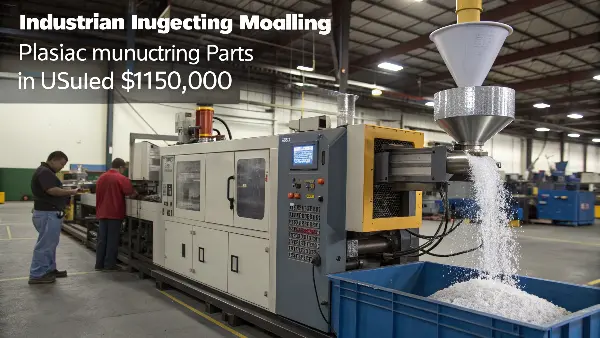
An injection molding machine is a piece of industrial equipment used for manufacturing plastic parts in large volumes. It works by melting plastic pellets and injecting the molten material under high pressure into a mold cavity. Once the plastic cools and solidifies, the mold opens, and the finished part is ejected. This process is highly efficient for mass production. The cost of a machine can range from $5,000 for a small, used model to over $500,000 for a large, high-tonnage new one.
What is an injection molding machine?
Are you confused about what an injection molding machine actually does? You see the final plastic products everywhere, but the machine that creates them seems like a black box. This lack of understanding can make it difficult to communicate with suppliers or plan your own production line effectively. Let’s open that black box and look at how this incredible piece of equipment works to turn raw plastic into finished goods.
An injection molding machine has three primary parts: the injection unit, the clamping unit, and the control system. The injection unit melts plastic pellets and forces the molten plastic into a mold. The clamping unit holds the two halves of the mold tightly shut during injection and opens it to release the part. The control system is the brain, managing the temperature, pressure, speed, and timing of the entire cycle to ensure every part is made reliably.
The Core Components
An injection molding machine is a marvel of engineering, but its operation can be simplified by looking at its three main sections. Each has a critical job to do in the molding cycle.
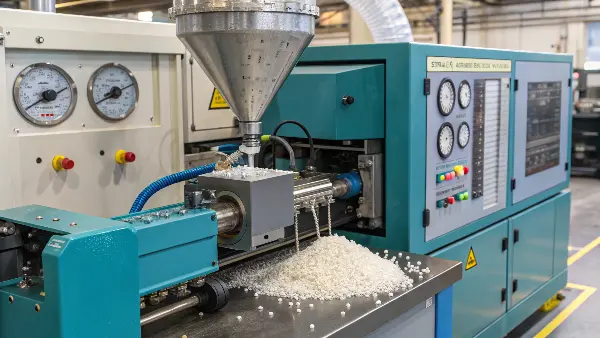
- Injection Unit: This is where the plastic’s transformation begins. It’s responsible for melting the raw material and getting it ready for injection. It consists of a hopper to feed the plastic pellets, a heated barrel, and a reciprocating screw that moves the material forward, melts it, and injects it into the mold.
- Clamping Unit: This part is all about force. It holds the mold shut against the immense pressure of the injected plastic. It then opens the mold after the part has cooled and uses an ejector system to push the finished part out. The “tonnage” of a machine refers to the clamping force this unit can generate.
- Control System: This is the machine’s brain. Modern machines use sophisticated computer controls (PLCs) to manage every variable, from the temperature of the barrel to the speed of injection and the cooling time. This precision is what allows for the production of millions of identical parts.
Here is a simple table outlining the functions:
| Component | Primary Function | Key Parts |
|---|---|---|
| Injection Unit | Melts and injects plastic material into the mold. | Hopper, Barrel, Screw, Nozzle |
| Clamping Unit | Holds the mold closed and ejects the finished part. | Platens, Tie Bars, Ejector System |
| Control System | Manages and monitors the entire molding process. | PLC, User Interface, Sensors |
Understanding these parts helps you see that an injection molding machine isn’t just one thing; it’s a system where each component must work in suitable harmony.
What is the purpose of injection molding?
You might wonder why injection molding is such a popular manufacturing method. With options like 3D printing and CNC machining available, what makes this process so special? If you don’t understand its core purpose and strengths, you might choose a less efficient or more expensive method for your project. Let’s clarify why millions of companies rely on injection molding to bring their products to life every single day.
The primary purpose of injection molding is to mass-produce identical plastic parts with high precision and low per-unit cost. It is ideal for creating complex shapes and intricate details that would be difficult or impossible to make with other methods. Its speed, repeatability, and ability to use a wide range of plastic materials make it the go-to process for industries from automotive and medical to consumer electronics and packaging. It excels when production volumes are high.
Key Advantages in Manufacturing
Injection molding serves several critical purposes in modern manufacturing, making it an indispensable process for many businesses. Its benefits go beyond just making plastic parts; it’s about how it makes them.
- Efficiency at Scale: The biggest advantage is speed. Once the mold is made and the machine is set up, parts can be produced in a cycle that takes only seconds. This rapid production makes the cost per part extremely low when manufacturing thousands or millions of units.
- Design Complexity and Precision: The process can create parts with incredibly complex geometries and fine details. Features like threads, hinges, and complex curves can be incorporated directly into the mold. The high pressure of injection ensures that the plastic fills every tiny crevice, resulting in highly precise and repeatable parts.
- Material Versatility: A huge range of thermoplastic polymers can be used in injection molding. This allows engineers to select a material with the exact properties they need, whether it’s strength, flexibility, heat resistance, or color.
Let’s compare it to other common methods to highlight its purpose:
| Manufacturing Method | Best For | Key Limitation |
|---|---|---|
| Injection Molding | High-volume, complex, and repeatable parts. | High initial mold cost and lead time. |
| 3D Printing | Prototyping, custom parts, low volume. | Slow production speed, higher per-unit cost. |
| CNC Machining | High-precision parts from solid blocks. | Generates material waste, slower for complex shapes. |
Ultimately, the purpose of injection molding is to provide a reliable, fast, and cost-effective solution for manufacturing high-quality plastic components at scale.
How much is an injection mold machine?
Thinking about buying an injection molding machine, but the potential cost is a major concern? It’s a significant investment, and the price can vary wildly. Without a clear understanding of the factors that influence the price, you could end up overspending on features you don’t need or underspending and getting a machine that can’t do the job.
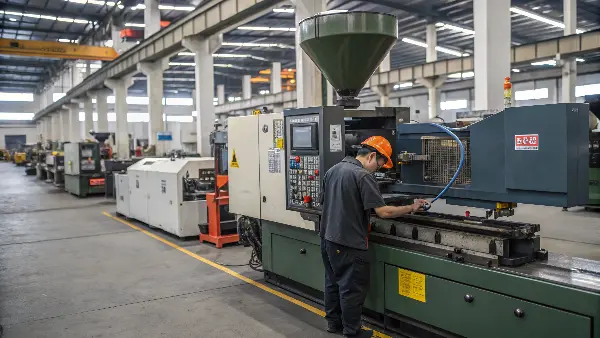
The price of an injection molding machine is determined by its tonnage (clamping force), brand, new vs. used condition, and special features. A small, used machine might cost as little as $5,000 to $20,000. A new, mid-size machine (100-300 tons) typically ranges from $50,000 to $150,000. Large, high-tonnage machines from premium brands with advanced features like all-electric drives or robotics can easily exceed $500,000.
Factors Driving the Price Tag
The cost of an injection molding machine isn’t arbitrary. Several key factors directly influence how much you will pay. Understanding these will help you navigate the market and find the right machine for your budget and needs.
- Tonnage (Clamping Force): This is the single biggest factor. Tonnage is the force the machine uses to hold the mold closed. Larger parts with greater surface area require higher tonnage to counteract the injection pressure. Higher tonnage means a bigger, more powerful, and more expensive machine.
- New vs. Used: A used machine can be significantly cheaper, often less than half the price of a new one. However, it comes with risks like a shorter lifespan, potential for more maintenance, and no warranty. A new machine offers the latest technology, better energy efficiency, and a manufacturer’s warranty, but at a premium price.
- Drive System (Hydraulic, Electric, or Hybrid):
- Hydraulic: The traditional standard. They are powerful and have a lower initial cost but are less energy-efficient and precise.
- All-Electric: More expensive upfront but offer superior precision, higher speed, quieter operation, and are much more energy-efficient.
- Hybrid: A mix of both, offering a balance of performance and cost.
- Brand and Origin: Machines from top-tier brands in Germany or Japan (like Arburg or Fanuc) command the highest prices due to their reputation for quality and technology. Machines from Taiwan or China often provide a better price-to-performance ratio.
Here’s a general price breakdown to give you a clearer picture:
| Machine Type | Tonnage Range (Tons) | Estimated Price Range (New) |
|---|---|---|
| Small / Benchtop | 10 – 50 | $20,000 – $60,000 |
| Medium | 100 – 500 | $60,000 – $250,000 |
| Large | 500 – 1500 | $250,000 – $750,000+ |
| Very Large / Specialized | 1500+ | $750,000 – Millions |
Remember to also factor in costs for shipping, installation, and any necessary auxiliary equipment like dryers, loaders, or robots.
What is the price of a 400 ton injection molding machine?
Are you looking for a specific machine size, like a 400-ton press, but can’t find a straightforward price? It’s frustrating when you’re trying to budget for a project and the numbers are all over the place. The price for the same tonnage can vary dramatically, and if you don’t know why, you could make a poor investment.
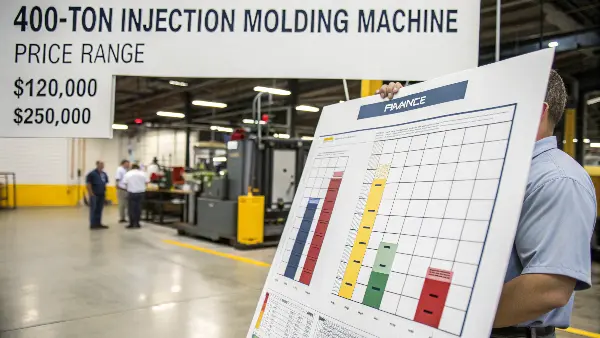
A new 400-ton injection molding machine typically costs between $120,000 and $250,000. The final price depends heavily on the brand, drive system (hydraulic vs. all-electric), and any included options or automation. A standard hydraulic machine from a reputable Chinese or Taiwanese brand will be at the lower end of this range. A high-performance, all-electric machine from a top-tier German or Japanese manufacturer could be at the higher end or even exceed it.
I recently helped a client, the buyer, source a 400-ton machine for producing automotive interior components. He had quotes ranging from $110,000 to over $280,000 and was completely confused. We sat down and analyzed his needs. His parts required high precision but not extreme speed. We determined that a hybrid machine from a solid, mid-tier brand offered the best balance. It saved him nearly $100,000 compared to the top-of-the-line all-electric model, money he could then invest in a high-quality mold.
Analyzing the Cost of a 400-Ton Machine
A 400-ton machine is a versatile workhorse, capable of producing a wide range of medium-to-large parts. It’s a common size in many industries, so there are plenty of options on the market. The price variation comes down to a few key areas that you pay a premium for.
- Drive System Comparison: This is a major cost driver.
- Hydraulic 400T: This will be the most affordable option. It’s great for parts that aren’t overly complex and where energy cost is less of a concern. Expect a price in the $120,000 – $160,000 range for a new machine from a quality manufacturer.
- All-Electric 400T: This is the premium choice. You get unmatched precision, repeatability, and energy savings. It’s ideal for medical or electronic parts with tight tolerances. The price will likely be in the $200,000 – $250,000+ range.
- Brand Reputation: A machine from a world-renowned brand like KraussMaffei will cost more than one from a brand like Haitian, even with similar specs. You’re paying for their R&D, service network, and proven track record of longevity.
- Optional Features and Automation: The base price can increase quickly with add-ons. Features like a robot for part removal, specialized screw and barrel for abrasive materials, or advanced monitoring software will all add to the cost.
Here is a sample price comparison for a new 400-ton machine:
| Feature Level | Drive System | Typical Origin | Estimated Price Range | Best For |
|---|---|---|---|---|
| Entry-Level | Hydraulic | China | $110,000 – $140,000 | General-purpose molding, less critical parts. |
| Mid-Range | Hybrid | Taiwan/Korea | $150,000 – $190,000 | Good balance of precision and cost. |
| High-End | All-Electric | Japan/Germany | $200,000 – $250,000+ | High-precision, high-speed, medical parts. |
When you request a quote, be very specific about your needs to get an accurate price. Don’t just ask for a “400-ton machine”; specify the drive type, screw diameter, and any other features you require.
Normalize Machine Quotations Before Comparing Price
The price bands above are planning illustrations, not current offers or market averages. Machine prices change with quotation date, currency, delivery term, electrical specification, local safety package, warranty, commissioning and service scope. Obtain dated offers against one technical specification before treating any price difference as a saving.
| Normalize this item | Buyer check |
|---|---|
| Machine fit | Compare usable shot size, injection pressure and rate, tie-bar spacing, platen and daylight—not clamp tonnage alone. |
| Included equipment | List robot, dryer, chiller, mold-temperature controller, material handling, guarding, interfaces and installation separately. |
| Energy claim | Ask whether the figure is a machine-only test or a product-specific measurement. EUROMAP 60.1 deliberately excludes the tool and many auxiliaries; product-related comparisons use a different boundary. |
| Support and risk | Record training, spares, local service response, acceptance test, warranty exclusions and software/license costs. |
When outsourcing production rather than buying a press, use the supplier capacity audit to verify machine fit and backup capacity before requesting a production quote.
Size the Clamp and Injection Units From the Job
Clamp force must resist projected cavity pressure without excessive flash, while the injection unit must deliver the shot volume, speed and pressure with suitable reserve. Oversizing can increase capital and energy cost; undersizing can narrow the process window and limit future parts.
Compare Hydraulic, Electric and Hybrid Tradeoffs
Drive architecture affects energy, motion control, maintenance, noise, recovery and service expectations. Electric systems may offer precise repeatability, while hydraulic or hybrid systems can suit other force, budget or service requirements. Compare the complete application rather than treating one architecture as universally best.
Include Mold, Robot and Auxiliary Interfaces
The machine must accept the mold size, ejector stroke, hot-runner power, cooling, robot, dryer, chiller, loader and inspection system. A low machine price can be misleading if the line needs expensive adapters, special controls or manual handling to operate.
Evaluate Precision and Support Where It Matters
Repeatability of position, pressure, speed, temperature and check-ring behavior affects part consistency. Service response, spare parts, training, controls compatibility and local support can have more economic value than a small initial price difference.
Calculate Total Cost of Ownership
Include purchase or lease, installation, energy, labor, maintenance, calibration, downtime, tooling changeover, depreciation and resale. Match the machine to expected hours and accepted output. A cost model based only on purchase price can select a machine that is expensive to run or difficult to recover.
Injection Molding Machine Cost: Buyer Review Checklist
- Size clamp force, shot size, speed and pressure from the part and mold.
- Compare hydraulic, electric and hybrid systems by application and service needs.
- Check platen, ejector, hot-runner, robot, cooling, dryer and inspection interfaces.
- Evaluate repeatability, controls, training, spare parts and support response.
- Model installation, energy, labor, maintenance, downtime and accepted-output cost.
Frequently Asked Questions
Does a larger-tonnage machine generally cost more to operate?
Often it can, but energy and total cost depend on drive, utilization, cycle, maintenance and auxiliaries. Size the machine from the actual production job.
What should be included in a machine quotation?
Machine, controls, installation, training, auxiliaries, mold interface, automation, warranty, spare parts, service terms and expected energy or maintenance assumptions.
Conclusion
In summary, an injection molding machine is the engine of modern plastic manufacturing. It’s built to produce complex, precise parts at an incredible speed and low per-unit cost. The price varies widely based on size, brand, and technology, from a few thousand for a used model to hundreds of thousands for a new, high-tonnage machine. Understanding these fundamentals is the key to making smart decisions for your production needs.