
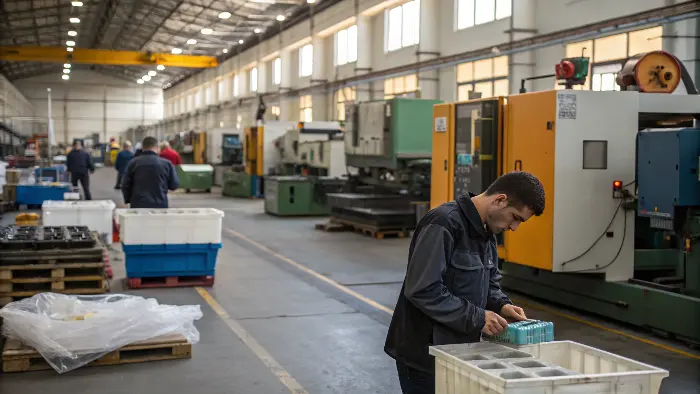
A reliable mold maker in China should be selected through project-specific evidence, not a “top supplier” list, a low price or broad claims about the country. Verify who will design, machine, fit, trial, inspect and support the mold; define ownership and handover; and connect every promise to a deliverable you can review.
This due-diligence process is designed for buyers sourcing export molds or tooling-plus-production. It does not rank companies and does not assume that every supplier in one region has the same price or capability.
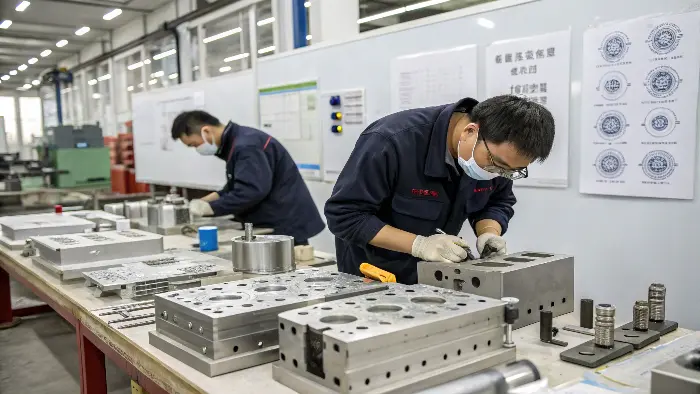
1. Define the Mold You Are Actually Buying
Before contacting suppliers, prepare a controlled RFQ with the product files, resin, volume, destination, quality requirements and expected handover. State whether the mold will remain with the supplier or run at another molder. Export molds require early agreement on machine interfaces, utilities, standard components, spares, documentation and packing.
Do not hide uncertain requirements. List them as open decisions with an owner and date. This gives each supplier the same basis and makes quotation differences easier to explain.
2. Confirm the Contracting and Manufacturing Parties
Ask for the legal entity issuing the quotation and invoice, the manufacturing address, the project contact and any subcontracted operations. A supplier may use external heat treatment, texturing, hot-runner service or specialist machining; subcontracting is not automatically a defect, but responsibility and change notification should be clear.
A video call or visit can confirm that the stated resources exist, but it should support—not replace—documented technical evidence. Request a process map showing who owns mold design, steel purchasing, machining, fitting, trials, inspection and export release.
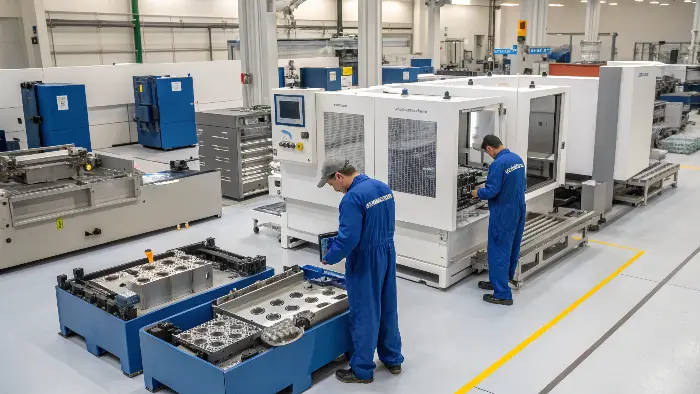
3. Test Engineering Capability on Your Part
The most useful early evidence is a concise, project-specific technical review. It should identify:
- parting line, gate, ejector and visible-mark constraints;
- undercuts, sliders, lifters and shutoff risks;
- wall transitions, ribs, bosses, draft and likely deformation;
- resin, shrinkage, venting, wear or corrosion implications;
- critical dimensions and features difficult to correct after T1;
- proposed cavity count, runner and cooling concept; and
- open decisions that must be closed before steel release.
The supplier does not need to disclose another customer’s confidential design. A marked-up review of your part and a sample report with sensitive data removed are stronger evidence than generic claims of “high precision.”
4. Match Equipment to the Proposed Mold
Request the planned machines and inspection resources, not only a factory equipment list. Check mold size, travel, machining tolerance strategy, electrode control, spotting, measurement volume and trial-press compatibility. For large, deep, optical, textured, multi-cavity or action-heavy molds, identify the actual bottleneck process and contingency.
Equipment age alone does not establish capability. Maintenance, calibration, workholding, programming, operator discipline and inspection feedback all affect results.
5. Verify Material and Tooling Traceability
Write the core/cavity grade, mold base, standard components, hot-runner brand, hardness or heat-treatment route and any coating into the approved specification. Define the evidence required at handover. If substitution is allowed, require written approval before purchase or machining.
A certificate is only useful when it can be connected to the relevant steel or component. Ask how pieces are identified through cutting, heat treatment, machining and assembly.
6. Review the Trial and Acceptance System
T1 should have written objectives and a record of the machine, resin, conditioning, process settings, cavities and sample identification. The acceptance plan should define critical dimensions, measurement method, part age, cosmetic limits, functional checks and disposition of open issues.
A single attractive sample is not production evidence. For multi-cavity tools, review results by cavity. For dimensions influenced by moisture or conditioning, agree when and how parts will be measured.
7. Normalize Price and Exclusions
A tooling quotation should itemize the mold concept, engineering, steel/components, trials, reports, samples, corrections, spares, export preparation and delivery term. Do not use generic online price ranges as a substitute for a project quote; geometry, material, actions, cavities, finish, validation and destination can change the cost substantially.
Compare bids with the global quote normalization guide and the accurate China mold RFQ checklist.
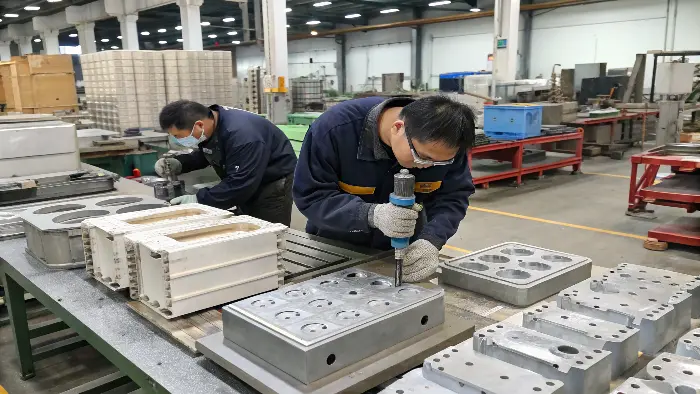
8. Define Ownership, IP and Transfer Before Deposit
The agreement should cover the physical mold, product files, mold-design source files, electrode and inspection data, process records, spare components and supplier-created changes. Define permitted use, confidentiality, subcontractor access, retention or deletion of information and the handover package.
WIPO’s public guidance on IP agreements with suppliers explains why ownership, permitted use and confidentiality should be explicit. These terms require project-specific legal review.
9. Make Logistics and Destination Support Concrete
Name the exact place with the selected Incoterms® 2020 rule. Define export packing, lifting points, preservation, spares, manuals, water and electrical diagrams, process sheets and destination-trial responsibilities. Incoterms allocate selected delivery obligations, costs and risks; they do not decide mold ownership or acceptance.
If the mold will run elsewhere, include the receiving molder in design approval. Confirm platen, tie-bar, nozzle, locating ring, ejector, connectors, voltage, hot-runner control, water and safety interfaces before shipment.
10. Use Milestones and Change Control
Connect payment milestones to verifiable deliverables such as purchase release, approved mold design, documented T1, accepted correction plan or shipment readiness. Payment percentages vary; the control is the evidence attached to each milestone.
Define how changes to product geometry, resin, tolerance, appearance, volume, machine interface or validation requirements affect price and schedule. No supplier can control a moving baseline without written change management.
Supplier Due-Diligence Scorecard
| Area | Evidence | Decision question |
|---|---|---|
| Engineering | Project-specific DFM and mold concept | Does the team identify trade-offs and unresolved risk? |
| Execution | Named machines, owners, bottlenecks and schedule | Can the proposed tool be built and trialed with the stated resources? |
| Quality | Drawing-linked inspection and cavity-level trial record | Is acceptance based on reproducible evidence? |
| Commercial | Scope, exclusions, milestones and change rules | Can the buyer explain what is and is not included? |
| IP/ownership | Contract terms and handover list | Can the mold and its data be controlled or transferred? |
| Support | Warranty scope, spares and escalation path | What happens after T1, shipment or a production problem? |
Warning Signs That Require Clarification
- The proposal cannot identify the mold concept or major exclusions.
- Technical answers change between sales and engineering contacts.
- Steel, components or design changes may be substituted without approval.
- T1 is promised without a defined process record or inspection plan.
- The supplier will not state ownership, permitted use or transfer conditions.
- Cycle time, tool life or tolerance is guaranteed without operating and acceptance assumptions.
- A low price depends on undefined later charges.
To begin a project-specific review, complete the requirements form. If CAD is available, send it separately to jerry@ckmold.com.
Reference Scope
The references support only the cited contractual topics. This page does not rank competitors, claim country-wide price or quality differences, or imply CKMOLD certification.