
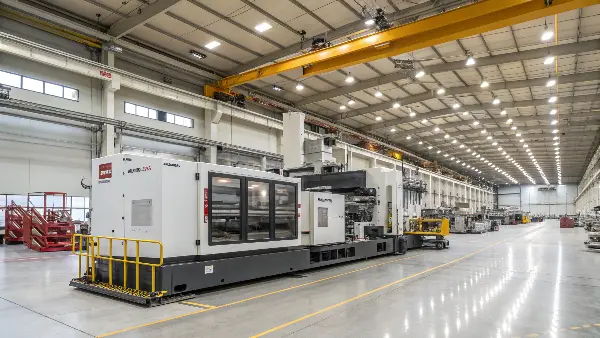
Quick answer: A machine list does not prove available capacity. Audit the exact mold-to-machine fit, accepted output at the validated cycle, active cavities, availability, yield, changeovers, labor, material and downstream constraints, then review peak-demand and downtime recovery with traceable assumptions.
Decision Inputs
| Audit claim | Evidence to request | Risk hidden by a headline number |
|---|---|---|
| Available presses | Machine IDs, schedules, mold-fit matrix and committed loading | Listed equipment is unsuitable or already allocated |
| Parts per hour | Validated cycle, active cavities, yield and downtime history | Theoretical shots are reported as shipped parts |
| Surge capacity | Labor, material, utilities, maintenance and downstream plan | Extra shifts move the bottleneck elsewhere |
| Backup capacity | Qualified machine, adapters, recipe translation and reapproval time | A press exists but cannot run the tool promptly |
Begin With the Product Demand Profile
Provide monthly demand, peak weeks, launch ramp, lot size, color or material variants, service stock and forecast uncertainty. Distinguish required accepted parts from gross shots. State delivery and inventory assumptions so capacity is evaluated against the real schedule.
Identify shared tools, family molds and customer-supplied components. Demand that appears modest annually can overload a qualified press during a seasonal peak or simultaneous launch.
Record the service level and planned inventory buffer. Capacity needed for immediate make-to-order supply differs from capacity supported by an agreed finished-goods strategy.
Build a Mold-to-Machine Fit Matrix
For each candidate press, verify platen, tie bars, daylight, opening, shot, screw, pressure, rate, clamp, nozzle, ejector, hot runner, utilities and automation. Mark fully qualified, technically possible with changes, or unsuitable. Do not count an unverified large press as automatic backup.
Confirm material-specific needs such as high-temperature barrel, dryer, corrosion resistance or residence limits. Include mold-change access and support equipment.
Calculate Accepted Output
Start with scheduled seconds divided by the validated cycle, multiplied by active cavities. Then apply demonstrated availability, performance and quality losses for the actual mold or a justified analogue. Separate planned maintenance and changeovers from unplanned stops.
Review cavity-specific rejects, startup scrap and downstream losses. A press can meet theoretical rate while inspection, assembly or packaging prevents shipment. Trace the constraint through accepted packaged output.
Challenge Schedule and Changeover Assumptions
Inspect current committed loading on suitable machines and the sequence of resins, colors and molds. Verify changeover duration, purge burden, warm-up, first-off approval and staffing. A monthly utilization average can hide daily conflicts and long qualification restarts.
Ask how preventive maintenance, trials and emergency repairs are reserved. Capacity should include the planned work needed to keep the tool reliable.
Audit Supporting Systems
Check dryers, loaders, temperature controllers, chillers, robots, gauges, fixtures, resin storage, utilities, operators and maintenance skills. Confirm these resources are available concurrently, not merely present somewhere in the plant.
Review process monitoring and traceability needed by the program. More press hours do not compensate for missing measurement, material control or trained coverage on an extra shift.
Test Peak and Recovery Scenarios
Model a demand increase, one press outage, mold repair and material delay. Identify the backup machine, adapter, process-translation method, approval steps and time to recover. Distinguish normal, surge and contingency capacity.
Document assumptions, owners and triggers for action. Revisit the model when cycle, cavities, forecast or loading changes. A credible supplier explains the boundary of its capacity instead of offering an unsupported percentage.
Illustrative Capacity Audit
Illustrative engineering example—not a claimed CKMOLD customer result: A supplier reports three 500-ton presses, but the mold fits only two, one is committed to a long-running job and the backup lacks the required valve-gate controller. The audit counts demonstrated output on the qualified press and makes controller availability plus a machine-transfer trial prerequisites for contingency capacity.
Buyer Questions
Is a supplier machine list enough for capacity approval?
No. Machines must fit the mold and process, have actual schedule availability and share capable utilities, labor and quality systems.
What is the basic capacity formula?
The theoretical ceiling is scheduled seconds divided by validated cycle times active cavities; demonstrated losses and downstream constraints determine accepted output.
Should OEE be used in an audit?
It can structure availability, performance and quality, but mold-specific demonstrated history is stronger than one plant-wide average.
What makes backup capacity credible?
A compatible machine, required controllers and adapters, a process-transfer method, approval steps and a realistic recovery time.
Buyer Decision Checklist
- Provide demand, peaks, variants, launch ramp and accepted-part definition.
- Verify an exact mold-to-machine compatibility matrix.
- Use validated cycle, active cavities, availability and quality yield.
- Inspect actual loading, changeovers, maintenance and trial reservations.
- Include dryers, utilities, automation, gauges, labor and downstream work.
- Review cavity losses, startup scrap and packaged-output bottlenecks.
- Model surge, press outage, mold repair and material-delay recovery.
- Record normal, surge and contingency assumptions separately.
Resources for the Commercial Review
- production injection molding
- mold testing and validation
- multi-cavity injection molds
- injection molding services
Apply the How Buyers Audit Injection Molding Machine Capacity at a Supplier review to your released design. Share the function, exact resin, annual volume, CTQs, cosmetic limits and launch timing through the CKMOLD project form. If CAD is relevant, send it directly to jerry@ckmold.com; the form does not require an upload.