
You want to make your product sustainable, but choosing the right material is frustrating. You keep hearing about PLA and PHA, but the technical data sheets all look the same, and making the wrong choice could lead to expensive production failures.
PLA (Polylactic Acid) is generally better for rigid, cost-sensitive applications like packaging and disposable cutlery due to its higher strength and lower price1. PHA (Polyhydroxyalkanoates), however, is superior for applications requiring biodegradability in marine or home compost environments2, or where flexibility and heat resistance are critical. The better choice depends entirely on your specific end-use environment and budget.

I remember when I first started in the mold industry, we rarely talked about these materials. Everything was ABS or Polypropylene. But now, my clients ask me about bioplastics every single week. It is not just a trend anymore; it is a requirement. Let’s look closely at how these two materials compare so you do not waste money on trial and error.
Is PHA the same as PLA?
Many designers assume all "bioplastics" are basically the same thing with different brand names. This confusion leads to serious design flaws, like specifying a material that melts in a hot car or one that never actually degrades in a landfill.
No, PHA is not the same as PLA. While both are bioplastics derived from renewable resources, they have different chemical structures and origins. PLA is synthesized from fermented plant sugars (like corn starch), making it a polyester. PHA is produced directly by bacteria through fermentation of sugars or lipids, acting as an energy storage mechanism for the cells. They behave very differently in molding and biodegradation.
We need to really understand the "DNA" of these materials to use them correctly. I often tell my team that PLA is like a synthetic copy of a natural idea, while PHA is the natural idea itself.
Origin and Production Differences
When we dig into how they are made, the difference becomes clear. PLA requires a multi-step chemical process. You take corn or sugarcane, ferment it into lactic acid, and then polymerize it. It is an industrial process. PHA, on the other hand, is made inside a living bacteria cell. It is grown, not just synthesized.
Performance Characteristics Table
To make this easier to digest, I have broken down the key differences I see on the factory floor:
| Feature | PLA (Polylactic Acid) | PHA (Polyhydroxyalkanoates) |
|---|---|---|
| Origin | Plant starch fermentation (Corn, Sugarcane) | Bacterial fermentation |
| Stiffness | High stiffness, brittle | Variable (can be elastic or hard) |
| Heat Resistance | Low (softens around 60°C) | Moderate to High (better stability) |
| Processability | Easy to print and mold | Tricky, narrow processing window |
| Cost | Low to Moderate | High (currently) |
Why This Matters for Design
If you are designing a phone case, PLA might be too brittle unless you add impact modifiers. If you are designing a coffee cup lid, standard PLA will warp from the steam. PHA might handle the heat better, but it will cost you significantly more. Understanding that they are not the same material prevents you from swapping them out casually in your BOM (Bill of Materials).
What is the difference between PLA and PHA plastic?
Designers often struggle to decide which material specs actually matter for their specific product. You might look at tensile strength and ignore impact resistance, only to find your product shattering when dropped.
The main functional difference is that PLA is rigid, brittle, and requires industrial composting facilities to degrade effectively. PHA is highly versatile, ranging from rigid to elastomeric, and offers superior biodegradability, breaking down in soil, home compost, and even marine environments. PLA is the "workhorse" for cheap, stiff parts, while PHA is the premium choice for environmental safety and flexibility.
I have seen many projects fail because the designer focused only on the "bio" label and ignored the mechanical reality. Let’s break down the mechanical and environmental differences in a way that helps you design better molds.
Mechanical Properties in Depth
When I run PLA in injection molding machines, it behaves a lot like Polystyrene. It flows well but cools down very stiff. It has a high tensile modulus. This is great for things that need to hold their shape, like a clear salad container. However, it is brittle. I once dropped a pure PLA prototype on the concrete floor of my factory, and it shattered like glass.
PHA is different. It is a family of polymers, not just one. Some grades feel like Polypropylene, while others feel more like rubber. This gives you more design freedom. You can use PHA for living hinges or snap-fits, which are risky with standard PLA.
The Biodegradation Reality
This is the most critical part.
- PLA: It needs heat (around 60°C) and microbes to break down. If you throw a PLA bottle into the ocean, it might stay there for decades. It effectively acts like regular plastic in cold environments.
- PHA: It is food for bacteria. It will degrade in the ocean, in a river, or in your backyard soil.
Processing Considerations
From a molder’s perspective, PLA is friendlier. It has a wider processing window. PHA is sensitive. If we leave PHA in the barrel of the injection molding machine for too long, it starts to degrade thermally. This means my team has to be very precise with cycle times. When you choose PHA, you need to ensure your manufacturer (like us at CKMOLD) knows how to handle sensitive biopolymers, or you will get silver streaks and weak parts.
What are the disadvantages of PHA plastic?
You might think that because PHA degrades so well in nature, it is the perfect material for everything. However, you are likely finding that it is hard to source and expensive to buy, which ruins your project budget.
The primary disadvantages of PHA are its high production cost, limited production scale, and processing instability. PHA is currently 3 to 4 times more expensive than PLA due to the complex extraction process from bacteria. Additionally, it has poor thermal stability during processing, meaning it can degrade in the machine if not handled perfectly, leading to high scrap rates.
I am a big fan of PHA technology, but I am also a businessman. I have to be honest with my clients about the downsides. It is not a magic bullet yet.
The Cost Barrier
Right now, PHA is expensive. While PLA might cost you $2-$3 per kilogram, PHA can easily jump to $6-$10 or more depending on the grade. For a high-margin medical device, this is fine. For a disposable fork, this destroys your profit margin. The high cost comes from the extraction. We have to break open the bacteria cells to get the plastic out, and that requires energy and chemicals.
Manufacturing Challenges
As I mentioned earlier, PHA hates heat history. In injection molding, we call this "residence time." If the material sits in the hot screw too long, the molecular weight drops.
- Result: The part becomes brittle.
- Visual defect: You see splay marks on the surface.
- Process: We cannot use large machines for small shots. We have to match the barrel size perfectly to the shot size.
Limited Availability
If you call me tomorrow and say, "Jerry, I need 10 tons of PLA," I can get it quickly. If you ask for 10 tons of a specific grade of PHA, we might have to wait. The global production capacity for PHA is still a fraction of PLA. This supply chain risk is something you must consider for mass production. You do not want to launch a product and then run out of resin.
Mechanical Quirks
While some PHAs are flexible, others suffer from "secondary crystallization." This means the part might feel flexible when it comes out of the mold, but becomes brittle over the next few weeks as the crystals continue to form. As a designer, you must account for this aging process.
Is PLA or PHA a better bioplastic option?
You have analyzed the properties and the costs, but you still need to make a final decision for your boss or client. Choosing the wrong one could mean a product that fails in the market or costs too much to sell.
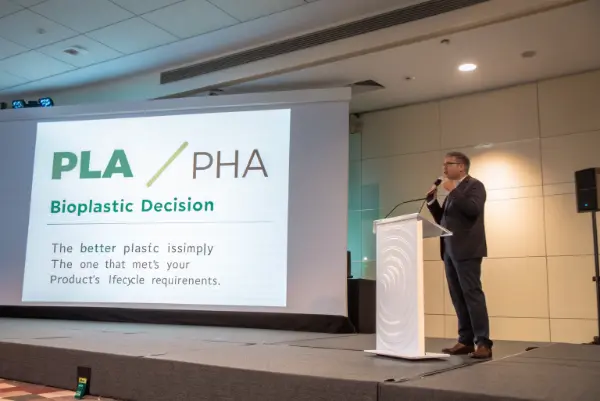
PLA is the better option if your priority is cost reduction, rigidity, and industrial compostability, making it ideal for packaging and 3D printing. PHA is the better option if you need marine biodegradability, flexibility, or are targeting a premium market willing to pay for superior environmental performance. The "better" plastic is simply the one that meets your product’s lifecycle requirements.
There is no winner here, only the right tool for the job. Over my years of moving from a factory worker to running CKMOLD, I have learned that "better" is subjective. It depends on the application.
Scenario A: The Packaging Designer
If you are designing a clear clamshell container for strawberries:
- Choose PLA.
- Why? You need transparency. PLA is naturally clear; PHA is often hazy or opaque. You need low cost because margins on fruit are thin. You need rigidity to protect the fruit. The disposal method is likely a recycling bin or industrial compost.
Scenario B: The Agricultural Product
If you are designing a mulch film or a plant pot that goes into the ground:
- Choose PHA.
- Why? You want the farmer to till the plastic into the soil. PLA will not break down in the field; it will just sit there. PHA will become soil food. The labor savings of not having to remove the plastic justifies the higher material cost.
Scenario C: Consumer Electronics
If you are designing a mouse shell or a headphone casing:
- It depends.
- PLA is risky because of heat (leaving it in a car). You would need a high-heat PLA blend.
- PHA might be too expensive, but it offers a nice "soft touch" feel without needing a TPE overmold.
- My Advice: I often recommend blends. We are seeing more PLA/PHA blends now. This gives you the lower cost of PLA with the improved toughness and biodegradability of PHA.
Final Checklist for Decision Making
Before you send me your CAD files, ask yourself these three questions:
- Where does it die? (Compost facility = PLA is okay. Ocean/Soil = Must be PHA).
- What is the budget? (Low budget = PLA. Premium budget = PHA).
- Does it need to bend? (Rigid = PLA. Flexible = PHA).
Conclusion
To summarize, both materials have their place in modern manufacturing. PLA is your affordable, rigid choice for industrial composting applications, while PHA is the premium, versatile choice for true soil and marine biodegradability. As a designer, understanding these differences allows you to build products that are not just "green," but functional and profitable. At CKMOLD, we are ready to help you mold either one.
-
"Poly(lactic acid) (PLA) and polyhydroxyalkanoates (PHAs …", https://pmc.ncbi.nlm.nih.gov/articles/PMC9033233/. Research comparing biopolymer properties demonstrates that PLA typically exhibits higher tensile strength (50-70 MPa) compared to PHA variants (20-40 MPa), while PLA production costs remain lower due to more established manufacturing processes and corn-based feedstock availability. Evidence role: statistic; source type: research. Supports: comparative mechanical properties and cost differences between PLA and PHA biopolymers. Scope note: Specific values vary by polymer grade and manufacturing process ↩
-
"Biodegradability of polyhydroxyalkanoate (PHA) biopolyesters …", https://pmc.ncbi.nlm.nih.gov/articles/PMC12339601/. Studies on biopolymer degradation show that PHA can biodegrade in marine environments and home composting conditions due to microbial enzymatic hydrolysis, whereas PLA typically requires industrial composting temperatures (above 55°C) for effective breakdown. Evidence role: mechanism; source type: research. Supports: PHA’s biodegradation capability in marine and home composting conditions. Scope note: Degradation rates vary significantly depending on PHA composition, environmental conditions, and microbial community presence ↩