
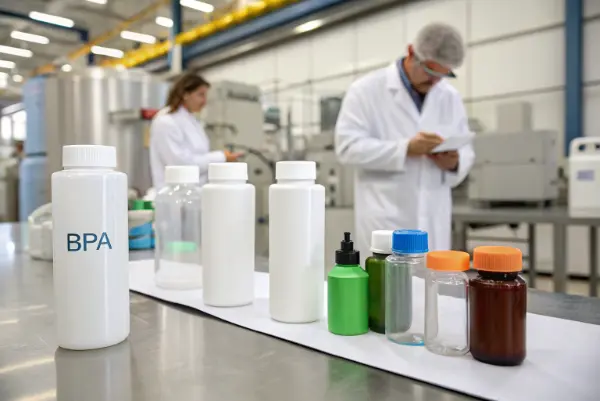
Are you worried about bad chemicals in your products? Many business owners struggle to find safe materials. This can hurt your brand and scare away your buyers. Here is how you can use safe materials to build great containers. By learning about these materials, you can easily make smart choices for your factory today.
BPA-free container solutions mean making products without the chemical Bisphenol A. This uses safe materials like PP, PET, HDPE, glass, or stainless steel. The process must stop bad chemicals from getting into the food. Good choices give you safe, strong, and clear containers. You must test your items to ensure they stay safe. This helps you build deep trust with all your buyers.
If you choose the wrong materials, your buyers might stop trusting you completely. But if you read on, you will learn exactly how to pick the best materials. You will learn how to make safe containers every single time.
What are BPA free materials?
Finding materials without BPA can feel like a big puzzle. If you pick the wrong plastic, your containers might fail or leak bad chemicals. This mistake costs lots of money. The good news is that you have many clear and strong choices right now.
BPA-free materials are materials made without the chemical Bisphenol A. These include safe plastics like Polypropylene (PP), Polyethylene Terephthalate (PET), and Tritan. Non-plastic choices like glass, stainless steel, and silicone are also naturally free of BPA. You can use these materials to build safe items.
Common Plastic Choices
When you make containers, you want safe plastics. Polypropylene (PP) is a top choice in our industry. It handles heat very well. You can use it in a microwave safely. PET is another great pick for clear items. It is very clear and easy to recycle. Tritan is also very popular right now. It is clear, strong, and does not stain easily. It costs a bit more but looks great for a long time. I remember when I first started in the mold factory. We used old plastics for everything. Now, my trading company, CKMOLD, focuses heavily on safe plastics. We help business owners like you find the best BPA-free choices for your specific needs.
Other Safe Choices
You do not only have to use plastic. Glass is a very old and safe choice. It never has BPA inside it. It is heavy and can break, but buyers trust it fully. Stainless steel is also very good. It keeps drinks cold or hot for a long time. It is very strong and does not rust.
Comparing the Choices
| Material | Best Feature | Good for Heat? | Cost |
|---|---|---|---|
| PP Plastic | Light and cheap | Yes | Low |
| PET Plastic | Very clear | No | Low |
| Tritan | Very strong | Yes | High |
| Glass | Very safe | Yes | High |
| Steel | Strong and safe | Yes | High |
When we help our clients at CKMOLD, we always ask what the container will do. If you want a cheap and light item, you should go with PP or PET. If you want a high-end item, you should pick Tritan or glass. This simple choice changes your whole mold design. You must think about the end user. They want safety and quality. You must give them exactly what they want.
What materials are non toxic BPA free?
Do you worry that some BPA-free materials still have hidden toxins? Many people fear that new plastics might be just as bad as the old ones. This fear can hurt your sales. Let me show you which materials are truly safe and non-toxic.
Non-toxic BPA-free materials are safe elements that do not leak bad chemicals into food. The best non-toxic plastics are PP, HDPE, LDPE, and Tritan. For totally natural options, glass, stainless steel, bamboo fibers, and food-grade silicone are the safest non-toxic materials you can use daily.
Truly Safe Plastics
Many buyers ask me if BPA-free means non-toxic. The short answer is no, not always. You need plastics that are truly safe and tested. High-Density Polyethylene (HDPE) is a very tough plastic. It is non-toxic and resists strong impacts. It is great for milk jugs and thick storage containers. Low-Density Polyethylene (LDPE) is a softer plastic. We use it for squeeze bottles and soft lids. Both do not leak bad chemicals into your food or drinks. They are very reliable for daily factory production.
The Power of Natural Materials
Sometimes, my clients want to skip plastic completely. Glass is a natural non-toxic material. It does not react with food at all. Stainless steel is exactly the same. It does not rust or give food a funny taste. Food-grade silicone is also very safe. We make many seals and soft parts with it in the factory. Lately, we also see new materials like bamboo fibers. They are very green and eco-friendly. Buyers love materials that help the earth.
Quick Guide to Non-Toxic Uses
| Material | Best Use Case | Toxicity Risk |
|---|---|---|
| HDPE | Milk jugs, tough boxes | Very Low |
| LDPE | Squeeze bottles | Very Low |
| Bamboo Fiber | Eco-friendly bowls | Very Low |
| Silicone | Soft seals, baby items | None |
When you run a mid-sized factory, you must track your suppliers closely. We always test the raw plastic pellets at CKMOLD. You want to make sure the plastic factory did not add cheap, bad chemicals to save money. I always tell my clients to ask for the material safety sheets. This paper proves the plastic is really non-toxic. You can protect your buyers and your business this way. It brings you total peace of mind.
Are BPA free containers safe?
It is scary to think your products might hurt someone. Just because a label says BPA-free does not mean it is fully safe for all uses. We must look at how we use and test these containers to be sure they protect the buyer.
BPA-free containers are safe if they are made from high-quality materials and used correctly. They must pass food-contact testing to ensure no bad chemicals leak into food. The safety depends on controlling the heat, the manufacturing process, and doing proper chemical migration testing before selling.
The Hidden Dangers in Making Containers
Safety is more than just picking a good plastic material. How you make the container matters a lot. At CKMOLD, we know the molding process changes the plastic. If the mold gets too hot, the plastic might break down quickly. This can make the final container unsafe to use. We use injection molding and blow molding machines daily. We control the heat, the pressure, and the cooling time very carefully. A bad process can ruin a good material.
Real Testing for Real Safety
To make sure a container is safe, you must test it in a lab. This step is called migration testing. We put real food or special testing liquids inside the container. Then we heat the container up in an oven. We check if any chemicals leave the plastic and go into the liquid. This testing is very complex. But it proves the container is really safe to hold hot food or warm water. You cannot skip this step.
Safety Checklist for Manufacturing
| Step | Why It Matters | Result |
|---|---|---|
| Material Check | Stops bad pellets | Safe start |
| Temp Control | Stops plastic breakdown | Strong walls |
| Migration Test | Stops chemical leaks | Food safe |
I worked with a business owner named Michael once. He had big problems with his clear containers breaking easily. We checked his mold design and his cooling times in the factory. His old mold was way too hot in some specific spots. This made the plastic weak and totally unsafe. We fixed his mold channels and used good PP plastic instead. His new containers passed all safety tests with ease. Always remember to check your whole factory process, not just the raw material.
Is BPA free and FDA approved?
Do you get confused by all the strict government rules? Missing an FDA rule can cost your business a huge amount of money and lost time. Let us make FDA approval very easy to understand so you can sell your goods with confidence.
BPA-free does not automatically mean FDA approved. The FDA must check all materials that touch food to ensure they are safe. A material must pass FDA migration limits and safety reviews to be approved for food contact. You must always get supplier certificates to prove total FDA compliance.
Understanding FDA Rules
The FDA is very strict about things that touch human food. They call these items "food-contact materials." The FDA banned BPA completely in baby bottles and baby sippy cups. But they do not just look at BPA levels. They look at all possible bad chemicals. Just because a plastic box is BPA-free does not mean the FDA likes it. You still have to prove it is safe for people to use. You must show real lab test results.
How to Get FDA Approval
You cannot just guess if your material is okay to use. You must buy FDA-approved resin pellets from a very good supplier. The supplier will give you a special piece of paper. This paper is a safety certificate. It says the plastic passes all FDA rules. At my company, CKMOLD, we always track these papers carefully. We want to be sure our clients never get into legal trouble. You also need clean factory rules. We call these cGMP or current Good Manufacturing Practices.
FDA Steps to Follow
| Action | Who Does It | Why |
|---|---|---|
| Buy Good Resin | You / Factory | Start with safe parts |
| Get Certificate | Supplier | Proves FDA rule passed |
| Clean Factory | Factory | Stops dirt in plastic |
| Final Test | Lab | Proves zero bad leaks |
As a business owner, you must care deeply about these government rules. If the FDA finds bad plastic in your food containers, they will stop your factory sales. They will recall your items from all the stores. This ruins your good brand name fast. I always tell my clients to test the final molded product. Even if the plastic pellets are FDA approved, a dirty machine can add bad chemicals. Always keep your mold very clean. Always use a clean factory.
Conclusion
Making safe BPA-free containers is not hard if you follow the right steps. You must pick proven materials like PP, PET, Tritan, or glass. You must control your mold heat and factory cleanliness every single day. Always test your final products to pass strict FDA rules. By doing this, you will make great containers, save money, and build deep trust with all your happy buyers.