
Home / Plastic Parts / Custom Plastic Injection Molding for Production Parts
CKMOLD produces custom molded components for OEM and engineering teams that have defined part geometry, material, quantities and approval requirements. New molds can be engineered and built as part of the program; customer-owned tools can be considered through a controlled transfer and qualification route.
The work is organized around repeatability, not a single good sample. Press selection, resin handling, process settings, cavity identity, inspection, secondary operations and packaging are defined before recurring production is released.
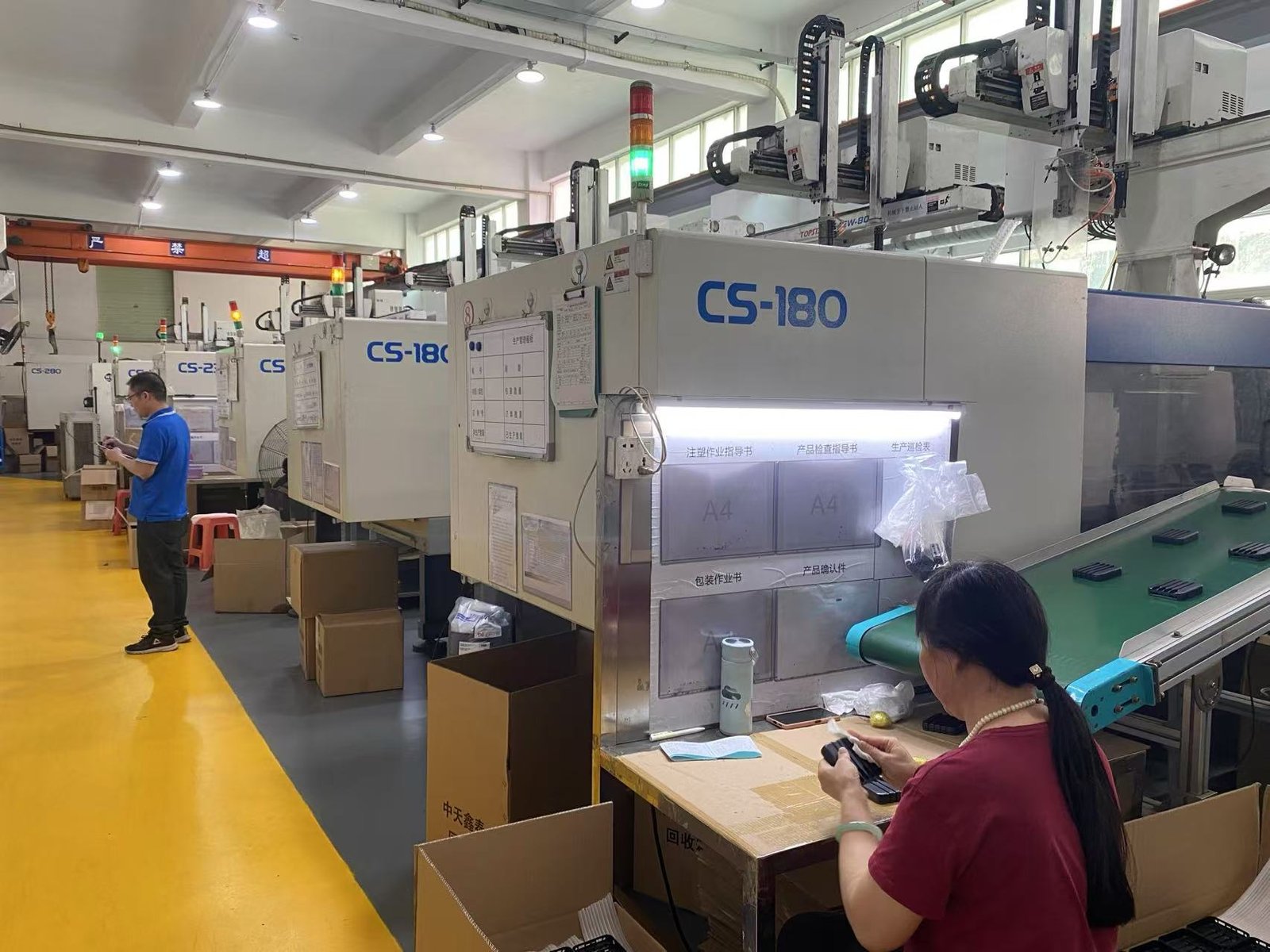
Published in-house injection molding capacity
Multi-cavity samples and data can be separated by cavity
Production follows released samples and requirements
Scheduling and packaging defined for recurring orders
Reviewed by CKMOLD project engineering • Last updated August 2026
A fit decision is based on geometry, resin, mold, press, handling, inspection and downstream work. Industry name alone does not confirm capability.
Housings, brackets, connectors, covers and engineered components with controlled assembly interfaces and material requirements.
Visible plastic parts where gate, parting, ejector, weld, texture, color and handling expectations must be agreed early.
Components requiring positioned metal inserts, soft-touch materials, sealing details or controlled bonding and mechanical lock.
Higher-demand parts where filling, cooling and cavity-to-cavity variation justify a balanced multi-cavity strategy.
Customer-owned tools that need condition review, machine matching, trial comparison and process redevelopment before restart.
Released parts produced in defined batches when tooling investment, setup and repeat-order economics are understood.
CKMOLD publishes in-house injection molding capacity up to 1200T. A tonnage label alone does not confirm fit. The quotation and trial plan check projected area, clamp requirement, shot size, plasticizing needs, tie-bar clearance, mold envelope, nozzle, locating ring, ejector stroke, daylight, water and electrical interfaces.
Part-size and shot-weight limits are therefore confirmed on the selected press rather than advertised as one universal range. Large or specialized programs outside verified in-house limits require a case-by-case decision and must not be assumed from partner access.
Use a manufacturer and grade when the design is qualified to one. If an equivalent is permitted, define the properties and approval method before substitution.
Colorant source, let-down, texture, gloss, lighting and acceptable variation affect approval. A screen image is not a production color standard.
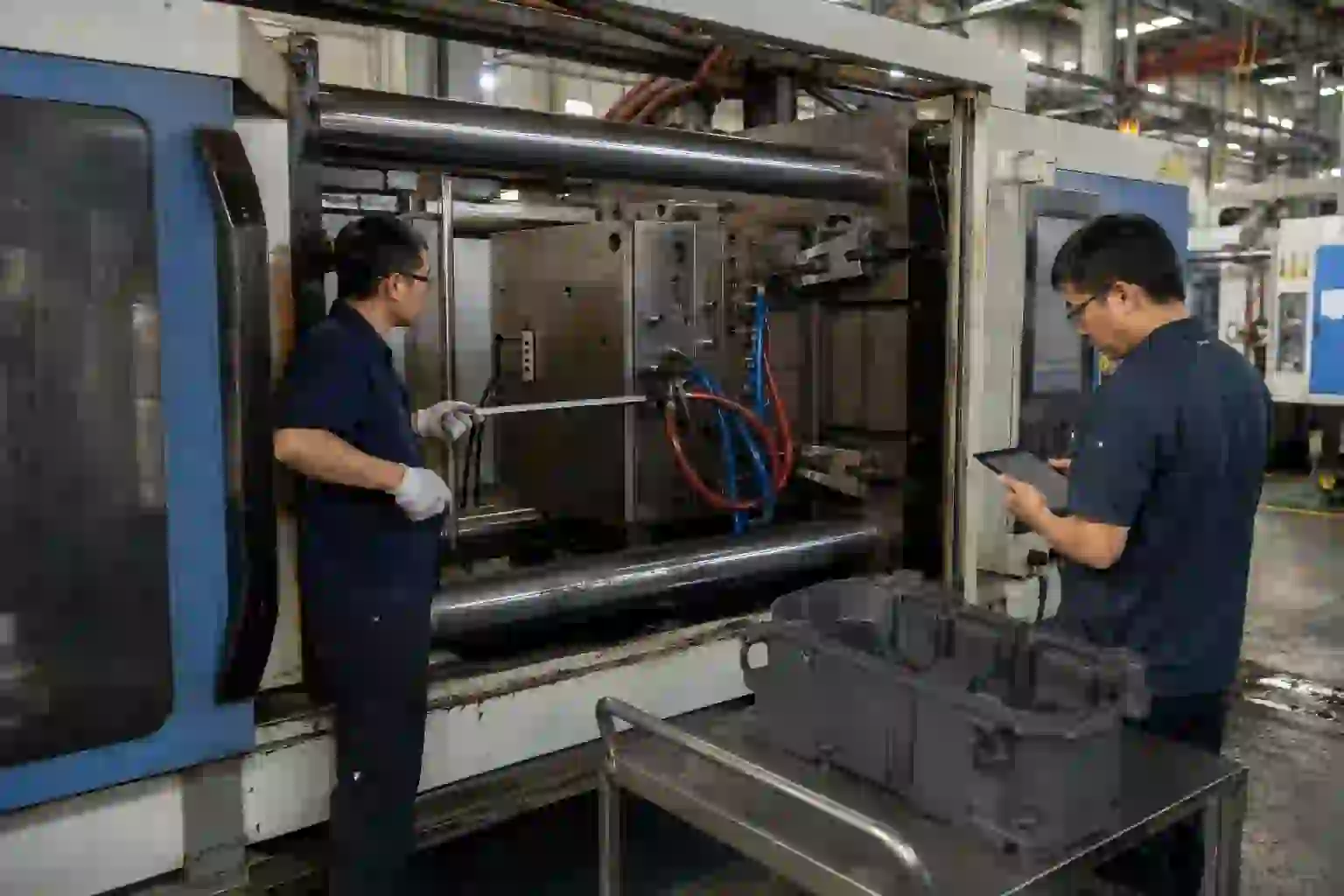
Confirm mold revision, press, resin, drying, setup, cavity identity, sample quantity and trial objectives.
Inspect agreed appearance, dimensions, assembly and function; separate tool corrections from process tuning.
Record the accepted sample/revision and any conditions that define production release.
Transfer approved process ranges, inspection points, handling, secondary work and packaging instructions.
Reconfirm revision, resin/color, quantity, schedule and any approved engineering change before each production run.
Record the settings that materially affect fill, pack, cooling and release. A stable process window matters more than copying one machine screen.
Check the defined dimensions and appearance after setup before releasing the full run; use the approved sample and drawing revision.
Set checks by project risk—dimensions, appearance, weight, assembly or function—rather than claiming a universal frequency.
Number cavities where practical and keep samples or records separated when cavity-to-cavity variation can affect acceptance.
Contain suspect material, identify the affected lot/cavity/process condition, document disposition and control any correction.
Do not mix old and new part or tool revisions. Review engineering changes for tooling, inspection, inventory and labeling impact.
Trimming, printing, marking, painting, welding, heat staking, insert installation, simple assembly, functional checks and custom packaging may be provided or managed according to the approved route. CKMOLD distinguishes its own work from qualified partner support in the quotation.
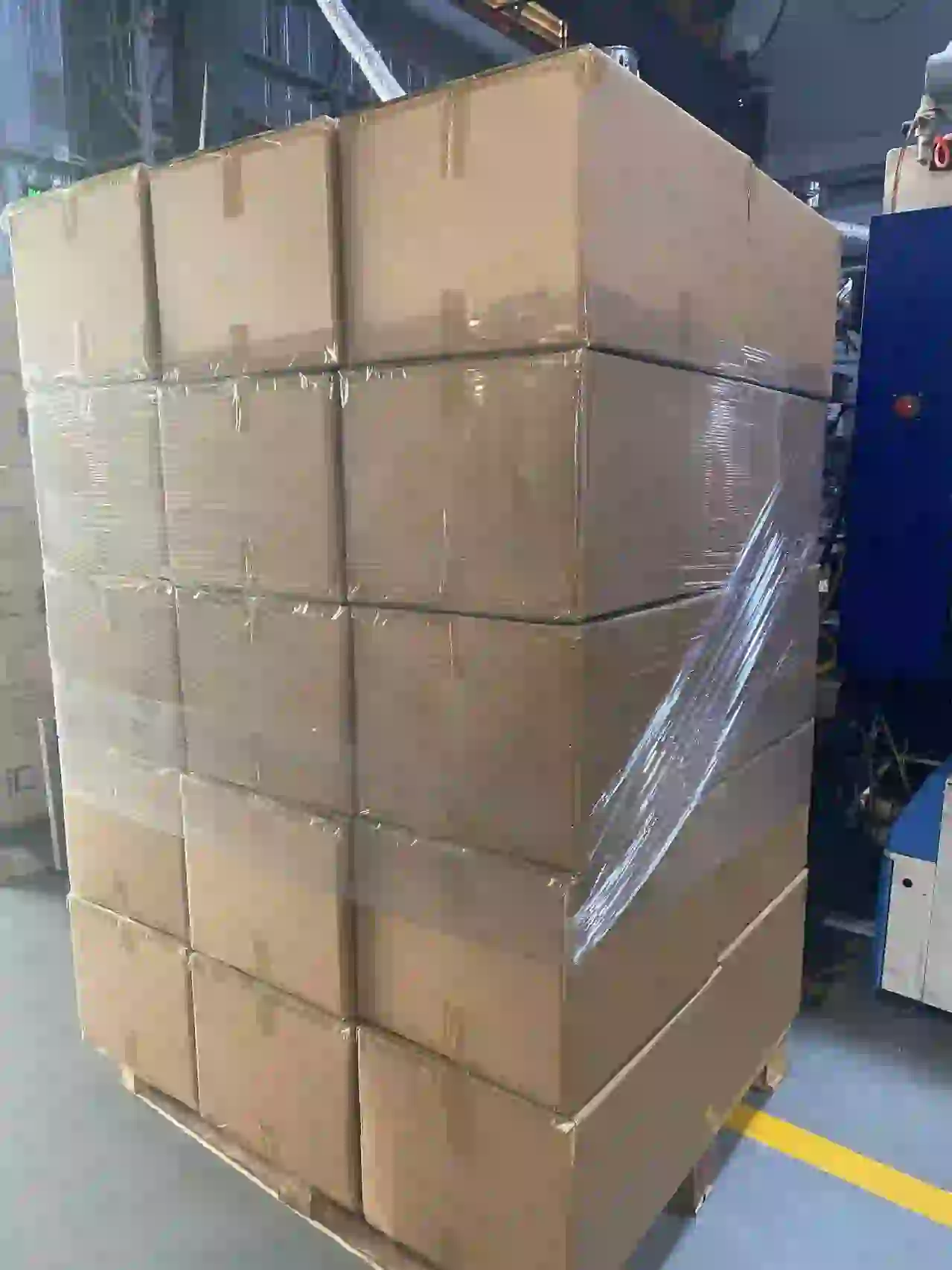
Packaging protects appearance, dimensions and traceability through transit. Export programs identify labels, bag/tray/carton method, quantity per pack, moisture or surface protection and shipping destination before the production release.
CKMOLD does not publish one universal MOQ because resin purchase, color, setup, cavity count, cycle, inspection and secondary operations change the economic batch size. Share initial and annual demand for a project-specific recommendation.
No. Tolerance feasibility depends on material, geometry, shrinkage, tool construction, process, measurement method and assembly function. Mark critical dimensions on the drawing so capability and inspection can be reviewed before quotation.
Yes, subject to ownership confirmation, condition review, machine compatibility, repair or modification needs, trial results and sample approval. A transfer tool is not released directly to production without qualification.
No. Dimensional reports and project records are defined by scope. FAI, PPAP, capability studies or customer templates should be requested during RFQ so required samples, data and effort are included.
The order should reference the approved part/tool revision, resin and color, quantity, inspection and packaging basis. Any engineering change or material substitution is reviewed before the next run.
Complete the RFQ with resin grade, color, initial and annual quantities, critical dimensions, appearance standard, secondary work, target date and shipping destination. Email CAD and drawings separately to jerry@ckmold.com with the company and project reference.
Tool construction, cavity strategy and steel choice affect both capital cost and the production process. Use the preliminary estimator to set a budget range, then complete the RFQ and email CAD separately to jerry@ckmold.com for a combined mold and molded-parts quotation.
Use this short form for a general inquiry. For a quotation, complete the full RFQ and email any 3D/CAD files separately to jerry@ckmold.com.
Join our mailing list and receive a 10% discount on your next mold or CNC project.