
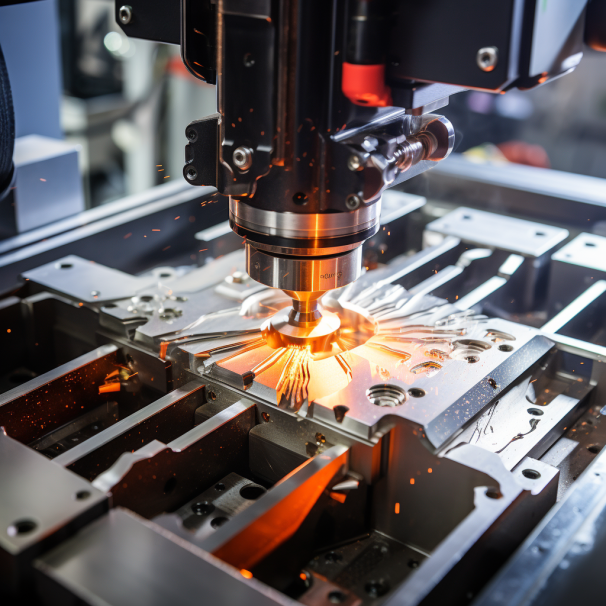
CNC machining helps product teams and mold manufacturers produce accurate prototypes, mold inserts, cavities, cores and precision plastic or metal parts. For injection mold projects, its value is not only speed. CNC machining reduces uncertainty before and during tooling.
The main CNC machining benefit in an injection mold project is controlled translation from digital geometry to measurable steel. Speed and accuracy matter, but the deeper value comes from datum strategy, repeatable setups, replaceable inserts, in-process probing and a clear inspection chain. CNC is most effective when mold design anticipates how cavities, shutoffs, cooling features and future corrections will actually be manufactured.
Related engineering resources: mold design | rapid tooling | mold testing and validation
At CKMOLD, CNC machining is connected with injection mold manufacturing, DFM review and mold trial support. This connection matters because machined features, mold fit and molded part quality all influence each other.
What Is CNC Machining?
CNC machining uses computer-controlled equipment to remove material from a workpiece. Common operations include milling, turning, drilling, tapping and surface machining.
Main Benefits of CNC Machining
1. High Dimensional Accuracy
CNC machining can hold tight tolerances when material, tool path and setup are controlled correctly. This is important for mold inserts, shut-off surfaces, sliders, lifters and precision assembly features.
2. Faster Prototype Validation
Before investing in mold steel, a machined prototype can help verify part geometry, assembly fit and functional performance.
3. Better Mold Component Quality
Injection molds depend on accurate steel components. Poor machining can cause flash, mismatch, bad parting lines, ejection problems or assembly delays.
CNC Machining vs 3D Printing
3D printing is useful for quick visual models, but CNC machining is often better when strength, tolerance, surface quality or real material testing matters.
Where CNC Fits in the Injection Mold Workflow
- Prototype machining for design validation
- Electrode machining for EDM
- CNC roughing and finishing of mold cores and cavities
- Machining inserts, sliders, lifters and mold plates
- Post-trial modification after T1 sample review
Common Mistakes to Avoid
- Using CNC prototype results without considering injection molding shrinkage
- Ignoring draft angle because the machined part can be removed easily
- Assuming a CNC tolerance is automatically practical for molded production
- Choosing prototype material that behaves very differently from the molding resin
How CKMOLD Helps
CKMOLD uses CNC machining to support plastic product design, mold design and production tooling. Our engineers can review whether CNC prototyping, prototype tooling or direct mold manufacturing is the best next step.
Datum Planning Preserves the Tolerance Chain
A mold contains interfaces among plates, inserts, slides, lifters, electrodes and the molded-part datums. Manufacturing should define where each component is located, how it is re-established after heat treatment and which surfaces control assembly. Tight tolerances applied without a datum plan can still produce mismatch, flash or poor cavity alignment.
High-Speed and Hard Milling Reduce Handoffs
Modern toolpaths can machine complex freeform surfaces and, in suitable steels, finish-hardened details with fewer setups. That can reduce electrode work and accumulated variation. It does not eliminate EDM, grinding or polishing where deep ribs, sharp internal corners, fine textures or hard shutoffs require them. Process selection should follow geometry and surface integrity.
Probing Turns the Machine Into a Feedback Point
Touch probes and tool measurement can verify stock, locate inserts, detect tool wear and inspect critical features before the part leaves the setup. The data are useful only when linked to drawing datums and calibrated systems. In-process results complement, rather than automatically replace, CMM, optical or functional checks after machining and assembly.
Insert Strategy Makes Corrections Safer
Replaceable cavity details, gate inserts, wear components and steel-safe regions can reduce risk when dimensions or product revisions remain uncertain. CNC repeatability allows a revised insert to return to known interfaces. Poorly planned splits can create witness lines, cooling interruptions or weak shutoffs, so serviceability and molded appearance must be reviewed together.
Machining Data Should Support Mold Trials
Retain toolpaths, offsets, inspection and deviation records by revision. When T1 reveals a dimensional issue, compare molded shrinkage and process evidence with actual steel before cutting. This prevents a process problem from being machined into the tool and creates a defensible history for later repair, spare inserts or transfer.
CNC Machining Benefits for Injection Mold Projects: Design and Validation Checklist
- Define component and molded-part datums before detailed machining.
- Choose milling, EDM, grinding and polishing from geometry and surface needs.
- Use calibrated probing and independent inspection at appropriate control points.
- Design inserts around correction risk, wear, cooling and appearance.
- Link machining revisions to mold-trial and dimensional evidence.
How CNC Machining Reduces Tooling Risk
CNC machining is valuable because it gives engineers a physical part or steel component that can be measured, assembled and tested. For a new plastic product, a machined prototype may reveal interference, weak ribs, screw boss problems or tolerance conflicts before mold design is locked. These findings are much cheaper to correct in CAD than in hardened mold steel.
For mold manufacturing, CNC machining also helps control the quality of the tool itself. Mold plates, cavities, cores and inserts must match the design accurately. If shut-off surfaces do not fit, the result can be flash. If slider alignment is poor, the molded feature may be unstable. CNC accuracy therefore supports both the tooling schedule and the final part quality.
What Buyers Should Ask a CNC and Mold Supplier
- Can you machine both prototype parts and mold components?
- How do you check critical dimensions after CNC machining?
- Can you connect CNC prototype feedback with DFM and mold design?
- Do you support EDM, polishing and fitting after CNC roughing?
- Can you modify the mold after T1 sample review?
When CNC Is Not Enough
CNC machining is not a suitable prediction of injection molding behavior. It does not show resin flow, weld line position, packing pressure, cooling shrinkage or ejection stress. A CNC prototype can confirm shape and fit, but engineers still need to review draft angle, wall thickness, gate location and material shrinkage before production tooling.
This is why CKMOLD treats CNC machining as part of a larger manufacturing workflow. It supports engineering validation, but it should be connected to mold design and injection molding knowledge.
Frequently Asked Questions
Can CNC machining make every injection mold feature?
No. Deep ribs, sharp internal corners, fine shutoffs and special finishes may still need EDM, grinding, fitting or polishing.
What is steel-safe mold design?
It leaves material in selected areas so dimensions can be corrected by removing steel after trial rather than requiring welding or a new insert.
Does in-machine probing replace CMM inspection?
Not universally. Probing supports setup and process feedback, while independent inspection may still be required for full geometry and acceptance.
Can CNC machining replace injection molding?
For low quantities or functional prototypes, CNC machining can be enough. For repeated plastic part production, injection molding is usually more cost-effective after tooling is built.
Why is CNC machining important for mold making?
It produces accurate mold components and helps control parting line fit, cavity accuracy and moving component alignment.
When should I request CNC prototypes?
Request CNC prototypes when you need real material performance, assembly testing or dimensional validation before committing to mold tooling.