
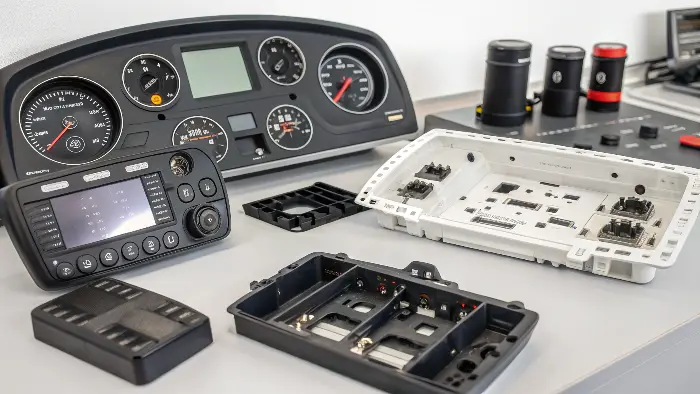
Smart injection molding is not simply connecting a machine to a dashboard. It is the use of reliable process data, automation and defined responses to improve repeatability, traceability, uptime and decision-making. Sensors and software help only when the team knows which part characteristics they represent and what action should follow an alarm or trend.
Related CKMOLD resources: production injection molding, mold testing and validation, mold repair or modification.
How is Injection Molding Powering the Rise of Smart Homes?
Your smart thermostat or speaker looks sleek, but imagine if its casing was clunky or fragile. Poor design compromises the tech inside and frankly, looks bad. Injection molding creates the suitable, protective fit for these intelligent devices.
Injection molding produces custom-fit, aesthetically pleasing, and durable enclosures for smart home devices like thermostats, speakers, and security cameras. It allows for complex geometries, integrated features like light pipes or buttons, and material choices that support both function and design, making our homes smarter.
It’s pretty amazing when you think about all the smart gadgets popping up in our homes. From the thermostat that learns your schedule to the voice assistant speaker that plays your favorite tunes, these devices are becoming part of our daily lives. And the unsung hero? Often, it’s the precisely molded plastic enclosure.
Aesthetics and Integrated Features
Beyond just holding everything together, these casings need to look good! After all, they’re on display in our living rooms and kitchens. Injection molding allows for a huge range of finishes – high gloss, matte, textured – and can produce complex, organic shapes that blend seamlessly with modern home decor. We can also mold in features like light pipes that channel light from an internal LED to the surface of the device, creating those cool status indicators. Or we can design integrated buttons and switch actuators directly into the housing. It’s amazing to think that the plastic shell, which most people don’t even notice, is so critical to the device’s function and appeal. We can even mold in features that help with heat dissipation or sound baffling for speakers. It’s not just a dumb box; it’s part of the intelligence. For the buyer, who might be looking to source components for consumer electronics, this level of precision and integration is absolutely key.
Is Injection Molding the Secret Behind Sleek Wearable Technology?
Wearable tech needs to be small, light, and tough – no one wants a brick on their wrist! Bulky or weak materials just won’t cut it for devices worn daily. Injection molding provides the compact, durable solutions essential for modern wearables.
Yes, injection molding is vital for wearables. It creates lightweight, durable, and intricately shaped casings and components for smartwatches, fitness trackers, and hearables. It allows for biocompatible materials, water resistance, and the integration of sensors in compact forms.
Wearable technology – smartwatches, fitness trackers, smart rings, even advanced hearables – has exploded in popularity. And a huge part of their appeal is how sleek, lightweight, and comfortable they’ve become. This is where injection molding really shines, especially when dealing with the challenges of miniaturization and durability.
Miniaturization and Intricate Designs
These devices are tiny, and they’re packed with an incredible amount of technology: sensors, batteries, processors, displays. The plastic components that house all this tech need to be incredibly thin-walled yet strong, and often feature very complex internal geometries to hold everything in place. I mean, think about the casing of a high-end smartwatch. It has to accommodate the screen, the battery, the heart rate sensor, the charging contacts, and the buttons, all in a super compact form. A big part of that is advances in injection molding, allowing for thinner walls, more complex internal structures, and even overmolding soft-touch materials for comfort. The molds for these parts are masterpieces of engineering themselves.
What’s Injection Molding’s Contribution to Smarter Cars?
Modern cars are packed with sensors, cameras, and displays, making them smarter and safer. If these components aren’t housed securely and precisely, they can fail, risking safety. Injection molding delivers the robust, intricate parts needed for automotive intelligence.
Injection molding produces a vast array of components for smart automotive features, including housings for sensors (parking, lane assist), dashboard displays, control panel buttons, and intricate light guides for ambient lighting. It ensures durability and precision fit in demanding automotive environments.
Cars these days are practically computers on wheels – it’s incredible! From advanced driver-assistance systems (ADAS) to sophisticated infotainment displays and ambient lighting, smart technology is everywhere in modern vehicles. And injection molding is a critical enabler for so many of these features. The automotive environment is tough – parts have to withstand extreme temperatures, vibrations, UV exposure, and impacts.
Housings for a Myriad of Sensors
Think about all the sensors on a new car: parking sensors discreetly embedded in bumpers, cameras for rearview and 360-degree views, radar and LiDAR units for adaptive cruise control and collision avoidance. Each of these sensitive electronic modules needs a robust, precisely-fit housing to protect it from the elements and ensure accurate operation. I was chatting with a client who supplies parts to a major automotive manufacturer, a bit in comparable programs focus but for car electronics. They were talking about the complexity of a new headlight assembly. It wasn’t just a lens and a bulb anymore. It had multiple LED modules, intricate light guides molded from clear polycarbonate for the daytime running lights, and sensor housings for automatic high beams – all made with injection molding. The precision required to get all those optical surfaces suitable is incredible.
Interior Sophistication and Functionality
Inside the car, injection molding creates the complex shapes for dashboards, center consoles, and door panels that seamlessly integrate touchscreens, smart buttons, and controls. Those fancy ambient lighting systems that create a specific mood? They often rely on intricately molded light pipes made from clear or translucent plastics to distribute the light exactly where it’s needed. Even the feel of the buttons and switches can be fine-tuned through material selection and mold design. And let’s not forget weight reduction – using strong, lightweight engineered plastics instead of metal for many components helps improve fuel efficiency, which is a big deal. It’s a far cry from just making a simple plastic trim piece. The demands are high, but the results are vehicles that are safer, more comfortable, and more connected than ever.
How Do Overmolding and Insert Molding Integrate Intelligence into Plastics?
Putting electronics inside plastic parts used to be a real headache. Components could get damaged during assembly, or seals weren’t suitable, limiting smart product design. Advanced molding techniques now embed intelligence seamlessly and robustly.
Overmolding and insert molding are key for smart tech. Insert molding encapsulates electronics (like sensors or connectors) directly within the plastic part during the molding process. Overmolding adds a second material layer, often for grip, sealing, or aesthetics, further protecting the embedded intelligence.
When we talk about making products “smarter,” it often means integrating electronics directly into the physical parts. Two amazing injection molding techniques that make this happen are insert molding and overmolding. These aren’t new, but their application in smart technology is really taking off, and I find them fascinating! It’s like magic, watching a simple electronic component become one with the plastic.
Insert Molding: Embedding Components
So, what’s insert molding? Imagine you have a small electronic sensor, a metal connector, or even a tiny circuit board. With insert molding, we carefully place this “insert” into the mold cavity before we inject the molten plastic. Then, the plastic flows around the insert, permanently encapsulating it within the molded part. It becomes a single, integrated piece.
- Why is this great for smart tech? It securely embeds delicate electronics, protects them from damage, and can drastically reduce assembly time and complexity. No more fiddling with tiny screws or adhesives to attach a sensor; it’s built right in! For example, the metal pins in a USB connector on a device housing are often insert molded.
Overmolding: Adding Layers of Functionality
Overmolding takes things a step further. It usually involves a two-step process. First, a base part is molded (this could be a simple plastic part or a part that already has an insert-molded component). Then, this part is placed into another mold, and a second material – often a softer, more flexible plastic like a thermoplastic elastomer (TPE) – is molded over or around specific areas of the first part.
- What’s the benefit here? You can add soft-touch grips for better ergonomics (think of a smart power tool handle), create waterproof seals around openings, provide shock absorption, or simply improve the aesthetics with multiple colors or textures. For smart devices, overmolding is brilliant for fully encapsulating and sealing sensitive electronics after they’ve been insert molded or assembled onto a substrate.
Real-World Smart Applications:
We had a project for a smart industrial sensor that really shows this off. The core electronics were quite delicate, so we first used insert molding to precisely position the sensor element and its connecting pins within a rigid plastic substrate. Then, this assembly was overmolded with a tough, chemical-resistant thermoplastic. This not only protected all the sensitive tech from the harsh factory environment (dust, moisture, vibrations – you name it!) but also made the final sensor unit incredibly robust and much easier for technicians to install. For a business owner like the buyer, understanding these processes can open up a whole new world of possibilities for product design and functionality, making products more integrated, reliable, and user-friendly.
Technique Smart Tech Example Benefit for Smart Functionality Insert Molding RFID chip or NFC antenna molded into a key fob or access card Secure, tamper-proof, compact identification Insert Molding Metal threaded inserts in a smart device housing Strong, reliable mounting points for assembly Overmolding Soft TPE button covers on a waterproof remote control Tactile feel, sealing against water ingress Overmolding Protective TPE bumper around a ruggedized smart tablet Shock absorption, enhanced durability, better grip Start With a Quality Question
Useful questions include why cavity weights drift, why a cycle becomes longer, how to detect a blocked cooling circuit, whether a tool is approaching wear or how to prove material and process traceability. Define the question before choosing sensors or software so data collection has a purpose.
Measure the Process Signals That Matter
Machine pressure, position, speed, cushion, temperature, cycle, cavity pressure, mold temperature, cooling flow, material drying and vision results can provide useful evidence. The right set depends on the part and defect risk; collecting every signal without a response plan creates noise.
Connect Automation to Quality
Robots, camera inspection, cavity identification, automatic separation, labeling and closed-loop control can reduce handling variation and improve traceability. Automation should be validated at production speed and designed so a fault does not silently pass defective parts.
Use Data for Maintenance and Process Capability
Trend changes in fill time, peak pressure, cushion, ejection force, cavity weight or temperature. A trend may indicate a blocked vent, wear, heater drift, leak or material change. The maintenance team needs thresholds, ownership and a verification step before a trend becomes a downtime event.
Implement in Stages
Begin with a stable process, defined critical characteristics and clean data. Add monitoring for the highest-risk variables, validate the relationship to part quality, then expand automation or analytics. Smart manufacturing is a controlled improvement program, not a replacement for DFM or mold maintenance.
Smart Injection Molding: Buyer Review Checklist
- Define a production or quality question before selecting sensors and software.
- Capture signals that correlate with cavity fill, dimensions, appearance, cycle or material condition.
- Validate robots, vision, separation, labels and alarms at production speed.
- Set trend thresholds, ownership, escalation and verification for maintenance or quality actions.
- Implement in stages after the base process and measurement system are stable.
FAQ
Does smart molding require a new machine?
Not necessarily. Existing machines can often add monitoring or automation, but signal access, controller capability and data quality must be assessed.
Can sensors prevent every molding defect?
No. Sensors can detect risk or variation, but DFM, mold design, material control and human engineering decisions remain essential.
Conclusion
Injection molding is no longer just for basic parts; it’s a cornerstone of smart technology, enabling the creation of complex, integrated, and intelligent products across many industries. It’s truly driving innovation forward.