
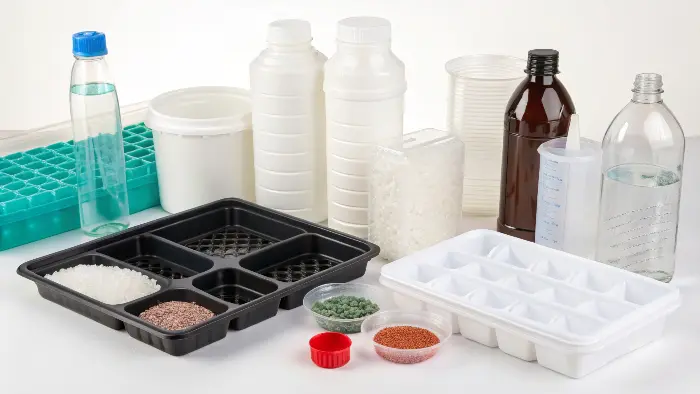
Injection molding can be an excellent packaging process for caps, closures, tubs, containers, dispensers and technical packaging components, but it is not automatically the best route for every package. The decision depends on wall thickness, opening, seal, hinge, barrier, product compatibility, volume, cycle, compliance, material policy and whether another process creates the required form more efficiently.
Related CKMOLD resources: production injection molding, multi-cavity molds, insert molding and overmolding.
What is Injection Molded Packaging, Really?
What Kinds of Packaging Can You Make with Injection Molding?
Wondering if injection molding can produce the specific type of packaging your product requires? Feeling limited by current, perhaps less versatile, options? Using unsuitable packaging can compromise product integrity, user experience, and ultimately, your brand image – nobody wants that!
Injection molding produces a vast array of packaging types, including rigid containers, pails, tubs, lids, screw caps, flip-top caps, closures with tamper-evident features, thin-wall containers for food, and custom-designed protective cases. Its versatility makes it suitable for food & beverage, cosmetics, pharmaceuticals, and industrial goods.
| The range of packaging you can create with injection molding is honestly pretty staggering. It’s not just one-size-fits-all. For starters, think aboutrigid containers. This includes everything from small tubs for sauces or spreads, to larger pails for paint or industrial chemicals, to sophisticated cosmetic jars. These need to be sturdy, often stackable, and sometimes require a really good seal. I’ve worked on projects where the container itself was a key part of the product’s perceived value – the right weight, the right feel, it all matters. Then you have caps and closures. This is a massive area, seriously. We’re talking simple screw caps, flip-top caps for sauces or shampoos (so convenient!), dispenser caps, child-resistant closures (CRCs) for pharmaceuticals (super important for safety), and tamper-evident bands that give consumers peace of mind. The precision of injection molding is critical here – these parts need to fit reliably and function reliably every single time. A faulty cap can ruin a product. Another big one is thin-wall packaging (TWP). These are items like yogurt cups, margarine tubs, and disposable food containers. Here, the goal is to make the walls as thin as possible to save material (and cost!) while still maintaining enough strength. This requires specialized molds and fast cycle times. And don’t forgetcustom and specialty packaging. This could be anything from bespoke promotional items that make a brand pop, to protective inserts for delicate electronic components, or even reusable crates and trays for B2B applications. If you can design it in plastic and it needs to be mass-produced with precision, injection molding is often the way to go. The ability to incorporate branding, specific colors, and unique shapes directly into the part is a huge plus for businesses in comparable programs that want their packaging to stand out and reflect their quality. |
Packaging Category | Examples | Key Benefits via Injection Molding | Typical Materials |
|---|---|---|---|---|
| Rigid Containers | Tubs, pails, jars, cases | Durability, stackability, custom shapes, premium feel | PP, HDPE, PS, SAN | |
| Caps & Closures | Screw caps, flip-tops, dispensers, CRCs, spouts | Precision fit, tamper-evidence, functionality, ease of use | PP, LDPE, HDPE | |
| Thin-Wall Packaging | Yogurt cups, food containers, disposable cutlery | Material efficiency, fast cycles, low cost, lightweight | PP, PS | |
| Custom/Specialty | Promotional items, inserts, reusable trays, complex shapes | Design freedom, branding integration, specific function | Various (ABS, PC, etc.) |
How is Sustainability Shaping Injection Molded Packaging?
Concerned about the environmental impact of plastic packaging? Are you actively looking for more sustainable solutions for your business to meet consumer demands? Traditional plastic packaging often faces criticism for waste and pollution, potentially harming your brand’s eco-conscious image and bottom line.
Sustainability in injection molded packaging involves using recyclable or bio-based polymers, designing for lightweighting to reduce material consumption, creating mono-material packaging for easier recycling, and incorporating post-consumer recycled (PCR) content. The goal is to minimize environmental footprint while maintaining functionality.
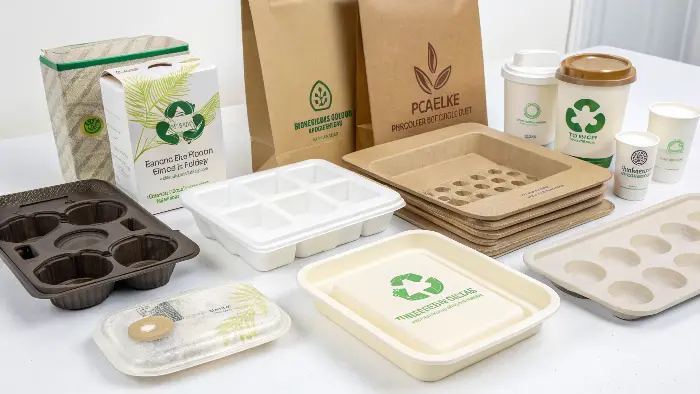
Let’s be honest, plastic packaging gets a bad rap sometimes, and often for good reason when it’s not designed, used, or disposed of properly. But the injection molding industry, including us at CKMOLD, is working hard on the sustainability front. It’s something I discuss more and more with clients, even those focused on industrial parts like the buyer, because everyone’s becoming more aware, and frankly, it’s the right thing to do. Plus, consumers are demanding it!
One of the biggest pushes is towards using more sustainable materials. This means things like Post-Consumer Recycled (PCR) plastics – taking old bottles and containers and turning them back into resin for new packaging. The quality of PCR is getting better all the time. There’s also a lot of research and development into bio-based plastics, made from renewable resources like cornstarch or sugarcane. While these are still evolving and have their own challenges, the intent to move away from fossil fuels is there.
Then there’s designing for recyclability. This often means making packaging from a single type of plastic (mono-material) because mixed plastics are a nightmare to recycle effectively. It also involves avoiding problematic additives, dark colorants (which can hinder sorting), or labels that contaminate the recycling stream. I generally encourage designers to think about the end-of-life of the packaging right from the start – “How will this be recycled?” should be a key question.
Lightweighting is another key strategy, and it’s a win-win. The less plastic you use, the better for the environment, right? This means designing parts to be as thin as possible while still doing their job effectively. This also saves on material costs and transportation fuel because lighter products mean less energy to ship. Modern injection molding techniques and advanced mold design allow for incredible thin-wall applications without sacrificing necessary strength.
And, of course, durability and reusability. While not all injection molded packaging is designed to be reused multiple times by the end consumer, some is. Think of those sturdy plastic crates used in logistics or some food storage containers. The longer a piece of packaging can be used, the lower its overall environmental impact per use. It’s a complex issue, but the industry is definitely moving in the right direction, driven by both consumer demand, regulatory pressures, and a genuine desire to be more responsible. It’s not just a trend; it’s becoming a core requirement for modern packaging.
What Materials Work Best for Injection Molded Packaging Solutions?
Where Injection Molding Creates Packaging Value
The process supports repeatable threads, snap-fits, tamper features, living hinges, ribs, handles, dispensing interfaces and textured grip surfaces. Multi-cavity tools and automation can support high output when the package design and demand justify the tooling investment.
Closure Performance Is the Real Test
A cap or closure must meet torque, opening force, leak, seal, hinge-life, tamper and assembly requirements. Shrinkage, ovality, gate location, cooling and thread design affect performance. A visually good sample is not enough if it does not seal after conditioning or repeated use.
Material and Compliance Must Match the Contents
PP, HDPE, PET-related routes, engineering plastics and elastomers may serve different packaging functions. The exact grade, additives, colorant, recycled content and intended contact condition determine compliance and chemical compatibility. The resin family name alone is not a food or cosmetic approval.
Compare Thin-Wall and Alternative Processes
Injection molding can produce thin, detailed parts, but thermoforming, blow molding, extrusion or other processes may be more suitable for particular hollow shapes or volumes. Compare scrap, tooling, cycle, barrier, tolerance, decoration, assembly and material supply rather than using a single process assumption.
Design Sustainability Into the Tooling Plan
Material reduction, efficient cycles, recyclable structures, controlled scrap, repairable molds and responsible color or additive selection can reduce impact. Sustainability claims should be supported by the actual material, process and end-of-life pathway.
Is Injection Molding Right for Modern Packaging? A Technical Evaluation: Buyer Review Checklist
- Define package contents, seal, opening, hinge, tamper, impact, temperature and compliance needs.
- Review threads, snaps, gates, cooling, ovality, ejection and assembly in DFM.
- Confirm exact resin grade, additives, colorant, recycled content and contact documentation.
- Compare injection with blow molding, thermoforming, extrusion and other realistic routes.
- Evaluate material use, cycle, scrap, repairability and end-of-life strategy with evidence.
FAQ
Is injection molding suitable for food packaging?
It can be, when the exact material, process, hygiene controls and compliance documentation match the intended food-contact use.
Why do packaging caps leak after molding?
Thread or seal geometry, ovality, shrinkage, cooling, gate balance, material condition and assembly torque can all contribute.
Conclusion
Injection molding provides incredibly versatile, efficient, and increasingly sustainable solutions for a vast range of packaging needs. From sturdy containers to intricate caps, understanding its capabilities helps create packaging that truly performs and protects.