
Making plastic buckets uses a lot of fossil fuels. You want to make your buckets green, but you worry the new materials will fail or break your machines. This is a big headache for many business owners. Finding the right bio-based plastic can save your brand and keep your factory running smoothly. Let me show you how.
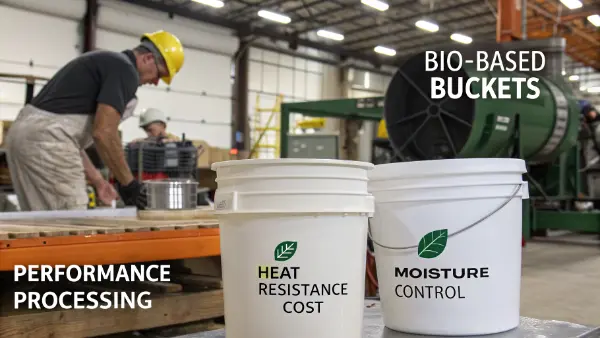
Bio-based alternatives for traditional plastic buckets can work well, but performance and processing depend heavily on the resin you choose. Drop-in options like bio-PE and bio-PET keep the familiar strength and durability of standard plastics. Other materials like PLA and PHA are better for the earth but face big processing challenges. They often have lower heat resistance, cost more, and need strict moisture control. The key is matching the right bio-plastic to your exact bucket needs.
When you start looking at these green materials, it feels like learning a whole new language. You might want to stop reading here if you think all plastics are exactly the same. But if you keep reading, you will learn exactly how to use these materials in your mold factory without losing money.
What are bio-based alternatives?
Your customers want eco-friendly products. But if you choose the wrong plastic, your business will lose money. Many factory owners feel confused by all the new green words. Let us look closely at what bio-based materials actually are. This will help you make the right choice for your factory.
Bio-based alternatives are plastics made from renewable plant resources instead of fossil fuels like oil or gas. Plants like corn, sugarcane, or even plant waste are used to make these new materials. Some of these plastics act exactly like the traditional plastics you already use in your factory. Others are completely new types of materials. They aim to reduce our carbon footprint while giving us the rigid shapes we need for things like buckets.
I started my mold career on the factory floor. Back then, we only used normal plastics like standard PP or PE to make heavy buckets. Now, the market is changing fast. My clients, who are smart business owners like you, always ask me about these new plant-based materials. They want to know what they are dealing with.
Understanding Drop-In Plastics
The easiest bio-based materials to understand are called drop-in plastics. These include bio-PE and bio-PET. They are made from plants like sugarcane. But chemically, they are exactly the same as the old plastics made from oil. This means you can use them in your current injection molds without changing anything.
Understanding New Bio-Polymers
Then we have totally new materials. The most common ones are polylactic acid (PLA) and polyhydroxyalkanoates (PHA). These do not act like standard PE or PP. They are built differently. They bring new rules to the molding machine. You must treat them with extra care.
Let us look at a simple table to see the difference.
| Material Type | Made From | Acts Like Standard Plastic? | Factory Change Needed? |
|---|---|---|---|
| Standard PE | Oil | Yes | No |
| Bio-PE | Plants | Yes | No |
| PLA / PHA | Plants | No | Yes |
I have seen factory owners buy PLA thinking it will run just like standard PE. It always ends in a mess. The molds get stuck, and the buckets warp. You need to know what kind of bio-based alternative you are buying. This is the very first step. Bio-based simply means it comes from plants. It does not mean it is easy to mold.
What are some biodegradable alternatives to traditional plastics?
Trash in the ocean is a huge problem. You might worry your company is adding to this mess. Finding plastics that actually break down in nature is hard. If you pick a fake green plastic, your customers will get angry. Here are the real biodegradable options you can use today.
The best biodegradable alternatives to traditional plastics for buckets are PLA (polylactic acid) and PHA (polyhydroxyalkanoates). PLA is made from fermented plant starch like corn. It breaks down in hot industrial compost centers. PHA is made by bacteria eating sugars. It can actually break down in normal dirt or water over time. Both of these materials help reduce environmental impact. They offer great branding options for companies that care about sustainability.
When my trading company first got an order for a green bucket, I had to do a lot of homework. The client wanted something that would not sit in a landfill for a thousand years. We had to look at plastics that actually degrade.
The PLA Option
PLA is the most famous one. You see it everywhere now. It is easy to find. Many suppliers sell it. But PLA is not perfect for a heavy bucket. It is stiff, but it breaks easily. It also melts if it gets too hot. A PLA bucket left in a hot car will lose its shape. And PLA only breaks down if you send it to a special hot compost factory. It will not just melt away in a garden.
The PHA Option
PHA is much more interesting. It is truly biodegradable. It can break down in normal soil. It is very renewable. But PHA needs very specific processing conditions in the mold. It is also hard to buy in large amounts right now.
Let us compare these two main biodegradable options:
| Biodegradable Material | Best Feature | Biggest Flaw for Buckets | Where it Breaks Down |
|---|---|---|---|
| PLA | Easy to buy | Very sensitive to heat | Special compost factories |
| PHA | Truly breaks down in soil | Hard to mold | Natural soil or water |
If you make small containers for a short time, these materials work well. But a bucket usually takes a beating. Making a strong bucket out of pure PLA or PHA is a big challenge. You often have to mix them with other things to make them stronger. The science is getting better every day. Soon, biotechnology will give us better options for heavy-duty jobs.
Are bioplastics a good alternative to traditional plastics?
You need to make a thousand buckets a day. You are scared a new green material will slow you down and cost too much. It is scary to risk your profit on untested plastics. You need to know if bioplastics are actually worth the trouble. Let us see if they really work.
Bioplastics can be a good alternative, but it depends on your bucket’s job. If you use drop-in materials like bio-PE, they are a great alternative. They keep the toughness, impact strength, and chemical resistance of traditional plastics. But if you use compostable bioplastics like PLA, they are not always good for heavy-duty use. They have lower durability and heat resistance. Bioplastics are a great choice when your main goal is to reduce fossil fuel use without changing how you make things too much.
I always tell my factory clients that "good" depends on what you need the bucket to do. A bucket holds heavy water, harsh soap, or wet paint. It gets dropped. It gets kicked.
When Bioplastics Win
Bioplastics are a great alternative when you want a better brand image. Customers love eco-friendly products. If you make reusable utility buckets, bio-PE or bio-PET are amazing. They are the best options. You do not need to change your molds. You do not need to retrain your workers. The bucket acts exactly like a normal bucket. It just comes from plants.
When Bioplastics Fail
But if you need high chemical resistance, some bioplastics fail. Compostable ones like PLA or PHA are less suitable for harsh chemicals. If your bucket holds strong acid or bleach, a pure plant starch plastic might melt or crack. Also, people often think bio-based materials are weak. This consumer perception can hurt your sales if the bucket does not look strong.
Here is a simple guide I use to see if bioplastics are a good fit:
| Bucket Use | Best Bio-Plastic Choice | Is it a Good Alternative? |
|---|---|---|
| Holds water or sand | Bio-PE | Yes, very good |
| Holds hot liquids | Bio-PET | Yes, works well |
| Single-use paint cup | PLA | Yes, acceptable |
| Holds harsh bleach | None (use normal plastic) | No, too risky |
In my experience, successful bucket designs do not use pure compostable resin. They use bio-based drop-ins or mixed blends. This gives you the green label without the weak bucket. Bioplastics are good, but you must be smart about which one you pick.
What are some problems or challenges with bioplastics?
Making buckets sounds simple until your new plastic will not melt right. You buy expensive green materials, but the buckets come out warped and ugly. This wastes time and destroys your profit. You must understand the hidden dangers of bioplastics before you put them in your machines.
The biggest challenges with bioplastics are high cost, processing limits, and lower mechanical strength. Materials like PLA and PHA are very sensitive to moisture. They need longer drying times before you can melt them. They also have narrow temperature windows during injection molding. If the heat is just a little off, the plastic will not flow right. Some bioplastics also shrink differently in the mold. This causes part warpage, which makes rigid buckets and lids fit together poorly.
Processing is often the biggest hurdle. Let me tell you a story from a factory I helped last year. The owner bought a ton of PLA to make eco-friendly buckets. He did not dry the material enough. When it went into the mold, the water in the plastic turned to steam. The buckets came out looking like Swiss cheese.
Moisture and Heat Problems
Bio-based plastics are very sensitive to water. You must dry them much longer than regular PE. If you do not, they lose all their strength. Also, their melting points are tricky. You need very tight temperature control. If the barrel of your machine gets too hot, the bioplastic burns quickly. If it is too cold, it will not fill the mold.
Shrinkage and Fit
Another big problem is crystallization behavior. This means how the plastic cools and shrinks. Buckets need tight lids. If the bucket shrinks too much, the lid will fall off. Many new bioplastics show a lot of variation in how they melt and cool. This means your factory line needs constant adjustments.
Let us break down the main factory challenges:
| Factory Challenge | Why it Happens | How it Hurts the Bucket |
|---|---|---|
| Moisture Sensitivity | Plant plastics pull water from the air | Causes bubbles and weak spots |
| Narrow Heat Window | Material burns or freezes easily | Stops the machine, ruins the shape |
| Weird Shrinkage | Cools differently than oil plastics | Lids do not fit, bucket warps |
| High Cost | Harder to make than oil plastics | Cuts into your business profit |
To fix these problems, we focus on innovation in bio-based composites. We mix the plant plastic with other things to make it stronger and easier to mold. Cost and availability are still huge obstacles. But if you control the moisture and heat, you can make it work.
Bio-based plastics offer a great way to make eco-friendly buckets. You can choose drop-in materials like bio-PE for easy processing. Or you can use PLA and PHA if you need them to break down. You will face challenges with cost, moisture, and heat control. But with the right material choice, you can create strong, green buckets that your customers will love.