
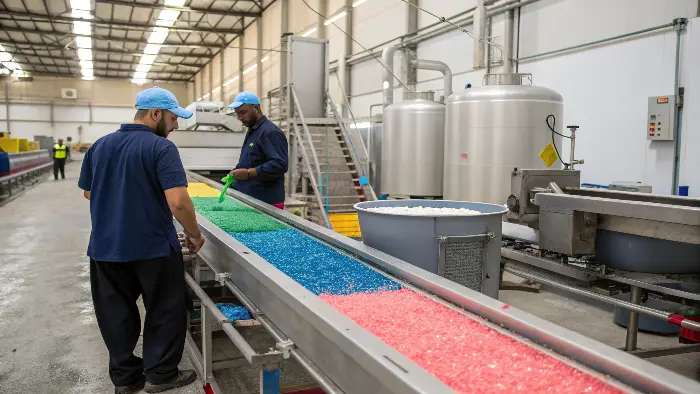
Color masterbatch should be approved as a resin–colorant–surface–process system. A Pantone reference or digital color value is not enough by itself because base resin, wall thickness, texture, gloss, lighting, molding conditions and lot variation all influence what the molded part looks like.
Define the Color Requirement in the Part’s Context
Identify the base resin manufacturer and grade, opacity or translucency, part thickness range, texture, gloss, mating components, lighting conditions and end-use environment. State whether the requirement is visual, instrumental or both. For assemblies, decide which component is the master and which surfaces are compared.
Control the Master and Viewing Method
A physical approved sample is often more useful than a screen image. Store the master away from heat, light and contamination, assign a revision, and define viewing geometry and illumination. Visual assessment should use trained observers and agreed conditions. Instrument readings should state the color space, illuminant, observer angle, measurement mode and permitted difference.
| Input | Why it changes color | Control action |
|---|---|---|
| Base-resin lot | Natural color and additives can vary | Approve the exact grade and define lot-change handling |
| Let-down ratio | Pigment concentration affects shade and opacity | Document dosing method and verified ratio |
| Wall thickness | Light path changes, especially in translucent colors | Use plaques or parts representative of the geometry |
| Texture and gloss | Surface scattering changes perceived lightness | Compare surfaces with the production finish |
| Molding history | Heat, shear and residence can shift or degrade color | Record the approved processing window |
Check Carrier Compatibility and Performance Effects
The carrier resin and additive package should be compatible with the base polymer and end-use requirements. Review dispersion, migration, plate-out, mechanical performance, flame rating, UV stability, food-contact or medical requirements where applicable. A colorant change may require revalidation; do not assume it is purely cosmetic.
Plan Dosing and Mixing
Define the intended let-down ratio, dosing equipment, mixing method and purge procedure. Gravimetric dosing can improve control where the program justifies it, but equipment accuracy still needs verification. Poor mixing may create streaks, clouds or cavity-to-cavity differences even when the nominal ratio is correct.
Develop Color on Representative Parts
Flat plaques help early comparison, but the final approval should account for the production material, tool surface, thickness and process. Deep ribs, knit lines, flow orientation and differential gloss can make a nominally correct formulation appear inconsistent. Use the mold trial to separate formulation issues from tooling and processing effects.
Illustrative Approval Sequence
This is an illustrative workflow, not a customer result. A textured enclosure requires a dark neutral color that matches a painted metal panel. The team first approves a molded texture plaque under defined lighting, then molds the production geometry at a documented let-down ratio. Visual and instrumental results are reviewed on the same surfaces that meet in assembly. If texture creates a perceived mismatch, the team evaluates surface and color separately before changing pigment concentration.
What to Record at Color Approval
- Physical master ID and revision
- Base resin, masterbatch and colorant lot
- Target and actual let-down ratio
- Tool, cavity and surface-finish condition
- Approved molding window and purge state
- Visual method and instrument configuration
- Acceptance decision, deviations and change-notification rules
Authoritative Color Reference
Color-Control Questions
Is a Pantone number enough for molded plastic?
No. It is a communication starting point. The resin, thickness, surface, lighting and acceptance method must also be defined.
What does Delta E prove?
It quantifies a color difference under a specified calculation and measurement setup. It does not by itself establish that two textured parts look acceptable in every lighting condition.
Should color be approved before texture?
Early color development can begin first, but final appearance approval should use a surface representative of the production part.
For a new colored component, submit resin, color reference, finish, annual volume and validation requirements through the project form. CKMOLD can coordinate color requirements with production molding and secondary operations.