
Choosing the right colors for plastic products often means using masterbatches. But many traditional options aren’t great for our planet. This creates a big problem for companies wanting to be more sustainable. Eco-friendly color masterbatches offer a fantastic solution, helping us color plastics responsibly.
Eco-friendly color masterbatch decisions should combine color performance with material compatibility, processing stability, compliance and lifecycle evidence. A masterbatch can support recycled or bio-based content, but its sustainability value depends on the carrier, pigment, dosage, scrap, rework, packaging and end-of-life route. The right choice is a controlled formulation, not a green label alone.
Related CKMOLD resources: plastic material selection, production injection molding, mold testing and validation.
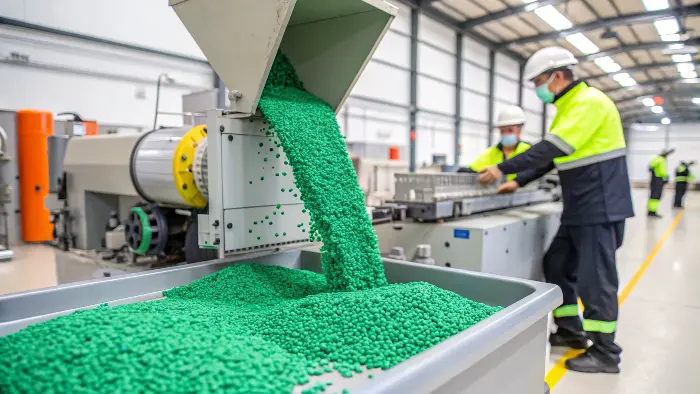
Eco-friendly color masterbatches provide a sustainable way to add color and other properties to plastics during injection molding. They are made with sustainable ingredients, like bio-based materials, recycled content, or biodegradable components. This reduces their environmental impact compared to traditional masterbatches. These special masterbatches can color various plastics, including bio-based and recycled types, making your products greener.
What plastics can be used for injection molding?
You have a great product idea, and it needs to be made from plastic. But then you wonder, which plastics actually work well with injection molding? It can seem like a huge list, and picking the right one is key. Let’s clear up some of that confusion.
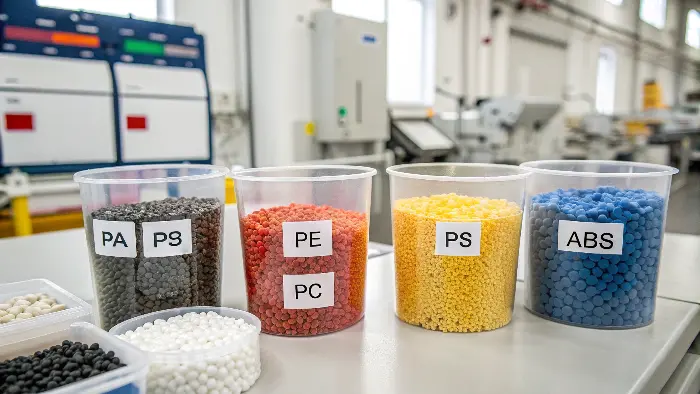
Many thermoplastics are suitable for injection molding. Common examples include Polypropylene (PP), Polyethylene (PE), Polystyrene (PS), Acrylonitrile Butadiene Styrene (ABS), Nylon (PA), and Polycarbonate (PC). These materials are chosen for their good flow properties when melted and their ability to solidify into durable parts. Eco-friendly masterbatches can be used with many of these, especially their recycled or bio-based versions.
Here’s a quick look at some common ones:
| Plastic Type | Common Uses | Key Properties for Molding |
|---|---|---|
| Polypropylene (PP) | Containers, packaging, automotive parts | Good flow, chemical resistance |
| Polyethylene (PE) | Bottles, bags, toys | Flexible, low cost |
| Polystyrene (PS) | Disposable cutlery, CD cases, food containers | Rigid, clear (GPPS), impact (HIPS) |
| ABS | Electronic housings, Lego bricks, car parts | Tough, impact resistant |
| Nylon (PA) | Gears, bearings, automotive components | Strong, wear-resistant |
| Polycarbonate (PC) | Eyeglasses, CDs/DVDs, safety helmets | Transparent, high impact strength |
The great thing is, as we move towards more sustainable practices, eco-friendly color masterbatches are designed to work with many of these standard plastics. And they work especially well if you’re using recycled versions of these plastics or exploring bio-based alternatives. This means you don’t have to compromise on color to be more green.
What are the sustainable plastics for injection molding?
We all want to reduce our environmental footprint. But when it comes to injection molding, finding plastics that are truly sustainable can feel like a big hurdle. It’s a challenge many of my clients face. The good news is, there are options.
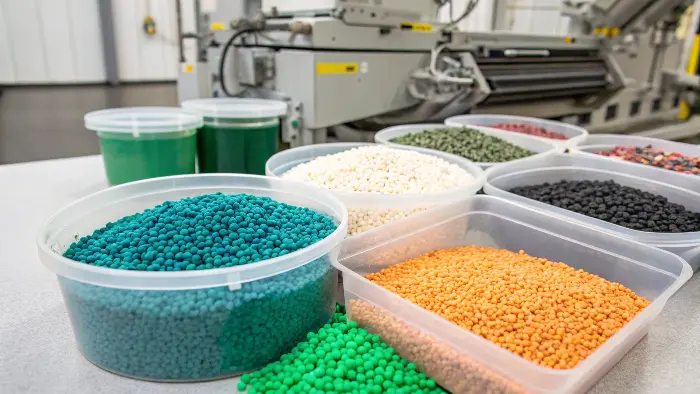
Sustainable plastics for injection molding include recycled plastics like rPET (recycled Polyethylene Terephthalate) and rPP (recycled Polypropylene). Bio-based plastics, made from renewable resources like corn starch or sugarcane (such as PLA or PHA), are also great choices. Biodegradable plastics, designed to break down under specific conditions, round out the main options for greener molding.
Here are the main categories:
-
Recycled Plastics: These are made from plastic waste that has been collected, cleaned, and reprocessed. Common examples are:
- rPET (recycled Polyethylene Terephthalate): Often made from old drink bottles. It’s great for new bottles, containers, and even fibers for clothing.
- rPP (recycled Polypropylene): Used for containers, automotive parts, and more.
Using recycled plastics reduces waste, saves energy, and lessens the demand for new fossil fuels. Eco-friendly masterbatches are suitable here because they can help achieve vibrant colors even with the slight variations that can come with recycled materials. Some recycled masterbatches even use recycled plastic as their carrier resin, making the whole colorant system more sustainable.
-
Bio-based Plastics: These plastics are made wholly or partly from renewable resources like corn, sugarcane, or cellulose.
- PLA (Polylactic Acid): Often made from corn starch or sugarcane. It’s popular for food packaging, disposable cutlery, and 3D printing.
- PHA (Polyhydroxyalkanoates): Made by microorganisms. It has interesting biodegradable properties.
Bio-based plastics help reduce our dependence on fossil fuels. When you use bio-based masterbatches with these plastics, you’re creating a product that’s even more aligned with sustainability goals. These masterbatches often use pigments and carrier resins derived from renewable resources too.
Choosing a sustainable plastic is a big step. And pairing it with an eco-friendly masterbatch ensures your commitment to sustainability runs through the entire product, color and all.
What are the most eco-friendly plastics?
The term “eco-friendly” gets used a lot. But when we talk about plastics, which ones truly make the biggest positive difference for our planet? It’s an important question, because not all “green” plastics are created equal. We need to look at the whole picture.
The most eco-friendly plastics are often those with a very high percentage of recycled content, like 100% rPET. Bio-based plastics derived from non-food, renewable sources, or agricultural waste also rank high. Plastics that are genuinely biodegradable in natural environments or home compost systems are also top contenders, though these are less common for durable goods.
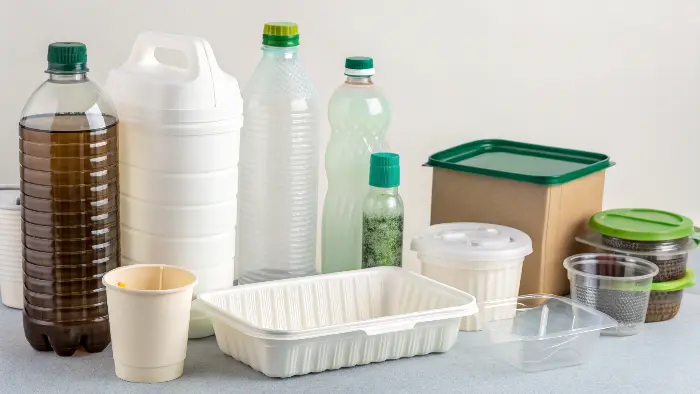
When I talk to designers like the project stakeholder, who are generally looking to improve product quality and reduce costs while being sustainable, we often discuss what “most eco-friendly” really means. It’s not just about one factor. It’s about the entire life cycle of the plastic.
Here’s how A common observation is it:
It’s also about choosing the right plastic for the right application. A single-use item might benefit most from being easily recyclable or compostable. A durable product might benefit most from being made with high recycled content and designed for longevity. The key is a thoughtful approach, and eco-friendly masterbatches support this by offering sustainable coloring options for all these greener plastics.
What are the biodegradable injection molding resins?
We hear the word “biodegradable” a lot, and it sounds like a suitable solution for plastic waste. But what does it really mean for injection molding resins? It can sometimes be a bit confusing, and it’s important to understand the details.
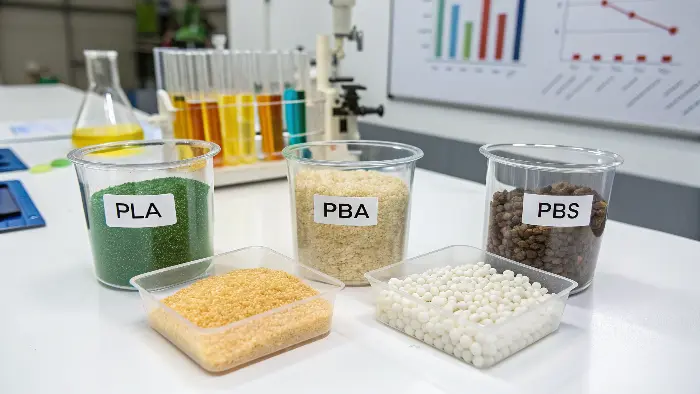
Biodegradable injection molding resins include materials like PLA (Polylactic Acid), PHA (Polyhydroxyalkanoates), and some specially formulated starch-based blends or PBS (Polybutylene Succinate). These plastics are designed to be broken down by microorganisms into natural substances like water, carbon dioxide, and biomass, but usually under specific conditions like industrial composting.
When a client asks me about biodegradable options, the first thing I clarify is what “biodegradable” entails. It’s not magic; these plastics don’t just vanish if you toss them in your backyard (usually). They need specific environments to break down effectively.
Here are some common biodegradable resins used in injection molding:
When using these resins, it’s crucial to use biodegradable masterbatches. If you use a traditional masterbatch, the colorant and its carrier resin might not break down, leaving behind microplastics or hindering the overall product’s biodegradability. Eco-friendly masterbatches designed for biodegradable plastics use carrier resins and additives that are also biodegradable and compostable, ensuring the entire colored part meets the desired end-of-life standards. This is something I generally emphasize – the color has to be as green as the plastic itself!
Choose the Carrier to Match the Base Resin
The carrier should disperse in the target polymer without creating poor mixing, weld-line weakness, surface defects or unexpected shrinkage. A masterbatch designed for one resin family may not be suitable for another, especially when recycled content changes viscosity or contamination risk.
Consider Recycled and Bio-Based Content Carefully
Recycled resin can vary in color, odor, moisture, contamination, melt flow and thermal history. Bio-based or mass-balance claims require supplier documentation and a clear accounting method. Color formulation may need extra strength or adjustment to compensate for the base resin’s variation.
Measure Color and Process Stability
Use a defined color standard, lighting, ΔE or other agreed measurement, along with visual inspection. Check dispersion, black specks, streaks, plate-out, filter pressure, cycle and surface. A lower pigment dosage is not an improvement if it increases scrap or rework.
Check Compliance and Migration Requirements
For food, medical-related, automotive or electronic applications, pigments, carriers and additives may have specific restrictions. Obtain documentation for the exact masterbatch and use condition rather than assuming that a sustainable colorant has the required compliance.
Calculate Lifecycle Value
Compare dosage, resin cost, scrap, color changeover, purge, cleaning, inventory, regrind policy and end-of-life compatibility. The sustainable option should be evaluated through the complete production and product lifecycle.
Eco-Friendly Color Masterbatches for Injection Molding: Buyer Review Checklist
- Match masterbatch carrier, pigment and additive package to the exact base resin.
- Verify recycled or bio-based content, variability, moisture, contamination and documentation.
- Define color standard, lighting, measurement method, dosage and acceptable variation.
- Check dispersion, streaks, plate-out, processing, compliance and end-of-life compatibility.
- Compare total lifecycle cost and scrap—not only masterbatch price or marketing claims.
FAQ
Can any color masterbatch be used with recycled plastic?
No. Recycled resin variability and contamination can affect carrier compatibility, dispersion, color and processing; the exact combination should be trialed.
Does a lower dosage generally make a masterbatch more sustainable?
Not necessarily. Lower dosage may be beneficial, but higher scrap, poor dispersion or extra purge can offset the apparent saving.
Conclusion
Eco-friendly color masterbatches are a material change for sustainable injection molding. They allow us to color recycled, bio-based, and biodegradable plastics effectively and responsibly. By choosing these advanced masterbatches, we can reduce environmental impact and create greener products without compromising on quality or aesthetics.