
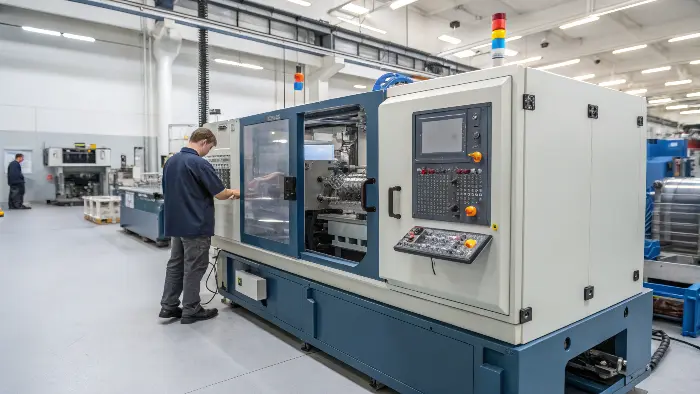
Injection Molded Products Across 12 Industries: A Practical Application Guide

Struggling with complex manufacturing? Overwhelmed by production choices? Injection molding offers a precise, high-volume solution for your plastic part needs.
Injection molding creates plastic parts by injecting molten material into a mold. It’s widely used for its precision and efficiency in mass production across diverse sectors, from automotive to medical, due to its versatility and cost-effectiveness.
You’ve heard about injection molding, and maybe you’re wondering just how far its capabilities stretch. As someone who’s spent years in the mold industry, starting from the factory floor and later building a trading company, I’ve seen firsthand its incredible impact. This process isn’t just about making plastic parts; it’s about innovation and efficiency. Let’s explore the vast world of injection molded products and see how they shape our daily lives and industries. I believe understanding this can truly help you, just as it helped me achieve my goals.

What Are the Broad Applications of Injection Molding Across Industries?

Wondering where injection molding makes an impact? Many products you use daily are made this way. Let me show you its vast reach.
snippet paragraph:
Injection molding is key in automotive, consumer electronics, medical devices, packaging, and construction. It produces everything from car dashboards and TV casings to syringes and bottle caps, efficiently and precisely.

Injection molding is a cornerstone of modern manufacturing, and its applications are incredibly diverse. I’ve worked with clients from so many different sectors, and it always amazes me how this one process can solve so many different problems. Let’s look at some key areas:

Key Industrial Applications

  1. Automotive: This is a huge one. Think about car interiors – dashboards, door panels, buttons, and even engine components like intake manifolds. Precision and durability are critical here, and injection molding delivers.
  2. Consumer Electronics: Your TV remote, computer mouse, phone casing, and even parts inside your coffee maker are likely injection molded. The ability to create complex shapes with good surface finishes is vital.
  3. Medical and Healthcare: From single-use syringes and petri dishes to complex device housings and implantable components, biocompatibility and sterility are often requirements that specific plastics can meet. I remember a project involving a complex medical device housing; the precision needed was immense.
  4. Packaging: Bottle caps, containers, and thin-wall packaging are mass-produced using injection molding. Speed and low cost per unit are major advantages.
  5. Construction: Pipe fittings, electrical conduits, window components, and insulation panels use injection-molded parts for their strength and weather resistance.
  6. Toys: Iconic toys, like LEGO bricks, rely on the high precision and repeatability of injection molding.
  7. Appliances: Components for refrigerators, washing machines, and air conditioners are often injection molded.
  8. Aerospace: While demanding, certain non-critical components and interior parts can be injection molded using high-performance plastics.
  9. Agriculture: Think of irrigation components, equipment housings, and containers. Durability is key.
  10. Sporting Goods: Helmets, protective gear, and equipment components often use this method.
  11. Furniture: Chair shells, drawer components, and decorative elements can be efficiently produced.
  12. Industrial Equipment: Housings, gears, knobs, and handles for various machinery.
    This list isn’t exhaustive, but it shows the sheer versatility. Each industry has its own specific material and design requirements, and injection molding can often be adapted to meet them.

    Are LEGO Bricks Really Made Using Injection Molding?

    Ever wondered how LEGO bricks fit so perfectly? Their amazing precision isn’t magic. It’s a testament to a brilliant manufacturing process.
    Yes, LEGO bricks are a prime example of precision injection molding. This method allows for the high accuracy, consistency, and durable material (ABS plastic) needed for bricks that interconnect flawlessly, produced in massive volumes.
    LEGO bricks production
    The precision of LEGO bricks is legendary, and it’s all thanks to injection molding. I often use LEGO as an example when explaining the capabilities of high-quality molds and processes to my clients. The tolerances they achieve are incredibly tight – we’re talking about micrometers!

    Why Injection Molding is Perfect for LEGO

    • High Precision and Tolerance: LEGO bricks need to connect perfectly every single time. Injection molding, with well-designed and maintained molds, can achieve these incredibly tight tolerances repeatedly. The molds themselves are works of art, often costing hundreds of thousands of dollars.
    • Material Choice: LEGO primarily uses Acrylonitrile Butadiene Styrene (ABS) plastic. This material is strong, impact-resistant, has excellent dimensional stability, and holds color well – all crucial properties for a toy that needs to last and look good.
    • Mass Production: LEGO produces billions of bricks each year. Injection molding is ideal for this scale due to its fast cycle times. Once the mold is made, parts can be produced very quickly.
    • Complexity of Shape: While a basic LEGO brick might seem simple, the internal tube structure and precise stud dimensions require a process that can handle these details accurately.
    • Consistency: Every 2×4 red brick needs to be identical to every other 2×4 red brick, regardless of when or where it was made. Injection molding excels at this kind of consistency.
      I recall visiting a facility that produced high-precision components, and the attention to detail reminded me so much of the principles behind LEGO’s success. It’s not just about squirting plastic into a shape; it’s about mastering the entire system from material science to mold design and process control.

      What Key Rules of Thumb Should You Follow for Successful Injection Molding?

      Want to avoid costly injection molding mistakes? Certain design rules are crucial. Ignoring them can lead to defects and delays.
      snippet paragraph:
      Key rules include maintaining uniform wall thickness, incorporating draft angles for easy part ejection, radiusing corners to reduce stress, and choosing the right gate location. These help ensure part quality and manufacturability.
      Injection molding design principles
      When I work with product designers like Jacky, we often discuss design for manufacturability (DFM). For injection molding, certain "rules of thumb" are fundamental to getting good parts and an efficient process. These aren’t just suggestions; they can make or break a project.

      Essential Design Guidelines for Injection Molding:

      Guideline Why It’s Important My Tip
      Uniform Wall Thickness Prevents sink marks, warping, and uneven cooling. Ensures consistent material flow. Aim for consistency. If thickness variations are unavoidable, make transitions gradual.
      Draft Angles Allows the part to be easily ejected from the mold. Usually 1-2 degrees per side. More is often better, especially for textured surfaces. I’ve seen parts get stuck due to no draft!
      Radiused Corners Reduces stress concentrations and improves melt flow. Sharp corners can lead to cracks. Even small radii (e.g., 0.5mm) can make a big difference. Think "smooth flow" for the plastic.
      Gate Location Affects filling patterns, weld lines, and cosmetic appearance. Consider part function and aesthetics. I always discuss this early with designers.
      Ribs & Bosses Adds strength without increasing overall wall thickness. Design them carefully. Rib thickness should be ~60% of the wall they’re attached to. Bosses need draft and proper support.
      Undercuts Features that prevent direct ejection. Require complex mold actions (sliders, lifters). Avoid if possible to reduce mold cost and complexity. If needed, simplify the undercut.
      Material Selection Directly impacts part properties, mold design, and processing parameters. Consider mechanical, thermal, and chemical requirements. Don’t just pick the cheapest!

      These rules are interconnected. For instance, material choice can affect how strictly you need to follow wall thickness guidelines. I always tell my clients: "Let’s talk about these rules early in your design phase." It saves so much time and money down the line. When I first started, I learned some of these lessons the hard way, with parts that warped or had terrible sink marks. Experience is a great teacher!

      How Can You Identify the Best Injection Molding Machines for Your Needs?

      Choosing an injection molding machine feels daunting? So many options, so many specs. Let’s simplify how to find the right fit.
      The "best" machine depends on your specific needs: part size, material, production volume, and precision. Key factors include clamping force, shot size, and brand reputation for reliability and support.
      Injection molding machine
      When people ask me, "Who makes the best injection molding machines?" I usually say, "It depends on what you need to do." There isn’t one single "best" for everyone. It’s like asking who makes the best car – a sports car isn’t best for a large family. As a mold maker and trader, I’ve seen a wide range of machines.

      Factors to Consider When Selecting an Injection Molding Machine:

  13. Clamping Force (Tonnage):
    • What it is: The force required to keep the mold closed during injection.
    • Why it matters: Too little, and the mold can flash (plastic seeps out). Too much can damage the mold or machine. It’s determined by the part’s projected area and the injection pressure of the material.
    • My insight: I always advise clients to calculate this carefully. Don’t just guess. There are formulas and software that can help.
  14. Shot Size/Capacity:
    • What it is: The maximum volume or weight of plastic the machine can inject in one cycle.
    • Why it matters: Must be larger than the total volume of your part(s) plus the runner system. Using 20-80% of the machine’s shot capacity is a good rule of thumb for optimal melt quality.
    • My insight: Running a machine at its absolute maximum or minimum shot size for extended periods is generally not ideal.
  15. Mold Size Compatibility (Platen Size & Tie Bar Spacing):
    • What it is: The physical dimensions the machine can accommodate for a mold.
    • Why it matters: Your mold must physically fit within the machine’s platens and between the tie bars.
    • My insight: Always check the minimum and maximum mold height too.
  16. Type of Machine (Hydraulic, Electric, Hybrid):
    • Hydraulic: Robust, good for high clamping forces, often lower initial cost.
    • Electric: High precision, energy-efficient, cleaner, quieter. Often preferred for medical or high-precision parts.
    • Hybrid: Combines features of both, aiming for a balance of performance and efficiency.
    • My insight: Electric machines are becoming increasingly popular for their precision and energy savings, though the initial investment might be higher. I’ve seen clients achieve amazing consistency with them.
  17. Brand Reputation, Support, and Service:
    • Why it matters: Downtime is costly. A reliable machine from a reputable manufacturer with good local support can save a lot of headaches.
    • Notable Brands (examples, not exhaustive): Arburg, Engel, Husky, KraussMaffei, Nissei, Sumitomo (SHI) Demag, Haitian, Yizumi. Each has strengths in different areas or machine types.
    • My insight: Talk to other users, check reviews, and assess the availability of service and spare parts in your region. When I helped clients source machines, after-sales service was always a top consideration.
      Choosing a machine is a significant investment. Consider your current and future needs. It’s often better to have a little more capacity than to be constrained later.

      Conclusion

      Injection molding is a versatile, precise, and efficient manufacturing process, vital across countless industries for producing a vast array of plastic parts effectively.


CKMOLD Engineering Update: Injection Molded Products Across 12 Industries: A Practical Application Guide

Injection molded products appear across many industries because the process can combine repeatable geometry, integrated features, scalable output and a wide choice of thermoplastics and elastomers. The correct material and mold strategy changes with the market: a medical housing, automotive clip, food-contact cap and electronic enclosure do not share the same validation or documentation requirements.

Related CKMOLD resources: injection mold services, production injection molding, export injection molds.

A 12-Industry Application Map

Typical applications include automotive components, consumer electronics, medical-related housings, packaging and closures, appliances, industrial equipment, construction hardware, aerospace-adjacent components, telecommunications, sports products, consumer goods and electrical products. These are application categories, not automatic material approvals; each part needs its own engineering review.

Different Industries Change the Critical Requirements

Automotive may prioritize heat, vibration and assembly; electronics may need insulation, shielding, bosses and thermal management; packaging may focus on sealing, hinge life, cycle and compliance; medical-related products may need cleanliness and traceability. Industrial parts may prioritize wear, chemical exposure or dimensional stability.

Material and Mold Choices Follow the Application

PP, ABS, PC, PA, POM, PBT, TPU, TPE and other families can serve different functions. Fillers, flame retardants, colorants, elastomers and recycled content change flow, shrinkage, mold wear and validation. Gate, cooling, venting, ejection and steel should be selected around the final use.

Validation Is the Bridge to Production

A prototype can confirm form and fit, but production approval may require dimensional capability, assembly, impact, thermal cycling, chemical exposure, sealing, aging, cleanliness or appearance checks. The customer and market define which evidence is required.

Choose a Supplier That Understands the Whole Chain

A mold supplier should connect product requirements to DFM, tooling, trial, inspection, production and maintenance. For export programs, drawings, revisions, spare parts, shipping and service support are part of the deliverable.

Engineering and Sourcing Checklist

  • Identify the industry, use environment, function, volume and customer or regulatory expectations.
  • Select material and mold architecture from actual performance and processing requirements.
  • Review integrated features, surface, tolerance, gates, cooling, venting and ejection in DFM.
  • Define validation evidence before choosing prototype or production tooling.
  • Confirm supplier capability for trials, inspection, documentation, export and maintenance.

Search Intent Takeaway

Injection molded products are not interchangeable just because they share a process. Industry requirements determine the material, mold, validation and supply controls needed for a reliable result.

For a project review, contact CKMOLD with drawings, 3D CAD, resin grade, tolerance targets, surface requirements and annual volume. CKMOLD can support prototype injection molding, rapid tooling, insert molding and overmolding, export injection molds, and mold repair or modification.

FAQ

Which industries use injection molded products most?

Automotive, electronics, packaging, appliances, medical-related, industrial, construction and consumer products are common users, among others.

Can one injection mold serve multiple industries?

A mold may support product variants, but material, validation, cleanliness, documentation and performance requirements must be reviewed for each application.

Facebook
Twitter
LinkedIn

Request A Quote for Your Projects!

Hi there! I’m Jerry, a proud dad and passionate at CKMOLD. With years of hands-on experience in the injection mold and CNC industry, I’ve grown from managing the smallest details on the shop floor to leading international projects with clients across Europe and the U.S.

At CKMOLD, we specialize in precision molds, plastic parts, and CNC solutions that help bring bold product ideas to life. I love solving complex challenges, building long-term partnerships, and pushing the limits of what great manufacturing can do.

Let’s connect, exchange ideas, and grow together—whether you’re looking for a reliable manufacturing partner or just want to talk shop!

Request a Quick Quote

Send your drawings and detailed requirements via:
Email: jerry@ckmold.com

Or fill out the contact form below:

We will contact you within one working day. Please pay attention to the email with the suffix “@ckmold.com”

Wait, We Have Something Special for You!

Join our mailing list and receive a 10% discount on your next mold or CNC project.