
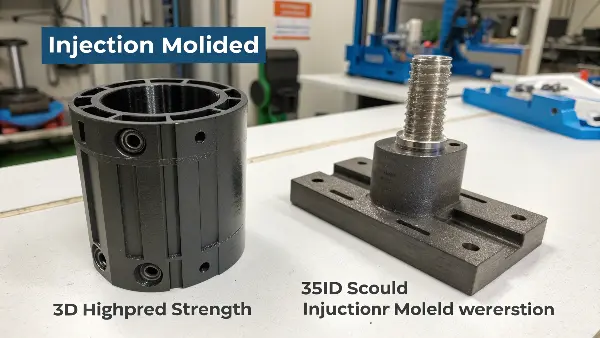
Are you trying to get prototypes made quickly but find traditional mold making too slow and expensive? The long lead times for steel or aluminum molds can kill your project’s momentum, making it hard to test designs and get to market fast. Imagine a faster way to create functional prototypes, a method that bridges the gap between idea and production without breaking the bank. What if you could create your own molds in-house, in days instead of weeks?
3D printing is most useful in injection molding when it is assigned the right job. It can accelerate concept parts, bridge tooling, mold inserts, cooling experiments, fixtures, gauges, patterns and replacement aids, while conventional steel remains appropriate for high-volume life and tight repeatability. The engineering question is not whether a printer can make a shape, but whether the printed item delivers the required heat, load, finish and accuracy.
Related engineering resources: rapid tooling | prototype injection molding | mold design
Yes, you can absolutely use 3D printing for injection molding, primarily for creating the mold tool itself. This process is often called rapid tooling. Instead of machining a mold from metal, you 3D print it using high-temperature resistant plastics like SLA resins or PEI (ULTEM). This 3D printed mold is then placed into a standard injection molding machine to produce a limited run of parts—typically from 10 to a few hundred shots. It’s an excellent method for rapid prototyping and low-volume production.
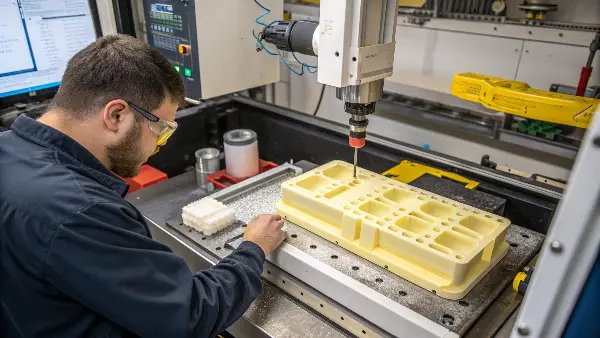
This technology is a real material change, especially for people like me who started on the factory floor and know how long traditional tooling can take. It blends the speed of additive manufacturing with the material versatility of injection molding. For business owners like the buyer, it means you can validate a design with real production-grade plastic parts much faster.
Can you make molds with a 3D printer?
Have you ever been stuck waiting for weeks, or even months, for a traditional metal mold just to test a new part design? This delay is a major bottleneck. It costs you time and money, and in a competitive market, it can mean missing your window of opportunity. It feels frustrating to have your entire project on hold because of one slow process. What if you could shrink that tooling time from months to just a few days?
Definitely. You can make functional injection molds with a 3D printer. The key is to use the right 3D printing technology and materials that can withstand the heat and pressure of the injection molding process. Technologies like Stereolithography (SLA) using high-temperature resins, or Fused Deposition Modeling (FDM) with robust materials like ULTEM, are common choices. These printers build the mold cavity and core layer by layer, allowing for complex geometries that might be difficult to machine traditionally. This process is suitable for creating bridge tooling.
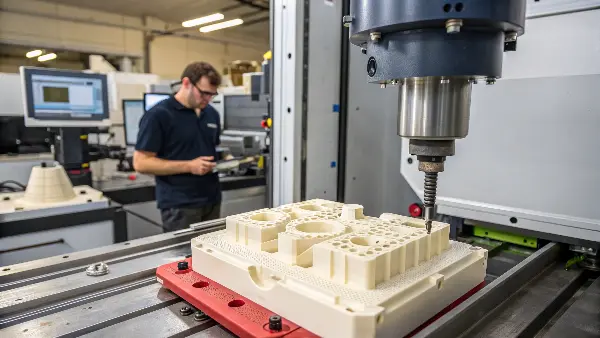
Designing for a 3D Printed Mold
First, your part design needs to follow standard design for manufacturability (DFM) principles for injection molding. This means including draft angles so the part can be ejected easily. You also need to think about wall thickness and avoid undercuts. But for printed molds, you might need to use slightly larger draft angles, maybe 2-5 degrees, because the surface finish isn’t as smooth as polished steel. This helps reduce friction during ejection.
Choosing the Right Technology and Material
The technology you choose has a big impact. A practical approach is to SLA for its high resolution and smooth surface finish, which translates to a better finish on your molded part. FDM is also an option, especially with high-performance materials, but the layer lines can show up on the final part.
Here’s a quick comparison of common choices:
| Technology | Material Example | Best For | Key Consideration |
|---|---|---|---|
| SLA | High-Temp Resin | Fine details, smooth finish | Can be brittle, requires post-curing |
| FDM | ULTEM (PEI), PEEK | Durability, high temperatures | Prominent layer lines, lower resolution |
| PolyJet | Digital ABS | Complex molds, multi-material | Higher material cost |
Post-Processing the Printed Mold
After printing, the mold isn’t ready yet. It needs post-processing. For SLA molds, this involves washing away excess resin and then curing the mold under UV light to maximize its strength and thermal resistance. You might also want to do some light sanding or polishing on the mold surfaces to improve the part finish and help with ejection. This simple step can make a huge difference in mold life and part quality.
Can you use a 3D printer to injection mold?
So, you’ve successfully 3D printed a mold. Now the big question is: can you actually use it in an injection molding machine? Many people are skeptical. They worry the plastic mold will melt, crack under pressure, or just not work at all. This doubt can stop you from even trying this cost-effective method, keeping you stuck with the slow, expensive traditional route for all your prototypes. What if a printed mold could handle the job just fine?
Yes, you can directly use a 3D printed mold for injection molding, but it’s best suited for low-volume production and prototyping. These molds are typically housed within a standard metal mold base or frame for support. The injection molding machine’s settings, like injection pressure, temperature, and clamping force, must be carefully adjusted to be much lower than what’s used for steel molds. This gentle approach ensures the printed mold survives the process and can produce a limited series of high-quality parts.
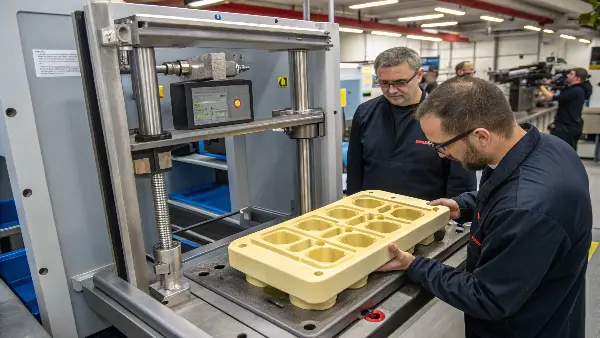
Setting Up the Injection Molding Machine
The setup is the most important part. You can’t just throw the printed mold in and run it like a steel one. Here’s what you need to adjust:
- Clamping Force: Use the absolute minimum force necessary to keep the mold halves sealed. Too much force will crush your printed mold. The metal frame helps distribute this force evenly, which is why it’s so important.
- Injection Temperature: Heat transfer is very different in a polymer mold compared to a metal one. Metal dissipates heat quickly; plastic insulates it. You should use a melt temperature at the lower end of the recommended range for your chosen plastic. This reduces the thermal stress on the printed mold.
- Injection Pressure and Speed: Go low and slow. High injection speeds create a lot of shear heat and pressure spikes that can damage the mold. A slower, more controlled injection fills the cavity gently.
The Molding Process
Once the machine is set, a typical cycle looks like this:
| Step | Action | Key Consideration for 3D Printed Molds |
|---|---|---|
| 1. Mold Closing | The two halves of the mold are clamped together. | Use minimal clamping force. The metal frame takes most of the load. |
| 2. Injection | Molten plastic is injected into the mold cavity. | Use lower pressure and slower speed to avoid damaging the mold. |
| 3. Cooling | The part cools and solidifies inside the mold. | Cooling times are much longer because plastic molds don’t conduct heat away. This can be the longest part of the cycle. |
| 4. Mold Opening | The mold halves separate. | Open smoothly to avoid torquing or stressing the printed components. |
| 5. Ejection | The part is pushed out of the mold. | Ensure proper draft angles and use mold release spray to prevent sticking. |
This process might be slower per part than with a steel mold due to the longer cooling time, but the massive savings in upfront tooling time make it worthwhile for prototyping.
Can PLA be used for injection molding?
When people start with 3D printing, they often begin with PLA because it’s so easy to use. So, a common question I get is whether you can use this familiar material for injection molding parts. The problem is, PLA is known for being a bit brittle and having a low melting point. This makes business owners and engineers hesitant to use it for functional parts, worrying it won’t hold up in real-world applications. Is there a way to make it work?
Yes, PLA can be used for injection molding, and there are specific injection-grade PLA resins available. However, standard 3D printing PLA filament is not suitable for this process. Injection-grade PLA is formulated to have better flow characteristics and thermal stability for molding. It’s a great material choice for producing biodegradable or compostable products, like disposable cutlery, packaging, or agricultural items. The molding process requires careful temperature control due to PLA’s narrow processing window and low melting point.
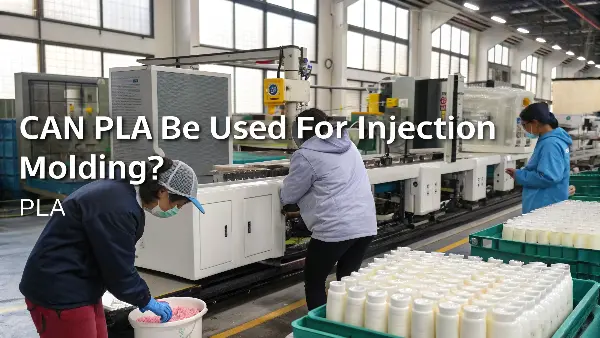
Using PLA for injection molding is an interesting topic, especially with the growing demand for sustainable materials. I’ve worked on a few projects where the client specifically wanted to use a bioplastic. PLA was our top choice, but it comes with its own set of rules. You can’t just swap it in for ABS or Polypropylene and expect the same results.
Key Differences: 3D Printing PLA vs. Injection Grade PLA
It’s crucial to understand that the PLA you put in your FDM printer is not the same as the pellets you feed into an injection molding machine.
| Feature | 3D Printing Filament PLA | Injection Molding Pellet PLA |
|---|---|---|
| Form | Long, continuous filament on a spool | Small pellets or granules |
| Formulation | Optimized for melting and extruding smoothly | Optimized for melt flow index (MFI) and rapid cooling |
| Additives | May contain additives for color and printability | Often contains nucleating agents for faster crystallization and mold release agents |
| Drying | Recommended but sometimes optional for hobbyists | Mandatory. PLA is highly hygroscopic (absorbs moisture) and must be dried for hours before molding. |
Processing PLA in an Injection Molding Machine
If you want to mold with PLA, you have to be precise. Here’s what the process looks like:
- Drying the Material: This is the most critical step. PLA absorbs moisture from the air. If you try to mold wet PLA, the water will turn to steam at processing temperatures, causing bubbles, splay marks, and severely weakened parts. You must dry the pellets in a desiccant dryer for several hours at around 80°C (175°F).
- Setting Temperatures: PLA has a low melting point, typically around 190-220°C (374-428°F). You have to keep the barrel temperatures within this narrow window. If you go too high, the material will degrade and become brittle. If you go too low, it won’t flow properly.
- Mold Temperature: A heated mold is often necessary to control the crystallization of PLA. This helps improve the part’s strength and heat resistance. A mold temperature of around 60-80°C (140-175°F) is common.
PLA is suitable for single-use products where biodegradability is a key selling point. But for durable, long-lasting parts, it’s usually not the best choice compared to materials like ABS or Nylon.
Is 3D printing as strong as injection molding?
When you’re deciding on a manufacturing process, part strength is often the number one concern. You see the amazing speed of 3D printing, but you worry that the parts won’t be durable enough for real-world use. The idea of parts delaminating or breaking under stress can make you stick with injection molding, even for early prototypes, delaying your project. How do these two methods really stack up when it comes to strength?
No, in a direct material-to-material comparison, an injection molded part is often stronger than a 3D printed part. Injection molding creates a solid, homogenous part by forcing molten plastic into a cavity under high pressure, resulting in isotropic properties (strong in all directions). 3D printed parts are built layer by layer, creating anisotropic properties. This means they are weaker along the Z-axis (between the layers) than they are along the X and Y axes. The bonds between layers are potential failure points.
This is a really important distinction, and understanding it helps you choose the right tool for the job. I generally tell my clients, including experienced people like the buyer, that it’s not about which one is “better” overall, but which one is better for a specific application at a specific stage of development. Both technologies have their place.
Understanding Anisotropic vs. Isotropic Properties
This is the core of the strength difference.
- Isotropic (Injection Molding): Imagine a block of solid wood. It’s strong no matter which way you push on it. Injection molded parts are like this. The plastic molecules are tightly packed and intermingled, creating consistent strength in all directions.
- Anisotropic (3D Printing): Now imagine a stack of paper glued together. It’s strong if you try to pull it apart from the top and bottom sheets (X and Y-axis). But it’s very easy to peel the layers apart (Z-axis). This is how FDM 3D printed parts behave. The strength depends on the orientation of the layers relative to the force being applied.
How to Maximize 3D Printed Part Strength
While a 3D printed part might not match an injection molded one, you can take steps to make it much stronger:
- Part Orientation: This is the easiest and most effective method. Orient your part on the print bed so that the forces it will experience in use are applied along the X and Y axes, not against the Z-axis layers.
- Material Choice: Some materials are inherently stronger than others. Using engineering-grade filaments like Carbon Fiber Nylon, Polycarbonate, or ULTEM will produce much stronger parts than standard PLA or ABS.
- Print Settings: You can also adjust slicer settings. Increasing infill density, using more perimeters (shells), and slightly increasing the print temperature can all improve layer adhesion and overall part strength.
Here’s a general comparison for context:
| Feature | 3D Printing (FDM) | Injection Molding |
|---|---|---|
| Part Strength | Anisotropic (weaker between layers) | Isotropic (uniformly strong) |
| Tensile Strength | Good along X/Y axes, lower along Z-axis | Excellent and consistent in all directions |
| Best Use Case | Prototypes, custom tools, low-stress functional parts | Mass production, high-strength structural components |
For a final product that needs to withstand significant mechanical stress, injection molding is often the answer. But for form and fit testing, jigs, fixtures, and even some functional prototypes, 3D printing is more than strong enough—and infinitely faster and more flexible.
Use Printed Parts to Learn Before Tooling
Prototype fit, assembly, ergonomics and clearance with printed parts before cutting steel. Be explicit about what the prototype can and cannot represent: printed anisotropy, surface, shrinkage and mechanical behavior may differ from injection-molded material.
Apply Additive Tooling Where Speed Matters
Printed inserts or cavity modules can support early molding trials, material screening and bridge quantities. Keep the interface to the mold base robust, seal the parting line and define a replacement plan. A modular design makes learning faster without compromising the base tool.
Explore Conformal Cooling Carefully
Additive metal tooling can place cooling channels closer to the cavity or follow complex geometry, but channel diameter, powder removal, sealing, pressure testing and inspection still matter. Compare temperature uniformity, cycle, warpage and maintenance against a conventional cooling layout.
Print Fixtures, Gauges and Process Aids
Low-cost fixtures can improve insert loading, orientation, inspection and changeover. Use stable datums, wear surfaces and replaceable contacts where operators apply force. Validate the fixture’s repeatability so speed does not introduce a new assembly or measurement error.
Define the Handoff to Production
Record material, print orientation, post-processing, dimensions, surface and service limits. If a printed component influences a molded part, compare the result with production-like tooling and confirm the design remains valid. Replace the printed aid when wear or temperature changes its function.
Use 3D Printing in Injection Molding: Buyer Review Checklist
- Assign printing to prototypes, inserts, cooling, fixtures or patterns based on evidence.
- State what printed prototypes cannot represent about molded material or process.
- Design printed tooling with robust interfaces, sealing and replacement access.
- Validate conformal cooling, fixtures and gauges for temperature, pressure and repeatability.
- Document limits and define the handoff to production tooling or hardware.
Frequently Asked Questions
What is the easiest 3D-printing win in an injection molding program?
Fixtures, gauges, insert-loading aids and early fit prototypes are often lower-risk starting points than a full printed production mold.
Can a printed prototype predict injection-molded shrinkage?
Not by itself. Printed geometry is useful for fit and form, while shrinkage, orientation, weld lines and molding defects require molded or simulated evidence.
Conclusion
In the end, using 3D printing for injection molding is a powerful strategy for speeding up product development. It allows you to create low-cost molds for prototyping and small production runs in a fraction of the time it takes for traditional tooling. While it has its limitations in mold life and part strength compared to steel molds, its value in validating designs quickly with production-grade materials is undeniable. It’s a bridge, not a replacement.