
PLA vs PHA: Application, Processing and End-of-Life Guide

You want to make your product sustainable, but choosing the right material is frustrating. You keep hearing about PLA and PHA, but the technical data sheets all look the same, and making the wrong choice could lead to expensive production failures.

PLA is often the more practical starting point for rigid, dimensionally stable bio-based products, while PHA grades can offer a different balance of toughness and biodegradation behavior. Neither family is automatically suitable for every product or disposal route. The right choice depends on service temperature, moisture, impact, wall design, processing window, local waste infrastructure and the exact certification or test behind an environmental claim.

Related engineering resources: DFM analysis | prototype injection molding | mold testing and validation

PLA (Polylactic Acid) is generally better for rigid, cost-sensitive applications like packaging and disposable cutlery due to its higher strength and lower price1. PHA (Polyhydroxyalkanoates), however, is superior for applications requiring biodegradability in marine or home compost environments2, or where flexibility and heat resistance are critical. The better choice depends entirely on your specific end-use environment and budget.

PLA vs PHA pellets comparison

Is PHA the same as PLA?

Many designers assume all “bioplastics” are basically the same thing with different brand names. This confusion leads to serious design flaws, like specifying a material that melts in a hot car or one that do not actually degrades in a landfill.

No, PHA is not the same as PLA. While both are bioplastics derived from renewable resources, they have different chemical structures and origins. PLA is synthesized from fermented plant sugars (like corn starch), making it a polyester. PHA is produced directly by bacteria through fermentation of sugars or lipids, acting as an energy storage mechanism for the cells. They behave very differently in molding and biodegradation.

We need to really understand the “DNA” of these materials to use them correctly. A useful principle is that PLA is like a synthetic copy of a natural idea, while PHA is the natural idea itself.

Origin and Production Differences

When we dig into how they are made, the difference becomes clear. PLA requires a multi-step chemical process. You take corn or sugarcane, ferment it into lactic acid, and then polymerize it. It is an industrial process. PHA, on the other hand, is made inside a living bacteria cell. It is grown, not just synthesized.

Performance Characteristics Table

To make this easier to digest, The following comparison summarizes the key differences A common observation is on the factory floor:

Feature PLA (Polylactic Acid) PHA (Polyhydroxyalkanoates)
Origin Plant starch fermentation (Corn, Sugarcane) Bacterial fermentation
Stiffness High stiffness, brittle Variable (can be elastic or hard)
Heat Resistance Low (softens around 60°C) Moderate to High (better stability)
Processability Easy to print and mold Tricky, narrow processing window
Cost Low to Moderate High (currently)

Why This Matters for Design

If you are designing a phone case, PLA might be too brittle unless you add impact modifiers. If you are designing a coffee cup lid, standard PLA will warp from the steam. PHA might handle the heat better, but it will cost you significantly more. Understanding that they are not the same material prevents you from swapping them out casually in your BOM (Bill of Materials).

What is the difference between PLA and PHA plastic?

Designers often struggle to decide which material specs actually matter for their specific product. You might look at tensile strength and ignore impact resistance, only to find your product shattering when dropped.

The main functional difference is that PLA is rigid, brittle, and requires industrial composting facilities to degrade effectively. PHA is highly versatile, ranging from rigid to elastomeric, and offers superior biodegradability, breaking down in soil, home compost, and even marine environments. PLA is the “workhorse” for cheap, stiff parts, while PHA is the premium choice for environmental safety and flexibility.

Mechanical Properties in Depth

PHA is different. It is a family of polymers, not just one. Some grades feel like Polypropylene, while others feel more like rubber. This gives you more design freedom. You can use PHA for living hinges or snap-fits, which are risky with standard PLA.

The Biodegradation Reality

This is the most critical part.

  • PLA: It needs heat (around 60°C) and microbes to break down. If you throw a PLA bottle into the ocean, it might stay there for decades. It effectively acts like regular plastic in cold environments.
  • PHA: It is food for bacteria. It will degrade in the ocean, in a river, or in your backyard soil.

Processing Considerations

From a molder’s perspective, PLA is friendlier. It has a wider processing window. PHA is sensitive. If we leave PHA in the barrel of the injection molding machine for too long, it starts to degrade thermally. This means the production team has to be very precise with cycle times. When you choose PHA, you need to ensure your manufacturer (like us at CKMOLD) knows how to handle sensitive biopolymers, or you will get silver streaks and weak parts.

What are the disadvantages of PHA plastic?

You might think that because PHA degrades so well in nature, it is the suitable material for everything. However, you are likely finding that it is hard to source and expensive to buy, which ruins your project budget.

The primary disadvantages of PHA are its high production cost, limited production scale, and processing instability. PHA is currently 3 to 4 times more expensive than PLA due to the complex extraction process from bacteria. Additionally, it has poor thermal stability during processing, meaning it can degrade in the machine if not handled reliably, leading to high scrap rates.

The Cost Barrier

Right now, PHA is expensive. While PLA might cost you $2-$3 per kilogram, PHA can easily jump to $6-$10 or more depending on the grade. For a high-margin medical device, this is fine. For a disposable fork, this destroys your profit margin. The high cost comes from the extraction. We have to break open the bacteria cells to get the plastic out, and that requires energy and chemicals.

Manufacturing Challenges

As I mentioned earlier, PHA hates heat history. In injection molding, we call this “residence time.” If the material sits in the hot screw too long, the molecular weight drops.

  • Result: The part becomes brittle.
  • Visual defect: You see splay marks on the surface.
  • Process: We cannot use large machines for small shots. We have to match the barrel size reliably to the shot size.

Limited Availability

If you call me tomorrow and say, “Jerry, I need 10 tons of PLA,” I can get it quickly. If you ask for 10 tons of a specific grade of PHA, we might have to wait. The global production capacity for PHA is still a fraction of PLA. This supply chain risk is something you must consider for mass production. You do not want to launch a product and then run out of resin.

Mechanical Quirks

While some PHAs are flexible, others suffer from “secondary crystallization.” This means the part might feel flexible when it comes out of the mold, but becomes brittle over the next few weeks as the crystals continue to form. As a designer, you must account for this aging process.

Is PLA or PHA a better bioplastic option?

You have analyzed the properties and the costs, but you still need to make a final decision for your boss or client. Choosing the wrong one could mean a product that fails in the market or costs too much to sell.

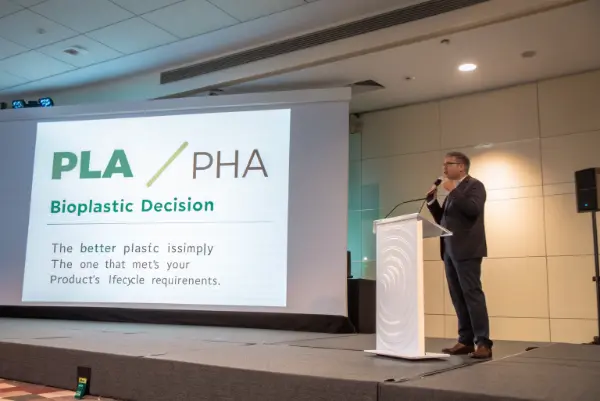
PLA is the better option if your priority is cost reduction, rigidity, and industrial compostability, making it ideal for packaging and 3D printing. PHA is the better option if you need marine biodegradability, flexibility, or are targeting a premium market willing to pay for superior environmental performance. The “better” plastic is simply the one that meets your product’s lifecycle requirements.

Scenario A: The Packaging Designer

If you are designing a clear clamshell container for strawberries:

  • Choose PLA.
  • Why? You need transparency. PLA is naturally clear; PHA is often hazy or opaque. You need low cost because margins on fruit are thin. You need rigidity to protect the fruit. The disposal method is likely a recycling bin or industrial compost.

Scenario B: The Agricultural Product

If you are designing a mulch film or a plant pot that goes into the ground:

  • Choose PHA.
  • Why? You want the farmer to till the plastic into the soil. PLA will not break down in the field; it will just sit there. PHA will become soil food. The labor savings of not having to remove the plastic justifies the higher material cost.

Scenario C: Consumer Electronics

If you are designing a mouse shell or a headphone casing:

  • It depends.
  • PLA is risky because of heat (leaving it in a car). You would need a high-heat PLA blend.
  • PHA might be too expensive, but it offers a nice “soft touch” feel without needing a TPE overmold.
  • My Advice: A practical approach is to blends. We are seeing more PLA/PHA blends now. This gives you the lower cost of PLA with the improved toughness and biodegradability of PHA.

Final Checklist for Decision Making

Before you send me your CAD files, ask yourself these three questions:

  1. Where does it die? (Compost facility = PLA is okay. Ocean/Soil = Must be PHA).
  2. What is the budget? (Low budget = PLA. Premium budget = PHA).
  3. Does it need to bend? (Rigid = PLA. Flexible = PHA).

Separate Feedstock Origin From End-of-Life Behavior

Bio-based describes where carbon comes from; biodegradable describes conversion under defined environmental conditions; compostable adds criteria for disintegration, biodegradation and compost quality in a specified system. PLA and PHA can both be bio-based, but grades, blends and additives alter end-of-life behavior. A molded article should not be advertised as disappearing in nature merely because its base polymer belongs to one of these families.

Use PLA When Rigidity and Processing Availability Lead

Commercial PLA compounds can provide good stiffness, clarity or surface quality and are widely available for prototypes, packaging and selected molded products. Their common limitations include low heat resistance without crystallization or modification, notch sensitivity, hydrolysis during processing and possible brittleness. Drying, melt history, mold temperature and crystallization strategy should be matched to the exact grade and required cycle.

Use PHA When Its Grade-Specific Property Set Adds Value

PHA is a family produced through biological processes, not one uniform resin. Some grades are flexible or tough, while others behave more like rigid thermoplastics. Heat stability, narrow processing windows, odor, cost and supply consistency can be project constraints. Buyers should request current mechanical, thermal, aging and processing data for the specific PHA formulation rather than extrapolating from a general biodegradability claim.

Compare Molded Performance After Conditioning

Test tensile or flexural behavior, impact, creep, dimensions and appearance after realistic heat and humidity exposure. Thin clips, weld lines and loaded bosses often reveal differences that standard dry-state datasheets hide. If annealing or controlled crystallization is used for PLA, measure the resulting dimensional change. For PHA, confirm residence-time and thermal-degradation limits on the intended machine and runner system.

Design the End-of-Life Claim Around a Real System

Identify whether the product will reach an industrial composting facility, home compost, anaerobic digestion, recycling, landfill or uncontrolled environment. Confirm that the complete article—including color, label, adhesive and residue—fits the relevant test and collection route. Where facilities are limited, qualify the claim clearly and provide disposal instructions that users can actually follow.

PLA vs PHA: Design and Validation Checklist

  • Define stiffness, impact, heat, moisture, chemical exposure and product lifetime.
  • Compare exact PLA and PHA grades, including blends, colorants and additives.
  • Validate drying, melt stability, mold temperature, crystallization and cycle behavior.
  • Test molded features after representative conditioning, aging and assembly load.
  • Tie every compostable or biodegradable claim to a method, condition and collection route.

Authoritative Reference Points

Frequently Asked Questions

Does PLA biodegrade in a normal landfill?

Do not assume so. Temperature, moisture, oxygen and microbial conditions differ from controlled composting, and disposal claims must match verified conditions.

Is PHA generally more flexible than PLA?

No. Both are material families with multiple grades and compounds. Compare exact-grade modulus, impact, heat and aging data.

Can PLA and PHA run in the same mold?

Possibly for trials, but shrinkage, viscosity, venting, gate, cooling, crystallization and dimensions may differ enough to require tooling or process changes.

Conclusion

To summarize, both materials have their place in modern manufacturing. PLA is your affordable, rigid choice for industrial composting applications, while PHA is the premium, versatile choice for true soil and marine biodegradability. As a designer, understanding these differences allows you to build products that are not just “green,” but functional and profitable. At CKMOLD, we are ready to help you mold either one.


Facebook
Twitter
LinkedIn

Request A Quote for Your Projects!

Hi there! I’m Jerry, a proud dad and passionate at CKMOLD. With years of hands-on experience in the injection mold and CNC industry, I’ve grown from managing the smallest details on the shop floor to leading international projects with clients across Europe and the U.S.

At CKMOLD, we specialize in precision molds, plastic parts, and CNC solutions that help bring bold product ideas to life. I love solving complex challenges, building long-term partnerships, and pushing the limits of what great manufacturing can do.

Let’s connect, exchange ideas, and grow together—whether you’re looking for a reliable manufacturing partner or just want to talk shop!

Start with the Project Basics

Use this short form for a general inquiry. For a quotation, complete the full RFQ and email any 3D/CAD files separately to jerry@ckmold.com.

Wait, We Have Something Special for You!

Join our mailing list and receive a 10% discount on your next mold or CNC project.