
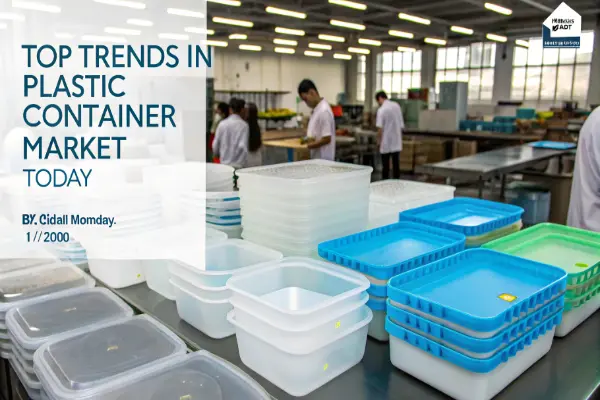
Plastic containers are everywhere, but the market is shifting fast. If you ignore these changes, your products might fall behind your competitors. Changing rules and picky buyers make it tough to know what to produce. But learning what different regions want solves this problem. You can make smart choices that save money and win customers.
The top plastic container market trends show strong volume growth in the Asia-Pacific region, while North America and Europe focus on sustainability. Globally, design preferences are shifting toward lightweight, reusable, and easy-to-recycle formats. Consumers want practical features like microwave safety, BPA-free materials, and space-saving shapes. At the same time, governments are demanding less waste.
Let’s break down exactly what is happening in the global market right now. When you understand these regional demands and design shifts, you can make much better choices for your business. I want to share what I see happening on the ground.
How Is the Asia-Pacific Region Driving Volume Growth?
Trying to scale up your production? It is hard to know where the real demand is coming from. If you look in the wrong places, you waste money and time. Asia-Pacific is where the volume is exploding right now. Knowing this helps you target the right buyers.
The Asia-Pacific region is experiencing the fastest growth in the global plastic container market. This boom is driven by high beverage consumption, rapid urbanization, and massive demand for everyday food packaging. This area currently holds nearly half of the global market share and will continue to lead the world in pure volume.
When I look at the numbers, the Asia-Pacific region is truly the giant of the plastic container industry. If you want to sell in high volumes, this is the place to watch. The demand here is pushed by a growing middle class. More people have money to spend on packaged goods, drinks, and convenience foods.
Every day, millions of people in this region buy bottled water, sodas, and ready-to-eat meals. All of these products need safe, cheap, and reliable plastic containers. Because of this, beverage bottles remain extremely important. PET plastic continues to dominate the beverage sector because it is clear, strong, and easy to mold. High-density polyethylene (HDPE) is also gaining a lot of ground for thicker containers like milk jugs and shampoo bottles.
I spend a lot of time thinking about how to produce things efficiently. In the Asia-Pacific market, efficiency is everything. Because the volume is so high, even a tiny drop in production cost makes a huge difference. Buyers here want massive orders delivered quickly. They care deeply about cost and lead time. If you run a manufacturing business, you know how hard it is to keep up with that kind of pace.
But it is not just about cheap bottles anymore. Even in this high-volume market, buyers are starting to ask for better quality. They want containers that do not leak, look good on the shelf, and keep food safe. This means your injection molds must be perfect. If your tooling is bad, your high-volume run will be full of defects. So, to win in Asia, you need speed, volume, and consistent quality all at once.
Why Are North America and Europe Focused on Sustainability?
Throwaway plastics are losing favor fast. If you keep making old-school single-use containers, western buyers will look elsewhere. This can hurt your sales. But adapting to new eco-friendly standards opens exciting new doors for your business.
North America and Europe are heavily focused on sustainable and recyclable plastic containers. North American buyers prefer eco-friendly materials mixed with high convenience. European markets are driven by strict environmental laws that push for circular designs, mandatory recycled content, and biodegradable materials to reduce plastic waste.
In North America, the story is all about balancing convenience with going green. People still want their food delivered fast, and they want their packages easy to open. But they also want to feel good about what they throw in the trash. I notice that e-commerce is a huge driver here. When you order food or products online, it comes in a container. Buyers want those containers to be reusable or easy to recycle. The narrative in the US and Canada emphasizes eco-friendly materials and brand differentiation. Companies want their packaging to say, "We care about the earth."
Europe takes this a step further. In Europe, it is less about what the consumer wants and more about what the law demands. Strict environmental regulations are changing the whole game. Governments are forcing companies to use a certain percentage of recycled content in every new bottle or box. They are pushing hard for circular designs. This means a container must be easily turned back into a new container when it is done.
The Rise of Bioplastics
Because of these rules, technological advancements in bioplastics are gaining traction. Bioplastics are made from plants instead of oil. They are becoming a real alternative to traditional plastic materials.
If you want to sell to Europe or North America, you have to rethink your materials. You cannot just use the cheapest plastic anymore. You have to design for compliance. This means making containers that are easy to wash, easy to sort at the recycling plant, and safe for reuse. It is a big challenge, but it is also a great way to stand out.
What Do Emerging Markets Want in Plastic Containers?
Focusing only on the US, Europe, and Asia limits your growth. Missing out on emerging markets means leaving money on the table. Every region has unique problems to solve. Knowing what these growing regions need can give you a fresh edge.
Emerging markets like Latin America and the Middle East have very specific needs for plastic containers. In Latin America, rapid urbanization increases the demand for highly durable, convenient packaging. In the Middle East, there is a growing interest in strong, airtight plastic containers to preserve food in hot climates.
Let us look at Latin America first. Cities are growing fast. More people are moving away from farms and into urban areas. When people live in cities, they buy more packaged goods from stores instead of growing their own food. This urbanization means a huge spike in demand for convenient plastic containers. But these containers must be durable. The supply chains in Latin America can be rough. Roads might be bumpy, and products might be handled roughly. The packaging needs to survive the trip from the factory to the store shelf without breaking.
Now, look at the Middle East. The climate is very hot and dry. Food spoils quickly if it is not protected. Because of this, I see a strong, growing interest in airtight plastic containers. Food preservation is the top priority here. Buyers want heavy-duty seals. They want containers that block out air and moisture completely.
The Importance of Supply Chain Features
In both of these regions, industrial and commercial users have specific demands too. They prefer containers with standardized dimensions. They need chemical resistance and extreme durability. They also want tracking-friendly features.
For example, many buyers now want flat spaces on the container where they can stick a barcode or an RFID tag. This helps them track the container as it moves through automated supply chains. If you are designing containers for these markets, you must think about how the box travels, not just how it looks.
What Are the Latest Design Preferences for Plastic Containers?
A bad container design hurts your brand. If your packaging is heavy, ugly, or hard to use, customers will complain. Your sales will drop. Upgrading your design keeps your products selling fast and keeps you ahead of the pack.
The latest design preferences focus on lightweighting, stackability, and consumer safety. Manufacturers are making container walls thinner to save material while keeping structural strength. Consumers also strongly prefer BPA-free, microwave-safe, and freezer-safe options. Finally, attractive aesthetics are critical for building brand recognition on store shelves.
Design is where the magic happens in this industry. Globally, customization and design innovation are the most important trends right now. The biggest priority across all regions is "lightweighting." This means making the container as light as possible without making it weak.
Why do we do this? First, plastic costs money. Less plastic means less cost. Second, shipping heavy things costs more fuel. Lighter containers save money on freight. Third, it helps with sustainability goals. To do this, engineers reduce the wall thickness of the container. But they add clever structural ribs to keep the box strong. This requires incredible precision in your injection molds. If your mold is slightly off, the thin wall will fail.
Health and Space Savings
Health-conscious consumers in developed regions are also forcing a big shift. People are worried about chemicals leaking into their food. Because of this, there is a massive shift toward BPA-free plastic containers. Buyers want clear safety labels. They want to know they can put the container in the microwave or the freezer without any danger.
Space is another big issue. The demand for lightweight and stackable designs is increasing fast. Consumers want space-saving solutions for their small kitchens. Stores want stackable designs so they can fit more products on a shelf.
Packaging aesthetics are also becoming more critical. Companies want their boxes to look premium. A beautiful design enhances brand recognition. If your container looks cheap, people think the product inside is cheap. Good design fixes that.
How Can Manufacturers Adapt to These Changing Demands?
Changing your production line is scary. If you guess wrong, you lose time and a lot of money. You might buy the wrong machines. But making smart, data-driven updates keeps your factory busy, profitable, and ready for the future.
Manufacturers can adapt by using advanced injection molding and flexible tooling. You should focus on creating lightweight designs and testing new bioplastics. By standardizing container dimensions and improving your mold quality, you can cut costs, reduce material waste, and meet global sustainability demands easily.
So, how do you actually keep up with all these trends? It all comes down to how you make the product. I know from experience that your final product is only as good as the tools you use to make it.
If you want to create these new, thin-walled, lightweight containers, you need fantastic injection molds. You cannot use old, worn-out tools. You need high-precision CNC machining to cut the molds perfectly. When the mold is perfect, the plastic flows evenly. This prevents weak spots in your containers. At CKMOLD, we always say that you need to master molding right. Getting the foundation perfect saves you endless headaches later.
Steps to Stay Ahead
Here are a few practical steps you can take:
- Invest in better tooling: High-quality molds allow you to run faster cycles and make thinner walls.
- Test new materials: Start running trials with recycled PET or bioplastics. Learn how they behave in your machines before your clients demand them.
- Standardize your sizes: Create designs that stack perfectly. This makes shipping cheaper for you and your customer.
- Add smart features: Design flat areas for RFID tags and barcodes.
If you are tracking the market for business planning, remember this simple split. Asia-Pacific means volume growth. North America means convenience mixed with sustainability. Europe means regulation-driven circular packaging. If you tailor your manufacturing to fit these specific needs, you will always have eager buyers waiting for your products.
The plastic container market is growing, but what buyers want depends on where they live. Asia wants high volume, Europe demands strict recycling, and the Americas want convenience and durability. To win, you must focus on lightweight, stackable, and safe designs. By upgrading your tooling and understanding these regional trends, you can produce better containers and grow your business faster.