
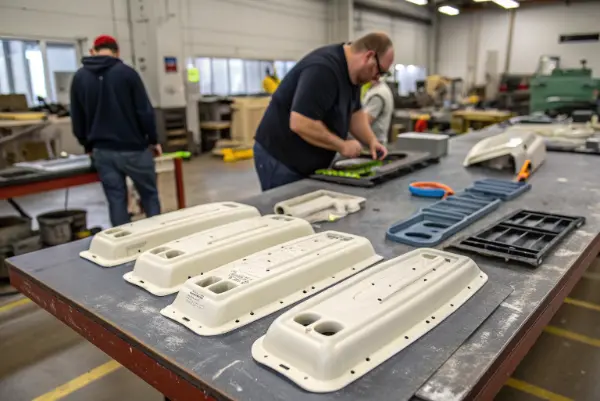
Are you a product designer struggling to get your plastic parts made correctly? You spend weeks perfecting a design in CAD, only for the manufactured part to have sink marks, warping, or other defects. It’s frustrating when your vision doesn’t translate reliably into a physical product, leading to costly rework and project delays. You need a clear guide to bridge the gap between your design and the final molded part.
A dependable injection molding program moves through evidence gates rather than jumping from CAD to steel. Product requirements, DFM, material selection, mold architecture, trial strategy, quality approval and production readiness should each close specific risks. This stage-gate approach keeps engineering, purchasing and the toolmaker aligned on what is approved and what remains open.
Related engineering resources: DFM analysis | mold design | production injection molding
Injection molding is a manufacturing process for producing parts by injecting molten material into a mold. First, plastic pellets are melted and then forced under high pressure into a custom-made mold cavity. The plastic cools and solidifies, taking the shape of the cavity. Finally, the mold opens, and the finished part is ejected. This process is ideal for mass-producing identical parts with high precision, making it one of the most common methods for manufacturing plastic components.
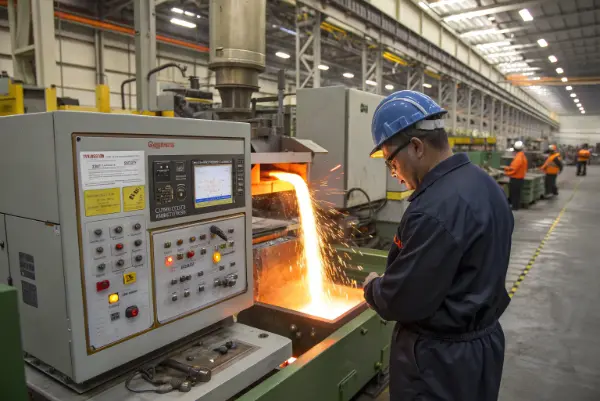
What exactly is the injection molding process?
You’ve finalized your design, but now you have to turn that digital file into thousands of physical parts. The manufacturing process seems like a black box, and you’re worried about things going wrong. If you don’t understand the key steps, you can’t anticipate potential problems or communicate effectively with your manufacturing partner. This lack of knowledge can lead to costly mistakes and delays that put your project at risk.
The injection molding process consists of four main stages: clamping, injection, cooling, and ejection. First, the two halves of the mold are securely closed by a clamping unit. Then, molten plastic is injected into the mold cavity under high pressure. The plastic is held in the mold during a cooling phase until it solidifies. Finally, the mold opens, and the part is pushed out by ejector pins. This cycle repeats rapidly to produce a high volume of parts.
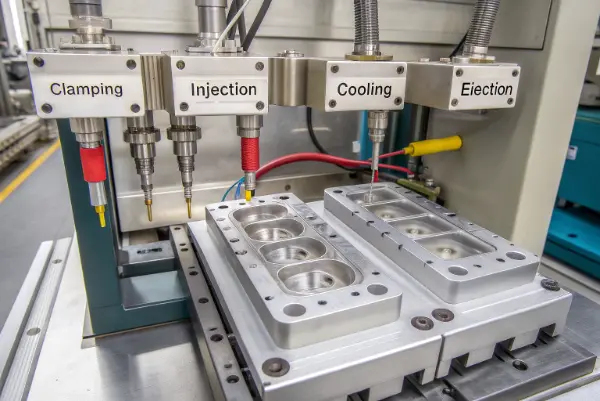
To really master part design, you need to understand what happens inside the machine. It’s not magic, it’s a precise sequence of events. I generally tell designers to think about this cycle when they are working. Visualizing how the plastic flows, cools, and is ejected will help you make better design decisions.
The Clamping Stage
Before any plastic is injected, the machine has to prepare the mold. A mold has two halves: the “A-side” or cavity side, and the “B-side” or core side. The clamping unit is a powerful hydraulic or electric press that pushes these two halves together with immense force. We measure this force in tons. The amount of clamping force needed depends on the size of the part and the pressure of the injection. If the clamping force is too low, the injection pressure can force the mold halves apart, causing molten plastic to leak out. This creates a defect called “flash.”
The Injection Stage
This is where your part starts to take shape. Raw plastic material, usually in the form of small pellets, is fed from a hopper into a barrel. Inside the barrel, a large reciprocating screw melts and mixes the plastic pellets using both heat and friction. As the screw turns, it moves the molten plastic toward the front of the barrel. When enough melted plastic is ready, the screw acts like a plunger, rapidly pushing the material through a nozzle and into the mold. The pressure and speed of this injection are critical for filling the mold completely and capturing all the fine details of your design.
The Cooling Stage
Once the mold is filled, the cooling stage begins. This is often the longest part of the entire cycle. The molten plastic must cool down and solidify into its final shape. Molds are built with internal cooling channels where a fluid, usually water, circulates to draw heat away from the plastic. The cooling time depends on several factors:
- The type of plastic used.
- The wall thickness of the part (thicker walls take much longer to cool).
- The temperature of the mold.
If a part is ejected before it’s fully cooled, it can warp or deform. This is why consistent wall thickness is so important in part design.
The Ejection Stage
After the part has cooled and solidified, the clamping unit opens the mold. A system of ejector pins on the “B-side” of the mold then pushes forward to release the part from the cavity. Sometimes, compressed air is also used to help release the part. The part falls into a collection bin, and the mold closes again to start the next cycle. The whole process can take anywhere from a few seconds to a couple of minutes, depending on the part’s size and complexity.
How do you design parts for successful injection molding?
You’ve created a functional and aesthetically pleasing design, but you’re worried it might not be manufacturable. You’ve heard about things like draft angles and sink marks but aren’t sure how to apply these rules to your specific part. Designing without considering the manufacturing process can lead to parts that are impossible to produce or are full of defects, wasting both time and money. It’s a common headache for even experienced designers.
To design for successful injection molding, you must follow key principles. Maintain a uniform wall thickness to prevent sink marks and warping. Add a draft angle (typically 1-2 degrees) to all vertical faces so the part can be easily ejected from the mold. Use generous radii on all corners to improve plastic flow and reduce stress concentrations. Finally, carefully manage undercuts, as they require complex and costly mold mechanisms. These rules ensure a smoother manufacturing process and higher-quality parts.
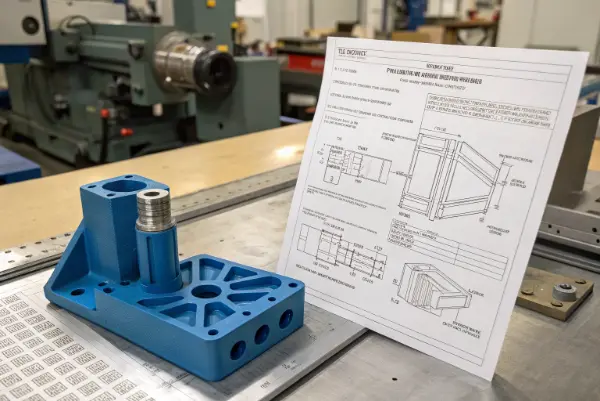
Uniform Wall Thickness
This is the single most important rule in plastic part design. When molten plastic cools, it shrinks. If one section of your part is much thicker than another, the thick section will cool slower and shrink more. This differential shrinkage pulls on the surrounding material, causing defects like sink marks (small depressions on the surface) or warp (the part twisting out of shape).
- Goal: Keep wall thickness as constant as possible throughout the part.
- Best Practice: If you must have variations, make the transition gradual.
- Tip: “Core out” thick sections to create hollow ribs, which add strength without creating thick masses of plastic.
Draft Angles
Imagine trying to pull a suitable cube out of a tight-fitting box. It creates a vacuum and scrapes along the sides. A draft angle is a small taper applied to the vertical walls of your part, making it slightly wider at the top (parting line) than at the bottom. This allows the part to release cleanly from the mold during ejection without drag marks or damage.
| Surface Texture | Recommended Minimum Draft Angle |
|---|---|
| Polished (SPI A1-A3) | 0.5 degrees |
| Light Matte (SPI B1-B3) | 1.0 – 1.5 degrees |
| Light Texture (MT-11010) | 2.0 degrees |
| Medium/Heavy Texture | 3.0 – 5.0+ degrees |
Even a small draft angle of 1 degree can make a huge difference. The deeper the part, the more important the draft angle becomes.
Corner Radii (Fillets)
Sharp internal corners are a major problem in injection molding. They create stress concentrations in the part, making it weak and prone to cracking. They also make it difficult for the molten plastic to flow smoothly, potentially leading to incomplete filling of the mold.
- Rule of Thumb: The inside radius should be at least 0.5 times the wall thickness.
- Ideal Scenario: The outside radius should be the inside radius plus the wall thickness (Outside Radius = Inside Radius + Wall Thickness). This helps maintain that all-important uniform wall thickness.
Adding generous radii not only strengthens your part but also improves the mold’s longevity by reducing wear on the tool steel.
Undercuts and Side-Actions
An undercut is any feature that prevents the part from being directly ejected from the mold, like a snap-fit clip or a side hole. These features require a more complex mold with “side-actions” or “lifters”—moving parts within the mold that slide in to form the feature and then slide out before ejection. While undercuts are often necessary for functionality, they significantly increase the cost and complexity of the mold. Generally ask yourself: is this undercut absolutely necessary, or can I achieve the same result with a different design?
What are the best materials to use for injection molding?
Choosing the right plastic for your part feels overwhelming. There are thousands of options, each with a different set of properties and costs. If you pick the wrong material, your product could fail in the field, costing your company its reputation and money. You need a simple way to navigate the options and select a material that meets your design requirements for strength, flexibility, temperature resistance, and budget.
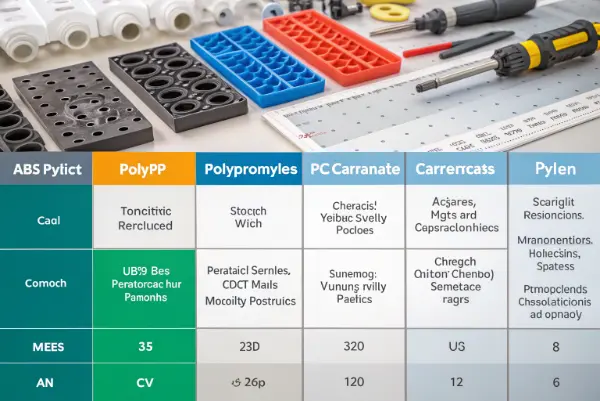
The best material depends entirely on your application. For consumer products, ABS is a great all-around choice due to its toughness and good surface finish. For low-cost, high-volume items like containers, Polypropylene (PP) is ideal because of its chemical resistance and flexibility. For parts requiring high strength and heat resistance, like gears or automotive components, Polycarbonate (PC) or Nylon (PA) are excellent options. Generally evaluate your specific needs against the material’s properties.
Commodity Plastics
These are the workhorses of the injection molding world. They are produced in high volumes and are generally inexpensive and easy to process.
- Polypropylene (PP): Known for its excellent chemical resistance, fatigue resistance (think living hinges on a bottle cap), and low cost. It’s a semi-crystalline material, which makes it tough but also prone to higher shrinkage.
- Common Uses: Food containers, packaging, automotive parts, living hinges.
- Polyethylene (PE): Comes in various densities (LDPE, HDPE). It’s very flexible, has good chemical resistance, and is an excellent electrical insulator.
- Common Uses: Plastic bags, bottles, toys, containers.
Engineering Plastics
These materials offer superior mechanical and thermal properties compared to commodity plastics. They are used when parts need to withstand more demanding conditions.
- Acrylonitrile Butadiene Styrene (ABS): This is one of the most popular plastics for a reason. It offers a great balance of strength, toughness, and surface finish. It’s easy to paint or plate, making it ideal for consumer electronics and automotive interiors.
- Common Uses: LEGO bricks, keyboard caps, electronics housings, car dashboards.
- Polycarbonate (PC): Incredibly strong and impact-resistant. It’s also transparent, making it a great replacement for glass in many applications. It can be difficult to process and is susceptible to scratching without a hard coat.
- Common Uses: Eyeglass lenses, safety shields, CDs/DVDs, water bottles.
- Nylon (Polyamide, PA): Known for its excellent strength, high-temperature resistance, and low-friction properties. It’s often used for mechanical parts like gears and bearings. A key consideration is that it absorbs moisture, which can affect its dimensional stability.
- Common Uses: Gears, bearings, zip ties, engine components.
Here is a simple table to help you compare them:
| Material | Key Strengths | Common Weaknesses | Relative Cost |
|---|---|---|---|
| Polypropylene (PP) | Low cost, flexible, chemical resistant | Low strength, high thermal expansion | $ |
| ABS | Tough, good surface finish, easy to process | Poor UV and chemical resistance | $$ |
| Polycarbonate (PC) | Very high impact strength, transparent | Prone to scratching, requires high processing temps | $$$ |
| Nylon (PA) | Strong, heat resistant, low friction | Absorbs moisture, can be difficult to mold | $$$ |
When selecting a material, generally start with your product’s requirements. What is the most important property? Is it strength, flexibility, cost, or something else? Answering that question will narrow down your choices significantly.
How can you avoid common defects in injection molded parts?
Your first batch of molded parts has arrived, but they’re not suitable. You see sink marks over the ribs, some parts are warped, and there’s thin, unwanted plastic “flash” along the edges. It’s frustrating to see these flaws after all the work you put into the design. These defects can lead to part rejection, project delays, and difficult conversations with your supplier. You need to know what causes these issues so you can prevent them in your next design.
To avoid common defects, focus on DFM (Design for Manufacturability). Prevent sink marks and warp by using uniform wall thickness and coring out thick sections. Eliminate flash by ensuring your part’s parting line is flat and simple. Avoid short shots (incomplete parts) by designing for smooth plastic flow with proper radii and avoiding very thin sections. By addressing these potential issues in the design phase, you significantly reduce the chances of defects during production.
Sink Marks
Sink marks are small craters or depressions on the surface of a part. They are caused by the plastic shrinking as it cools in areas that are too thick.
- Design Cause: Non-uniform wall thickness, especially where ribs or bosses meet a nominal wall.
- Design Solution: Follow the rule that the thickness of a rib should be no more than 60% of the wall it’s attached to. Core out thick areas. Move bosses and ribs away from cosmetically critical surfaces when possible.
Warping
Warping is when a part twists or bends out of its intended shape as it cools. Like sink marks, it’s caused by differential shrinkage.
- Design Cause: Large, flat, unsupported areas or non-uniform wall thickness.
- Design Solution: Add ribs or gussets to increase the stiffness of flat areas. Maintain a consistent wall thickness throughout the part. Ensure the design is symmetrical if possible, as this helps stresses balance out during cooling.
Flash
Flash is a thin layer of excess plastic that seeps out of the mold cavity at the parting line or ejector pin locations.
- Design Cause: A complex or uneven parting line that is difficult for the mold to seal reliably.
- Design Solution: Keep your parting line as flat and simple as possible. Avoid placing textures or features directly on the parting line. This allows the two halves of the mold to clamp together tightly, creating a strong seal.
Short Shots
A short shot is an incomplete part, which happens when the molten plastic doesn’t fill the entire mold cavity.
- Design Cause: Walls that are too thin, long flow paths without proper support, or sharp corners that restrict flow.
- Design Solution: Establish a reasonable minimum wall thickness for your chosen material. Use generous radii on all corners to help the plastic flow smoothly. If you have a long, thin part, consider adding a “flow leader”—a slightly thicker channel—to help the plastic reach the end of the mold.
Here’s a quick reference table:
| Defect | Primary Design Cause | Key Design Solution |
|---|---|---|
| Sink Marks | Thick sections, thick ribs | Keep rib thickness to <60% of wall thickness |
| Warping | Non-uniform walls, large flat areas | Maintain uniform walls, add stiffening ribs |
| Flash | Complex or uneven parting line | Design a simple, flat parting line |
| Short Shot | Walls are too thin, restricted flow | Use adequate wall thickness and corner radii |
By thinking like a mold maker when you design, you can eliminate most of these problems before they even start.
Gate 1: Product and Business Requirements
Freeze the intended function, environment, life, annual and lifetime volume, variants, assembly, appearance, CTQs, compliance needs and target launch. Identify assumptions that still need testing. A quote cannot be compared fairly when suppliers are solving different requirement sets.
Gate 2: DFM and Material Decision
Review walls, ribs, bosses, draft, undercuts, parting, gates, vents, shrinkage, tolerances and assembly. Select an exact resin grade and note drying, mold temperature, wear, color and supply implications. Approve tradeoffs before detailed tooling.
Gate 3: Mold Architecture and Build
Choose cavities, runner, steel, slides, lifters, inserts, cooling, ejection, sensors and maintenance access. Inspect design strength and opening sequence, then control machining, EDM, heat treatment, polishing, texture, fitting and dimensional evidence.
Gate 4: Trial and Product Validation
Use short shots, balance studies, process windows, dimensional reports, appearance masters and functional tests. Close deviations with documented corrections. A visually complete T1 part is a learning sample, not automatically a production approval.
Gate 5: Production and Change Control
Release material handling, process limits, cavity traceability, inspection, SPC, packaging, maintenance, spares and reaction plans. Define approvals for resin, color, machine, tool or design changes. Production readiness includes recovery from normal wear and interruption.
Injection Molding Design and Manufacturing: Buyer Review Checklist
- Freeze product, volume, CTQs, environment, compliance and launch assumptions.
- Approve DFM and exact resin-grade tradeoffs before detailed tooling.
- Review mold architecture, build evidence, maintenance access and opening sequence.
- Use trial data to close dimensions, appearance, function and process margin.
- Launch with traceability, SPC, spares, packaging and change-control rules.
Frequently Asked Questions
Why use stage gates in an injection molding project?
They prevent incomplete assumptions from moving into expensive tooling or production and make ownership of open risks clear.
What should be approved before cutting steel?
Part requirements, material intent, DFM, parting, gate, ejection, surface zones, CTQs, tool architecture and known tradeoffs should be reviewed and documented.
Conclusion
Injection molding is a powerful process, but it has its own set of rules. The key to success is bridging the gap between design and manufacturing. By focusing on principles like uniform wall thickness, draft angles, material selection, and anticipating common defects, you can create parts that are not only well-designed but also easy and cost-effective to produce. This knowledge will make you a more effective designer and a more valuable partner in any product development project.