
PVC injection molding rewards a stable, conservative process window because the material can be sensitive to heat history, shear, residence time and contamination. The exact settings depend on the compound, hardness, color, machine, gate, runner and wall thickness. A robust setup controls the melt path from hopper to cavity and defines what happens during startup, pauses, color changes and shutdown.
For production injection molding, agree the compound and acceptance requirements before trial. Review the runner, vents and thermal-control layout in mold design, and resolve geometry constraints through DFM analysis.
There is no universal PVC machine recipe. Start with the exact compound supplier’s processing sheet, distinguish rigid from flexible formulations and verify actual melt temperature, residence history and the mold response. Release a documented window for the specific grade, tool and machine.
What Are the Four Core Variables in Plastic Processing?
Melt temperature, pressure, flow rate and cooling provide a useful starting framework for process review. They are not an exhaustive recipe or a ranked list of all causes. For PVC, also track the exact compound, shear and residence history, interruptions, contamination and tool condition.
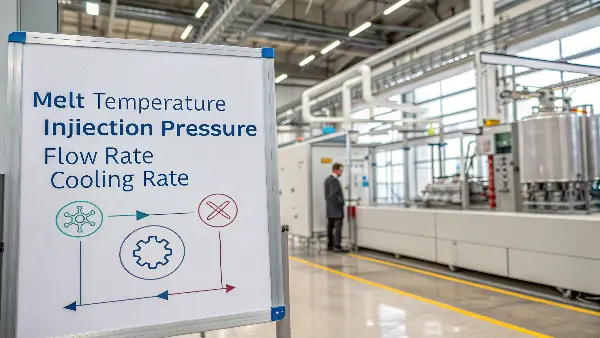
Illustration for the topic; the pictured equipment or components do not establish a PVC grade, validated operating setting or CKMOLD production result.
Track these variables together with resin condition, residence time, machine response and tool condition. No fixed percentage of molding problems can be assigned to four variables without a defined dataset.
1. Melt Temperature
Melt temperature describes the material condition, rather than the barrel-heater setpoint alone. Insufficient heat can contribute to poor filling, while excessive temperature or prolonged residence can degrade PVC. Verify the actual melt using the supplier’s measurement guidance and interpret it with shear and residence history; temperature alone does not identify every short shot or burn.
2. Injection Pressure
Pressure is force per unit area, commonly reported in MPa, bar or psi. Distinguish the machine’s hydraulic pressure from calculated plastic pressure and any measured cavity pressure. Filling and packing are successive control stages, not quantities to add together. Establish transfer and hold from part weight, cavity response and dimensional checks within the compound and equipment limits.
3. Flow Rate
Flow rate is the volume delivered per unit time; injection speed is the screw’s movement rate. Their relationship depends on screw geometry and machine response. Select a profile that fills consistently without unacceptable shear heating, jetting, hesitation or trapped-gas effects. Diagnose the actual defect and flow path before deciding to increase or decrease speed.
4. Cooling
Cooling begins the moment the plastic touches the cooler mold walls and continues until the part is solid enough to be ejected. The cooling time, mold temperature, and cooling channel design all influence this variable. It’s often the longest part of the cycle, so optimizing it can significantly reduce cycle times. For materials like PVC, proper cooling is vital for dimensional stability and preventing warpage.
| Variable | What to record | What to verify |
|---|---|---|
| Melt temperature | Measured melt and heater settings, with stabilized operating conditions | Filling, appearance and thermal history within the compound guidance |
| Pressure | Measurement basis, filling profile, transfer and hold settings | Stable part weight, dimensions, packing and absence of unacceptable flash |
| Flow rate | Injection profile and actual fill time | Flow-front behavior, shear effects, venting and repeatability |
| Cooling | Mold temperature, coolant condition and time to ejection | Ejection, handling and dimensions under the agreed acceptance conditions |
Which Parameters Are Most Critical for PVC Injection Molding?
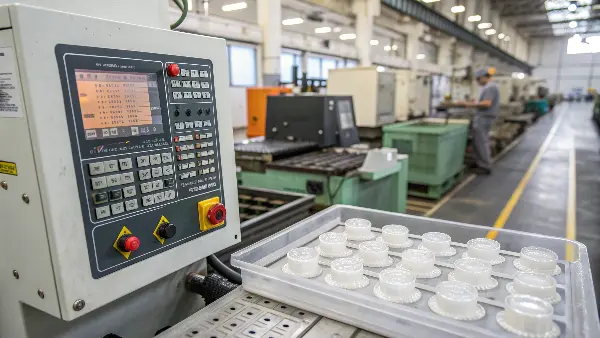
For PVC injection molding, melt temperature and residence time must be controlled together. Use the grade supplier’s melt-temperature recommendation, verify it by measurement rather than heater setpoint alone, and document maximum interruption time plus purge and shutdown rules. Venting and corrosion-resistant machine/tool surfaces are also part of the process plan, but the required construction depends on the compound and exposure.
The Temperature-Time Relationship
PVC is heat-sensitive, so residence time must be calculated from the machine’s usable shot capacity, actual shot mass, cycle and interruption pattern. A shot-utilization percentage is only a screening heuristic: supplier guides differ by compound, and a large barrel or long stoppage can still create damaging dwell time. Record the calculation and define when the barrel must be emptied or purged.
Screw and Barrel Considerations
Confirm the proposed screw and barrel arrangement with the compound and machine suppliers. Suitability depends on geometry, operating conditions, surface protection and the actual formulation; a general-purpose screw is not automatically unsuitable for PVC.
- Screw Design: Confirm compression ratio, L/D, tip and check-valve design with the exact compound and equipment suppliers. Different PVC formulations and guides specify different constructions.
- Material: Specify suitable surfaces or coatings for the compound and expected duty with the equipment supplier. PVC degradation can evolve hydrogen chloride and create corrosion risk; protection does not replace thermal control, cleaning and the approved shutdown procedure.
Mold Venting
This is a frequently overlooked but vital parameter. As PVC is injected, trapped air and any gases from slight degradation need a path to escape.
- Inadequate venting: Restricted escape paths can contribute to compressed-gas heating, burns or incomplete filling. Check the location and cleanliness of vents alongside the filling profile and thermal history; a burn mark alone does not prove PVC degradation or corrosion.
- Venting: Specify entrance depth, land and escape path for the grade and local flow conditions. Measure the as-built vents and verify gas evacuation without unacceptable flash.
| Critical PVC Parameter | Why It’s Critical | Best Practice |
|---|---|---|
| Melt Temperature | Narrow processing window; risk of degradation. | Use the exact supplier sheet, measure the melt, and establish warning and shutdown limits. |
| Residence Time | PVC degrades over time at melt temperature. | Calculate residence time from usable capacity, shot mass and cycle; include interruptions. |
| Screw Design | High shear can burn the material. | Confirm screw geometry and corrosion protection with the compound and equipment suppliers. |
| Mold Venting | Restricted gas escape can contribute to burns or incomplete filling; degradation and corrosion require separate evidence. | Qualify clean, measured vent paths at relevant last-fill areas against flash and part acceptance. |
Establish a Grade-Specific PVC Window
- Freeze the compound code, color and approved regrind rule; obtain the current processing sheet.
- Start conservatively and measure actual melt and mold temperatures after the process stabilizes.
- Use a fill study and pressure/time data to separate flow shortage from venting or thermal degradation.
- Set hold pressure and time from gate-seal and part-weight/dimension studies, not a fixed percentage.
- Challenge the window with planned pauses and define purge, shutdown and restart instructions.
Teknor Apex’s rigid-PVC pellet guide and Alphagary’s flexible-PVC processing guide address different formulations and provide reference starting conditions. Use the exact grade’s current data and qualify the actual setup; do not combine temperatures, pressure percentages or shot-size guidance from different suppliers into one recipe. For a production review, submit the compound data, drawing and current observations through the RFQ process.
Evaluate Shot Utilization, Residence Time and Interruptions
Calculate shot utilization using the machine’s capacity converted to the actual compound basis, then assess residence time from usable melt inventory, shot mass, cycle and interruptions. Utilization alone does not prove first-in, first-out flow or freedom from stagnation.
Confirm cushion and screw recovery against the equipment guidance and stable packing response. Document the compound-specific pause, purge and shutdown procedure; do not apply one 30–70% band or cushion distance to every PVC setup.
Release Process Changes Against Accepted-Part Cost
Evaluate any shorter cycle against accepted yield, degradation, purge, maintenance and inspection. See the PVC cost review for the cost boundary; the process window should remain tied to compound and part evidence.
Confirm Compound and Machine Compatibility
Record the exact PVC compound, hardness, color, additives and supplier guidance. Check barrel capacity, screw design, nozzle, runner, venting and corrosion resistance. A machine that is oversized for the shot can create unnecessary residence time, while a restrictive flow path can increase shear.
Control the Thermal Profile
Use barrel and nozzle settings as a starting point, then verify actual melt condition and stability. Avoid local hot spots and long idle periods. Do not presume a hot runner is suitable: the cited Teknor Apex rigid-PVC guide advises against it for the material covered. Any alternative needs compound and system-supplier qualification of residence, stagnation, startup and purge behavior.
Use Speed and Pressure to Manage Flow
A staged speed profile can reduce jetting, protect appearance and fill thin sections without an abrupt pressure spike. Set transfer and pack from cavity response, weight and dimensions rather than from a generic percentage. Monitor for flash, burn, weld-line weakness and color change.
Keep Vents, Cooling and Ejection Practical
PVC needs a clear path for displaced air and a cooling plan that limits distortion and cycle variation. Dirty vents can cause burns or short shots, while aggressive ejection can mark a soft or warm part. Inspect gates, vents, shutoffs and critical surfaces on a defined schedule.
Define Purge, Pause and Shutdown Rules
Use a compound-appropriate purge and do not leave degraded material in hot zones during a break. Document screw position, temperature reduction, barrel emptying, restart sampling and color-change acceptance. Verify the process with repeat shots after the machine reaches equilibrium.
PVC Injection Molding Parameters: Buyer Review Checklist
- Confirm compound, shot size, screw, nozzle, runner, venting and corrosion needs.
- Control actual melt path temperature, local hot spots and residence time.
- Tune speed, transfer and pack from weight, dimensions, flash and appearance evidence.
- Maintain vents, cooling, ejection and critical mold surfaces.
- Document purge, pause, shutdown, restart and repeatability requirements.
Frequently Asked Questions
Should PVC be molded as fast as possible to reduce residence time?
Not necessarily. Excessive speed can increase shear, air entrapment, flash or appearance defects. Use a staged profile that balances filling, venting and thermal exposure.
What is the best way to set PVC hold time?
Use a weight or gate-freeze study on the actual tool, then confirm dimensions, flash, sink and appearance after the part reaches its defined conditioning state.
Conclusion
Release a documented window for the identified compound, tool and machine. Include measured melt and mold conditions, filling and packing evidence, accepted dimensions and appearance, and pause/restart limits. Preserve trial records so future material, machine or tooling changes trigger the appropriate revalidation.