
Choosing the wrong plastic is a big problem. You design a great mold, but the final part breaks or melts. This wastes time and money. I will show you exactly how to pick the right TPE material. This guide will help you understand every type so your parts come out perfect every time.
Yes, there are many different types of TPE. TPE stands for Thermoplastic Elastomer. It is a large family of materials. They act like soft rubber, but they melt and shape like standard plastic. The main types include SEBS, SBS, TPO, TPV, and TPC. Each type has a different mix of strength, stretch, and heat resistance. You use different types for different jobs. For example, some are for car parts, and others are for soft tool grips.
I remember when I first started working in the mold factory. I was very confused by all these letters. My boss told me to order TPE, and I did not know which one to pick. I made mistakes that cost us money. I want to share my knowledge with you. Let us look at each type closely so you do not make the same mistakes I did.
Are there different types of TPE?
You might think all rubbery plastics are the exact same thing. But using the wrong type of TPE can completely ruin your new design. The parts might melt in the hot sun or snap in the winter cold. Let us look at the main options to keep your project safe and strong.
Yes, the TPE family has several main types. The most common ones are TPS, TPO, TPV, TPU, TPC, and TPA. They all mix a hard plastic part with a soft rubber part. TPS includes SBS and SEBS. TPS is great for very soft grips. TPO and TPV are very tough and work well for car bumpers. TPU is very strong against rubbing. TPC handles very high heat. You must pick the one that fits your exact need.
Breaking Down the TPE Family
When I talk to product designers, they always ask me how to tell these materials apart. I like to keep things simple. Think of TPE as a big team. Every team member has a special job. TPE is not just one thing. It is a mix of two things. It has hard plastic blocks and soft rubber blocks. The hard blocks give the part its shape. They let you melt the material in a molding machine. The soft blocks make the part stretchy and flexible.
If you put more hard blocks in the mix, the material gets stiff. If you put more soft blocks, the material gets soft and squishy. I learned this the hard way. I once tried to use a very soft TPE for a hard tool case. The part came out looking like wet noodles. It was a bad day at the factory.
As a mold designer, you must care about the type of TPE because of shrinkage. Every type of TPE shrinks a different amount after it cools down in the mold. If you do not know the exact type, you cannot calculate the right mold size. Your parts will be too small or too big.
| TPE Type | Common Name | Best Feature | Typical Use |
|---|---|---|---|
| TPS (SBS) | Styrenic Block Copolymer | Cheap and very easy to shape | Shoe soles, indoor toys |
| TPS (SEBS) | Hydrogenated Styrenic | Excellent weather resistance | Outdoor tool grips, window seals |
| TPO | Thermoplastic Olefin | Very stiff and takes paint well | Car bumpers, dashboard parts |
| TPV | Thermoplastic Vulcanizate | Great heat and oil resistance | Car engine hoses, seals |
| TPU | Thermoplastic Polyurethane | Very hard to scratch or wear down | Phone cases, roller skate wheels |
| TPC | Thermoplastic Copolyester | Handles very high temperatures | High-heat engine covers |
You can see from the table that you have many choices. You need to look at your product requirements first. Think about where the customer will use the product. Will it be hot? Will it be outside? This helps you pick the right TPE team member.
What is the difference between SEBS and SBS?
Trying to choose between SEBS and SBS is very tricky. If you pick SBS for an outdoor part, it will turn yellow and break down quickly. This wastes money and makes your customers angry. Knowing the real difference fixes this problem fast and saves your project.
The biggest difference is how they handle the sun and weather. SEBS is made by adding extra hydrogen to SBS. This extra step makes SEBS very strong against sunlight, hot heat, and bad weather. It lasts a long time outdoors. SBS is much cheaper and easier to mold, but it breaks down fast in the sun. You should use SBS for indoor things like cheap shoe soles. You should use SEBS for outdoor things like garden tool grips.
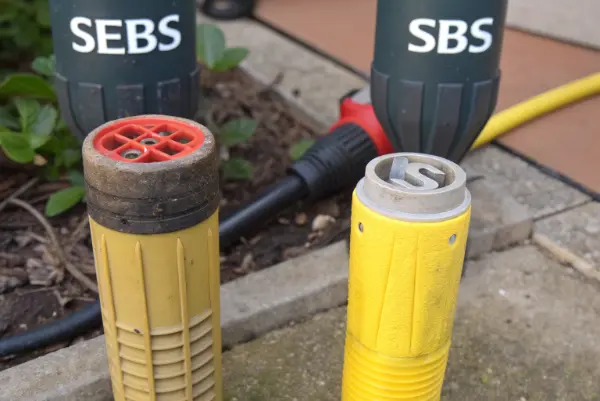
The Chemical Magic of Hydrogenation
Let me explain this in a very simple way. Imagine SBS as a fence with many open gates. When oxygen and sunlight hit the fence, they go right through the open gates. They attack the material and break it apart. This is why SBS turns yellow and gets brittle outside. The chemical term for these open gates is double bonds. SBS has many double bonds.
Now, let us look at SEBS. To make SEBS, the factory takes SBS and does something called hydrogenation. They add hydrogen gas to the material. The hydrogen closes all the open gates on the fence. Now, when the sun and oxygen try to attack, they cannot get in. The material stays safe and strong. This makes SEBS a much better choice for outdoor products.
I remember a client who wanted to save money. He made bicycle handles out of SBS. After one summer, all the handles cracked and fell off the bikes. He had to pay a lot of money to replace them. He learned that cheap material is not always good.
As a mold designer, you also need to know that SEBS flows differently than SBS. SEBS usually needs higher temperatures in the molding machine. It is a bit thicker when it melts.
| Feature | SBS | SEBS |
|---|---|---|
| Weather Resistance | Very poor | Excellent |
| UV Light Resistance | Very poor | Excellent |
| Cost | Low | High |
| Heat Resistance | Low (around 60°C) | Better (up to 100°C) |
| Common Uses | Indoor goods, adhesives | Outdoor tools, medical tubes |
Always check the working environment of your product. If it sees the sun, always pick SEBS. It costs more at the start, but it saves your brand reputation in the end.
Which is better TPV or TPE material?
Many designers get totally stuck here. Standard TPE might melt or lose its shape if the part gets too hot. Your part fails, and your client is very unhappy. TPV offers a much better way to handle high heat and tough oils.
TPV is better than general TPE if you need high heat resistance and good oil resistance. TPV stands for Thermoplastic Vulcanizate. Inside TPV, the soft rubber parts are fully baked and cured, just like a car tire. This makes TPV very tough. It bounces back well after you squeeze it. Standard TPE is better if you need a very soft feel, clear colors, or a lower price. You use TPV under car hoods and TPE for toothbrushes.
When to Upgrade to TPV
I want to talk about bouncing back. In the mold industry, we call this compression set. When you squeeze a piece of rubber, you want it to pop back to its original shape. Standard TPE is okay at this. But if you keep standard TPE squeezed in a hot place for a long time, it stays flat. It does not bounce back. This is a big problem if you are making a water seal. The seal will stay flat and the water will leak.
TPV fixes this problem completely. TPV goes through a special baking process called vulcanization. This bakes the rubber bits inside the plastic. It makes the rubber cross-link. Think of it like cooking an egg. Once you cook an egg, it stays firm. TPV stays firm and bounces back even when it is very hot.
I helped a client design a seal for a dishwasher. At first, we tried standard TPE. The hot water made the TPE flat, and the dishwasher leaked everywhere. We switched to TPV. The TPV seal handled the hot water perfectly and never leaked.
As a mold designer, TPV gives you a small challenge. It does not flow as easily as standard TPE. You need to make your mold gates a little bigger. You also need very good air vents in your mold so the air can escape fast.
| Material | Heat Resistance | Oil Resistance | Compression Set (Bounce Back) | Best Use Case |
|---|---|---|---|---|
| General TPE (TPS) | Low to Medium | Poor | Poor in high heat | Soft touch grips, toys, clear parts |
| TPV | High | Very Good | Excellent in high heat | Automotive seals, hot water seals |
If your part touches hot oil or needs to be a tight seal for many years, TPV is the clear winner. If you just need a soft handle for a consumer product, stick with general TPE.
Which is better, TPO or TPE?
Making large and tough parts is hard. If you use standard TPE, the large part might be too floppy. It will not hold its shape when someone pushes it. TPO is the clear answer when you need a stiffer material that still bends just a little bit.
TPO is better for stiff, strong parts, while standard TPE is better for soft, stretchy parts. TPO stands for Thermoplastic Olefin. It is a mix of rubber and a very stiff plastic like polypropylene. TPO is very tough, resists cold impacts well, and paints easily. This makes it perfect for car bumpers and roofing. General TPE is much softer and stretches a lot more. You use TPO for rigid protection and TPE for comfort.
Strength Versus Softness
TPO is the tough guy of the TPE family. Most standard TPEs are made to feel soft in your hand. TPO is made to take a heavy hit and not break. Think about a car bumper. When a car hits a pole at a low speed, the bumper needs to bend a little bit so it does not crack. But it also needs to be stiff enough to hold its shape on the car. TPO does this job perfectly.
Standard TPE would just flop around on the front of the car. It has no structural strength. TPO has a lot of hard plastic inside it, usually Polypropylene (PP). This PP gives it a strong backbone.
Another great thing about TPO is paint. It is very hard to paint standard TPE. The paint just peels off. TPO is much easier to paint. Car makers love TPO because they can paint the bumpers to match the car body exactly.
I remember designing a mold for a large safety guard on a lawnmower. The client wanted standard TPE so it would not hurt the trees. But the TPE was too weak. Stones from the lawnmower tore right through it. We changed the material to TPO. The TPO guard was stiff enough to stop the stones, but still flexible enough not to break.
For you as a mold designer, TPO is very important to understand. TPO shrinks differently than soft TPE. Because TPO has so much PP in it, it shrinks a lot more. You must make your mold cavities bigger when you use TPO.
| Feature | TPO | General TPE (TPS) |
|---|---|---|
| Stiffness | Very stiff and rigid | Very soft and flexible |
| Impact Resistance | Excellent, even in cold | Good, but part can tear |
| Paintability | Very easy to paint | Very hard to paint |
| Shrinkage Rate | High (similar to PP) | Low to medium |
| Main Application | Car bumpers, large guards | Soft grips, wearable items |
If you need a part to stand up on its own and take a hit, TPO is better. If you need a part to bend in half or feel soft, general TPE is the right choice.
Conclusion
Choosing the right TPE is critical for your product success. You now know that SEBS is for the outdoors and SBS is for the indoors. TPV handles hot temperatures and oil, while TPO gives you stiff strength for large parts. Keep these simple rules in mind, and your next mold design will work perfectly.