
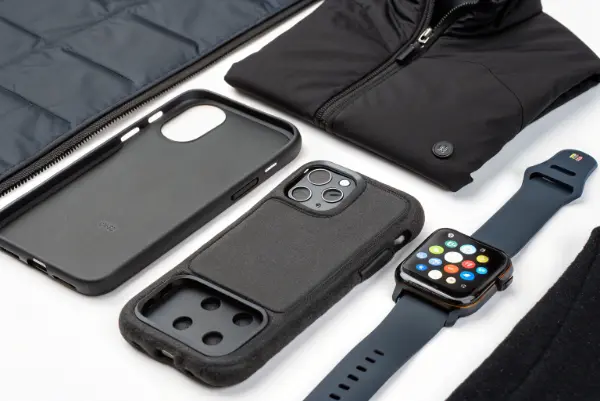
You want to design electronics that feel great in the hand but survive drops. Hard plastics crack easily. Traditional rubber is too slow to mold. You face a big design problem. TPE solves this issue. Thermoplastic elastomers give you the soft touch of rubber with the fast molding speed of plastic.
TPE is widely used in consumer electronics because it combines soft-touch comfort, impact protection, and easy molding. You will see TPE in phone cases, button pads, cable jackets, and smartwatches. It provides a non-slip grip and acts as an electrical insulator. Manufacturers love TPE because they can easily overmold it onto hard plastics like PC or ABS. This makes TPE perfect for both outer protective layers and complex internal components.
I will show you exactly how TPE fits into your daily design work. Let us look at the details so you can make the best choices for your next project.
What are TPEs commonly used for in electronic devices?
You need a material for a smartwatch band. Hard plastic will hurt the user. Silicone takes too much time to cure. TPE is your best choice. It feels great on the skin and processes very fast.
TPEs are commonly used for phone protective cases, smartwatch bands, earbud tips, and TV remote buttons. They provide excellent flexibility and a slip-resistant grip. For internal parts, designers use TPE for cable insulation, plugs, and sockets because it resists moisture and does not conduct electricity. TPE is highly versatile because you can mold it into very complex shapes. It also bonds perfectly with rigid plastics during two-shot molding.
I see many designers struggle to find the right material for wearables. TPE is skin-friendly. This means it will not cause allergies. You can use it safely for fitness trackers and earbuds. In earbud construction, TPE helps achieve ergonomic designs. TPE creates a tight seal inside the ear. This tight seal helps with sound isolation. It blocks out background noise. Consumers love this feature.
You also see TPE everywhere in charging cables. Consumer electronics frequently utilize TPE in cable insulation. Cables must bend thousands of times. TPE gives cables the flexibility they need. It also provides strong electrical insulation. It stops the electrical current from shocking the user. Moisture resistance is another big plus. TPE protects outdoor electronics from rain and sweat. TPE’s water-resistant properties enhance the durability of outdoor and sports electronics.
Let us talk about overmolding. This is where TPE truly shines in a mold factory. You can inject TPE directly over a hard plastic part. This process is called two-shot molding. You do not need glue. The TPE bonds chemically to plastics like ABS or PC. This saves assembly time. It also makes the product much stronger. I remember a client who made power tools. We overmolded TPE onto the tool handle. The tool became much easier to hold. It also absorbed the vibration from the motor. As electronics become more lightweight, the flexible nature of TPE aids in reducing overall device weight.
Here is a breakdown of common TPE applications in electronics:
| Component Type | Specific Application | Why TPE is Chosen |
|---|---|---|
| Outer Protectors | Phone cases, bumper guards | Impact resistance, drop protection |
| Wearables | Smartwatch bands, VR headsets | Skin-friendly, soft-touch finish |
| Internal Parts | Cable jackets, wire insulation | Electrical insulation, flexibility |
| User Interface | Remote control buttons, grips | Slip-resistant grip, easy molding |
What is the difference between TPE and TPU?
You look at a material catalog and feel confused. TPE and TPU seem very similar. Making the wrong choice can ruin your product design. TPU might be too stiff for your needs. We need to clear up this confusion.
The main difference between TPE and TPU is their stiffness and resistance to wear. TPU is actually a specific type of TPE. TPU is much harder, stiffer, and resists scratches better. TPE is generally softer, more flexible, and feels better against the skin. You use TPU for parts that need tough durability, like heavy-duty phone cases. You use TPE for parts that need a soft touch, like earbud tips or comfortable grips.
I get this question from designers all the time. People mix up TPE and TPU constantly. TPE stands for Thermoplastic Elastomer. It is a large family of materials. TPU stands for Thermoplastic Polyurethane. TPU is just one specific member of the TPE family. Think of TPE as a big umbrella. TPU is just one person standing under that umbrella.
TPE blends plastic and rubber. It gives you a very soft, rubber-like feel. It bends very easily. It is lighter in weight. TPU is much more rigid. It handles friction very well. It does not scratch easily. It handles oils and greases better than standard TPE. But TPU does not feel as nice on bare skin. It lacks that smooth, powdery soft touch that standard TPE provides. You choose TPE for wearables and smartwatches because of its comfortable finish.
When you design a mold, you must consider shrinkage. This is very important for a mold designer. TPE and TPU shrink differently inside the mold cavity. TPE usually shrinks more than TPU. You must calculate this mold shrinkage carefully. If you get the mold shrinkage wrong, your parts will not fit together. I always tell my clients to double-check their material data sheets. You must run mold flow simulations. You must design the mold runners correctly to match the specific material.
Let us compare them clearly in a table:
| Feature | TPE (General) | TPU |
|---|---|---|
| Softness | Very soft and flexible | Harder and stiffer |
| Wear Resistance | Moderate | Excellent |
| Skin Contact | Very comfortable, skin-friendly | Less comfortable, can feel sticky |
| Shrinkage | Generally higher | Generally lower |
| Best For | Wearables, grips, soft buttons | Rugged cases, protective gears |
What are the disadvantages of TPE material?
You found a material that feels great. You start full production. Suddenly, the parts lose their shape under pressure. This failure costs your company money. TPE has weaknesses. You must know them to avoid costly mistakes.
The main disadvantages of TPE material are poor heat resistance and a tendency to deform under constant stress. TPE can melt or lose its shape if exposed to very high temperatures for a long time. It also suffers from "creep," meaning it will permanently deform if a heavy load presses on it continuously. Additionally, standard TPE does not resist strong chemicals or heavy oils well. It can also be more expensive than traditional rigid plastics.
No material is perfect. I want you to design with complete confidence. To do that, you must understand the limits of TPE. Heat is a big enemy of TPE. The thermal stability of TPE helps manage heat dissipation in electronic devices. But TPE cannot handle extreme heat. If you put a TPE part near a very hot engine, it will soften. It will lose its mechanical strength. You must keep TPE parts away from major heat sources.
Another big issue is creep. Creep happens when a material stays under a constant load. Think about a heavy metal box sitting on a TPE rubber pad. Over time, the pad will flatten. It will not bounce back to its original shape. You must design your parts so they do not carry heavy structural loads. TPE is for touch and seal. It is not for holding heavy weight.
Cost is another factor you must consider in your project budget. TPE raw materials cost more than standard hard plastics like PP or PE. But TPE saves money in assembly. You can overmold TPE directly onto rigid parts. You do not need to buy glue. You do not need to buy screws to attach a TPE grip. You also need to watch out for certain chemicals. Standard TPE will break down if you wipe it with strong solvents. You must choose the right grade of TPE if your device will face harsh environments.
Here is a table showing the disadvantages and how you can solve them:
| Disadvantage | Why It Happens | How to Solve It in Design |
|---|---|---|
| Poor high-heat resistance | TPE melts at lower temperatures | Keep TPE away from internal heat sinks |
| Material Creep | TPE deforms under heavy pressure | Do not use TPE for load-bearing parts |
| Chemical Sensitivity | Solvents break down the polymer chains | Specify a chemical-resistant TPE grade |
| Higher Material Cost | Complex polymer blending process | Save money by using two-shot molding |
Does TPE degrade over time?
You design a beautiful outdoor device. A year later, the customer complains. The rubbery grip is cracked and faded. Sunlight and weather destroyed your product. TPE can degrade over time. You must plan for this in your design phase.
Yes, TPE degrades over time when exposed to direct sunlight, high heat, and harsh environmental conditions. Ultraviolet (UV) rays from the sun break down the chemical bonds in standard TPE. This makes the material brittle, faded, or sticky. However, you can add UV stabilizers during the manufacturing process to prevent this. While TPE ages slowly under normal indoor conditions, outdoor electronics need special TPE blends to maintain their durability over many years.
I have seen many products fail because designers forgot about material aging. Everything degrades eventually. TPE is no exception. UV light is the biggest danger for outdoor electronics. The UV rays act like tiny knives. They cut the polymer chains inside the TPE. This makes the surface look chalky. It can also make the surface feel sticky to the touch. Customers hate sticky electronics.
To solve this problem, you must work closely with your material supplier. You need to ask for UV-stabilized TPE. These special additives act like sunscreen for the plastic. They block the UV rays from damaging the polymer chains. This is very important for sports electronics and action cameras. You do not want the water-resistant protection to fail after one summer. Temperature changes also cause aging. If a device goes from freezing cold to burning hot repeatedly, the TPE expands and contracts. This thermal cycling causes tiny cracks over time.
Despite these aging issues, TPE has a massive advantage at the end of its life. TPE is highly recyclable. Traditional rubber is a thermoset material. You cannot melt traditional rubber again. TPE is a thermoplastic. You can grind it up. You can melt it down. You can use it to make new parts. TPE is preferred for its recyclable properties. This aligns perfectly with sustainable electronics manufacturing.
Here are the main factors that cause TPE to age:
| Environmental Factor | Effect on TPE Material | Prevention Strategy |
|---|---|---|
| Ultraviolet (UV) Light | Fading, cracking, sticky surface | Add UV stabilizers to the raw material |
| Extreme Heat | Softening, loss of strength | Use high-temperature TPE grades |
| Harsh Chemicals/Oils | Swelling, material breakdown | Choose oil-resistant TPE blends |
| Repeated Bending | Material fatigue, tearing | Increase the corner radius in your CAD design |
Conclusion
TPE is a wonderful material for consumer electronics. It gives your designs a soft touch, great grip, and strong impact resistance. You can use it easily for phone cases, charging cables, and internal waterproof seals. Just remember to account for its limits with high heat and long-term stress. Keep these tips in mind, and your next product design will be a huge success.