
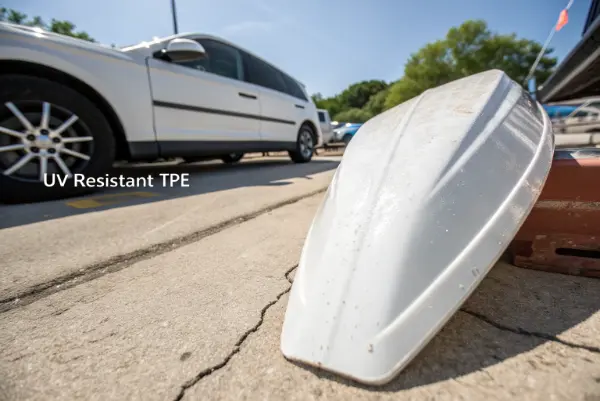
You design a great outdoor product. Sunlight hits it every day. The plastic cracks and fades. Your customers complain. You feel stressed. I know this feeling. I saw many failed plastic parts in my early days at the mold factory. But you can fix this. UV-resistant TPE formulations stop the sun from ruining your hard work.
Yes, UV-resistant TPE formulations offer excellent performance and durability for outdoor applications. Regular TPE can degrade under strong sunlight. But UV-resistant TPE includes special additives like UV absorbers and stabilizers. These chemicals protect the material from sun damage. They prevent fading, cracking, and loss of flexibility. You can use this strong TPE for car parts, boat parts, and outdoor wires. Your outdoor products will last much longer.
Let us talk more about TPE materials and sunlight.
Is TPE material UV resistant?
You pick standard TPE for a project. The sun beats down on it. The material turns yellow. It gets hard and breaks easily. This ruins your product design. You need a better material. Standard TPE needs help to fight the sun.
Standard TPE is not naturally UV resistant. Sunlight quickly damages plain TPE. The sun breaks the chemical bonds in the plastic. This causes cracking and fading. But you can make TPE highly UV resistant. Material makers add UV stabilizers and absorbers into the TPE mix. Sometimes they add carbon black. These additives block the bad sun rays. This special mix makes the TPE very strong against the sun.
Standard TPE needs extra help to survive the sun. The sun shoots strong UV rays at your product. These rays act like tiny knives. They cut the links inside the plastic. We call this photodegradation. I remember a client who made garden tools. They used normal TPE for the grips. The grips crumbled after one summer. They lost a lot of money. They came to me for help. I told them about UV stabilizers.
How We Protect TPE
We add special chemicals to the raw TPE. Think of it like putting sunscreen on your skin. These chemicals do different jobs. Some catch the bad rays. Some fix the broken links.
| Additive Type | How It Works | Best Used For |
|---|---|---|
| UV Absorbers | They drink up the bad sun rays. They turn the rays into harmless heat. | Bright colors and clear TPE parts. |
| HALS (Stabilizers) | They act like tiny doctors. They fix the broken chemical bonds. | Long-lasting outdoor parts like cables. |
| Carbon Black | It blocks the sun completely. It is very cheap and works very well. | Black parts only. It makes everything black. |
The Science of Sun Damage
Sun damage causes discoloration. Discoloration means the color changes. Sun damage causes cracking. Cracking means the part breaks. Sun damage causes hardening. Hardening means the soft rubber turns into hard rock. You must add antioxidants too. Antioxidants stop oxygen from helping the sun damage the part. This keeps the physical shape strong. I always tell my clients to ask for both UV stabilizers and antioxidants. This mix keeps the material soft and strong. You can pull it and bend it. It will not break. Nanotechnology is also new. Tiny particles can protect the TPE even better. This is the future of outdoor plastic. We must learn these tricks to master molding right.
Is TPE good for outdoor use?
You want a soft rubber feel for an outdoor item. Real rubber is hard to process. It takes too much time. You lose money. TPE is fast to process. But is it safe for outside? Yes, the right TPE is perfect for outdoor use.
Yes, TPE is very good for outdoor use if you choose the right formulation. Weatherproof TPE grades handle heat, cold, rain, and intense sunlight. They keep their bright colors. They stay flexible and soft. Outdoor TPE is perfect for car window seals, roof parts, and outdoor cables. You must tell your supplier to add UV protectors and weathering agents. This ensures the TPE will last for many years outside.
You can definitely use TPE outside. It is one of the best choices for modern designs. I use it a lot in my trading company. My clients make car parts and boat parts. The sun is very strong in these places. The water is salty. Standard plastics fail quickly. We must use special outdoor TPE.
Testing for the Real World
We do not just guess if it works. We test it. Good factories use special machines to test the plastic. These machines act like the sun and rain. We call this weathering testing. Sometimes we put the plastic in a hot desert. Sometimes we put it in a wet swamp.
| Test Type | What It Checks | Why It Matters |
|---|---|---|
| Florida Exposure | High heat and high moisture. Strong sun. | Shows if the TPE will rot or mold. |
| Kalahari Exposure | Very dry heat. Very bright sun. | Shows if the TPE will crack or dry out. |
| Tensile Test | Pulling the plastic until it breaks. | Shows if the sun made it weak. |
Picking the Right Mix
You must think about a few things before you choose an outdoor TPE. First, think about the sun intensity. A roof part gets more sun than a side door part. Second, think about the color. Black is the easiest color to protect. We just add carbon black. But customers want bright colors today. So we must use expensive UV absorbers. Third, think about the temperature. TPE must survive freezing winters and boiling summers. We add thermal stabilizers for this. Thermal stabilizers stop heat damage. This creates good thermal stability. Finally, think about bonding. You might need to stick the TPE to a hard plastic like PP. The UV additives must not ruin this sticky bond. I always check the bonding strength after adding the sun protection.
What is the difference between TPO and TPV?
You need a strong plastic for a car bumper. You see many names. TPO and TPV sound the same. You pick the wrong one. The part fails in the cold. Your boss is angry. Let us clear up this confusion easily.
TPO and TPV are both types of TPE, but they have different structures. TPO stands for Thermoplastic Olefin. It is a simple blend of plastic and rubber. It is strong and cheap, good for car bumpers. TPV stands for Thermoplastic Vulcanizate. The rubber inside TPV is fully cured or vulcanized. This makes TPV much more like real rubber. TPV handles high heat and harsh chemicals much better than TPO.
The TPE family is very large. TPO and TPV are two brothers in this family. They do different jobs. I learned this the hard way years ago. I tried to use TPO for a hot water pipe seal. The seal melted. Water leaked everywhere. I should have used TPV. Let me explain the difference to you clearly.
Understanding TPO
TPO is a mix of hard plastic and soft rubber. We usually mix Polypropylene (PP) and EPDM rubber. We just melt them together. We do not cook the rubber. TPO is tough. It resists cold weather well. It is very easy to shape in a mold. Car makers love TPO. They use it for car bumpers and dashboard covers. It is cheap and does a good job.
| Feature | TPO (Thermoplastic Olefin) | TPV (Thermoplastic Vulcanizate) |
|---|---|---|
| Rubber State | Uncooked (Unvulcanized) | Cooked (Vulcanized) |
| Heat Resistance | Moderate (Melts easier) | High (Handles heat well) |
| Rubber Feel | Feels more like plastic | Feels more like real rubber |
| Main Use | Bumpers, large stiff parts | Seals, hoses, hot areas |
Understanding TPV
TPV is special. We mix the same PP and EPDM rubber. But we do a magic trick. We add a chemical to cook the rubber while we mix it. This cooking is called vulcanization. The rubber forms tiny, strong balls inside the plastic. This makes TPV very springy. If you squeeze it, it bounces back quickly. TPV can survive boiling water. It can survive oil. TPV is perfect for car window seals. It is perfect for washing machine hoses. It acts like real rubber but molds like plastic. When you need extreme weather resistance and heat resistance, you choose TPV. It costs a little more, but it never fails in harsh spots.
What is the difference between TPE and EPDM insulation?
You design an outdoor electrical cable. Water and sun will hit it. You choose standard rubber. Making the cable takes too long. Costs go up. You lose profit. TPE and EPDM are your two choices. You must pick the right one.
The main difference is how you process them and their base chemistry. EPDM is a traditional thermoset rubber. You must bake it to set its shape. It offers amazing heat and weather resistance. TPE is a thermoplastic. You can melt it, cool it, and melt it again. TPE processes much faster than EPDM. UV-resistant TPE can match EPDM in weather resistance. TPE is easier to recycle and cheaper to make.
Wires and cables need good skin. We call this skin insulation. Insulation keeps the electricity safe. It keeps the water out. For many years, everyone used EPDM for outdoor cables. EPDM is a great rubber. But my trading company sells a lot of TPE for cables now. The world is changing. You need to know why.
EPDM: The Old King
EPDM is a true rubber. You mix it, shape it, and put it in a giant oven. The oven cooks it. This cooking makes strong chemical bonds. EPDM can sit in the sun for twenty years. It does not care about cold rain. It does not care about hot engines. But EPDM is slow to make. If you make a mistake, you throw the rubber away. You cannot melt it again. This wastes money.
TPE: The New Choice
TPE is different. You do not need an oven. You just melt it and push it over the wire. It cools in seconds. The cable is done. This is incredibly fast. Fast means cheaper.
| Feature | EPDM Insulation | TPE Insulation |
|---|---|---|
| Processing Speed | Very Slow (Needs an oven) | Very Fast (Cools instantly) |
| Recyclable | No (Cannot be melted again) | Yes (Can be melted many times) |
| Weather Resistance | Excellent (Naturally very strong) | Excellent (Needs UV additives) |
| Weight | Heavier | Lighter |
You must remember one rule. TPE needs help to beat EPDM outside. You must use UV-resistant TPE formulations. You add HALS and UV absorbers. You add antioxidants. Then, the TPE acts just like EPDM in the sun. It stays flexible. It does not crack. TPE saves you processing money. TPE saves the earth because you can recycle it. For modern outdoor cables, a highly protected TPE is usually the smarter choice for your factory line.
Conclusion
UV-resistant TPE formulations are powerful materials for outdoor products. They stop sun damage, fading, and cracking. By adding UV absorbers and stabilizers, TPE lasts a long time outside. You can choose TPO for tough parts or TPV for rubbery seals. TPE processes faster than EPDM and saves money. Always match your TPE mix to your specific sun and weather needs.