
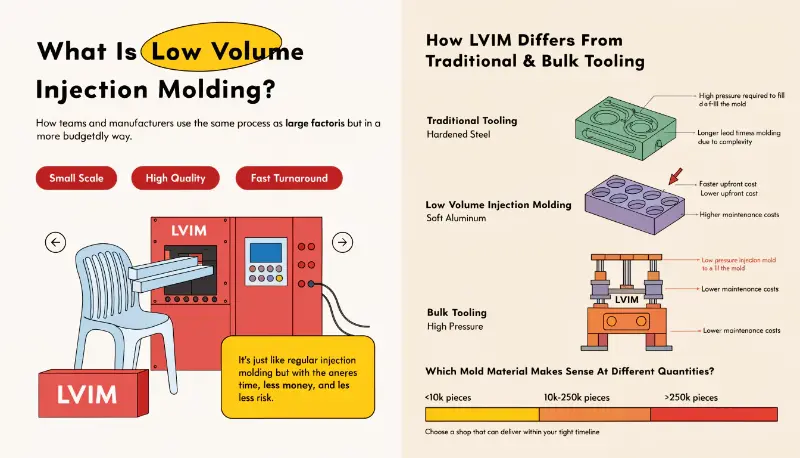
Injection molding is a process to make a lot of parts at once, and when engineers think of it, they consider as a big factory making thousands of the same parts using a strong steel tool. But that’s not the true approach. There is also a way to do injection molding on a smaller scale, which lets teams and manufacturers make products with the same strength, thickness, and quality as bigger productions1. This smaller scale process or method of doing things can be really useful for newly startup businesses2 that want to make high-quality products without consuming lots of money.
This guide covers what low volume injection molding actually is, how it is different from traditional and bulk tooling, and which mold materials make sense at different quantities. It’ll also help you figure out how to pick a shop that can actually deliver on a tight timeline.
What Is Low Volume Injection Molding Process?
The low molding process works with the same machines as regular injection molding, but the mold doesn’t need to be as durable. So it can make a smaller number of parts, like a few dozen or a few thousand, before it needs to be replaced.
You should opt for aluminum or a softer steel tool, or if you’re only making a small batch, use a a 3D printed insert. This method reduces both the cost and the time it takes to get started. When you choose a less costly material, you can save money and get your project up and running much quicker.
The components themselves are not inferior. They are made from the same high-quality resin and are suitable for checking out the products and also tell they fit out as part of a small-scale launch. The difference is that how many times the mold used to create them can be reused before it is no longer usable.
Comparison of Low Volume vs. Traditional Injection Molding
Traditional, high-volume injection molding works by spreading a big upfront tooling cost across a huge number of parts. A hardened steel mold runs $20,000 to $100,000 and takes four to eight weeks to machine. Once you have built it, the cost per part drops fast at scale. That math only holds up if you’re confident you can sell tens of thousands of units.
When you have to deal with low-volume production companies, the whole approach changes. Instead of focusing on keeping costs down for each part, you’re more concerned with the upfront risks. For example, a mold for a short run might only cost a little amount, and you can get it in just a few days.
The real question isn’t which method is “better.” It’s where the product actually Early-stage validation and short runs call for low volume tooling. Confirmed, repeat demand calls for production-grade steel.
How to Define Tooling Options for Low Volume Injection Molding
When it comes to short run molds, there’s no one-size-fits-all solution. The way a mold is built really depends on a few key factors: the material it’s made of, and how many parts you’re looking to produce.
When it comes to short-run injection molding, especially for small batches of under 500 parts, 3D printed mold inserts are a great option. They are not only the fastest way to get started, but also the least expensive. You can get printed resin or metal inserts in just one to three days.
However, it’s worth noting that these inserts don’t last as long as other options when exposed to high pressure and heat. That’s why they work best with easy flow materials, like PP, PE, or TPE. If you’re working with high-temperature engineering resins, you might want to consider a different option. But for simple, low-volume projects, 3D printed mold inserts are a great way to go. You saev time and money, and also get the results you need.
When we discuss small-scale injection molding, aluminum molds are the way to go and are good at getting the job done in no time. Aluminum is great at spreading heat around, which means you don’t have to worry as much about cooling channels. As a result, you can get your products made faster. An aluminum mold can be used a lot of times and can produce anywhere from 500 to 10,000 shots. This makes it suitable for testing out new products. You can use it for limited product launches, and it will still give you great results. Overall, aluminum molds good options who need to make a small batch of products rather than bulk production.
Softer or pre-hardened steel sits between aluminum and full production steel. It costs more than aluminum but survives a longer run and is useful when a client expects to reorder the same part many times over a year without committing to a hardened material
An experienced low volume injection molding shop walks you through this tradeoff before quoting a project.
The Low Volume Injection Molding Process
When it comes to designing parts for manufacturing, especially at low volumes, not possible to check critical things like draft angles, making sure the wall thickness is consistent, and looking out for undercuts.
But this step is so important, as mold fabrication is a method that involves using CNC machining to manufacture an aluminum cavity and core, or it could mean 3D printing a resin insert. Either way, this step tends to be the longest part of the process, but it’s still relatively quick, taking only days rather than weeks as production steel does. The time it takes to complete this step is significantly shorter, which is a major advantage.
Now it’s time for the mold setup and trial shots. The mold is carefully mounted in the press, and then a few test shots are run to get the pressure and cooling time just right. The tooling is simple and you can do any adjustments quickly and easily. This allows for a speedy fine-tuning process.
When the production process is all set, the actual manufacturing begins, and it depends on the size of the parts and the materials used; a company that specializes in making low-scale and bulk production and small batches of plastic parts can usually produce a few hundred parts in just one day.
Where Low Volume Injection Molding Fits Best
Product development and prototyping
Engineers use short run parts to confirm fit, function, and assembly with the actual production material rather than a 3D printed stand-in. This catches warping, shrinkage, and material-specific issues. These issues that a prototype print can’t reveal.
Custom and specialty parts
Some products and special industrial equipment, don’t need to be made in huge quantities – just a few hundred a year. In these cases, creating a super-strong steel tool isn’t usually worth the cost. However, a sturdy aluminum mold can be a good option, as you can use it for many years to make small batches.
Regional products
Products that don’t last forever, or appeal to a small group of people, are better off with production tools that fit their actual sales. This way, they don’t need a huge mold that’s meant for a much bigger scale than they’ll ever need.
Materials Used in Low Volume Injection Molding
The type of material can change how well a part works and how long it lasts, especially when making a small number of parts with a short run tool. This means that the tool life can vary greatly depending on the material chosen, with some materials making the tool last longer.
Polypropylene and polyethylene
When it comes to low volume plastic molding, two materials are considered particularly well-suited: polypropylene (PP) and polyethylene (PE). The main benefit of these materials is that they can flow at relatively low temperatures. It helps to reduce thermal stresses on tooling.
Both polypropylene and polyethylene are good to opt for packaging, housings, and parts of consumer goods, especially when the requirements for high heat resistance are moderate or low. They can meet the needs of these applications without being too expensive. Overall, PP and PE are great options for low volume plastic molding.
ABS
ABS is good for low volume injection molding services, such as prototypes, functional parts, and enclosures. Machines and finishes well after molding, making it suitable for textured or painted exterior parts.
TPE or TPU
When you need something to be flexible or soft, like seals, grips, or gaskets, TPE or TPU is a good choice. These materials can be processed at medium temperatures, when you’re making small batches and don’t have a lot of specialized tools. They’re also pretty forgiving, so even if your tools aren’t suitable, they’ll still produce a decent result.
Nylon (PA) and polycarbonate (PC)
Nylon and polycarbonate are stronger, but they need really high temperatures to be processed. This means that if you’re using a 3D-printed mold or a lightly built aluminum one, it’s not going to last very long. The extra heat puts a lot of stress on the mold, so even if you’re not making a huge amount of products, you’ll often choose a heavy-duty mold made of aluminum or steel.
This is because the softer tooling is tough to handle with these stronger materials. As a result, projects that use nylon or polycarbonate often end up moving away from the softer molds and towards the stronger ones, just to make sure they can keep up with production.
One big reason why new projects of small amounts of plastic parts get delayed is that the type of plastic used isn’t right for the way the parts are made. Often, the cheapest way to make the parts is chosen, and then it’s hoped that the plastic will work okay. But an experienced person who makes plastic parts will know if there is a problem before they even start making the parts, not after the first one breaks.
Choosing a Low Volume Injection Molding Company
When it comes to injection molding, not every company is equipped to handle small orders efficiently. Some manufacturers base their pricing on large production contracts; it is costly for customers who only need a few parts made. As a result, these companies might charge high prices that make short-run projects unrealistic.
Do they have a variety of tooling choices?
If a shop only produces hardened steel molds, it is not considered to be a short run shop. Find a provider who can suggest aluminum or quick tooling, depending on the quantity you need.
What is the smallest amount they can make?
Companies have minimum order requirements that are reasonable for small-scale production, but some companies can produce as few as a few dozen parts.
Can they handle your material?
Not all low volume stores stock all the resins. Check if they’re familiar with your product and if it’s not a commodity plastic such as PP or ABS.
How do they deal with reordering?
When your product does well in the short term, having a mould readily available in your shop can save you a lot of time. This is because you can reorder within just a few days, instead of having to start from scratch and rebuild the entire tool. This can be a huge benefit for you to get your products back on the market much faster.
For a seasoned shop, a quick rundown of the part’s geometry and the expected order of parts is all that’s needed. They suggest the best tooling approach, rather than just taking the path of least resistance. This way can ensure everyone’s on the same page, and the shop gets the right tools for the job.
FAQs
How many parts count as “low volume” in injection molding?
Most manufacturers use the term to describe production runs that can be as small as a single test shot or as large as 10,000 units. Generally, production runs with fewer than 500 parts as short run injection molding. In contrast, quantities that range from 100 to 10,000 units are counted as low volume production.
Is low volume injection molding more expensive per part compared to bulk production?
The cost is higher because the cost of making the tools is divided among fewer units. But the total cost of the project is often less as you don’t have to spend a lot of money on a production tool until you’re sure people want to buy the product.
How much time does it take to get parts from a low volume injection molding company?
Timelines vary by tooling method. A 3D printed mold can produce parts within a few days of design approval, while an aluminum tool takes three to four weeks from order to finished parts. Tools made of aluminum and steel can be kept and used again for future orders. Many companies that specialize in low-volume injection molding also store molds as part of what they offer. This way, if you need to make more parts, the tools are already available, which can save time and money.
Final Thoughts
Low-volume injection molding fills a gap between prototypes and mass production. It suggests a practical way for product teams to evaluate your material and design. That means deploying real components in the hands of real customers without any six-figure tooling barriers. Ordered 3D-printed inserts from the same week; if you have a project that even needs such
Need help to go from prototype to production? CKMold is your low-volume and short run injection molding manufacturing firm. We offer parts from different industries, all of which are made using our in-house facilities and aluminum, steel, and rapid tooling technology. Request a quote on your parts to have them evaluated by our engineers.
Move From Volume Assumptions to a Quoteable Scope
For repeat low-volume demand, compare the tooling basis on the low-volume injection molding service page. Complete the project requirements form with batch quantity, resin and approval needs; email available CAD separately to jerry@ckmold.com.