
Quick answer: A useful DFM report explains decisions, alternatives, product consequences and closure evidence. Review it against the controlled CAD, drawing, resin, volume and application; reject screenshots that identify a concern without showing the proposed disposition, owner and verification method.
The Injection Molding DFM Guide: From CAD Review to Steel Release connects geometry, tooling and approval as one process. The narrower task here is how a buyer should review and sign off a DFM report.
Release Decision Matrix
| Report section | What good evidence looks like | Warning sign |
|---|---|---|
| Inputs | Revisioned files, material, CTQs, appearance, volume and target machine | Generic assumptions or conflicting revisions |
| Mold concept | Molding direction, parting, gates, cavities, actions, ejection and cooling | Only draft colors and wall heat maps |
| Finding closure | Risk, options, recommendation, owner and decision status | Every item marked accepted without rationale |
| Trial plan | Named measurements, samples and functional evidence | T1 described only as sample confirmation |
Approval Checklist
- Match part, CAD, drawing, units, resin, color and volume revisions.
- Confirm molding direction, shrinkage convention and target machine assumptions.
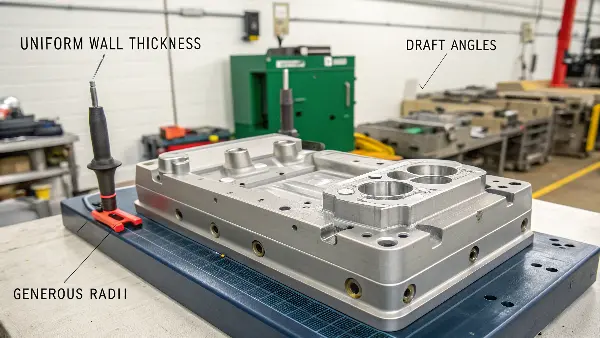
- Review wall, draft, radii, ribs, bosses and functional consequences.
- Approve parting, gates, weld lines, vents, actions and witness locations.
- Require cooling, ejection, handling and maintenance considerations.
- Map CTQs to datums, tool features and measurement conditions.
- Document steel-safe and difficult-to-correct dimensions.
- Close every finding with a disposition, owner and validation step.
Verify the Report Is About the Right Product
Check the part number, CAD and drawing revisions, units, resin grade or material requirement, color, texture, annual demand, cavities, machine envelope and assembly context. A technically polished report built on the wrong revision is unsafe. Confirm whether shrinkage has been applied to the reviewed model and how displayed dimensions should be interpreted.
List missing inputs. If chemical exposure, appearance zones or critical interfaces are unknown, the report should mark them as open assumptions rather than silently selecting a solution.
Read Wall and Draft Plots as Decision Aids
Wall analysis should identify thick mass, abrupt transitions, flow-limiting sections and features that can create sink or long cooling. It should connect each issue to function and a proposed geometry response. A color plot without nominal-wall context is not a disposition.
Draft analysis must use the selected mold-opening directions and actual texture needs. Review long walls, ribs, bosses and shutoffs separately. Zero or negative draft may be intentional on a sealing land or action feature, but the report should explain how that feature releases.
Interrogate Parting, Gate and Action Assumptions
Look for a clear parting line, cavity/core allocation, gate type and location, vestige, weld-line and air-trap expectations. For slides, lifters, unscrewing or collapsible systems, the report should identify the undercut, movement and visible witness. Product owners need to approve consequences, not merely acknowledge mold terminology.
Ask what alternatives were considered. A gate or action can be feasible yet not preferred once strength, cosmetic, maintenance and cost effects are compared.
Check Cooling and Ejection Depth
Many DFM reports are strong on draft but thin on cooling and release. Require attention to deep cores, thick bosses, inserts, slides and heat concentration. The concept should leave room for circuits, connections, flow and service. Cycle claims should state their basis.
Ejection review should show support locations, likely grip, cosmetic restrictions and handling of warm parts. Confirm that pins, sleeves, strippers or air assist do not compromise seals, thin walls or critical datums.
Review Tolerance and Steel-Safe Logic
Map CTQs to datums, measurement method, conditioning and mold features. Distinguish dimensions formed in one piece of steel from those spanning parting lines or moving components. The report should flag process-sensitive tolerances rather than promising all drawing dimensions equally.
Identify correction direction. Features planned steel-safe should have a realistic stock and access strategy; dimensions that would require welding or new inserts should be visible before approval. This information shapes both risk and sample decisions.
Turn the Report Into a Closed Decision Record
Use statuses such as open, supplier proposal, customer action, accepted, steel-safe and verify at T1. Record the decision owner and date. Attach revised CAD or drawings when the product changes; do not let the report become an unofficial design master.
Define T1 resin, sample quantity, cavity coverage, process evidence, dimensional report, visual standard and functional tests. The final report should make it possible to understand why the approved mold concept was selected months later.
Illustrative DFM Report Review
Illustrative engineering example—not a claimed CKMOLD customer result: A report flags insufficient draft on a textured sidewall and proposes two degrees. The reviewer checks the texture supplier’s recommendation, confirms the wall length and asks whether the added draft changes the assembly gap. The decision record then links the revised CAD, approved gap and T1 scuff inspection. The issue is closed with evidence rather than with a green status cell alone.
Supporting Review Resources
Questions Before Approval
What should an injection molding DFM report include?
It should include controlled inputs, wall and draft review, mold concept, gate and action decisions, cooling and ejection considerations, CTQs, risks and a closure plan.
Is a draft-analysis screenshot enough?
No. It must use the correct pull direction and texture assumptions and connect each result to a product or tooling decision.
Who owns changes proposed in a DFM report?
The supplier proposes manufacturability actions, while authorized product and quality owners approve changes to product requirements and acceptance.
Should the DFM report be updated after T1?
Yes when trial evidence changes assumptions or closes planned verification items. The record should remain aligned with released CAD and tooling decisions.
Apply the How to Review an Injection Molding DFM Report review to your released design. Share the function, exact resin, annual volume, CTQs, cosmetic limits and launch timing through the CKMOLD project form. If CAD is relevant, send it directly to jerry@ckmold.com; the form does not require an upload.