
Advanced mold-temperature control is useful when a measured thermal constraint justifies added sensing, circuits or dynamic heating and cooling. Compare actual surface-temperature history and accepted-part results against a stable baseline; more equipment does not by itself establish a shorter cycle or better dimensions.
Review the proposed circuits and heating interfaces in mold design, define the comparison through mold testing and validation, and transfer only the qualified settings and monitoring plan to production molding.
Advanced thermal systems can change flow, surface replication and cooling uniformity, but they do not automatically eliminate weld lines, sink marks or cycle time. Select steady-state, variothermal, conformal, induction or pressurized-fluid approaches from the exact material, geometry, quality target and measured thermal constraint.
Use Why Mold Temperature Matters for Different Plastic Materials for the material-dependent role of mold temperature. This article isolates advanced mold-heating and cooling technologies.
Choose the Technology From the Constraint
Select advanced thermal control from a measured constraint: surface replication, weld-line condition, local hot spot, warpage, pressure or cycle. The quotation should define the baseline, proposed circuit/heating architecture, target surface-temperature history, utilities, sensors, maintenance, energy and acceptance test. Compare the same material, cavities and quality limits.
Technical basis: Autodesk Moldflow — Rapid Heating and Cooling (RHCM analysis scope and thermal-cycle behavior); Autodesk Moldflow — Cooling-Time Equations (analytical cooling relationships and their inputs). Apply the cited scope to the exact grade, tool and acceptance plan.
Separate the Thermal Baseline From a Dynamic Heating Proposal
Record the existing surface-temperature response, circuit flow, cycle and accepted-part results. The thermal-loop review covers baseline circuit diagnosis. Consider a dynamic heating and cooling sequence only when a defined surface, filling or release constraint justifies it.
What is Variotherm Mold Temperature Control and How Does It Work?
Variothermal control can improve surface quality by heating before fill and cooling before ejection, but it manages rather than eliminates the quality/cycle trade-off. Added heat, equipment response, seals, energy, cooling capacity and part ejection still determine the final cycle and risk.
The Variotherm Cycle Breakdown
A variothermal cycle heats the relevant mold region before or during filling and cools it to the qualified ejection condition. Define the temperature history and switching points for the actual grade, part and equipment, then measure both the part result and the complete cycle.
Heating and Cooling Methods
Different systems achieve this rapid temperature change. Some of the most common methods are:
| Method | Operating principle | What must be qualified |
|---|---|---|
| Pressurized-water switching | An appropriately rated system changes the fluid condition delivered to the tool. | Verify temperature/pressure ratings, switching and purge arrangement, thermal response, utilities and accepted-part cycle with the supplier. |
| Steam heating with subsequent cooling | Steam transfers heat through a designed circuit; cooling follows the specified sequence. | Confirm condensate removal, switching, drainage and the measured surface history. Do not infer suitability solely from a high-gloss or thin-wall label. |
| Induction heating | An electromagnetic field generates heat in a suitable tool region. | Qualify coil access, tool material/geometry, sensing, cooling and uniformity at the intended surface; nominal heating speed is not a part-quality guarantee. |
Determining the Correct Mold Temperature
Start with the exact grade supplier’s processing guidance and the required finished condition. Define the surface-temperature range and its measurement point in the cycle, then compare filling, packing, release, dimensions and appearance under controlled trials. Wall thickness alone does not justify raising or lowering mold temperature.
Surface replication is one requirement alongside dimensional stability, material structure and function. A part with no cosmetic requirement still needs a qualified thermal history. Record the complete cycle and accepted yield; a temperature change that improves gloss but worsens release or post-conditioning dimensions is not an overall improvement.
Distinguish Channel Geometry From Dynamic Temperature Control
Conformal channels change the cooling geometry; variothermal control changes the temperature history during the cycle. They may be combined, but their benefits must be evaluated separately. Use the conformal-cooling design review for passage geometry, flow, strength and manufacturing checks.
Evaluate Induction Heating Against a Defined Surface-Temperature Cycle
An induction system can be considered for rapid local heating when its coil, tool material and geometry support the required thermal response. Specify the target surface-temperature history, heating and cooling timing, sensing and equipment limits with the supplier.
Do not assume that the mold should exceed the polymer’s melt temperature or that weld lines will disappear. Compare actual surface replication, line visibility, dimensions, cycle and energy use under the same acceptance conditions.
Qualify the Complete Pressurized-Water Circuit
Match the temperature-control unit, hoses, seals, valves, connections and mold circuits to the supplier’s rated operating conditions. Define the switching sequence, thermal response, alarms and safe failure behavior for the actual installation.
Verify surface temperature and accepted-part results during heating, filling, cooling and ejection. A unit’s nominal temperature capability does not prove uniform mold temperature, a shorter cycle or a particular optical result.
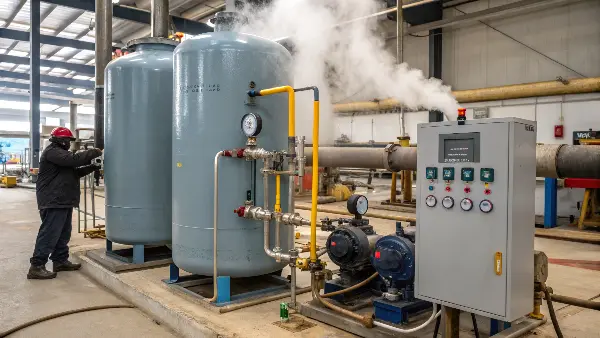
Separate Thermal Zones
Separate circuits can provide different control settings for cavity, core, slides, inserts and local hot areas. Thermal coupling through the steel and shared utilities remains, so verify the response together under production load. Record circuit identities, flow targets, supply/return temperatures and the accepted surface-temperature pattern.
Measure Flow and Temperature
Supply temperature alone cannot show whether a circuit is blocked or unbalanced. Measure flow, return temperature, pressure drop, warm-up and local surface temperature where practical. Trend changes by cavity and shift to identify gradual restriction or utility instability.
Use Closed-Loop Response Carefully
Closed-loop control can adjust heating, cooling or flow to maintain a target, but sensors must be located correctly and calibrated. Define alarm limits, response time, safe failure behavior and the effect of a correction on cycle and part quality.
Integrate With Mold and Process Data
Temperature should be reviewed with fill time, pressure, cushion, part weight, dimensions, warpage, appearance, ejection and cycle. A dashboard that shows temperature without part data can miss a defect or create unnecessary adjustments.
Prove the Business Benefit
Quantify reduction in scrap, cycle variation, warm-up time, dimensional spread, manual intervention or maintenance. Use a baseline and an agreed measurement method. The most sophisticated controller is not valuable if the mold channels, sensors or process window are not fit for purpose.
Advanced Mold-Temperature Control in Injection Molding: Buyer Review Checklist
- Separate cavity, core, insert, slide and hot-spot thermal zones where justified.
- Monitor flow, supply, return, pressure drop, warm-up and local temperature.
- Define sensor calibration, alarms, closed-loop response and safe failure behavior.
- Connect temperature data to pressure, weight, dimensions, appearance, ejection and cycle.
- Measure scrap, variation, cycle and maintenance benefits against a baseline.
FAQ
What makes mold-temperature control advanced?
Separate zones, flow monitoring, local sensors, alarms, data logging and closed-loop response can make control more precise when correctly engineered.
Can sensors alone improve part quality?
Sensors provide visibility; quality improves only when the data is calibrated, interpreted and connected to an effective process response.
Conclusion
Adopt advanced thermal control when a measured constraint and a validated comparison justify the added equipment and operating requirements. Preserve the baseline, record the actual temperature history and verify part quality, cycle, utilities and maintenance before release.