
Choosing between traditional rubber and Thermoplastic Polyurethane (TPU) can feel like a guessing game. You might spend weeks finalizing a design, only to realize during prototyping that your material choice fails under stress or costs too much to manufacture.
Thermoset rubber and thermoplastic polyurethane can both make flexible parts, but they reach performance through different material networks and manufacturing routes. Rubber is often preferred for demanding seals, heat or compression-set performance when the right elastomer is selected; TPU can deliver abrasion resistance, color, complex injection-molded geometry and recyclable production scrap. The choice should follow the failure mechanism, not the convenience of one process.
Related engineering resources: insert molding and overmolding | prototype injection molding | production injection molding
The main difference lies in processing and performance: Rubber (like silicone or natural rubber) offers superior heat resistance and long-term compression set, making it ideal for seals and gaskets in extreme environments. TPU, however, bridges the gap between rubber and plastic. It is far easier to process via injection molding, offers incredible abrasion resistance, and is recyclable, making it the better choice for consumer goods, protective cases, and high-wear industrial parts.
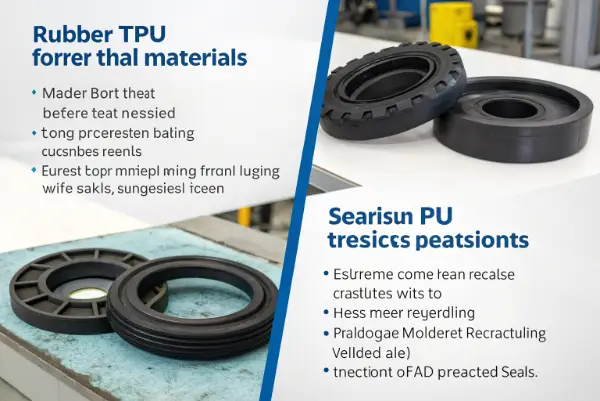
Is Thermoplastic Better Than Rubber?
Many designers assume that “thermoplastic” automatically means “better” because it sounds more modern, but this assumption often leads to product failure. You might be struggling with high production costs using rubber, or facing melting issues with thermoplastics, leaving you stuck in the middle.
Thermoplastics (TPE/TPU) are generally “better” for high-volume manufacturing due to faster cycle times and recyclability, but thermoset rubbers are “better” for extreme performance. Thermoplastics can be melted and re-molded, which reduces waste and cost. However, traditional rubber (a thermoset) undergoes a chemical cross-linking process that makes it permanent. If your part needs to survive high heat (above 150°C) or chemical exposure without deforming, traditional rubber wins every time.
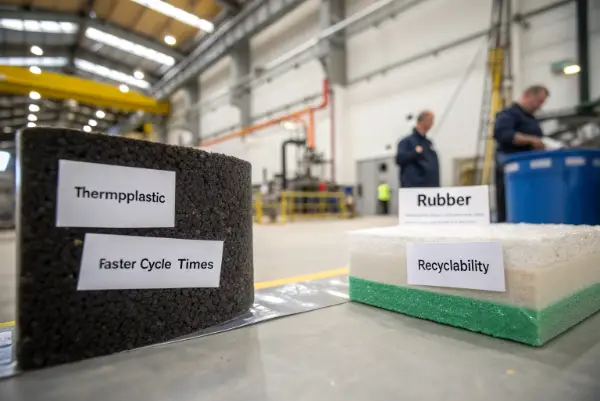
To really understand this, we need to look at the molecular behavior. Think of thermoplastics like butter. You can melt butter, shape it, freeze it, and then melt it again. This is why TPU is so popular in injection molding. You shoot it into the mold, it cools, and it’s done. If there is scrap, you grind it up and use it again.
Rubber, on the other hand, is like baking a cake. Once you mix the batter and bake it (vulcanization), you cannot turn it back into batter. This chemical bond is what gives rubber its superior properties in specific areas.
Key Comparison: Thermoplastic vs. Thermoset Rubber
| Feature | Thermoplastic (TPU/TPE) | Thermoset Rubber (EPDM, Silicone, NBR) |
|---|---|---|
| Processing Method | Injection Molding (Fast) | Compression/Transfer Molding (Slow) |
| Cycle Time | Seconds to Minutes | Minutes to Hours |
| Heat Resistance | Moderate (melts at high temps) | Excellent (stable at high temps) |
| Recyclability | High (can be remelted) | Low (cannot be remelted) |
| Chemical Resistance | Good (oils/greases) | Superior (acids/bases/solvents) |
| Compression Set | Moderate | Excellent (bounces back reliably) |
During project review, Reviewers should ask about the “end of life” of the product. If you are making consumer electronics where sustainability and recycling are selling points, TPU is the clear winner. But if you are designing an O-ring for a car engine that will get hot and stay compressed for ten years, do not touch thermoplastics. Stick to rubber.
Is TPU More Flexible?
A common misconception is that because TPU is a “plastic,” it must be stiffer than rubber, leading designers to avoid it for parts that need high flexibility. This fear often results in over-engineering or choosing materials that are harder to manufacture just to ensure softness.
TPU is incredibly versatile, but it is generally not “more” flexible than the softest rubbers; rather, it offers a wider range of hardness. TPU acts like a hybrid material. It can be formulated to be as soft as a gel (Shore 60A) or as hard as a construction helmet (Shore 70D). However, at very low hardness levels (very soft), traditional rubber or silicone feels more natural and “floppy,” whereas TPU retains a certain structural stiffness or “snap-back” quality.
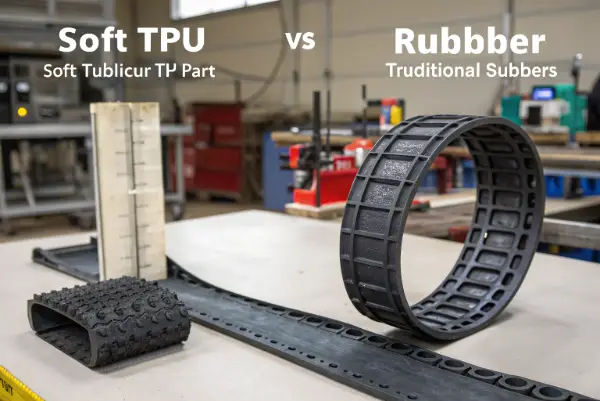
Flexibility is a tricky term in engineering because it often gets confused with hardness. Hardness is resistance to indentation (measured on the Shore scale), while flexibility is the ability to bend without breaking.
Understanding the Shore Hardness Range
When selecting flexibility, you must look at the Shore scales:
- Shore A: This is for soft, flexible materials.
- Rubber/Silicone: Can go very low (Shore 10A – gummy bear texture).
- TPU: Usually starts around Shore 60A (tire tread texture).
- Shore D: This is for hard plastics.
- TPU: Can go up to Shore 80D (hard hat).
If your design requires something that feels like human skin or a soft gel button, TPU might struggle to get that soft without expensive additives (plasticizers) that can leach out over time. In those ultra-soft cases, silicone rubber is superior. But for a phone case that needs to bend around the phone and then snap tight? TPU is the king of that specific type of flexibility. It holds its shape better than rubber while still allowing movement.
What Is the Disadvantage of TPU?
While TPU seems like a miracle material for many applications, ignoring its limitations can lead to catastrophic product failures in the field. You might choose it for its toughness, only to find it degrading rapidly under certain environmental conditions.
The main disadvantages of TPU are its poor resistance to hydrolysis (water damage at high heat), limited service temperature range, and higher raw material cost compared to commodity plastics. Standard TPU can degrade if exposed to hot water or steam for long periods. Additionally, TPU requires drying before processing; if it is not dried reliably, the moisture creates bubbles and weak spots in the final molded part, leading to high scrap rates.
The Environmental Weaknesses
What 3D Printing Material Is the Most Flexible?
Prototyping flexible parts is a major headache for designers; traditional FDM printers struggle with soft materials, leading to clogged nozzles and messy prints. You need to know which material will actually simulate your final production part without wasting days on failed prints.
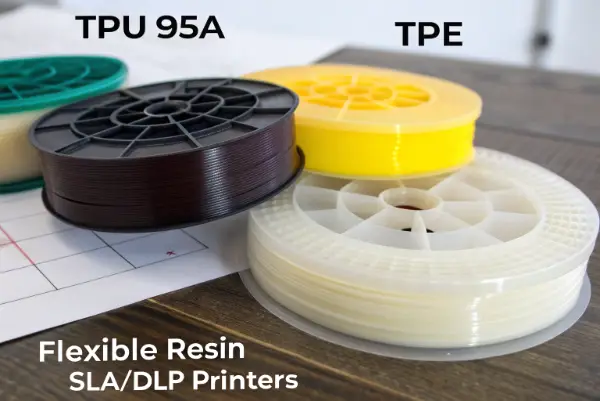
For 3D printing, TPU (specifically TPU 95A) is the industry standard for flexibility because it is printable on most consumer and professional machines. However, for extreme flexibility, TPE (Thermoplastic Elastomer) filaments are softer but much harder to print. If you need the absolute most flexible and realistic prototype, resin printing (SLA/DLP) with “Flexible Resin” or “Rubber-like Resin” offers the lowest shore hardness and best surface finish, though it is brittle compared to real molded rubber.
During project review, prototype, A common observation is them struggle with this constantly. They want to hold the part and feel the “squish.”
If you are using a standard filament printer (FDM), TPU is a practical option. The “95A” refers to the hardness. It prints like a stiff rubber hose. It is flexible, but you cannot crumple it like a piece of paper.
Breaking Down the Printing Options
-
FDM TPU (The Workhorse):
- Pros: Strong, functional, impact-resistant. You can actually use these parts in functional tests.
- Cons: Limited resolution, layer lines are visible, supports are hard to remove.
- Best for: Bumpers, functional gaskets, drone parts.
-
FDM TPE (The Soft Nightmare):
- Pros: Softer than TPU, feels more like real rubber.
- Cons: Very difficult to print. The filament is like cooked spaghetti; the printer gear tries to push it, and it just bends and jams. You need a specialized “direct drive” extruder to print this well.
-
SLA/DLP Flexible Resin (The Visual Model):
- Pros: Incredible detail, smooth surface, can simulate very soft rubber (Shore 40A-60A).
- Cons: Not durable. If you stretch it too far, it snaps. It also degrades quickly in sunlight.
- Best for: Visual verification, checking fit, checking ergonomics (how it feels in the hand).
For a professional, Consider using TPU for “works-like” prototypes (testing if it snaps together) and Flexible Resin for “looks-like” prototypes (showing the boss or client). But generally remember: none of these 3D printed materials will behave exactly like the final injection molded TPU or compression molded rubber. Generally leave room for adjustment in the final tool design.
Define What Flexible Means in the Product
A static gasket needs sustained sealing force, a boot needs fatigue and weather resistance, a wheel needs abrasion and tear strength, and a grip needs touch plus substrate adhesion. Specify hardness, tensile strain, compression, hysteresis, rebound and permanent set over temperature. Without a time-and-temperature requirement, a room-temperature comparison can point to the wrong material.
Choose the Rubber Chemistry for the Environment
EPDM, silicone, nitrile, natural rubber and fluorocarbon elastomers differ in heat, oil, ozone, fuel, water and low-temperature behavior. Vulcanization creates a crosslinked network that cannot simply be remelted. Tooling, cure time, flash control and post-cure can increase manufacturing effort, but the resulting set and chemical performance may justify it in long-life seals.
Choose TPU for Thermoplastic Design Freedom
TPU can be injection molded into thin flexible features, wear surfaces and overmolded assemblies, often with shorter cycles and easier scrap recovery than thermoset rubber. It can provide excellent abrasion and tear resistance. Hydrolysis, UV, high-temperature creep, plasticizer or chemical exposure and moisture-sensitive processing vary by grade, so the correct polyester, polyether or specialty chemistry matters.
Compare Tooling, Tolerance and Assembly
Rubber molds manage cure, flash, venting and demolding of highly elastic parts; TPU molds manage melt flow, shrinkage, cooling and ejection. Parting and gate witnesses may affect sealing surfaces in either route. TPU can integrate clips or bond to a rigid insert, while rubber may use compression, transfer or injection molding plus secondary bonding. Price the completed assembly rather than the raw polymer.
Validate Aging and Failure Mode
Measure seal force, leakage, tear, abrasion or fatigue after heat, fluid immersion, UV, ozone and compression as applicable. Use production geometry and the intended mating surface. A material that begins with higher strength may relax too much, while a softer rubber may maintain the seal. Define acceptable failure, inspection intervals and replacement strategy for service components.
Rubber vs TPU for Flexible Molded Parts: Design and Validation Checklist
- Define sealing force, strain, cycle, temperature and permanent-set limits.
- Screen rubber and TPU chemistries against every fluid and weather exposure.
- Compare molding, cure or cooling, flash, scrap, finishing and assembly costs.
- Protect sealing surfaces through parting, gate, vent and tolerance design.
- Test aged production parts on representative mating hardware.
Frequently Asked Questions
Is TPU a type of rubber?
TPU is a thermoplastic elastomer, not a conventional crosslinked thermoset rubber. It softens when reheated and uses different processing.
Which material has better compression set?
Many rubber formulations excel in demanding seal conditions, but exact chemistry, temperature, strain and duration determine the result.
Can TPU replace rubber in an existing mold?
Usually not as a direct substitution. Melt processing, shrinkage, venting, gate, ejection and parting requirements differ and need engineering review.
Conclusion
Deciding between rubber and TPU comes down to environment and volume. If your part needs to survive high heat, chemicals, or constant compression, stick with traditional thermoset rubber. However, if you are designing consumer goods that need high abrasion resistance, fast production cycles, and recyclability, TPU is the superior choice. Generally consider the “end of life” and the specific stress your part will endure before cutting steel for the mold.