

Injection molding is among the most used techniques for the manufacturing of plastic parts with great precision, durability, and at a low cost. In achieving consistent quality and efficiency in this process, a number of critical factors have to be carefully observed. Every parameter in material selection to mold design, from temperature control to injection pressure, has an important role in the success of the final product.
The injection molding process is governed by the interaction of material, machine, mold, method and measurement. A stable result does not come from one suitable pressure or temperature setting; it comes from controlling the complete chain from resin preparation and product design through filling, packing, cooling, ejection and inspection. Prioritizing the right variables helps engineers solve defects at the source rather than compensate for them at the machine.
Related CKMOLD resources: DFM analysis, mold design, production injection molding.
Prioritize the variables linked to the actual failure mode and acceptance requirements. Use material, tool, process and measurement records to distinguish a repeatable correction from a temporary shift in the defect.
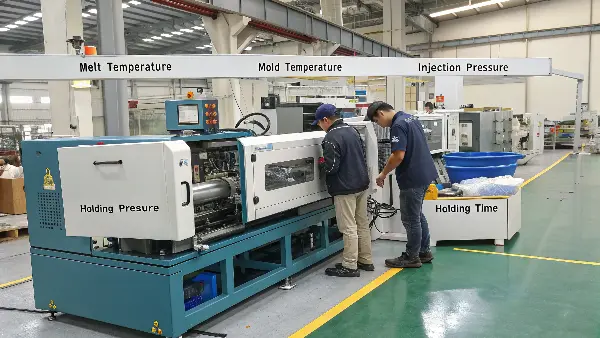
The most critical parameters that are considered during injection molding include melt temperature, mold temperature, injection pressure, holding pressure, and holding time. These parameters directly affect the quality, strength, and appearance of the molded parts. By controlling these variables, you can reduce defects, improve efficiency, and ensure that every product meets your standards.
When I talk to other designers and engineers, I often hear the same questions: What makes injection molding so useful? What are the key parameters? How do you control them? In this article, I’ll break down the essentials, share my own experiences, and help you understand how to master the injection molding process.
Define the Quality Framework as Evidence
A process label is not a complete mold architecture, and a center setpoint is not a quality system. For supplier comparison, request the exact material/conditioning, mold concept, machine capability, approved process limits, CTQ measurement plan, cavity traceability, maintenance/change control and trial evidence. These records show how material, machine, mold, method and measurement are controlled together.
Primary technical sources checked: Avient — Overmolding Guide (material-pair and interface design considerations). Apply the cited scope to the exact grade, tool and acceptance plan.
What is Injection Moulding process?
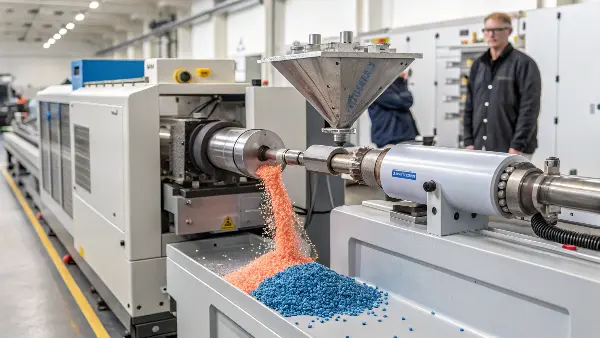
Injection moulding process is a very effective production process that is utilized in creating parts through injecting molten material into a moulding cavity. It is applied most often in manufacturing plastic components, although it can also be utilized in metals, glass and elastomers. It is done by melting plastic balls and pushing the molten substance under pressure into a specially shaped mould, which subsequently cools and hardens to achieve the finished shape.
The technique is common in automotive, medical, packaging, and consumer electronics industries since it provides a means to manufacture complex and high-quality components in large volumes with very high repeatability and low material wasteage. These will consist of among others, thermoplastics such as polypropylene (PP), polyethylene (PE), acrylonitrile butadiene styrene (ABS) and nylon (PA).
The benefits of injection moulding are as follows:
- Large volume production is highly efficient.
- Regular quality of products and size.
- Ability to generate complicated and intricate geometries.
- Small unit cost after the mould is formed.
Connect Process Control to Defined Responsibilities
Assign responsibility for material preparation, setup approval, monitoring, inspection and response to abnormal conditions. The quality framework should show who verifies each requirement and what evidence authorizes continued production.
Judge Repeatability From Production Evidence
Repeatability must be demonstrated across the planned production conditions. Compare accepted-part output and critical measurements by cavity, material lot and setup rather than inferring quality from process speed or automation alone.
Choose the Tool Architecture Against the Quality Requirements
Cavity count, feed system, parting arrangement and insert or multi-material operations create different control needs. Define the architecture from the part, volume and interface requirements, then identify cavity traceability, flow balance, thermal control, insert positioning and release checks in the acceptance plan.
What are the key parameters of injection molding?
The key injection molding parameters include melt temperature, mold temperature, injection pressure, holding pressure, and holding time. Each must be carefully controlled to ensure the plastic flows, fills the mold, and cools properly to produce strong, accurate parts.

How do these parameters affect the final product?
| Parameter | Description | Effect on Product Quality |
|---|---|---|
| Melt Temperature | Temperature of the plastic as it enters the mold | Too high: burns, flash; too low: short shots, poor flow |
| Mold Temperature | Temperature of the mold itself | Too high: long cooling, warping; too low: poor surface finish, incomplete fill |
| Injection Pressure | Force pushing plastic into the mold | Too high: flash, mold damage; too low: incomplete fill |
| Holding Pressure | Pressure maintained after filling to pack the part | Too high: stress, flash; too low: sink marks, voids |
| Holding Time | Duration of holding pressure | Too long: cycle time increases; too short: incomplete packing |
Small setting changes can materially affect the result, but the direction is mechanism-specific. A warmer mold may improve one weld line while extending cooling or changing shrinkage; additional hold may reduce one sink while creating stress or flash. Use a controlled study and preserve the accepted process window instead of presenting one adjustment as a universal fix.
What are the four primary elements that influence the injection molding process?
When I troubleshoot molding problems, I generally look at the four main elements that influence the process. These are the foundation of good molding practice.
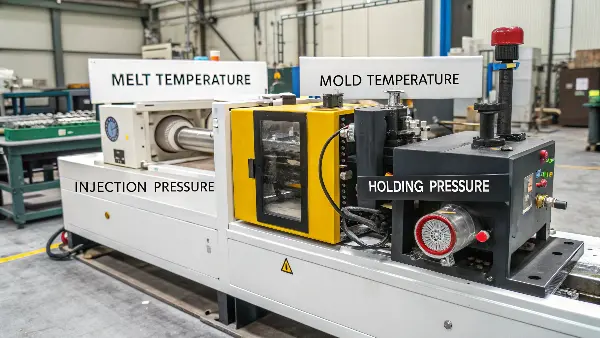
The basic variables involved with injection molding include temperature of melt, mold temperature, injection pressure, and holding pressure. It is these factors that will determine how the plastic will flow, fill the mold, and then solidify, thus determining directly the quality and consistency of the final product.
How do these four elements interact?
These elements don’t work in isolation. They interact in complex ways:
| Element | Role in Process | Interaction with Other Elements |
|---|---|---|
| Melt Temperature | Controls flow and fill | Affects pressure needed, cooling rate |
| Mold Temperature | Influences cooling and surface finish | Impacts holding pressure and time |
| Injection Pressure | Drives material into mold | Depends on melt temp and mold temp |
| Holding Pressure | Packs material, prevents shrinkage | Linked to holding time and mold temp |
For example, if the melt temperature is too low, you might need to increase injection pressure to fill the mold. But that can cause flash or stress in the part. If the mold temperature is too high, the part may warp or take longer to cool. Balancing these elements is key to getting the best results.
What are the requirements for injection molding?
My approach to the design of a new mold is by first considering what that mold needs to meet the requirements for successful injection molding, since accomplishing that will help ensure high-quality parts and an efficient operation.
Precise control of process parameters, proper mold design, suitable material selection, and regular maintenance of equipment are the major requirements for injection molding. This will pave the way for a smooth process, and the parts will meet specifications while defects are at a minimum.

What do you need for a successful injection molding process?
Here’s what I focus on:
| Requirement | Why It Matters | How to Achieve It |
|---|---|---|
| Process Control | Ensures consistency and quality | Use reliable machines, monitor parameters |
| Mold Design | Affects part quality and cycle time | Design for manufacturability, good cooling |
| Material Selection | Impacts strength, appearance, and cost | Choose based on part needs, test samples |
| Equipment Maintenance | Prevents downtime and defects | Regular cleaning, inspection, calibration |
For a multi-material architecture decision, separate the quality system from the process choice; the twin-shot molding guide compares sequence, tooling, grade-pair compatibility and quote scope.
Material Condition and Grade
Resin grade, moisture, lot, color, filler, regrind and residence time affect viscosity, shrinkage, appearance and strength. Drying and storage should be controlled with the grade’s requirements. A process window built on the wrong material condition is not a real process window.
Part and Mold Design
Wall thickness, flow length, draft, ribs, bosses, gates, runners, vents, cooling, ejection, slides and steel condition determine what the machine can achieve. DFM should identify risks before steel is finished, because a machine adjustment cannot fully correct an impractical flow or release design.
Machine and Process Capability
Shot size, pressure reserve, injection response, check-ring behavior, clamp force, temperature control and screw recovery must match the mold and resin. A stable process uses a validated speed, pressure, transfer, hold, cooling and cushion range rather than a single nominal setting.
Cooling, Ejection and Handling
Cooling controls shrinkage and dimensional stability, while ejection and handling can distort a warm part. Mold temperature, channel balance, draft, support, robot timing and inspection conditioning should be treated as quality variables.
Measurement and Corrective Action
Measure part weight, critical dimensions, appearance, fill time, pressure, cushion, temperature, cycle and cavity variation. Use controlled changes and a root-cause record. Without measurement, operators may chase normal variation and create a less stable process.
What Matters Most in the Injection Molding Process? A Quality Framework: Buyer Review Checklist
- Control resin grade, drying, lot, color, filler, regrind and residence time.
- Review wall, flow, gate, runner, vent, cooling, draft and ejection before tooling.
- Match machine shot, pressure, clamp, temperature and response capability to the tool.
- Validate cooling, ejection, warm-part handling and inspection conditioning.
- Trend weight, dimensions, appearance and process signals with defined corrective actions.
FAQ
What is the single most important setting in injection molding?
There is no universal single setting. Quality depends on the complete material, mold, machine and process window, supported by measurement.
Why do defects return after a process adjustment?
If the root cause is geometry, material condition, venting, cooling or wear, a temporary setting change may only move the defect or reduce process margin.
Conclusion
A useful quality framework connects the specified material, tool, machine, process and measurement system to approved limits and a response plan. Verify changes with accepted-part evidence and preserve the revision and trial history.