
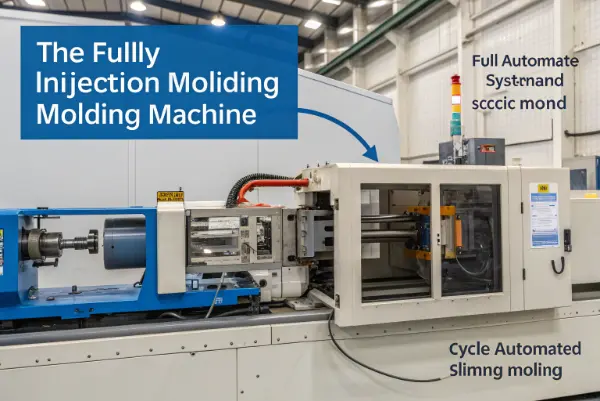
What is the process of each cycle of injection molding?

Are you struggling to optimize your part designs for manufacturing? You might find your designs face delays or cost overruns on the production line. This often happens because the crucial details of the injection molding cycle are overlooked during the design phase. Mastering this process is key to creating parts that are not just functional, but also efficient and cost-effective to produce from the very first shot. Let’s dive into how it all works.

The injection molding cycle is a repeatable sequence that creates a plastic part. It starts with the mold closing, followed by the injection of molten plastic. Next, pressure is applied to pack the material into the mold cavity. The part then cools and solidifies. Finally, the mold opens, and the part is ejected. This entire process, from mold close to mold close, repeats for every part made. The efficiency of this cycle directly determines the final part cost and quality.

A diagram showing the full injection molding cycle

Now that you have the big picture, you can see it’s more than just squirting plastic into a box. Each stage is a carefully controlled process involving specific pressures, temperatures, and timings. Understanding the role of each step is the first and most important part of designing for manufacturability. It allows you to anticipate potential issues and build solutions right into your design. Let’s break down each of these stages in more detail.

What is the cycle of injection molding?

Do you find it difficult to estimate production costs and lead times accurately? You might be treating the manufacturing process as a black box, making it hard to pinpoint where time and money are being spent. This uncertainty can lead to missed deadlines and blown budgets. The key is to understand the core unit of production: the molding cycle. This single concept is the foundation for all your cost and time calculations.

The injection molding cycle is the total time required to produce one complete "shot" of parts, from the moment the mold closes to the moment it closes again for the next one. This repeatable sequence is the heartbeat of the manufacturing process. The total cycle time is a critical metric because it directly dictates production capacity and cost per part. It is the sum of all the individual stages, including clamping, injection, packing, cooling, and ejection.

A stopwatch overlaid on an injection molding machine

To truly grasp its importance, you need to look beyond the simple definition. The cycle isn’t just a series of steps; it’s a finely tuned recipe where every second counts. I remember a project early in my career where we were molding a small consumer electronic housing. By optimizing the cooling time and ejection speed, we managed to shave just three seconds off a 28-second cycle. That might not sound like a big deal. But over a production run of one million parts, that saved the client over 830 hours of machine time, which translated into tens of thousands of dollars in savings. This is why a deep understanding of the cycle is so powerful.

Why Cycle Time Dictates Everything

In injection molding, time is literally money. The machine, the operator, and the factory space all have an hourly cost. The faster you can produce a quality part, the lower the cost per part becomes. The total cycle time is the primary factor in this equation. It is a Key Performance Indicator (KPI) that every mold designer and production manager watches closely. A shorter cycle time means higher output and better profitability. Conversely, an unnecessarily long cycle time can make a project unprofitable.

The Main Components of Cycle Time

The total cycle is composed of several smaller, distinct phases. While we’ll explore these in more detail, it’s helpful to see how they contribute to the whole.

Phase Typical Percentage of Cycle Time Key Influencing Factors
Cooling Time 50-70% Part wall thickness, material type, mold temperature
Injection & Packing 10-20% Part volume, melt flow rate, injection speed
Mold Movement 10-15% Machine size, mold open/close speed, ejection stroke
Part Ejection 5-10% Ejection mechanism, part complexity, robot speed

As you can see, cooling is almost always the longest part of the cycle. This is why, as a designer, your decisions about wall thickness have the single biggest impact on the final production cost. Thicker walls require exponentially longer cooling times, which directly extends the overall cycle and drives up the price of every single part.

What are the 5 steps of injection molding?

Are your parts suffering from defects like sink marks, warping, or short shots? These common problems often stem from a misunderstanding of what happens during the molding process. You can spend hours tweaking a design, but if you don’t connect it to the physical steps on the factory floor, you’re just guessing. Knowing the five core steps helps you diagnose and prevent these issues before they start.

The five fundamental steps of the injection molding process are Clamping, Injection, Packing (or Holding), Cooling, and Ejection. First, the two halves of the mold are clamped together with immense force. Second, molten plastic is injected into the mold cavity. Third, pressure is maintained to pack more material in as it shrinks. Fourth, the part cools and solidifies. Finally, the mold opens, and the finished part is ejected, completing the cycle.

A 5-step infographic of the injection molding process

Thinking of the process in these five distinct steps provides a clear framework for troubleshooting and design optimization. Each step has its own set of parameters and potential pitfalls. For a designer like you, understanding this sequence is not just academic; it’s a practical tool. For example, if a part has sink marks, you can immediately suspect an issue with the Packing phase—perhaps the holding pressure or time was insufficient. If you see flash, the Clamping force might not be high enough to counteract the Injection pressure.

Step 1: Clamping

Before any plastic enters the mold, the two halves of the mold tool must be securely closed. The clamping unit of the injection molding machine pushes the two halves together and applies a massive force to hold them shut. This force, known as clamp tonnage, is critical. It must be strong enough to resist the immense pressure of the molten plastic being injected, which is trying to force the mold halves apart. If the clamp force is too low, plastic can escape at the parting line, creating a thin layer of excess material called "flash."

Step 2: Injection

Once the mold is clamped, the injection process begins. Plastic pellets are fed from a hopper into a heated barrel, where a reciprocating screw melts and mixes them. The screw then acts like a plunger, rapidly pushing the molten plastic, or "melt," out of the barrel and into the mold through a system of runners and gates. The speed and pressure of this injection are carefully controlled. The goal is to fill the mold cavity completely and quickly before the plastic starts to cool and solidify. An incomplete fill results in a "short shot," a common molding defect.

Step 3: Packing (Holding)

After the mold cavity is about 95-99% full, the process switches from the high-speed injection phase to the packing or holding phase. As the plastic inside the mold cools, it begins to shrink. To compensate for this shrinkage and ensure the part fully conforms to the shape of the cavity, additional material is packed in under constant pressure. This holding pressure is typically lower than the injection pressure but is maintained for a specific period. Proper packing is essential for achieving good surface finish, dimensional accuracy, and preventing defects like sink marks.

Step 4: Cooling

Cooling is the most time-consuming step in the entire cycle. Once the packing phase is complete, the part must be left to cool and solidify inside the mold until it is rigid enough to be ejected without deforming. Cooling channels are machined into the mold, and a fluid (usually water) is circulated through them to draw heat away from the part. The cooling time depends heavily on the type of plastic, the wall thickness of the part, and the mold temperature. As a designer, this is your biggest lever for influencing cycle time.

Step 5: Ejection

After the part has cooled sufficiently, the clamping unit opens the mold. The ejection system, typically consisting of pins or plates, then pushes the solidified part out of the cavity. The cycle is now complete, and the mold closes again to start the process for the next part. The ejection must be done carefully to avoid damaging the finished component. Design features like draft angles are crucial for ensuring a smooth and easy release from the mold.

What is the injection cycle?

You hear the terms "injection cycle" and "molding cycle" used often, sometimes interchangeably. Does this cause confusion? It’s a common point of ambiguity that can lead to miscommunication between designers, engineers, and molders. While they are closely related, they refer to slightly different aspects of the process. Clarifying this distinction helps you speak the same language as your manufacturing partners and focus on the right parameters.

The injection cycle specifically refers to the phases directly involving the injection unit of the machine—melting the plastic, injecting it into the mold, and packing it under pressure. It is a subset of the overall molding cycle. While the molding cycle covers the entire process from mold close to mold close, the injection cycle focuses only on the material delivery part of the sequence. It is defined by parameters like injection speed, pressure, and time.

A close-up view of the nozzle and screw of an injection molding machine

Understanding this difference is important for detailed process optimization. When a molder talks about tuning the "injection cycle," they are specifically adjusting the variables that control how the plastic enters the mold. This is where they solve problems like short shots, flash, and weld lines. As a designer, your choices directly impact this phase. The geometry of your part, the location of the gate, and the thickness of the walls all dictate the requirements for a successful injection cycle. Let’s break down the key parts of this specific phase.

The Role of the Reciprocating Screw

The heart of the injection unit is the reciprocating screw. It performs two critical functions:

  1. Plasticizing (Melting): As the screw rotates, it conveys plastic pellets forward from the hopper. Shear heat from the screw’s rotation and external heater bands on the barrel melt the pellets into a homogenous molten state. This process is called plasticizing. The amount of material prepared for the next shot is called the "shot size."
  2. Injection (Plunging): Once the correct amount of melt is ready, the screw stops rotating and is pushed forward hydraulically, like a piston. This ram-like action forces the molten plastic into the clamped mold.

Key Parameters of the Injection Cycle

The success of this phase depends on the precise control of several variables. These are the main levers a process engineer uses to perfect the part.

  • Injection Speed: This is how fast the screw moves forward, pushing the melt into the mold. A faster speed can help fill thin-walled parts before the plastic freezes, but it can also cause defects like jetting or burn marks if not controlled properly.
  • Injection Pressure: This is the force pushing the melt into the mold. There’s a limit to how much pressure can be applied, determined by the machine and the mold’s strength. The pressure profile is often varied during the injection phase to control the flow front of the plastic.
  • Switchover Point: This is the critical point where the machine switches from the high-speed "injection" phase to the pressure-controlled "packing" phase. It is usually set based on the screw’s position, when the cavity is almost full. A poorly set switchover point can lead to flash (if too late) or sink marks (if too early).
  • Holding Pressure and Time: After the switchover, a constant holding pressure is applied for a set time to pack out the part and compensate for shrinkage. The amount of pressure and the duration are vital for achieving the correct part dimensions and weight.

As a designer, you don’t set these parameters, but your design dictates them. A complex part with long flow paths will require higher injection pressure and speed than a simple, compact part. This is why collaboration with your molder is so important.

What is the process of an injection machine molding?

Have you ever wondered how all the individual steps come together within the machine itself? It’s easy to think of clamping, injecting, and cooling as separate events, but they are part of a coordinated, automated sequence managed by the injection molding machine. Understanding the machine’s process gives you a complete picture, helping you appreciate the constraints and capabilities you are designing for. It connects your digital design to the physical reality of manufacturing.

The injection molding machine’s process is a fully automated cycle that integrates two main systems: the clamping unit and the injection unit. The process begins with the clamping unit closing and securing the mold. The injection unit then melts plastic and injects it into the mold. While the part cools, the injection unit prepares the next shot. Finally, the clamping unit opens the mold and ejects the part. The machine’s controller synchronizes these actions to run continuously.

A wide shot of a modern injection molding machine in a factory setting

Seeing the process from the machine’s perspective reveals the beautiful efficiency of modern manufacturing. I’ve spent countless hours on factory floors, just watching these machines run. It’s like a mechanical ballet. The two halves of the machine work in perfect harmony. While one system is busy holding the part during the long cooling phase, the other is already getting the next dose of plastic ready. This parallel processing is what makes injection molding such a fast and efficient method for mass production. Let’s look at how these two key units operate and interact throughout the cycle.

The Two Halves of the Machine

An injection molding machine is fundamentally composed of two parts. Your mold sits right in the middle, where these two systems meet.

  1. The Clamping Unit: This is the larger part of the machine that opens and closes the mold and applies the clamping force. It houses the moving and stationary platens where the mold halves are mounted. It also contains the ejection system that pushes the part out. Its job is purely mechanical: to hold the mold shut against the injection force and then open it to release the part.

  2. The Injection Unit: This is the part that prepares and injects the plastic. It consists of the hopper, the barrel, the reciprocating screw, and the nozzle. Its job is thermal and mechanical: to melt the raw material and deliver it to the mold under precise speed and pressure control.

The Coordinated Machine Sequence

Here is how the machine coordinates these two units to execute a full molding cycle.

Step Clamping Unit Action Injection Unit Action Status
1. Mold Close Closes mold halves and applies full clamp tonnage. Idle. The cycle begins.
2. Injection Holds mold clamped under full force. Screw moves forward, injecting melt into the mold. Mold is filling.
3. Packing/Holding Holds mold clamped under full force. Maintains pressure on the melt to compensate for shrinkage. Part is solidifying.
4. Cooling & Plasticizing Holds mold clamped. Part continues to cool. Screw rotates to melt and prepare the next shot of plastic. The most time-efficient step, as cooling and screw recovery happen in parallel.
5. Mold Open Releases clamp pressure and opens the mold. Idle, waiting for the next cycle. Part is ready for removal.
6. Ejection Activates ejector pins to push the part out of the mold. Idle. Cycle is complete. The machine returns to Step 1.

This table clearly shows the parallel nature of the process. The screw retracts and prepares the next shot (plasticizing) during the cooling time. Without this overlap, cycle times would be significantly longer. This integrated, automated process is the reason why injection molding is the undisputed king of high-volume plastic part production. As a designer, creating a part that runs smoothly through this sequence is the ultimate goal.

Conclusion

Understanding the injection molding cycle is fundamental for any product designer. It’s not just a manufacturing process; it’s the framework that dictates cost, quality, and speed. By mastering the five key steps—clamping, injection, packing, cooling, and ejection—you can design parts that are optimized for production. This knowledge empowers you to create better products more efficiently, turning your design concepts into successful, profitable realities.

Facebook
Twitter
LinkedIn

Request A Quote for Your Projects!

Hi there! I’m Jerry, a proud dad and passionate at CKMOLD. With years of hands-on experience in the injection mold and CNC industry, I’ve grown from managing the smallest details on the shop floor to leading international projects with clients across Europe and the U.S.

At CKMOLD, we specialize in precision molds, plastic parts, and CNC solutions that help bring bold product ideas to life. I love solving complex challenges, building long-term partnerships, and pushing the limits of what great manufacturing can do.

Let’s connect, exchange ideas, and grow together—whether you’re looking for a reliable manufacturing partner or just want to talk shop!

Request a Quick Quote

Send your drawings and detailed requirements via:
Email: jerry@ckmold.com

Or fill out the contact form below:

We will contact you within one working day. Please pay attention to the email with the suffix “@ckmold.com”

Wait, We Have Something Special for You!

Join our mailing list and receive a 10% discount on your next mold or CNC project.