
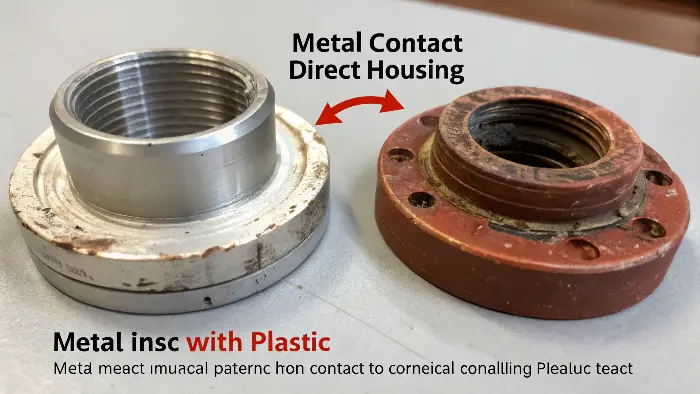
Steel cannot replace thermoplastic pellets in a conventional injection molding machine. Steel parts and plastic parts use fundamentally different thermal, flow, tooling and solidification routes even when both processes may involve a mold.
Steel cannot be processed through a conventional plastic injection mold in the same way as a thermoplastic because the two materials behave very differently under heat, pressure and cooling. Molten steel requires extreme temperature, high energy, specialized refractory tooling and a different solidification process. Plastic molding relies on a relatively low-viscosity polymer melt flowing through a precision mold and then cooling without changing the tooling itself.
Related CKMOLD resources: mold design, rapid tooling, injection mold services.

Why Can Steel Not Be Molded Like Thermoplastic?
Molten steel cannot be substituted for polymer in a conventional injection-molding machine. Steel melting temperatures, thermal loads, oxidation, equipment construction and solidification behavior are fundamentally different. Steel parts are made through routes such as casting, forging, machining, stamping or powder-based processes selected for alloy, geometry, properties and volume.
Metal injection molding (MIM) is a distinct powder-and-binder process followed by debinding and sintering; it is not the same as injecting molten steel. Compare any route on final density, tolerances, mechanical properties, tooling, secondary operations and qualification—not merely whether it uses a mold.
Primary sources checked: Uddeholm — Stavax ESR (one producer's corrosion, polish and heat-treatment context). The cited scope still has to be matched to the exact grade, tool, product and destination market.

What Does Plastic Mold Steel Need to Do?
The mold steel remains a tool; it is not the molded material. Select each component for load, wear, corrosion, polish/texture, thermal cycling, dimensional stability, machining, heat treatment and repair. Hardness alone is not a complete specification: excessively brittle or poorly treated steel can fail despite a high number.
Request the producer/grade, supplied condition, heat-treatment route, target hardness range by component, certificates and repair plan. Tie the choice to resin, fillers, surface requirement, expected volume and maintenance.
Why Is Plastic Normally Injected Rather Than Poured?
Thermoplastic pellets are plasticized under controlled heat and shear, then injected into a closed mold under pressure, packed, cooled and ejected. Pressure is needed to fill thin or complex geometry and compensate for shrinkage. Simply pouring melted plastic cannot reproduce the pressure transfer, temperature control, venting and repeatability of the process.
Other polymer routes—including compression, transfer, rotational and blow molding—use different material forms and tooling. Choose from part geometry, polymer chemistry, volume and acceptance requirements.

What Is P20-Type Mold Steel?
P20 is a family/specification reference commonly associated with prehardened plastic mold steels, but commercial variants and producer grades differ. It can suit many general mold-base, cavity or core duties when corrosion, wear and polish demands are compatible. Do not assign a fixed mold life from the P20 name alone; confirm grade, hardness, component, resin, maintenance and acceptance criteria.
How Does a Polymer Process Damage Steel Tooling?
The polymer does not “penetrate” solid tool steel. Damage mechanisms can include abrasive wear from fillers, chemical attack or deposits from resin/additives and moisture, galling at sliding interfaces, impact at shutoffs and fatigue from pressure/thermal cycling. Diagnose the actual mechanism before selecting harder steel, stainless steel, an insert, coating or process change.
Approval and maintenance records should identify critical wear locations, inspection interval, permissible wear/flash and replaceable components.

Can Metal Affect a Polymer?
Metal contamination, rust, deposits or inappropriate contact materials can discolor or degrade some polymers, but the mechanism depends on the exact resin, additives, temperature, residence time and contaminant. Do not treat broad polymer/metal pairings as universal incompatibilities.
Use material-supplier guidance and controlled trials. Keep the melt path clean, control residence time and temperature, identify contamination analytically when necessary, and document tool/alloy/coating choices for sensitive materials.

Temperature and Viscosity Are Fundamentally Different
Thermoplastics can be heated into a processable melt and injected through runners and gates at pressures suited to a steel mold. Steel melts at a much higher temperature and remains a dense, demanding liquid with different flow, heat-transfer and solidification behavior. A plastic injection mold would not survive that thermal and mechanical duty.
Steel Uses Different Forming Routes
Steel parts may be made by machining, forging, stamping, casting, powder metallurgy, additive manufacturing or combinations of these processes. Each route is selected for geometry, strength, material grade, volume, tolerance and surface requirements. A mold may be used in some casting or forming processes, but it is not the same tool as a plastic injection mold.
Tooling Materials Must Match the Process
Plastic injection molds use tool steels, cooling channels, runners, gates, vents and ejection systems designed for polymer processing. Metal casting tools need refractory or heat-resistant materials and may need different allowances for shrinkage, feeding, solidification and thermal fatigue.
Shrinkage and Solidification Behave Differently
Plastic shrinkage is influenced by polymer orientation, packing, cooling and resin grade. Steel solidification involves metal contraction, feeding, grain structure, porosity, residual stress and heat treatment. These are not interchangeable shrinkage models, so the part design and tooling allowances must follow the selected material route.
Choose the Route From Function and Volume
If the requirement is a steel-strength part, compare the metal processes directly. If the requirement is a lightweight plastic component, engineering polymers or reinforced materials may deliver the needed performance at lower mass and cost. The best process is determined by the finished part, not by trying to force one material into another material’s process.
You Cannot Mold Steel Like Plastic: Buyer Review Checklist
- Define material, strength, temperature, geometry, volume and tolerance before choosing a process.
- Separate plastic injection molding from metal casting, forging, stamping, machining and powder routes.
- Match tool material, cooling, allowances and inspection to the selected manufacturing method.
- Model polymer shrinkage and metal solidification with the correct process assumptions.
- Compare lifecycle cost, mass, performance, tooling and production rate at the finished-part level.
FAQ
Can steel be made using a mold?
Yes, steel may be shaped with casting or forming tools, but the tooling and process are designed for metal temperatures and solidification, not conventional thermoplastic injection molding.
Why are plastic injection molds made from steel?
Tool steel provides wear resistance, dimensional stability, polishability and strength while the lower-temperature plastic melt flows through the cavity.
Conclusion
Steel and thermoplastics require fundamentally different forming routes. Select the manufacturing process from material behavior and required properties; separately select plastic-mold steels by component duty, exact resin, finish, volume and maintenance. A shared word—“mold”—does not make the processes interchangeable.